Meaning
Time-dependent stress reduction within a polymer network under constant strain defines the physical state of viscoelastic relaxation. This phenomenon describes how molecular chains rearrange to dissipate energy over intervals determined by material temperature and structural density. When a polymer experiences sudden deformation, individual chains stretch beyond equilibrium positions and exert internal tension to restore their original conformation.
These chains transition through configurations governed by local free volume and intermolecular friction. Relaxation ends when the material reach a new equilibrium state where chain segments no longer slide relative to one another. The behavior serves as a boundary condition for material longevity under sustained load, dictating whether a component sustains its intended geometry during operational cycles.
Material Performance
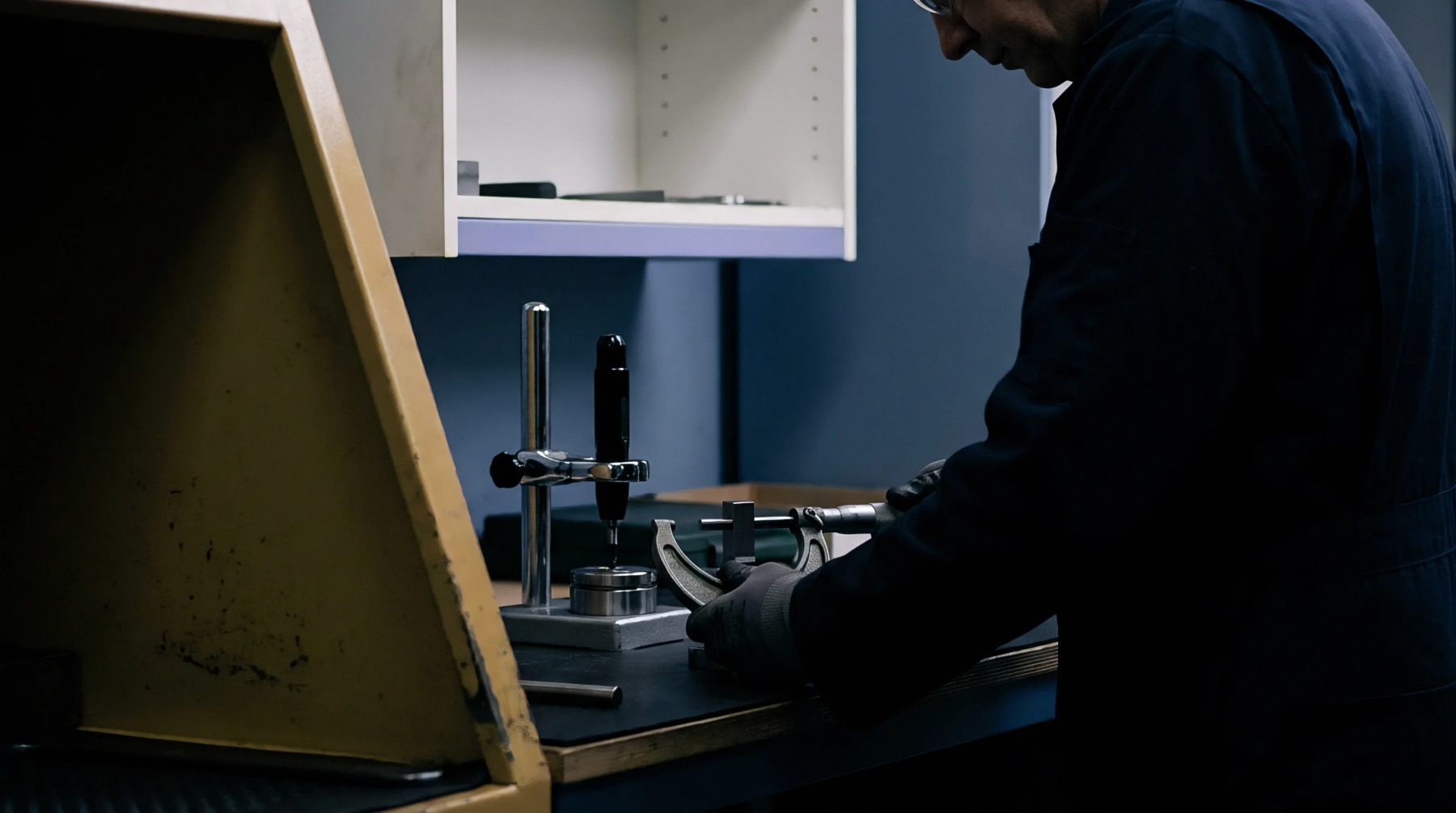
Mechanical integrity hinges on the rate at which stress decays inside a molded part. Engineers verify this behavior through stress decay testing where samples undergo fixed elongation while load cells record declining forces. If the force drops too quickly, the component lacks the structural memory required for seals or gaskets to maintain pressure against a mating surface.
High rates of decay indicate a susceptibility to permanent deformation, a condition practitioners identify as creep. Measuring this property allows production managers to filter out batches that show insufficient recovery before the parts ship to an assembly line. Laboratory protocols set the environmental baseline for these tests because thermal fluctuations accelerate molecular mobility and shorten the time required for energy dissipation.
Analysts correlate these measurements with long-term durability in high-pressure hydraulic systems or precision mounting hardware.
Process Stability
Manufacturing yields rely on the predictable outcome of cooling cycles after injection or extrusion. During production, trapped internal stresses induce unwanted dimensional shifts if the cooling rate bypasses the time necessary for relaxation to occur within the mold. A finished product might appear within tolerance upon exit, yet develop warping or shrinking after standing for several hours on a pallet.
Operators adjust the dwell time inside the cooling chamber to ensure that internal energy balances before the part undergoes physical removal. Rapid quench techniques often freeze molecular chains in high-energy states, causing unpredictable deformation as the material later seeks a lower energy configuration. Minimizing these post-process changes requires specific thermal management that respects the natural cadence of polymer movement.
Failure Prediction
Structural failure occurs when the material cannot accommodate the load at the intended rate of decay. Prediction models aggregate data from batch testing to establish the operational life of components under constant tension. If the observed decay exceeds the threshold for a specific application, the system fails to maintain necessary tightness or structural alignment.
A design choice favoring a material with high relaxation rates saves initial procurement costs but increases the probability of maintenance intervals occurring sooner than intended. Performance benchmarks against standard test coupons determine whether a supplier meets the consistency required for assembly. Every part holds a finite capacity for stress absorption before reaching the limit of its mechanical utility.