
Slot Die Coating Rheology in Battery Electrode Slurry Manufacturing
Slot die slurry throughput depends on high-shear thinning during extrusion and rapid low-shear yield stress recovery to prevent edge bead defects.
Slot die slurry throughput depends on high-shear thinning during extrusion and rapid low-shear yield stress recovery to prevent edge bead defects.

Structure long lead equipment exposure by locking baseline raw inputs via limited commitments and enforcing strict mathematical index caps in purchase orders.

Customs assists add buyer-provided foreign tooling, design, and direct inputs to transaction value, requiring itemized apportionment on import declarations.

Landed cost variance evaluation isolates duty reclassifications, terminal storage spikes, and local compliance retrofits from baseline machinery quotes.

Structural micro-vibration limits in multi-axis CNC tools depend on internal frame material damping factors and joint interface friction to control cutter displacement.

Auditing overseas site power quality and grounding topology prevents machine control trips, harmonic motor failures, and unconditioned utility warranty disputes.

Heavy imported machinery foundations require dynamic mass ratios up to 8:1 and isolated soil stiffness verification to prevent dynamic resonance and settlement.

Bilateral APAs for equipment commissioning depend on unbundling hardware, software, and field labor into clear, verifiable risk-adjusted transfer prices.

Excluding profit markups from cross-border asset transfers aligns customs valuation with tax depreciation basis, preventing unrecoverable tariff payments.

Aligning cross-border transfer prices with customs entry values creates a defensible local tax capitalization baseline while mitigating double taxation.

Factory acceptance benchmarks mask operational drift unless capital contracts quantify real shop floor thermal gradients before final signoff.

Cross-border tooling transfers demand verified dimensional inspection records and statistical process index matching to prevent costly production line failures.

Rigorous overseas tooling acceptance demands steady-state thermal runs, single-cavity Cpk validation, complete disassembly wear audits, and escrow-backed signoff.

Cavity thermal gradients drive unequal resin post-cure shrinkage; spatial sensor mapping and viscoelastic modeling allow precise diamond-machined mold offsets.

Post-ejection crystallization across high aspect ratio microchannels demands sub-millisecond optical verification to decouple shear from evaporative kinetics.
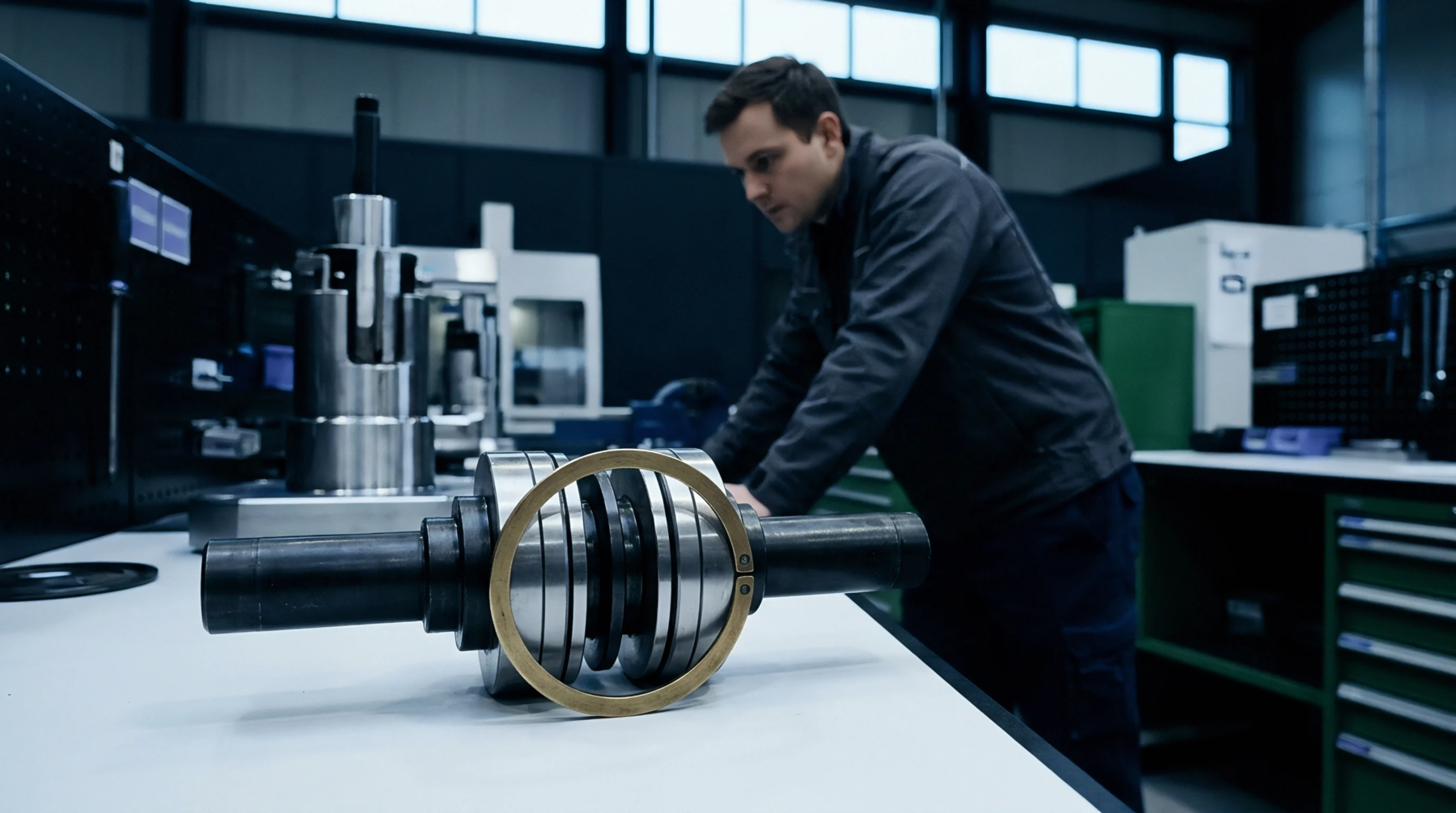
Precision micro-injection mold oversizing requires combining local polymer PVT volumetric contraction, flow-alignment anisotropy, and mold temperature steel expansion.

Coupling DSC kinetics with rheological gel constraints isolates the precise process window for structural epoxy consolidation before matrix flow ceases.

Dynamic and isothermal DSC calibration anchors amine-epoxy kinetic modeling, converting precise baseline and enthalpy measurements into reliable cure scale-up gates.

DSC heat flow analysis verifies epoxy cure state by quantifying reaction enthalpy, glass transition shifts, and residual crosslinking to prevent part failure.

Matching commercial contract terms to verified Front-End Loading engineering maturity limits capital expansion risk and prevents unhedged cost overruns.

Capital releases require verified floor telemetry demonstrating continuous throughput at the governing bottleneck under actual operating conditions.

Stage gate capital allocation protects liquid reserves by conditioning manufacturing expansion funds on verified operational readiness and constraint removal.

Daily reconciliation of backflushing delays and coded scrap logs eliminates phantom inventory to protect material requirements planning execution.

Disaggregating confirmation logs separates true machine constraints from reporting lags, scrap losses, and administrative batching to target capital expansion.

Enterprise resource planning records reveal demonstrated line capacity baseline through timestamp analysis of shop floor order confirmations.

Dynamic thermodynamic reconciliation resolves transient vessel holdups and sensor bias to prevent false performance failures during project escrow audits.

Process capability acceptance relies on setting exact metric definitions, subgroup strategies, and confidence interval bounds prior to milestone trials.

Commercial remedies for order book decay enforce strict take-or-pay floors, freeze gated expansion capital, and retool lines for multi-tenant production.

Unhedged capex expansion against non-binding customer forecasts creates severe liquidity exposure when volume drops force fixed debt service onto deflated unit margins.

Auditing industrial order books requires sifting firm purchase orders from non-binding forecasts before committing capital to factory expansion.
Expertise is a utility, not a secret. sentiention™ publishes its working knowledge as open reference: intelligence layer covering the materials it sources, the markets it enters, and the reference that serves both.