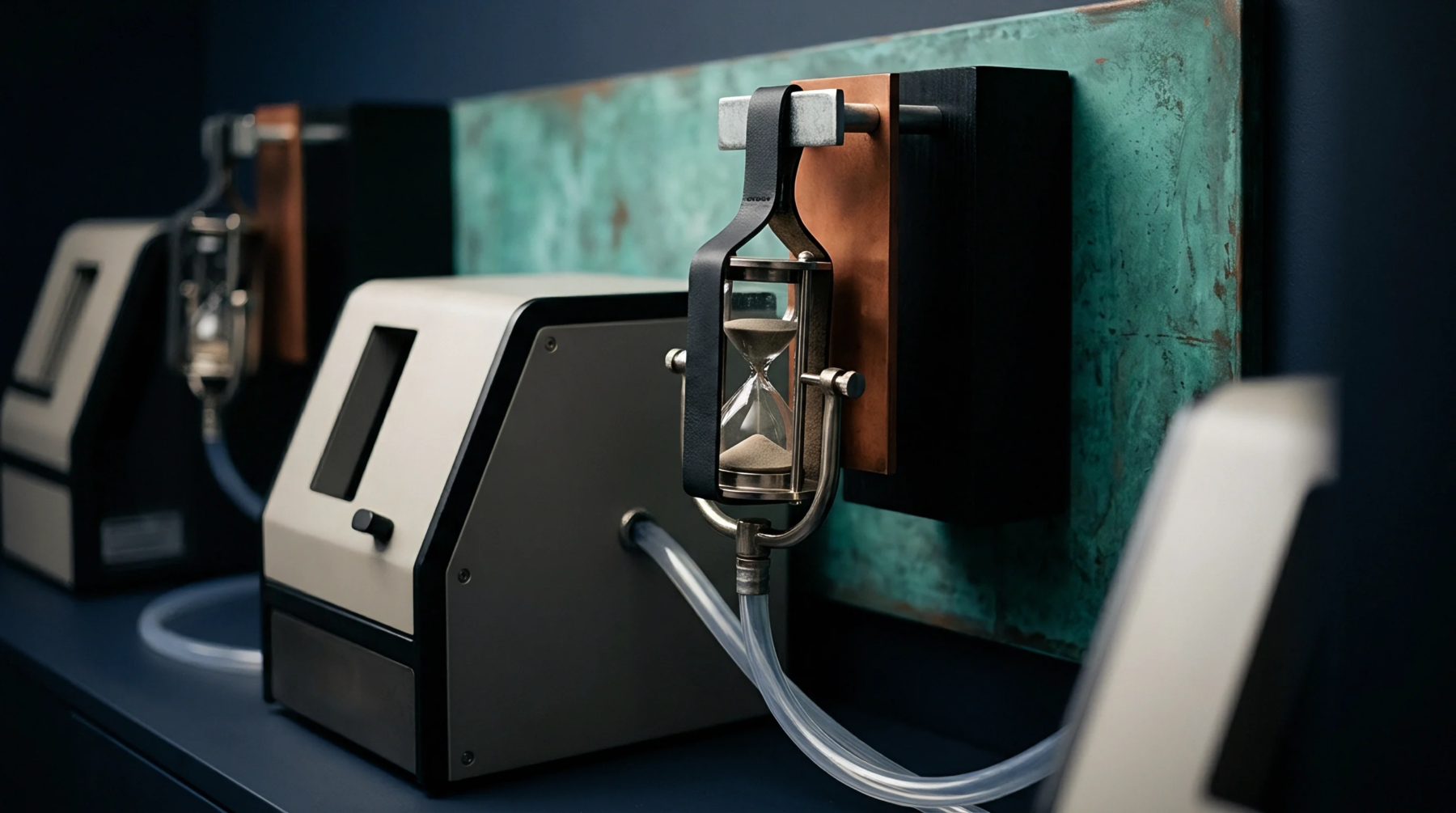
Capillary Rheometer End Correction Data Processing Workflows
End-corrected capillary rheology isolates entry losses and non-Newtonian wall shear rates to establish accurate melt viscosity curves for compounding quality control.
End-corrected capillary rheology isolates entry losses and non-Newtonian wall shear rates to establish accurate melt viscosity curves for compounding quality control.
Dynamic contact area expansion in translucent vulcanizates is governed by strain rate thermal softening and non linear viscoelastic relaxation boundaries.

Characterizing viscoelastic relaxation during post cure cycles prevents internal stress lockup, ensuring long-term dimensional stability for structural thermosets.

Unmodeled viscoelastic relaxation in inverse unclamping algorithms creates geometric shape errors that invalidate free state composite metrology.

Physical aging and nonlinear viscoelastic relaxation during secondary post-cure holds govern residual stress dissipation, matrix embrittlement, and warpage.
Bagley end corrections isolate true wall shear stress from entry pressure losses, preventing viscosity overestimation that distorts mold tooling and cash flow.
Expertise is a utility, not a secret. sentiention™ publishes its working knowledge as open reference: intelligence layer covering the materials it sources, the markets it enters, and the reference that serves both.