Meaning
Viscoelastic material property representing the portion of applied energy that is dissipated as heat during cyclic deformation. A high loss modulus characterizes materials that behave more like viscous liquids than elastic solids when subjected to dynamic stresses, and it measures the viscous response of the polymer matrix. This property is not measured under static loading conditions where no strain rate exists and the material behaves purely elastically or has achieved equilibrium.
Measuring Method
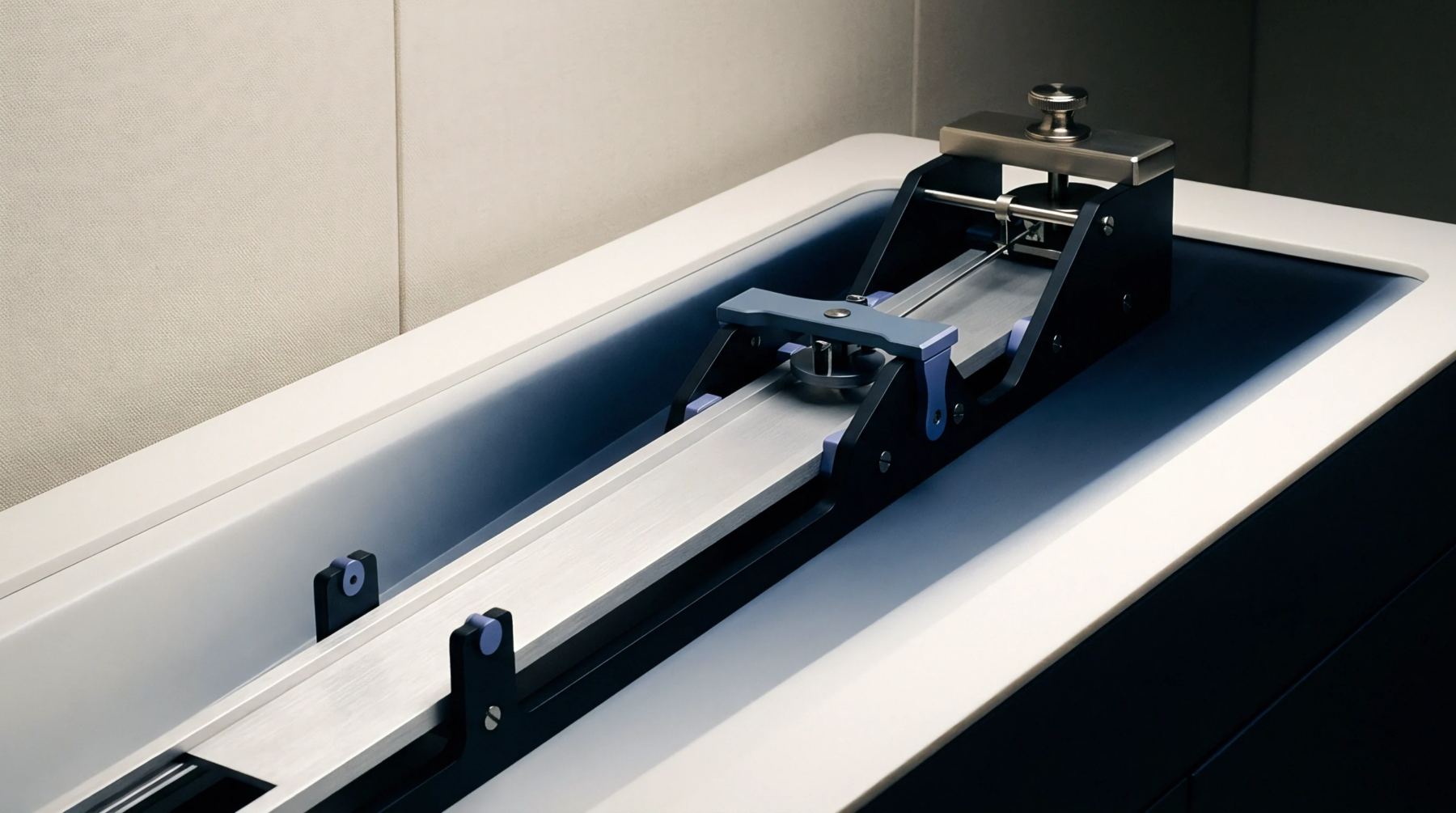
Dynamic mechanical analysis applies a sinusoidal strain to the polymer specimen to measure the resulting stress response. Determining the loss modulus involves calculating the out-of-phase component of the stress-to-strain ratio. This test is conducted across a wide temperature range to capture transitions.
Energy Dissipation
Mechanical energy is converted into thermal energy through molecular chain friction and slip during each cycle. In damping applications, a high loss modulus is desirable because it helps reduce vibration in automotive panels and industrial machinery. This dissipation reduces structural resonance.
Material Design
Polymer blending allows engineers to adjust the balance between energy storage and dissipation for specific applications. Controlling the loss modulus ensures that the final product maintains structural integrity while providing sufficient damping. Modifying cross-link density represents a common way to adjust this property.