High Temperature Thermoset Mold Cure Kinetics Basics
High temperature thermoset cure kinetics governs gelation timing, exotherm runaway risks, and press pressure application windows in structural composite molding.


Gel
Conversion Thresholds and Viscosity Divergence
High-temperature crosslinking reactions transform low-viscosity resin prepolymers into three-dimensional macromolecular networks within rigid metallic tool cavities. During early thermal ramps, thermal energy increases chemical kinetic energy while simultaneously reducing matrix viscosity. As monomer chains link and branch, molecular mass grows non-linearly.
The rate of conversion, denoted as the derivative of conversion with respect to time, drives the transition from fluid transport behavior to structural network formation.
When the reaction advances to a specific crosslinking density, liquid flow ceases entirely. The point of gelation marks the infinite mass fraction transition where the weight-average molecular weight approaches infinity. Rheological measurements demonstrate that shear viscosity escalates by four to five orders of magnitude over narrow conversion windows.
Tool clamping force and consolidation pressure application timing rely on tracking this rapid viscosity surge. Applying consolidation pressure after this viscoelastic transition introduces internal voids, structural delamination, and resin-starved zones across finished structural laminates.
Cyanate ester formulations reaching forty-two percent conversion at one hundred eighty degrees Celsius exhibit an abrupt three-decade viscosity spike within forty seconds.
In high-performance matrices such as bismaleimides, polyimides, and aerospace epoxies, conversion at gelation remains largely independent of temperature, operating as a distinct structural constant determined by monomer functionality. Processing conditions alter the rate at which the material approaches this threshold. Tool surface temperature differentials distort crosslinking progression across part thicknesses, creating localized flow boundaries.
Flory Stockmayer Network Criteria
Statistical network formation theory establishes the relationship between monomer functionality and the gel conversion limit. For a reaction system containing polyfunctional monomers with reactive group branching, the theoretical conversion at the gelation point depends on the average weight-based functionality of the precursor species. Calculating this threshold prevents premature press closure and avoids structural matrix degradation during thermal compression molding.
| Resin System Type | Base Chemistry | Reaction Enthalpy (J/g) | Activation Energy (kJ/mol) | Theoretical Gel Conversion |
|---|---|---|---|---|
| Tetraglycidyl Methylene Dianiline | Tetra-functional Epoxy | 480 to 520 | 75 to 82 | 0.33 to 0.36 |
| Bismaleimide Monomer Blend | Addition Polyimide | 310 to 350 | 92 to 104 | 0.40 to 0.44 |
| Cyanate Ester Prepolymer | Cyclotrimerization Triazine | 240 to 280 | 88 to 96 | 0.48 to 0.52 |
| High-Temp Vinyl Ester | Free Radical Polymerization | 320 to 360 | 68 to 74 | 0.12 to 0.18 |
Deviations between theoretical crosslinking limits and empirical mold flow boundaries occur due to side reactions, stoichiometry imbalances, and micro-gelation phenomena. Stoichiometric ratios drifting by more than three percent displace gel conversion thresholds significantly, shifting process timing out of pre-set press control windows. Tooling operations that ignore stoichiometric variations risk premature matrix immobilization during component filling.
Molding operations that misjudge the exact flow boundary incur irreversible part scrap, resin starvation micro-voiding, and permanent contamination of polished mold tooling surfaces.
Exotherm
Coupled Heat Energy Balance Equations
Internal heat generation rate during fast crosslinking frequently exceeds the thermal conduction capacity of thick composite laminates. Molded thermoset polymers possess low thermal conductivities, typically ranging from 0.15 to 0.45 Watts per meter-Kelvin. Heat released by ring-opening or addition reactions builds up inside the component core faster than surface boundary cooling dissipates the energy.
The governing energy conservation equation balances thermal conduction against volumetric heat generation.
The volumetric thermal generation term links total reaction enthalpy to kinetic conversion velocity. Uncontrolled energy accumulation produces runaway exotherms where local temperatures surpass heat-distortion limits, triggering thermal degradation, matrix charring, and resin micro-void generation. The heat equation links density, specific heat capacity, thermal conductivity, total enthalpy, and cure velocity:
rho Cp (dT / dt) = k_thermal grad^2(T) + rho H_total (dalpha / dt)
In laminates exceeding fifteen millimeters in thickness, internal temperature overshoot reached seventy degrees Celsius above setpoint tool boundaries during uncontrolled thermal cycles. Thermal conductivity along the through-thickness direction remains a principal limiting constraint. High heat generation rates coupled with thick cross-sections shift thermal profiles from uniform conduction regimes into localized thermal runaway states.
Exceeding the maximum exothermic peak threshold specified in standard composite tooling specifications invalidates thermal warranty coverage on carbon tooling matrices.
Managing heat accumulation demands precise thermal cycle profiling. Programmed thermal dwells slow reaction kinetics, allowing heat generated by initial crosslinking stages to diffuse toward tool boundaries prior to secondary elevated thermal ramps.
Core Thermal Runaway Prevention
Determining thermal runaway boundary conditions relies on evaluating dimensionless numbers governing internal heat dissipation. The Biot number compares internal conductive resistance against external convective surface resistance, while the Damköhler number assesses reaction heat generation relative to conductive heat transport rates across part geometries.
- Verify raw material stoichiometry via differential scanning calorimetry before charging hot compression molds.
- Measure mold platen surface thermal uniformity to confirm less than two degrees Celsius variance across working zones.
- Program intermediate thermal dwell profiles below resin initiation temperatures to equalize internal part gradient profiles.
- Monitor internal core thermocouple readings continuously during initial tool ramp phases to detect early exotherm acceleration.
- Apply peak consolidation pressure only after internal thermal runaway risks subside past peak exotherm velocity.
Tooling suppliers often state that thermal overshoot stems exclusively from operator deviation in ramp rates rather than inherent flaws in mold thermal transfer design.

Calorimetry

Kamal Sourour Autocatalytic Parameter Fitting
Differential scanning measurement protocols capture baseline total reaction enthalpy across controlled thermal gradients. Isothermal and dynamic calorimetry runs provide raw heat flow data across set heating profiles. Subtracting baseline instrument drift yields net heat flow, which directly correlates with reaction velocity.
Integrating total heat flow yields the total heat of reaction, forming the baseline denominator for instantaneous conversion calculations.
Phenomenological kinetics models capture crosslinking behavior across industrial molding cycles. While n-th order rate models fit simple chemical reactions, epoxy and bismaleimide systems display autocatalytic behavior, where reaction products accelerate subsequent reaction rate paths. The Kamal-Sourour autocatalytic kinetic formulation combines two distinct rate constants with exponential reaction orders:
dalpha / dt = (k1 + k2 alpha^m) (1 – alpha)^n
The rate constants k1 and k2 follow Arrhenius temperature dependencies involving activation energy and pre-exponential factors. Fitting empirical differential scanning data requires multi-variate non-linear regression analysis across minimum three distinct heating rates. Isothermal tests complement dynamic runs by resolving early-stage reaction rate acceleration under constant thermal conditions.
An empirical kinetic curve fit remains valid only within the thermal range where measurement data was collected. Extrapolating kinetic models beyond validated thermal bounds introduces major prediction errors during high-temperature compression molding.

Where Does Thermal Hysteresis Obscure the Gelation Point during Rapid Tooling Cycles?
Thermal lag between mold thermocouples and laminate cores creates measurement offsets during high ramp-rate heating schedules. High heat capacity tooling materials absorb thermal flux, delaying core temperature ascension. Differential scanning measurements conducted at high dynamic rates displace measured peak heat flow temperatures upward, masking true equilibrium kinetic reaction velocities.
- Isothermal baseline stability relies on immediate thermal equilibration during instrument sample loading to avoid missing early reaction enthalpy.
- Dynamic heating rate selection requires multi-rate runs at two, five, ten, and twenty Kelvin per minute to separate thermal lag from chemical kinetics.
- Glass transition tracking demands modulated temperature calorimetry to isolate reversible heat capacity shifts from irreversible crosslinking exotherms.
- Residual enthalpy determination measures uncured monomer content following incomplete molding cycles through post-cure thermal scans.
According to standard aerospace composite testing clauses, material qualification dossiers must include kinetic parameter fits derived from certified calorific testing methods with documented baseline subtraction procedures.

Rheology

Dielectric Ion Viscosity Monitoring
Viscoelastic property transformation during heated cure determines the window for laminate consolidation and compaction pressure. Dynamic mechanical analysis tracks storage modulus, loss modulus, and the damping factor tan delta across oscillating shear strain profiles. Prior to gelation, loss modulus dominates material behavior.
Beyond gelation, storage modulus increases by orders of magnitude as crosslinked networks build mechanical rigidity.
In-mold sensor technologies utilize dielectric analysis to measure ion mobility in real time within closed compression tools. Dipole mobility and ion resistivity correlate directly with fluid micro-viscosity. Ion viscosity measurements track resin progression through wet-out, minimum viscosity, gelation onset, and final vitrification without disrupting part integrity.
Consolidation press pressure applied prior to resin flow initiation forces dry resin micro-voids into structural laminates.
As conversion advances toward complete crosslinking, the glass transition temperature of the matrix rises continuously. The DiBenedetto relation models glass transition evolution as a function of conversion, monomer architecture, and crosslinking density parameters. When the rising glass transition temperature matches the instantaneous curing temperature, the material undergoes vitrification.
Dynamic Modulus Buildup Dynamics
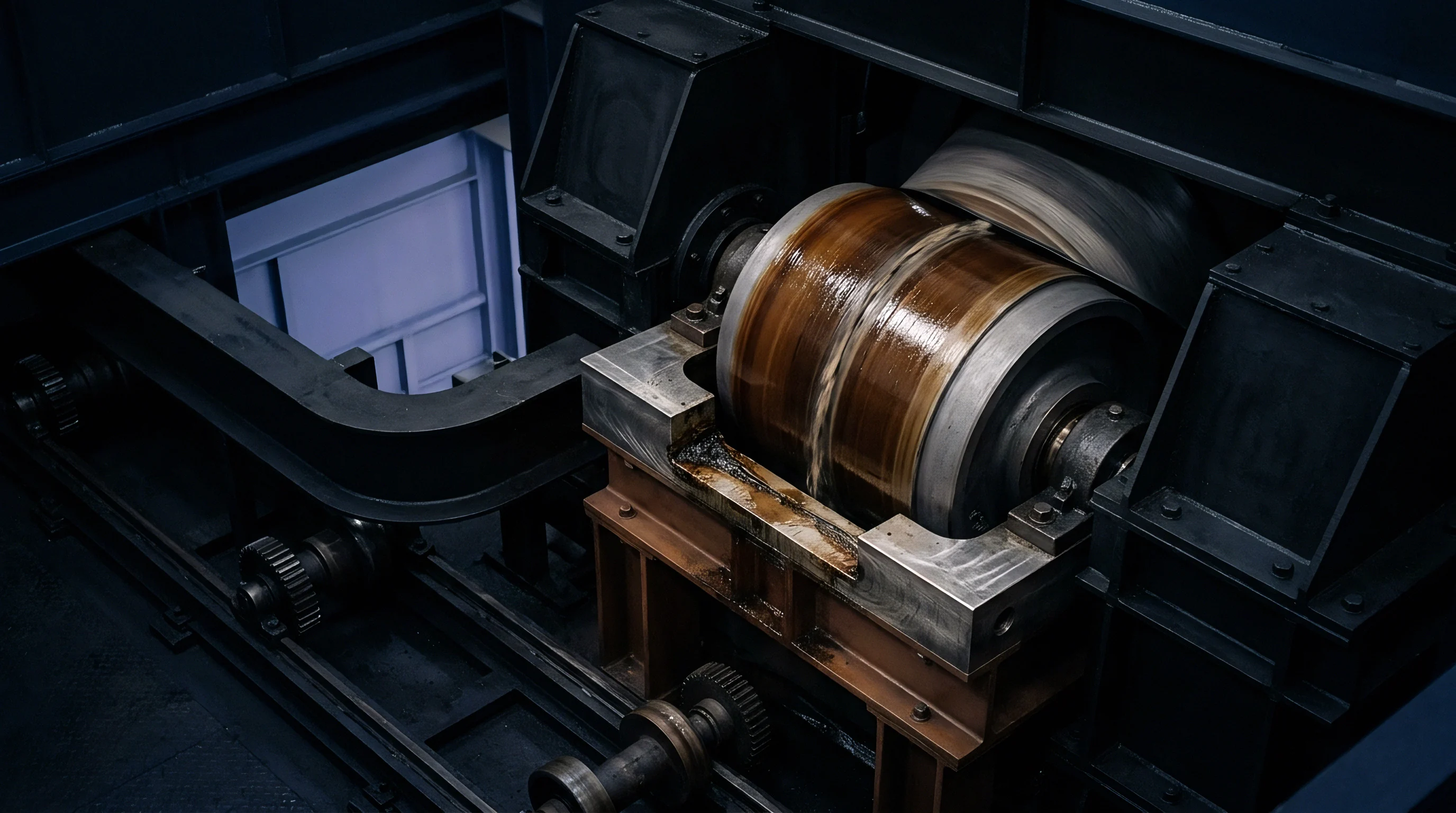
Vitrification transitions the reaction mechanism from liquid crosslinking control into diffusion-controlled regimes. In diffusion-controlled states, molecular mobility drops sharply, slowing reaction kinetics down by multiple orders of magnitude. Achieving complete cure beyond vitrification requires elevating tool temperatures above the ultimate glass transition temperature of the fully crosslinked polymer network.
| Monitoring Modality | Primary Measurement | In-Mold Suitability | Kinetic Parameter Derived | Key Operational Limitation |
|---|---|---|---|---|
| Dielectric Analysis | Ion Resistivity & Loss Factor | High (Flush Tool Sensors) | Real-time Ion Viscosity and Vitrification | Requires electrical isolation from conductive carbon fibers |
| Dynamic Mechanical Analysis | Storage & Loss Shear Modulus | Low (Laboratory Coupons) | Gelation Onset and Modulus Buildup | Destructive testing off line |
| Ultrasonic Wave Attenuation | Acoustic Velocity & Damping | Moderate (External Transducers) | Density Shift and Bulk Modulus | Sensitive to mold acoustic coupling variations |
| Fiber-Optic Bragg Grating | Spectral Strain & Refractive Index | High (Embedded Fibers) | Internal Strain and Exotherm Tracking | Embedded sensors remain permanently inside part matrix |
Laminates consolidated under premature pressure cycles display severe resin squeeze-out along part margins, causing resin-starved core zones and structural wall thickness variations.
- Resin flow inhibition occurs when tool surface chill zones freeze advance flow fronts before mold cavity filling completes.
- Void entrapment results when consolidation pressure arrives after resin viscosity surpasses two hundred Pascal-seconds.
- Micro-cracking forms during cool-down phases when matrix vitrification occurs under asymmetric thermal stress profiles.
- Resin migration leads to local stoichiometry shifts when high compaction forces filter resin away from structural fiber bundles.
Resin viscosity reaches minimum levels immediately before crosslinking acceleration overrides thermal thinning.

Window

Tooling Thermal Inertia Constraints
Production throughput in compression molding presses depends on balancing rapid ramp rates against crosslinking uniformity across structural geometry variations. Tooling designs with excessive mass exhibit high thermal inertia, prolonging heating and cooling phases during mold cycles. Large metallic molds require substantial heat input, limiting maximum achievable heating rates to two to five degrees Celsius per minute.
Fast-cycling mold lines utilize integrated oil or electric heating channels positioned close to tool cavity faces. Reducing heat transfer path distances minimizes thermal lag, enabling tight temperature control during critical crosslinking windows. Matching press heating capacity to tool thermal mass prevents temperature undershoot during high-endothermic or rapid mass flow cure stages.
Single-dwell cure cycles on thick structural components fail to prevent core thermal runaway when heating rates exceed three degrees Kelvin per minute.
Process optimization strikes a balance between total cycle time, peak internal temperature, and matrix conversion completeness. Multi-stage thermal profiles incorporate an initial hold to achieve uniform heat distribution without triggering rapid exotherms, followed by a higher-temperature post-cure hold to drive crosslinking past vitrification limits.

Cure Cycle Time Optimization Worked Model
Evaluating cure cycle efficiency requires coupled numerical modeling of heat conduction and reaction kinetics across part geometry. Consider a twenty-millimeter structural carbon-epoxy composite panel cured inside a heavy steel press tool. Assume a composite material density of 1550 kilograms per cubic meter, continuous through-thickness thermal conductivity of 0.55 Watts per meter-Kelvin, specific heat capacity of 1100 Joules per kilogram-Kelvin, and total heat of reaction equal to 450 Joules per gram.
The kinetic model follows a validated Kamal-Sourour fit with parameters: k1 pre-exponential factor equal to 1.2 x 10^5 per second with activation energy of 78 kilojoules per mole; k2 pre-exponential factor equal to 4.5 x 10^7 per second with activation energy of 68 kilojoules per mole; reaction order m equal to 0.45, and reaction order n equal to 1.55.
| Process Profile Option | Thermal Ramp Schedule | Peak Core Temp (°C) | Total Cycle Time (min) |
|---|---|---|---|
| Single Ramp Baseline | Direct ramp at 3.5 °C/min to 180 °C, hold 60 min | 228 (Exotherm Runaway) | 98 |
| Two-Stage Stepped Cure | Ramp 2.0 °C/min to 140 °C hold 30 min, ramp 1.5 °C/min to 180 °C hold 45 min | 186 (Controlled) | 122 |
| Optimized Kinetic Ramp | Variable ramp 1.0 to 3.0 °C/min based on core heat flux, hold 180 °C 40 min | 182 (Optimal) | 104 |
The single-ramp schedule shortens overall cycle time but generates an unacceptably high core exotherm, elevating internal temperatures forty-eight degrees Celsius above tool setpoint. This thermal spike exceeds the matrix degradation limit, inducing core thermal micro-cracking. The two-stage profile controls exotherm heat generation within safe limits but extends cycle duration by twenty-four minutes.
The variable kinetic profile uses continuous heat generation feedback to balance temperature limits and process speed, achieving full matrix conversion while maintaining part integrity.
- Raw material out-time must be tracked to confirm prepolymers remain below five percent pre-reaction conversion prior to mold loading.
- Tool surface temperature maps must confirm temperature variations across cavity surfaces remain within plus or minus two degrees Celsius.
- Pressure application points must align with real-time dielectric viscosity windows between twenty and eighty Pascal-seconds.
- Cooling rate controls must cap thermal drop velocities at two degrees Celsius per minute to prevent high internal residual stresses.
Can real-time closed-loop dielectric control dynamically alter press heating rates to eliminate exotherm risk without pre-programmed thermal holds?
Sequence

Stage Gate Verification Requirements
Production line expansion for high-temperature composite structures requires synchronizing press dwell schedules with raw material out-time tracking systems. Scaling thermoset molding operations multiplies baseline process variations if kinetic control protocols remain unverified. Stage-gate qualification procedures mandate physical validation of raw material batch kinetic parameters prior to releasing tooling lines for high-rate manufacturing.
Operational readiness relies on verifying three distinct readiness indicators across production lines. First, raw material batch incoming inspection must confirm total reaction enthalpy remains within specified tolerance bands. Second, press thermal uniformity audits must prove platen surface stability across maximum volume charges.
Third, composite structural non-destructive testing must verify void content remains below zero point five percent across critical load-bearing regions.
Quality management standards such as IATF 16949 and AS9100 demand formal process capability index calculations for critical cure parameters. Achieving a process capability index exceeding 1.33 requires continuous automated recording of press temperature, consolidation pressure profiles, and dielectric cure sensor traces for every manufactured component.

Capital Allocation against Cure Constraints
Deploying capital into additional mold presses without resolving curing cycle constraints compounds capital inefficiency. A line restricted by long dwell times or high scrap rates gains little throughput from added press capacity upstream. Investment sequences prioritize kinetic model verification, tooling heat transfer efficiency, and automated press control integration before expanding floor footprints.
Validating process window limits prior to finalizing tool design prevents costly mold modifications during production scale-up phases. Modifying hardened tool steel to adjust heating channel layouts costs significantly more than running pre-build thermal simulations. Documenting complete kinetic dossiers ensures production transfer between manufacturing sites occurs without compromising structural quality or cycle time performance.
Final line qualification requires executing continuous multi-batch trial runs under full production loading conditions. Completing twenty consecutive mold cycles without temperature variance or void defects establishes operational stability. Quality engineers freeze cure cycle profiles in automated press controllers upon completing final process sign-off.