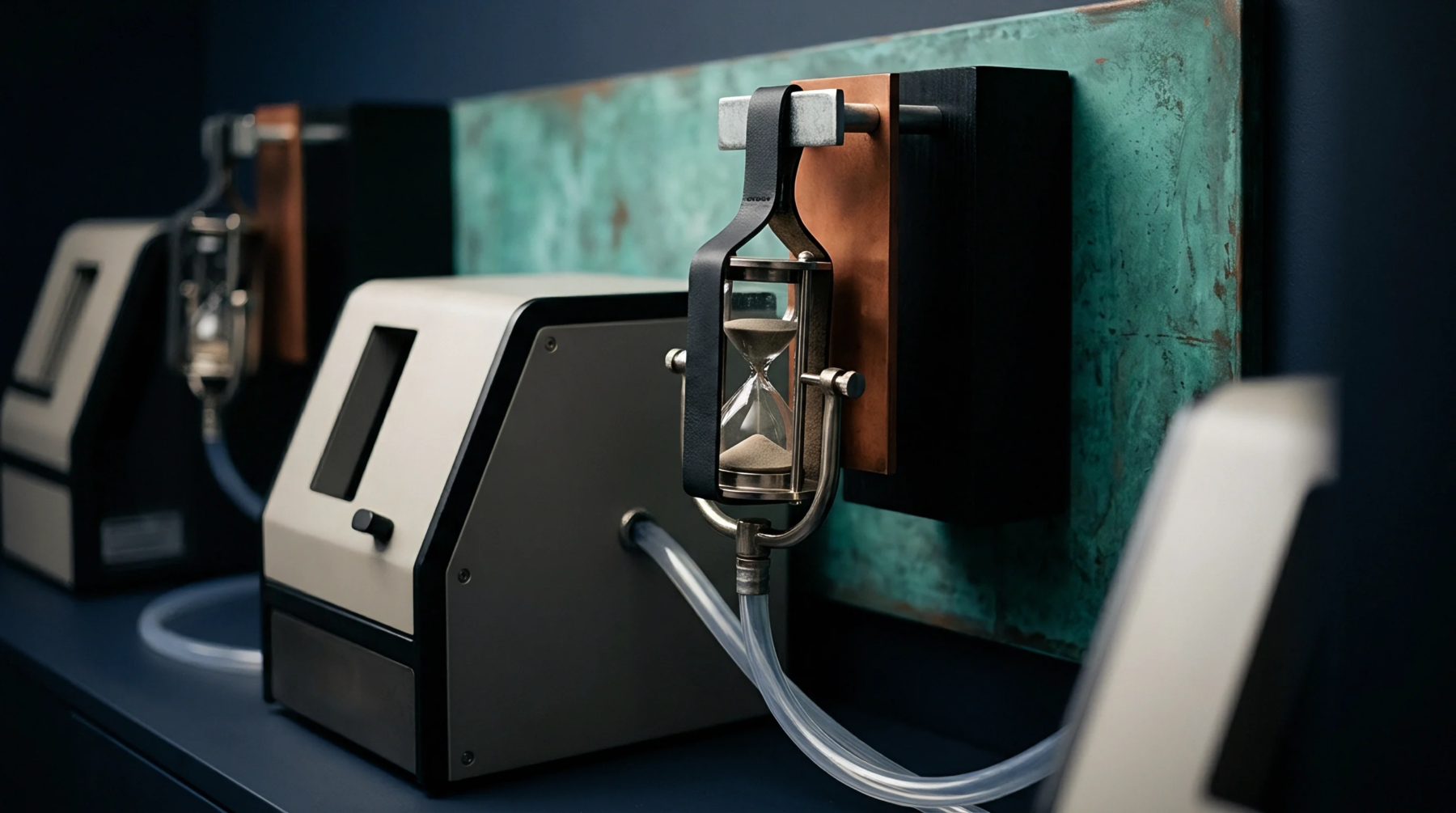
Capillary Rheometer End Correction Data Processing Workflows
End-corrected capillary rheology isolates entry losses and non-Newtonian wall shear rates to establish accurate melt viscosity curves for compounding quality control.
End-corrected capillary rheology isolates entry losses and non-Newtonian wall shear rates to establish accurate melt viscosity curves for compounding quality control.

Quantifying Mooney wall slip parameters across multiple capillary die radii prevents costly extrusion tooling rework and stabilizes polymer processing cash margins.

Quantifying true wall shear stress requires Bagley end-loss and Rabinowitsch corrections on capillary data to prevent premature extrudate fracture.
Polymer melt instability limits define the maximum line speed in profile extrusion before surface fracture and wall slip destroy yield and drain cash flow.

Melt temperature drift over 3 degrees Celsius shifts shear viscosity past structural tolerances, requiring active thermal balance before line acceleration.

Inaccurate capillary rheometry metrics hide high-shear processing limits, triggering scrap and line delays that expand working capital and lock cash in raw stock.
Expertise is a utility, not a secret. sentiention™ publishes its working knowledge as open reference: intelligence layer covering the materials it sources, the markets it enters, and the reference that serves both.