Predicting Long Term Post Cure Structural Distortion Driven by Non Linear Viscoelastic Relaxation Kinetics
Long-term composite distortion relies on time-temperature superposition shift factors, Prony relaxation spectrums, and physical aging strain tracking.
Creep
Polymer networks trapped below their glass transition temperature undergo continuous thermodynamic densification. This molecular compaction reduces free volume, changes mechanical compliance, and shifts relaxation spectra over long operational timelines. In structural composite assemblies, frozen-in manufacturing stresses do not remain static; internal stress gradients continuously redistribute through non-linear viscoelastic relaxation kinetics, driving macro-scale geometric warpage long after cure cycles are finished.

Mechanisms of Long Term Post Cure Relaxation
Thermoset laminates deform over time under steady mechanical and environmental loads. During initial cure, cross-linking resin matrices lock in micro-strains caused by chemical shrinkage and mismatched thermal expansion coefficients between reinforcing fibers and the surrounding polymer. Once ambient cooling finishes, these locked-in strains act as internal driving forces as molecular chain segments undergo physical aging, slowly reorienting toward thermodynamic equilibrium.
As glass transition temperatures shift and ambient aging changes matrix volume, mold geometry directly influences how stressed laminates creep over time.
Physical aging shifts the structural relaxation spectrum toward longer times, operating concurrently with mechanical stress relaxation. At low stress amplitudes, viscoelastic response follows linear superposition principles where compliance depends exclusively on elapsed time and temperature. Higher stress states break these linear boundaries, as elevated internal stresses accelerate molecular mobility, reducing effective relaxation times and accelerating long-term geometric distortion rates.
Thermorheological Complexity in Amorphous Epoxy Systems
Shift factor calculations assume equivalent relaxation mechanisms across diverse thermal regimes. Thermorheological simplicity lets engineers construct master curves using simple horizontal time-temperature superposition shift factors. However, advanced high-temperature epoxy, bismaleimide, and polyimide matrices display thermorheological complexity, where localized secondary relaxation modes carry activation energies distinct from primary glass transition relaxations.
Horizontal time shifts alone cannot capture long-term dimensional drift under thermorheological complexity. Vertical shift factors accounting for temperature-dependent modulus changes and physical aging density changes are necessary for reliable multi-year predictions. Omitting non-linear stress-activation terms yields non-conservative distortion estimates, overestimating dimensional stability over multi-year field service.
Ignoring stress-dependent non-linear viscoelastic kinetics leads to dimensional out-of-tolerance rejections during final aircraft subassembly integration.

Cure
Thermosetting polymers transform from liquid monomers into cross-linked networks through exothermic reactions. The thermal profile applied during processing governs chemical conversion rates, gelation onset, and final vitrification limits. Residual stress generation begins at the gelation point, as the resin transitions from a liquid capable of viscous flow to a viscoelastic solid that supports shear stresses.

Degree of Cure and Residual Stress Trajectories
Chemical conversion rates set the boundaries for gelation and vitrification. Before gelation, volumetric resin shrinkage causes matrix flow without generating strain within structural fiber beds. Once gelation occurs, chemical shrinkage directly induces internal micro-strains.
As cross-link density increases, the instantaneous shear modulus of the resin rises rapidly, multiplying the stress generated by subsequent volumetric shrinkage.
- Asymmetric Matrix Shrinkage – Ply stacking sequences with unbalanced fiber orientations generate differential contraction during cross-linking cycles.
- Thermal Mismatch Distortion – Differential thermal expansion coefficients between carbon fibers and epoxy resins induce residual micro-strains upon cooling.
- Graduated Moisture Desorption – Ambient environmental exposure causes non-uniform moisture egress, triggering localized volume contractions across thin-walled composite panels.
Thermal gradients across part thickness worsen internal strain distributions. Exothermic heat generation in thick-section laminates drives internal temperatures well above tool setpoints, causing sub-surface core regions to reach higher conversion levels faster than surface plies. Upon cooling, non-uniform thermal contraction overlays chemical shrinkage gradients, forming complex, self-equilibrating stress profiles across the laminate cross-section.

Vitrification Limits and Free Volume Trapping
Monomer mobility drops by orders of magnitude when the matrix transitions into a glassy solid state. Vitrification halts chemical conversion unless processing temperatures exceed the ultimate glass transition temperature. Vitrified resins retain excess non-equilibrium free volume, which acts as a thermodynamic driving force for long-term physical aging.
Post-cure thermal dwells at 180°C reduce frozen-in shear stress by 42 percent within 14 hours.
Post-cure heat treatments aim to push chemical conversion closer to completion while relieving locked-in manufacturing stresses. Exposing vitrified laminates to elevated temperatures reactivates molecular mobility so trapped free volume can collapse. Insufficient post-cure duration leaves high levels of unreacted functional groups and trapped free volume, raising susceptibility to post-manufacture structural warpage.
Standard thermal dwell schedules are often assumed to eliminate all residual stress, despite long-term dimensional drift data proving otherwise.

Heredity
Viscoelastic stress histories propagate through time via hereditary strain formulations. Predicting structural distortion requires mathematical architectures capable of integrating stress accumulation across changing thermal, moisture, and mechanical loads over multi-year operational lifespans.
Hereditary Integrals and Prony Series Formulation
Mathematical representations of stress relaxation rely on discrete Maxwell elements arranged in parallel. Generalized Maxwell models convert complex relaxation spectra into exponential series expansions, expressing the time-dependent relaxation modulus through discrete Prony series parameters to capture stress decay across multiple time decades.
As the viscoelastic modulus drops exponentially, early shrinkage in uncured resin leaves behind residual stresses that ultimately induce structural twist.
| Resin Grade | Initial Modulus (GPa) | Long-Term Relaxed Modulus (GPa) | WLF Shift Constant C1 | WLF Shift Constant C2 (°C) |
|---|---|---|---|---|
| Aerospace Epoxy 3501-6 | 3.45 | 0.82 | 17.44 | 51.6 |
| Toughened Epoxy 8552 | 4.67 | 1.15 | 16.20 | 48.3 |
| Bismaleimide 5250-4 | 4.12 | 1.35 | 22.10 | 83.7 |
| High-Temp Polyimide PETI-5 | 3.85 | 1.42 | 19.80 | 76.4 |
Integrating non-linear stress dependence into hereditary integrals requires modifying intrinsic relaxation times with stress-dependent shift factors. Under elevated stress fields, material time effectively flows faster than chronological time. The Eyring formulation and Schapery non-linear viscoelastic model adjust kernel functions to reflect these stress-accelerated relaxation rates, tracking structural distortion under sustained operational loads.
Unsaturated resin matrices store elastic energy during vitrification that releases across multi-year storage cycles.
Non Linear Shift Functions and Time Temperature Superposition
Temperature changes shift the time scale of mechanical relaxation according to empirical logarithmic expressions. The Williams-Landel-Ferry equation models shift factors near the glass transition temperature, whereas Arrhenius relationships govern behavior well below that boundary. Combining temperature shift factors with stress-activation terms yields unified reduced-time scales.
- Measure isothermal relaxation moduli across multiple elevated thermal levels using dynamic mechanical analysis instruments.
- Construct master relaxation curves by shifting experimental stress curves along logarithmic time scales.
- Fit discrete Maxwell relaxation times and Prony series coefficients using non-linear least-squares algorithms.
- Calculate non-linear stress-shift factors under varied operational strain amplitudes.
- Integrate viscoelastic constitutive equations into three-dimensional finite element solver subroutines.
Finite element subroutines evaluate hereditary strain integrals at every increment. Storing historical strain tensors across thousands of shell or solid elements demands substantial computational memory, so incremental recursive algorithms store internal state variables rather than complete strain histories, enabling efficient multi-year creep calculations on large structural airframe models.
Strain
Deformed geometry metrics require physical validation across extended environmental conditioning windows. Tracking sub-millimeter structural distortion over months of accelerated thermal exposure demands measurement systems isolated from environmental drift.
Optical and Strain Gauge Verification Methods
Digital image correlation measures full-field surface displacement vectors without applying physical contact loads. Multi-camera optical setups capture three-dimensional out-of-plane distortion topologies with sub-pixel resolution. Standard speckle pattern application methods must withstand long-term thermal aging without degradation or debonding from composite substrates.
Non-compliance with ASTM E831 thermal expansion test standards invalidates finite element creep distortion predictions.
Embedded fiber Bragg grating optical sensors provide internal strain measurements continuously during processing and long-term aging. Fiber sensors measure localized micro-strain changes driven by post-cure stress relaxation without altering structural laminate integrity. Comparing internal optical fiber strain readings against surface digital image correlation maps validates cross-sectional relaxation gradients predicted by numerical solvers.

Accelerated Thermal Aging Bench Execution
Elevated thermal chambers shorten the duration required to observe decades of material relaxation. Test specimens experience controlled thermal cycles designed according to time-temperature-stress equivalence principles. Accelerating physical aging without triggering non-representative chemical degradation mechanisms requires keeping conditioning temperatures strictly below initial glass transition boundaries.
Thermal strain drives overall warpage while shift factors govern its pace, with higher storage temperatures directly accelerating long-term creep.
Weight measurement platforms track moisture desorption simultaneously during thermal exposure. Absorbed water acts as a plasticizer, lowering glass transition temperatures and increasing viscoelastic compliance. Disentangling thermal relaxation kinetics from hygrothermal swelling relaxation requires continuous mass recording alongside optical displacement tracking.
Whether physical aging mechanisms fully stabilize or continuously evolve over multi-decade operational lifespans remains an active area of empirical research.

Tooling
Molds designed for composite fabrication incorporate negative dimensional offsets to counteract post-cure distortion. Predicting spring-in angles and flat-panel warpage allows tooling engineers to alter mold surface geometry, ensuring finished structural components conform to tight assembly tolerances.

Tool Geometry Compensation and Spring in Management
Corner angles in L-shaped laminate parts contract tighter than tool surfaces due to anisotropic thermal contraction. Fiber reinforcement restricts expansion along ply axes, while transverse through-thickness contraction remains unconstrained. Radiated spring-in increases linearly with part thickness and laminate lay-up angle asymmetry.
| Component Type | Layup Symmetry | Uncompensated Warpage (mm/m) | Tool Offset Applied (mm/m) | Residual 5-Year Distortion (mm/m) |
|---|---|---|---|---|
| C-Channel Spar | Asymmetric | 14.2 | -12.8 | 1.4 |
| Sine-Wave Rib | Symmetric | 3.1 | -3.0 | 0.2 |
| Hat-Stiffened Panel | Balanced Asymmetric | 8.7 | -7.5 | 1.2 |
| Double-Curved Skin | Symmetric | 5.4 | -5.1 | 0.3 |
Viscoelastic relaxation steadily alters initial spring-in geometry post-demolding. Instantaneous elastic recovery upon tool removal accounts for only a fraction of total life-cycle deformation. Over months of ambient storage, internal residual stresses force additional spring-in, invalidating tool geometry compensations based purely on linear elastic structural assumptions.
Tooling pre-compensation angles match post-cure spring-in directions derived from relaxed glass transition states.

Will Post Cure Dwell Times Stabilize Long Term Warpage?
Thermal hold steps above glass transition temperatures accelerate the dissipation of locked-in manufacturing stresses. Holding unconstrained components at elevated temperatures allows high-rate viscoelastic relaxation to clear internal stress gradients prior to final machining and assembly integration.
- Tool Material Expansion Matching – Tooling CTE selection dictates the magnitude of thermal stress locked into the part during cooling.
- Ply Stacking Symmetry Audit – Verification of structural balance across mid-plane axes eliminates bending-stretching coupling effects before autoclave processing.
- Post-Cure Thermal Boundary Design – Uniform heating environments prevent localized thermal gradients that induce differential relaxation rates across large component surfaces.
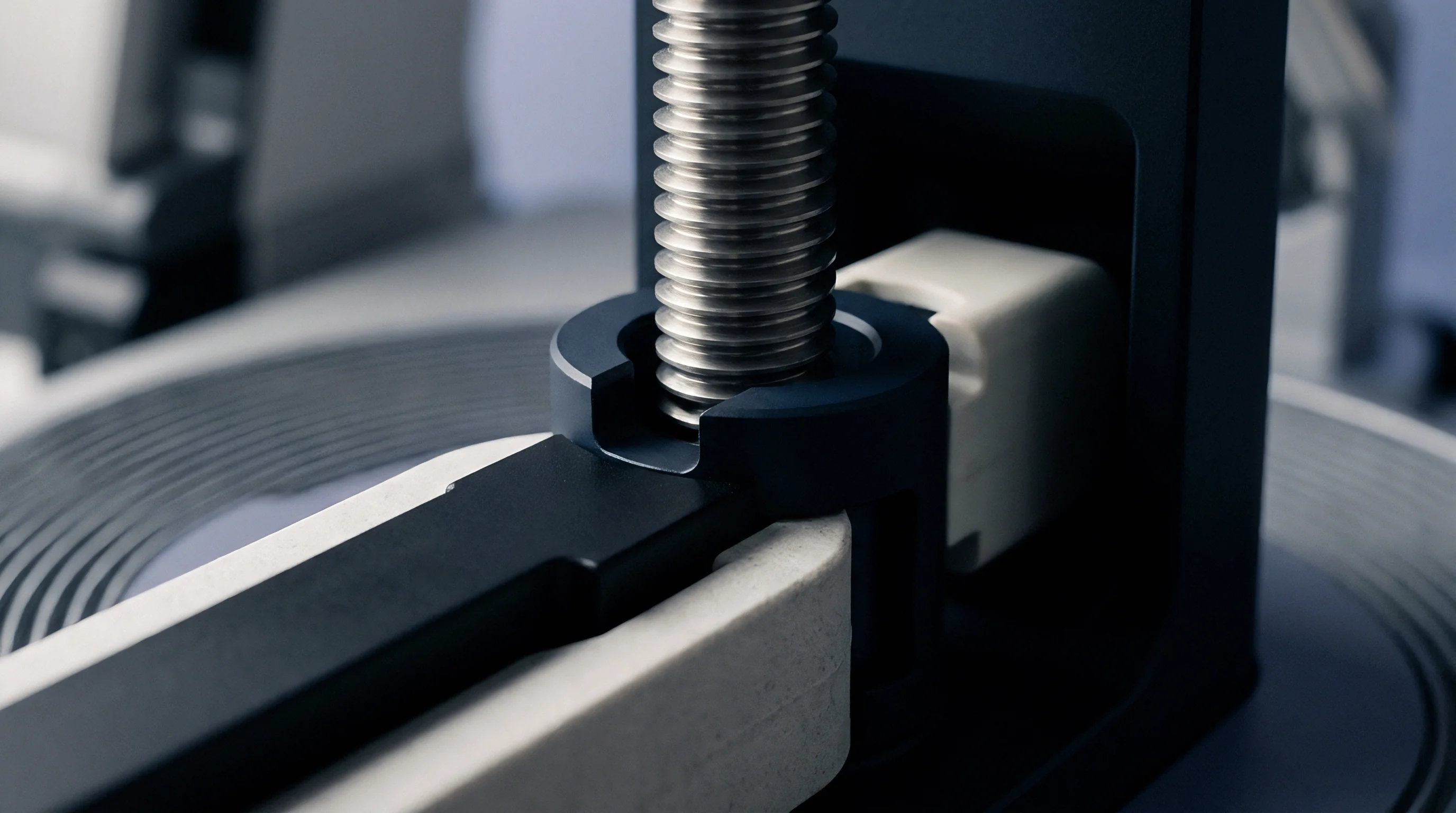
Unconstrained post-cure processing introduces risk if part support fixture design is inadequate. Gravity sag during high-temperature dwell cycles introduces permanent creep deformation. Vacuum bagging or precise mechanical restraint fixtures prevent sag while permitting volumetric relaxation along primary stress vectors.
Applying geometric offsets directly to master molds before verifying post-cure relaxation profiles guarantees expensive secondary machining.
Dwell
Hold times during thermal processing dictate the degree of structural relaxation achieved prior to component assembly. Establishing empirical dwell parameters balances plant throughput limits against long-term dimensional stability requirements.
Thermal Dwell Parameters and Stage Gate Controls
Process quality gates evaluate temperature distribution uniformity throughout part ramp and hold periods. Thermocouple arrays positioned at thick and thin section transitions confirm all laminate regions achieve required vitrification temperatures. Stage gate clearance relies on achieving minimum relaxation dwell durations calculated by integrated kinetic solvers.
As stress relaxes over time, mold geometry and tooling surfaces directly dictate the final shape of the component.
Cooling rates post-dwell control frozen-in thermal stress magnitudes. Rapid quenching traps steep thermal gradients across the laminate thickness, multiplying long-term post-cure creep driving forces. Controlled slow cooling at rates below two degrees Celsius per minute minimizes internal thermal stress generation.
Quality Dossiers and Commercial Risk Allocation
Contractual terms dictate liability assignments when long-term post-cure distortion exceeds dimensional assembly allowances. Manufacturing compliance records must include full cure cycle thermal histories, post-cure temperature tracking logs, and dynamic mechanical analysis material verification data. Detailed quality dossiers prove adherence to specified processing parameters, defending composite fabricators against secondary distortion claims.
Including ISO 25754 dimensional stability compliance provisions in procurement contracts shifts warpage remediation expenses back to component fabricators.