Designing Stage Gate Criteria for Environmental Machine Tool Capability Qualification
Stage gate criteria for machine tool environmental qualification enforce thermal stability hold points from foundation cure through seasonal production runs.

Draft
Precision machine tools placed on a general factory floor encounter local temperature swings that warp structural loop geometry before the cutting tool touches metal. A four-degree rise in shop air between sunrise and mid-afternoon expands a two-meter cast-iron column by eighty-eight micrometers, shifting the spindle nose relative to the pallet receiver. Machining centers certified to hold sub-ten-micrometer tolerances at a vendor assembly plant frequently yield out-of-spec workpieces within forty-eight hours of installation.
The difference stems from the environmental boundary conditions governing the machine enclosure during active cutting cycles.
Air speed across open bays varies hourly. Loading dock doors admit cold drafts that strike one side of a machine base while overhead radiant heaters warm the opposite casting. This asymmetric thermal loading introduces bending moments across linear guideways, twisting the physical coordinate system of the machine.
Facilities teams often install machine tools without measuring localized air velocity, floor slab conduction, or daytime solar radiation patterns. The resulting dimensional variation appears in production as unexplained tool offset adjustments and premature scrap.
Ambient air stratification inside an uninsulated high-bay factory induces measurable angular pitch in vertical machining columns.
Cooling currents circulating through standard ventilation ducts aggravate structural distortion when directed toward sensitive machine elements. High-velocity air currents strip heat unevenly from exposed ballscrews, hydraulic manifolds, and linear scales. Enclosed machine tools resist ambient disturbance better than open-frame units, yet sheet metal guards act as heat exchangers that trap stagnant air pockets around structural ribs.
When shop air temperatures fluctuate rapidly, the outer skin of the machine reacts within minutes, while the internal casting core lags by hours. This thermal hysteresis sets up persistent internal stresses that displace the tool center point.
- Asymmetric convective currents strip heat from external casting walls while insulated internal ribs retain operational heat.
- Direct solar radiation penetrates perimeter windows to create seasonal angular distortion across structural beds.
- Overhead radiant heating warms machine columns while concrete slab foundations sink thermal energy into the earth.
- Localized draft velocity exceeding zero point two meters per second alters linear glass scale thermal expansion rates.
Machine enclosures slow external air convection. Thermal gradients bend heavy machine columns. Plant engineers who measure only ambient dry-bulb temperature miss the localized conduction paths linking the factory foundation to the machine bed.
Subsurface ground temperatures remain stable throughout the year, but the top thirty centimeters of an uninsulated concrete floor cycle with daytime production activity. This differential creates a continuous heat sink beneath the leveling feet of the machine, forcing the lower structural joints into a concave bow. Machine vendors commonly insist that site air velocity falls outside their warranty schedule whenever localized drift exceeds five micrometers across twenty-four hours.

Gate
Commissioning equipment across fluctuating workshop conditions demands definitive hold points tied to physical stability criteria. Buyers who release capital expenditure milestones based on dry run axis motion discover that environmental variations invalidate factory buyoff data. A structured stage gate sequence prevents the transfer of environmental risk from the builder to the operating plant.
Each gate binds capital disbursements to verified thermal stability indices under simulated and actual production conditions.
Factory acceptance testing represents the baseline stage, conducted in the climate-controlled facility of the machine builder. This gate establishes whether the mechanical assembly meets geometric accuracy when external disturbances approach zero. Thermal drift testing during this phase isolates machine-induced heat from ambient effects, setting the benchmark for site installation.
Moving equipment to the customer site introduces uncontrolled variables that void builder test certificates if intermediate containment measures fail.
Thermal stability benchmarks established in builder cleanrooms degrade immediately upon delivery to uninsulated workshop bays.
Site installation initiates the structural and environmental stabilization phase. The foundation transmits ground vibrations. Concrete floors react slowly to temperature.
Bolting a multi-axis milling center to a green concrete slab introduces mechanical strain as the substrate cures and shrinks over months. Environmental qualification stage gates govern this transition by measuring baseline drift before the spindle ever runs production parts.
- Factory baseline qualification establishes volumetric positioning accuracy under controlled twenty-degree conditions, holding ten percent of total contract value until laser interferometer plots pass ISO 230-2 tolerances.
- Site environmental stabilization enforces a minimum three-week concrete cure and a forty-eight-hour unpowered soak test on the customer floor, releasing twenty percent of project funds upon verification of thermal stability.
- Dynamic operational qualification measures spindle growth, ballscrew heating, and environmental variation error under a simulated forty-hour duty cycle, holding fifteen percent of payment against drift thresholds.
- Extended production hold tracks process capability across three shifts and seasonal weather shifts, releasing the final retainage once statistical tolerance indices remain above target values.
Sequential Commissioning Milestones from Factory to Foundation
Passing from builder release to foundation anchoring requires rigorous verification of shop floor stability. The primary environmental gate checks the temperature gradient across the three physical axes of the proposed machine site over a continuous one-hundred-and-sixty-eight-hour period. Ambient variations exceeding one degree Celsius per hour disqualify the site from installation until air management systems receive dampening baffles.
Foundation isolation joints must isolate the machine slab from surrounding forklift transit aisles to prevent impact shock from misaligning internal leveling wedges.
Leveling checks run twice daily during site stabilization reveal whether the foundation slab experiences curling from differential moisture loss. If leveling indicators drift more than two arcseconds between morning and evening readings, the machine bed remains unbolted. Anchor bolts tightened prematurely against an unseasoned foundation warp the internal guideways, baking permanent geometric error into the assembly.
Stage gates forbid the commencement of laser calibration until foundation drift stabilizes below baseline thresholds.
Can Foundation Isolation Counteract Daytime Heat Ingress?
Thermal isolation trenches lined with elastomeric foam isolate machine tool foundations from horizontal heat conduction across the general factory slab. Concrete mass beneath the machine acts as a thermal ballast, dampening the amplitude of diurnal temperature waves. A two-meter-deep foundation block delays surface temperature peaks by up to twelve hours, shifting the thermal expansion phase into off-shift periods.
This thermal inertia reduces instantaneous coordinate distortion during peak afternoon operating hours.
Trench depth and isolation barrier material dictate the effectiveness of horizontal thermal attenuation. Polyurethane isolation mats prevent vibrational transmission while resisting oil, coolant, and ground moisture penetration. When radiant floor heating or shallow perimeter building footings introduce thermal differentials, foundation isolation prevents localized thermal bowing of the machine anchor base.
Foundation curing time doubles whenever soil moisture exceeds baseline readings taken during excavation.
| Gate Milestone | Environmental Boundary | Measurement Protocol | Acceptance Criterion | Commercial Consequence |
|---|---|---|---|---|
| Gate 0: Site Audit | Ambient drift under 1.5 K/hr | 7-day telemetry logging | Shop gradient under 0.8 K/m | Site prep modification order |
| Gate 1: FAT Baseline | Builder facility at 20 ± 0.5 °C | ISO 230-2 step laser run | Positioning within 0.006 mm | Factory release authorization |
| Gate 2: Foundation Soak | Customer bay at 18 to 26 °C | Electronic level logging | Tilt drift under 3 arcsec/24hr | Grouting approval signoff |
| Gate 3: Dynamic SAT | Chiller delta under 0.5 K | ISO 230-3 drift sequence | EVE drift under 0.012 mm | Line entry authorization |
| Gate 4: Production Hold | Three-shift ambient cycling | Statistical SPC run of parts | Cpk exceeding 1.67 on criticals | Final escrow retainage release |
Acceptance Run Parameters and Workpiece Soak Cycles
Raw billets brought into the machining cell from an external warehouse carry foreign thermal states that ruin tolerance verification runs. An aluminum forging stored in an unheated outdoor rack at five degrees Celsius requires twenty-four hours inside the machine enclosure to match ambient coolant temperatures. Machining cold raw material causes rapid shrinkage during final inspection, masking machine positional errors behind workpiece contraction.
Stage gate criteria define minimum material soak durations and coolant bath immersion periods before the buyoff sequence begins.
Inspection room transfer introduces a secondary thermal shock that distorts quality data. Coordinate measuring machines housed in metrology labs held at twenty degrees Celsius register artificial geometric deviations if parts exit the machine tool at twenty-six degrees. The dynamic site acceptance gate commands that workpieces remain bathed in recirculating machine coolant until core material temperatures match the machine casting within zero point five degrees.
Skipping this thermal equalization step invalidates all stage-gate quality signoffs.
Spindle
Rotational drives generate internal thermal energy that challenges the stability of precision machine tools. Spindle rotation generates localized heat. Bearings, winding resistance, and tool clamping mechanisms discharge thermal energy directly into the spindle carrier casting.
As thermal energy dissipates through the housing, the spindle centerline moves forward and upward relative to the table reference points. This displacement compounds with ambient thermal drifts, producing volumetric positioning deviations that ruin tight-tolerance bore locations.
Linear encoders register expansion directly. Coolant temperature dropped four degrees. The chiller failed during second shift.
When cutting fluid temperature deviates from casting temperature, the fluid functions as a massive, distributed heating or cooling element across the workpiece and the machine table. Chilled fluid striking a warm cast-iron table induces immediate top-surface contraction, bowing the center of the table upward toward the cutting tool. Machine builders often equip machines with closed-loop through-spindle refrigeration systems, yet misconfigured chiller hystereses cause cyclic dimensional wave patterns in finished surfaces.
Internal spindle bearing friction at twelve thousand revolutions per minute displaces the tool nose by forty micrometers along the vertical axis without active thermal stabilization.

Internal Motor Dissipation and Axis Growth
Electric spindle motors integrate directly into the structural housing of modern vertical and horizontal milling machines. Stator losses and rotor resistance convert up to fifteen percent of supplied electrical power into sensible heat inside the headstock. Without active liquid cooling jackets, this concentrated thermal output migrates into the structural slide, causing the Z-axis to expand downward into the workpiece.
Ball screw rotation adds friction along linear axes, expanding drive screws and causing pitch-dependent position feedback errors on machines lacking optical linear glass scales.
Axis tilt exceeds five arcseconds. Position errors compound across three axes. Modern computer numerical controls apply software compensation matrices to counteract spindle growth based on thermocouple inputs.
These mathematical corrections function reliably only when thermal equilibrium holds. During the initial ninety minutes of machine warm-up, non-linear thermal expansion gradients defy simple polynomial models, causing erratic tool tip displacement that fails stage-gate process capability criteria.
Coolant Chilling Tolerances and Fluid Recirculation
Coolant management systems dictate the thermal equilibrium of the entire cutting zone. Flooding a machining envelope with three hundred liters per minute of cutting fluid establishes the fluid as the primary thermal driver of both tool and workpiece. If the coolant chilling circuit permits a hysteresis of plus or minus two degrees Celsius, the entire machine structural frame expands and contracts in rhythm with the chiller compressor cycling.
This cyclic thermal pulse transfers directly to the finished workpiece geometry, producing distinct surface finish steps and dimensional bandings.
Stage gate criteria require precision differential chillers that slave fluid temperature directly to the machine bed temperature rather than to the ambient air. Tracking the machine casting within plus or minus zero point three degrees Celsius prevents thermal energy transfer between the cutting fluid and structural castings. Settling tanks containing chips and grinding swarf act as supplementary heat reservoirs if not properly isolated.
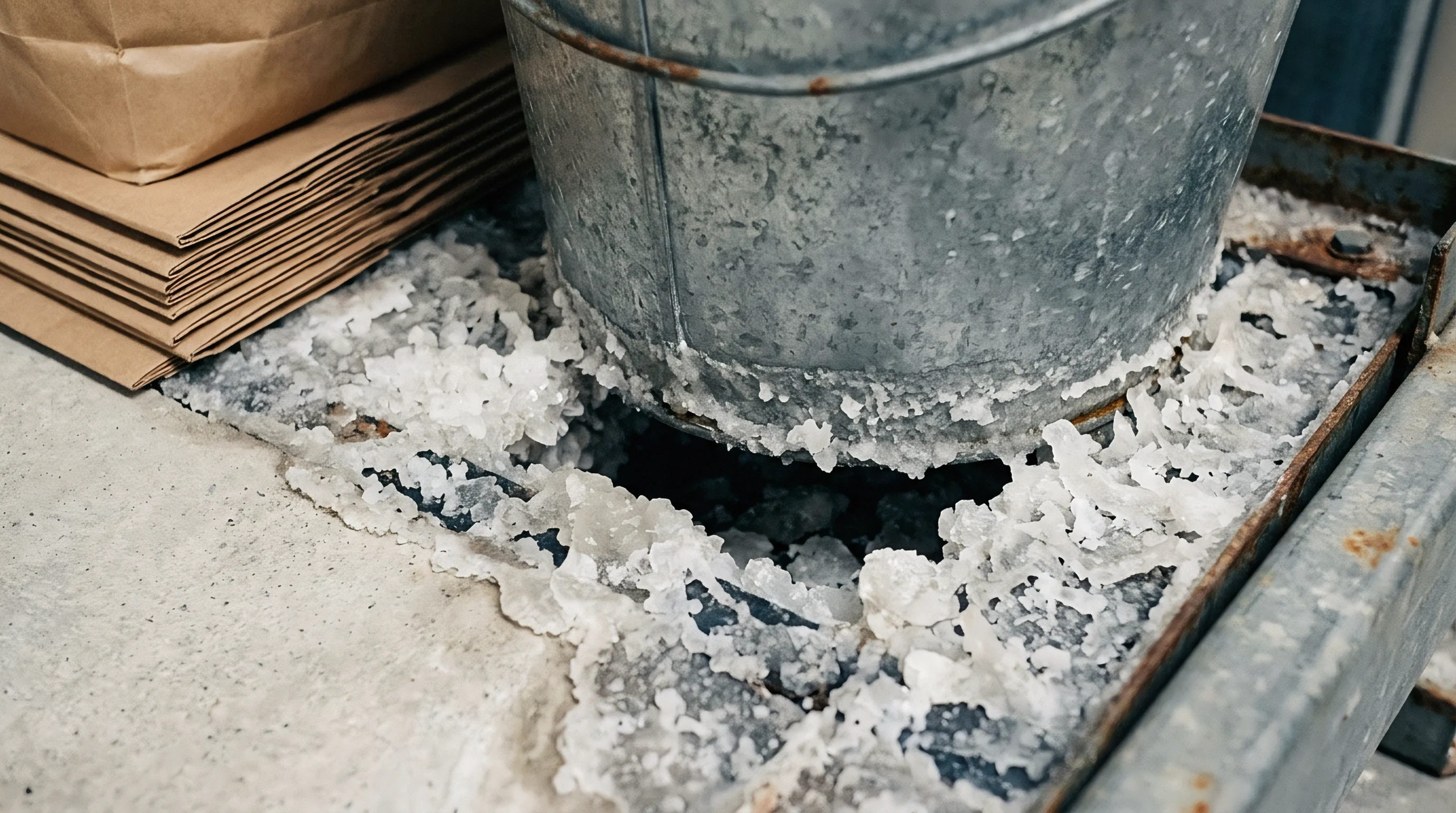
Chips settling on internal sheet metal trays transfer cutting heat back into the machine base, warping the lower guideway geometry.

How Do Thermal Offsets Decay across Extended Dwells?
Machine interruptions during tool changes, pallet shuttling, or shift breaks cause abrupt thermal cooling cycles across structural components. When a spindle running at fifteen thousand revolutions per minute stops for thirty minutes, bearing temperatures collapse toward ambient levels while the surrounding cast iron remains elevated. Restarting the cut immediately produces a dimensional step on the workpiece because the tool center point has contracted inward relative to the pre-stop baseline.
Software thermal compensation models struggle to predict this asymmetric decay curve.
Thermal memory effects persist across extended dwell periods, producing localized cold spots where external fans or high-pressure coolant washes contact bare metal. The structural recovery rate depends on the mass distribution of the headstock assembly and the circulation rate of internal lubricant fluids. Qualification protocols demand that stage gates include a simulated lunch break interruption followed by an immediate critical tolerance cut.
Machines failing to re-establish positional accuracy within five minutes of restart fail the dynamic environmental qualification gate.
| Thermal Error Source | Standard Shop (ΔT = 4.5 K) | Stabilized Bay (ΔT = 1.0 K) | Active Closed-Loop Enclosure |
|---|---|---|---|
| X-Axis Ballscrew Expansion | 0.042 mm | 0.009 mm | 0.002 mm |
| Y-Axis Column Thermal Tilt | 0.038 mm | 0.008 mm | 0.003 mm |
| Z-Axis Spindle Growth (12k RPM) | 0.045 mm | 0.015 mm | 0.004 mm |
| Bed Conduction Curvature | 0.019 mm | 0.004 mm | 0.001 mm |
| Coolant Chiller Cycling Band | 0.024 mm | 0.006 mm | 0.002 mm |
| Total Volumetric Uncertainty | 0.076 mm | 0.019 mm | 0.006 mm |
| Values calculated for structural cast iron with thermal expansion coefficient of 11.0 × 10⁻⁶ / K over an 800 mm structural loop, assuming uncompensated linear expansion vectors under ISO 230-3 testing definitions. | |||

Volumetric Displacement under Twenty Four Hour Excitation
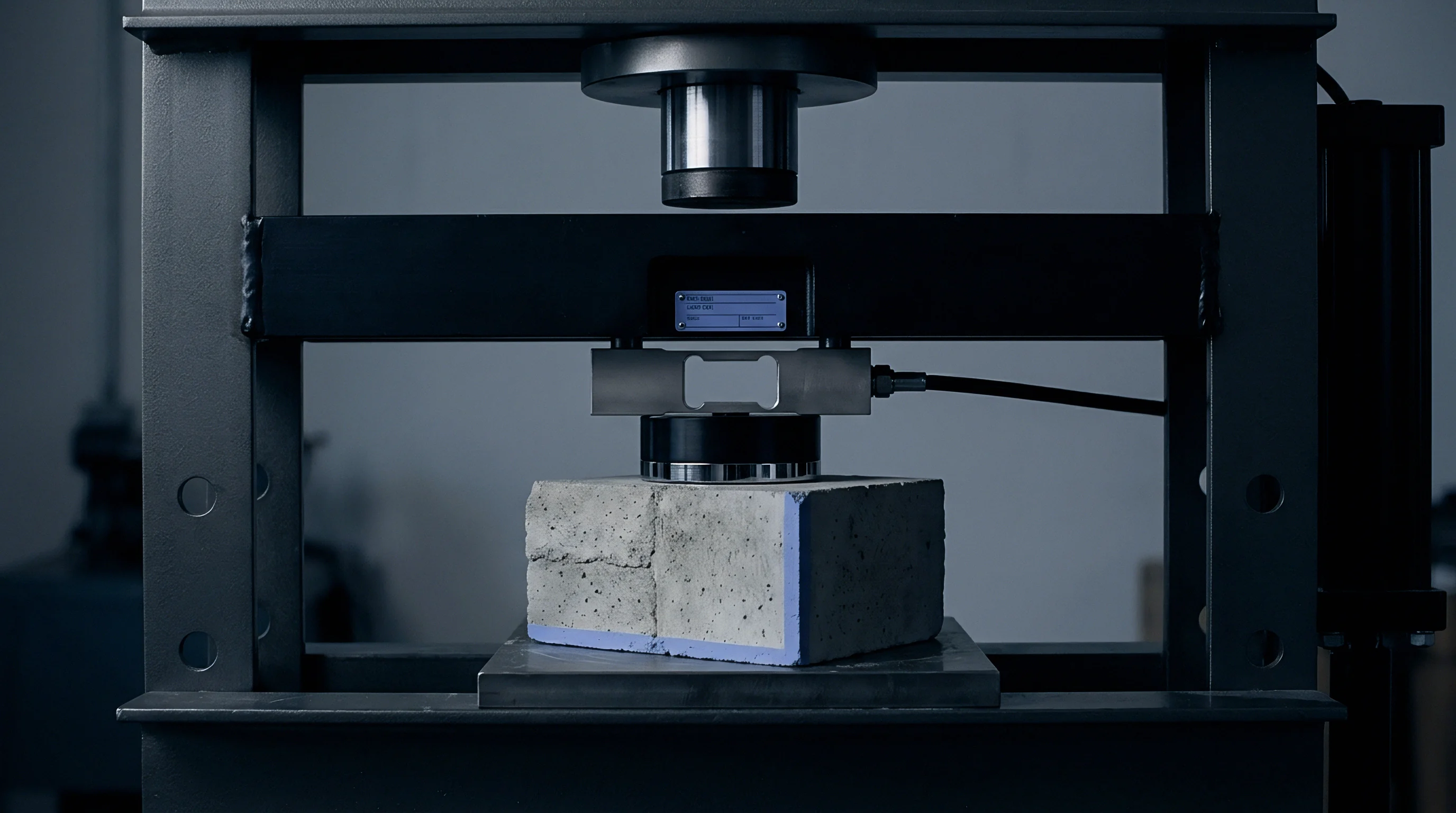
Consider an operational scenario involving an aerospace titanium bracket machined across an eight-hundred-millimeter envelope. The blueprint specifies true position tolerances of twenty-five micrometers across all hole patterns. The baseline machine configuration relies on cast-iron structural elements with an expansion coefficient of eleven micrometers per meter per Kelvin, paired with C1 grade ballscrews exhibiting an expansion rate of eleven point seven micrometers per meter per Kelvin.
During an unconditioned summer shift, ambient factory temperature rises from nineteen degrees Celsius at six in the morning to twenty-four point five degrees at two in the afternoon, yielding an ambient delta of five point five Kelvin.
Uncontrolled ambient heating expands the unconstrained eight-hundred-millimeter ballscrew by fifty-one point five micrometers. Concurrently, the vertical column warms non-uniformly, tilting the headstock assembly forward and creating thirty-two micrometers of Abbe offset error at the tool nose. Spindle motor operation at eight thousand revolutions per minute adds thirty-five micrometers of downward expansion along the Z-axis.
When cutting fluid fluctuates by two point five Kelvin due to on-off chiller regulation, the workpiece expands an additional twenty-eight micrometers across its clamping length. Summing these unmitigated vectors yields volumetric tool point uncertainty exceeding one hundred micrometers, completely consuming the allowable twenty-five-micrometer tolerance envelope. Whether external chiller loops induce high-frequency displacement in micro-milling heads remains an open dispute among thermal metrology specialists.

Audit
Diagnostic verification of machine behavior requires comprehensive evidentiary records that track ambient inputs alongside physical axis shifts. Plant management teams often discover discrepancies between certified machine capability reports and shop floor scrap tallies. The disconnect traces directly to documentation gaps during initial acceptance testing.
Proving that a machine tool satisfies environmental performance criteria requires continuous high-frequency logging across temperature, structural position, and vibration channels.
Telemetry records confirm chiller oscillations. The audit team rejected the run. Site acceptance dossiers must contain synchronized time-series files correlating shop floor temperature sensors with laser measurement data over full diurnal periods.
Without continuous telemetry, machine builders attribute dimensional non-conformance to operator error, cutting tool wear, or program feed rates. Complete data records strip away subjective debate, anchoring disputes in physical telemetry.
Acceptance dossiers lacking synchronized continuous environmental logs leave buyers legally exposed when machine positioning drifts under seasonal shop conditions.
Diligence teams examining machine qualification dossiers scrutinize environmental variation error charts captured under ISO 230-3 standards. This test runs the machine through defined kinematic cycles without cutting metal, continuously measuring the relative position between the tool holder and the workpiece table using capacitive sensors or precision test mandrels. Spikes in the resulting drift curves point directly to external environmental disturbances or internal cooling failures.
Gaps in logging timestamps signal unrecorded testing halts that obscure thermal instability.
- Time-stamped temperature logs record ambient air, machine bed, spindle housing, and coolant reservoir readings at one-minute intervals.
- Drift displacement files register capacitive probe deflection across X, Y, and Z axes during twenty-four-hour continuous soak sequences.
- Calibration certificates for test instrumentation prove traceability of displacement sensors and laser interferometers to national standards laboratories.
- Environmental disturbance notes document overhead door openings, weather transitions, and neighboring equipment startups during qualification runs.

Telemetry Records and Environmental Sensor Logs
Environmental qualification demands dense sensor placement across the physical machine structure. Minimum telemetry configurations mount four-wire platinum resistance thermometers at the machine base, the upper column, the spindle housing, and inside the coolant delivery line. Two additional sensors log ambient air temperatures at table height and two meters above the enclosure roof.
Logging intervals must not exceed sixty seconds to capture rapid convective air currents caused by factory ventilation shifts.
Data integrity checks verify that environmental logs remain continuous throughout the qualification testing window. Any discontinuity in temperature or displacement records voids the test run, resetting the twenty-four-hour soak clock. Sensor wiring must use shielded twisted-pair cabling routed away from high-power variable frequency drives to prevent electromagnetic noise from contaminating temperature data.
Audit teams reject datasets exhibiting noise spikes or missing time slices.
| Sensor Channel | Physical Location | Sensor Type | Sampling Rate | Permissible Band |
|---|---|---|---|---|
| T1: Ambient Low | Table level, 1 m from enclosure | PT100 Class A RTD | 1 reading / 30 sec | 20 ± 1.5 °C |
| T2: Ambient High | Enclosure roof height | PT100 Class A RTD | 1 reading / 30 sec | Gradient under 1.0 K |
| T3: Machine Bed | Central casting web, lower base | Magnetic surface RTD | 1 reading / 60 sec | Drift under 0.5 K/shift |
| T4: Spindle Nose | Front bearing housing cap | Embedded thermistor | 1 reading / 10 sec | Rise under 8.0 K total |
| T5: Cutting Fluid | Internal delivery manifold | Immersion RTD probe | 1 reading / 10 sec | Bed delta under ± 0.3 K |
| D1-D3: Tool Drift | Spindle to table test fixture | Eddy current probes | 10 Hz continuous | Total under 0.010 mm |
Statistical Process Indices under Ambient Swings
Demonstrating machine capability requires translating raw thermal drift figures into statistical capability metrics. Standard qualification runs mill identical test pieces across three eight-hour production shifts to capture the entire diurnal temperature cycle. Quality engineers calculate process capability and performance indices on critical geometric features, specifically hole locations, planar perpendicularity, and slot widths.
A machine operating within an unstable thermal environment may demonstrate acceptable short-term capability while failing long-term performance thresholds.
When environmental swings expand machine castings, feature measurements drift monotonically away from nominal dimensions. This systematic bias shows up in quality charts as a deteriorating process performance index despite stable within-subgroup variation. If the long-term capability index drops below one point six seven on critical features, the environmental stage gate rejects the installation.
Incomplete soak-test dossiers force plant owners to absorb recurring scrap rates and carry the entire expense of field rework.
Release
Final project milestone signoffs tie equipment handover to commercial escrow disbursements. The final payment remains in escrow. Warranty coverage ends at the dock.
Plant finance committees expose capital funds to massive write-downs when project managers authorize final payments before machine tools clear environmental qualification gates. Standard vendor contracts mandate final settlement upon initial part completion, shifting all subsequent thermal remediation expenses to the customer plant.
Withholding the final progress payment protects the buyer against latent environmental sensitivities that emerge during seasonal weather transitions. Commercial agreements must tie release of the final twenty percent retainage to thirty consecutive days of uninterrupted production conforming to capability criteria. If thermal drift forces continuous manual offset updates or generates recurring dimensional scrap, the warranty agreement must compel the builder to supply active compensation hardware or supplementary coolant chilling units at vendor expense.
Holding capital retainage in escrow until winter-to-summer seasonal transition cycles prove machine thermal stability prevents costly post-installation litigation.

Commercial Escrow Conditions and Performance Signoff
Escrow contracts define precise physical deliverables required before banking institutions release remaining project funds. Documentation packages must include validated ISO 230-3 thermal drift test reports, uninterrupted seventy-two-hour environmental sensor logs, and verified statistical capability studies running across production shifts. If the equipment fails to sustain capability indices above agreed limits under normal shop floor conditions, the contract grants the buyer the unilateral right to draw on escrow funds to execute environmental remediations.
Remediation expenditures covered by escrow include installing localized environmental curtain enclosures, adding secondary foundation isolation cuts, or retrofitting high-precision differential chillers. Vendor sales representatives resist conditional retainages by promising future software upgrades or service adjustments. Seasoned operations leaders reject verbal performance assurances, insisting that physical validation precede final commercial settlement.
Financial release signatures represent the single effective leverage point for enforcing environmental compliance.
Allocation of Liability for Thermal Drift Excursions
Sales agreements must establish unequivocal liability boundaries between ambient facility conditions and machine thermal design limits. Contracts define an operational temperature envelope, specifying the allowable ambient temperature range, maximum rate of air temperature change, and permissible floor vibration spectrum. If the plant facility maintains conditions within these defined parameters yet the machine tool fails to produce conforming workpieces, the builder bears sole financial responsibility for corrective actions.
Corrective actions encompass structural modifications, machine repositioning, and compensation for scraped production raw material. When plant conditions breach the contractually defined envelope, responsibility shifts to the plant operations team to install air management hoods or structural foundation dampening. Inserting an ISO 230-3 environmental variation error clause shifts the financial burden of secondary foundation modifications directly back to the equipment supplier before final payment leaves escrow.