Capillary Rheometry Entrance Corrections for Polyolefin Extrusion Processing
Bagley entrance corrections isolate true melt shear stress from elastic inlet losses, preventing severe tool design errors and extruder pressure overloads.
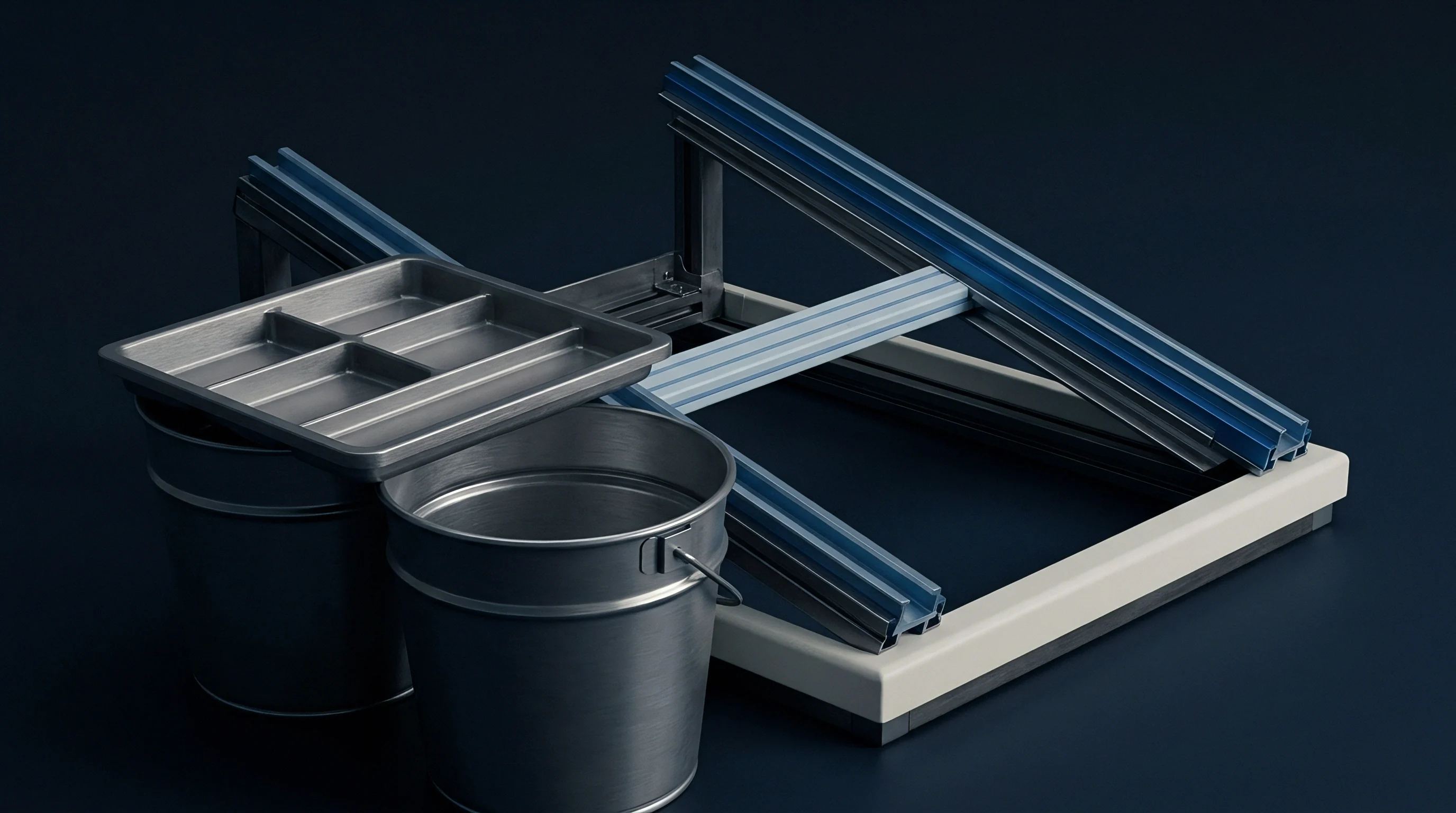

Constriction
A twin-screw extrusion line running high-density polyethylene film compound stalls when barrel pressure upstream of the breaker plate spikes past 340 bar at twenty-four revolutions per minute. Plant records attribute the shutdown to screen-pack blinding. Inspection of the removed mesh packs shows bare wire cloth free of degraded gels, carbon specks, or unmolten pellets.
The line choked because the tooling specification relied on uncorrected capillary rheology data, underestimating the pressure drop across the converging die adapter by forty-two percent. Raw viscometer output treats the entire resistance inside a test barrel as steady shearing friction along the capillary wall. Polyolefin melts do not behave like simple viscous fluids when entering a restricted channel.
Molten polymers transition from a wide reservoir into a narrow capillary orifice through an abrupt funnel geometry. As polymer chains funnel inward, the fluid accelerates along streamlines that converge sharply toward the centerline. This acceleration imposes severe extensional deformation on long molecular backbones.
Polyethylene and polypropylene macromolecules stretch, disentangle, and orient in response to the spatial velocity gradient. Melt elasticity compounds flow resistance. The energy expended in reorganizing and stretching these entangled networks registers on the rheometer pressure transducer as a steep, localized pressure loss directly at the die inlet.
In standard laboratory tests with short capillary dies, this localized entrance pressure drop accounts for thirty to eighty percent of the total measured force.
Converting raw capillary pressure signals directly into shear viscosity assigns elastic entrance losses to channel drag.
Assigning this entrance loss to steady shear flow inside the die land produces gross calculation errors. True wall shear stress drops. If an engineer takes the gross pressure drop recorded by a rheometer transducer and divides it by the die geometry using basic poiseuille pipe equations, the calculated wall shear stress incorporates both pure shearing friction and elastic entry dissipation.
The resulting apparent shear viscosity overstates the true resistance of the polymer melt inside long die channels. Extrusion dies sized with these inflated viscosity curves suffer from miscalculated land lengths, unbalanced manifold distribution, and incorrect motor torque projections.
Linear polyolefins behave differently from branched architectures under identical convergence angles. High-density polyethylene and linear low-density polyethylene exhibit high resistance to shear thinning at low rates, followed by sharp shear thinning and early onset of surface melt fracture. Low-density polyethylene produced through high-pressure autoclave or tubular reactors contains extensive long-chain branching.
These long branches generate massive secondary recirculating vortices in the die entry corners, acting as energetic dampers that swallow extruder pump pressure before the melt enters the die land. Ignoring entrance corrections blurs the rheological distinction between a narrow-distribution metallocene grade and a broad-distribution autoclave resin. Tooling engineered on uncorrected data causes undersized extruder drive motors to overheat, blow rupture disks, and trip thermal overload breakers during initial resin trials.


Bore
The standard methodology for isolating entrance resistance relies on testing the resin through multiple capillary barrels of identical diameter but differing lengths. E. B. Bagley established this protocol by measuring total pressure drop across a series of dies spanning length-to-diameter ratios from five to thirty at identical shear rates. Plotting total pressure drop against length-to-diameter ratio produces a straight line at each fixed apparent shear rate.
Extrapolating this line backward to a theoretical length of zero yields an intercept on the pressure axis. This intercept represents the entrance pressure drop, designated as the Bagley end correction. Subtracting this value from total die pressure drop isolates the true shear stress sustained along the capillary wall.
Is Orifice Die Pressure Sufficient across Diverse Polyolefins?
Testing polyolefin melts on twin-bore capillary rheometers frequently uses an orifice die possessing an effective length near zero alongside a long capillary die. The orifice die measures the entrance pressure drop directly in a single test stroke, eliminating the labor of running three or four separate long dies. Data fidelity depends on resin architecture.
For linear low-density grades, an orifice die with an aspect ratio of 0.25 to 1.0 captures the entrance loss within acceptable industrial tolerances. For broad molecular weight high-density grades or highly branched low-density resins, an orifice die introduces measurement artifacts. Melt elasticity causes pronounced post-extrusion swell directly at the orifice exit, generating a residual exit pressure drop that distorts the zero-length reading.
Extrusion lines tolerate little variance. When processing high-molecular-weight film resins, accurate separation of shear and extensional components dictates correct tooling sizing. Table 1 outlines empirical entrance corrections determined across common polyolefin types at standard processing temperatures, displaying the substantial magnitude of entrance pressure loss relative to capillary wall shear stress.
| Resin Type and Grade | Melt Index (g/10 min) | Test Temp (Celsius) | Apparent Shear Rate (1/s) | Total Pressure Drop L/D 16 (bar) | Entrance Loss Delta P_e (bar) | End Correction e (Die Diameters) | Viscosity Error Uncorrected (%) |
|---|---|---|---|---|---|---|---|
| Homopolymer PP Injection | 12.0 | 230 | 500 | 112 | 28 | 2.0 | 25.0 |
| Fractional Blow HDPE | 0.35 | 190 | 500 | 285 | 88 | 2.5 | 30.9 |
| Bimodal Film HDPE | 0.08 | 190 | 1000 | 460 | 165 | 2.9 | 35.9 |
| Tubular LDPE Film | 0.75 | 190 | 500 | 240 | 118 | 3.9 | 49.2 |
| Metallocene LLDPE Film | 1.00 | 190 | 1000 | 310 | 92 | 2.4 | 29.7 |
| Heterophasic PP Impact | 2.5 | 230 | 1000 | 265 | 76 | 2.3 | 28.7 |
Long dies minimize entrance effects. At a length-to-diameter ratio of thirty or forty, the entrance pressure drop contributes a smaller percentage to the total measured pressure than in a die with an aspect ratio of ten. Relying on long dies without applying a mathematical correction introduces systematic error into constitutive equations used for computer-aided die design.
The error propagates directly into crosshead manifolds, coat-hanger sheet dies, and blown film spiral mandrels. When engineers input uncorrected viscosity curves into finite element flow packages, the solver calculates artificially high pressure gradients along feed channels and underestimates channel depth requirements.
Several distinct structural mechanisms generate experimental dispersion during capillary measurements:
- Polymer chain disentanglement occurs abruptly within the converging entry cone, generating localized dissipative heating that shifts local fluid temperature above the nominal setpoint.
- Pressure-dependent viscosity increases melt resistance inside long capillary barrels under high backpressures, introducing non-linear upward curvature into standard linear Bagley extrapolations.
- Wall slip velocity develops in linear polyethylene grades once shear stress surpasses critical thresholds between 0.10 and 0.18 megapascals, producing apparent shear rates higher than actual deformation rates.
- Exit pressure retention introduces positive normal stresses at the die discharge, causing zero-length orifice dies to read values slightly higher than true inlet dissipation alone.
International standard ASTM D3835 specifies using capillary dies with length-to-diameter ratios of at least sixteen when uncorrected data serves quality control records, rejecting short dies for absolute material specification.
ASTM D3835 mandates explicit documentation of whether reported shear viscosity values include Bagley corrections, because uncorrected indices fail legal compliance audits during technical disputes over raw material consistency.
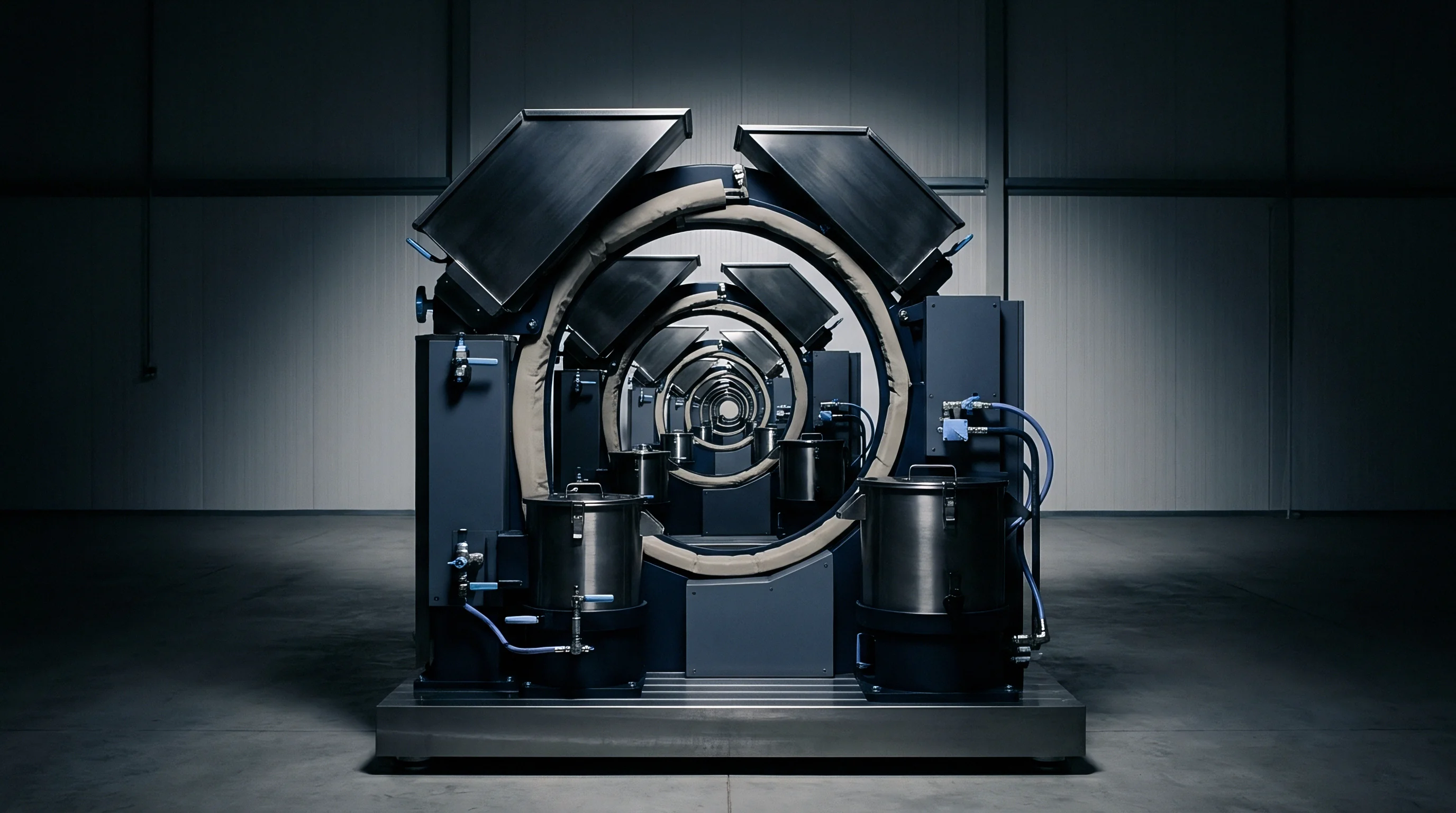

Vortex
Converging geometry upstream of a die entry creates distinct velocity fields determined by macromolecular architecture. Branched architectures create circulating vortices. In tubular and autoclave low-density polyethylene, extensional stresses build rapidly as fluid elements accelerate toward the capillary orifice.
Because the polymer cannot relax these stresses within the brief transit window, it shunts incoming volume away from the corners of the entry reservoir. Massive, stable annular vortices develop in the stagnant shoulders of the barrel upstream of the die face. These secondary recirculating zones act as elastic springs, continuously absorbing and dissipating pumping energy supplied by the rheometer piston or extruder screw.

Has Non-Linear Bagley Curvature Distorted Extruder Die Sizing?
Classical Bagley theory assumes that the relationship between total pressure drop and die length remains strictly linear across all aspect ratios. High-pressure processing of polyolefins violates this assumption. As extruder lines push throughput, barrel head pressures routinely exceed 500 bar.
At these magnitudes, the pressure-volume-temperature behavior of the polymer enters the piezoviscous regime, governed by the Barus equation where viscosity increases exponentially with hydrostatic pressure. Long capillaries experience elevated hydrostatic pressures along their initial lengths, increasing local viscosity and producing upward curvature on Bagley plots. Downward curvature occurs when viscous dissipation generates internal melt temperatures five to fifteen degrees higher than the barrel wall, thinning the fluid toward the exit.
A linear low-density polyethylene melt tested at 1000 reciprocal seconds exhibits an entrance loss of 92 bar against a total drop of 310 bar in an aspect ratio sixteen die.
Viscous heating generates barrel heat. When processing high-viscosity resins at commercial shear rates between 500 and 3000 reciprocal seconds, internal shear heating counteracts piezoviscous pressure stiffening. The mathematical challenge lies in separating pressure-induced thickening from temperature-induced thinning during data reduction.
Evaluating these effects sequentially isolates the true rheological parameters needed for accurate die fabrication:
- Raw pressure acquisition measures baseline pressure drop across three matched dies having length-to-diameter ratios of zero, sixteen, and thirty-two across target shear rates.
- Orifice subtraction verification cross-checks the direct orifice die reading against the extrapolated intercept derived from the longer dies to confirm linear alignment.
- Rabinowitsch correction calculates true wall shear rate from apparent shear rate by evaluating the non-Newtonian power-law index across adjacent shear steps.
- Piezoviscous parameter extraction evaluates residual non-linear curvature in the long die data to verify that pressure coefficients do not exceed 0.0015 bar inverse.
F. N. Cogswell demonstrated that entrance pressure drop provides a practical measurement of apparent extensional viscosity. Converging flow into a die involves pure shear along channel walls and pure extension along the central flow axis. By modeling the inlet vortex as an equilibrium between shearing friction and extensional resistance, Cogswell formulated analytical expressions converting entrance pressure loss into extensional stress and extensional strain rate.
This method grants production plants rapid insight into melt strength without procuring expensive tensile filament rheometers. High extensional viscosity calculated via Cogswell correlates directly with blown film bubble stability and parison sag resistance in blow molding operations.
Melt fracture limits extruder speed. Uncorrected capillary evaluations obscure the onset of flow instabilities. At high shear stresses, linear polyolefins exhibit sharkskin, followed by slip-stick alternating flow and gross catastrophic melt rupture.
Because elastic entrance losses reflect extensional stress concentrations at the die lip, tracking changes in entrance pressure drop over varying temperature sweeps pinpoints the processing boundary where surface defects emerge. Tooling rework consumes plant cash. A tool designer calculating die land friction from uncorrected data produces channels with excessive land length, driving extruder discharge pressures directly into the melt fracture regime during routine production campaigns.
How the interplay between extensional vortex growth and localized wall slip shifts the apparent entry correction across high-temperature masterbatch carrier resins remains unresolved in existing literature.

Throughput
Volumetric yield from a modern polyolefin manufacturing train depends directly on head pressure stability at the extruder discharge. A production line running high-clarity cast film compound at 1200 kilograms per hour operates under razor-thin pressure allowances. If the feedpipe, screen changer, adapter block, and flat die generate an aggregate pressure drop of 240 bar when the drive motor reaches ninety percent maximum torque, adding twenty bar of unexpected restriction forces a production slowdown.
Die flow balancing requires true shear viscosity curves. Sizing multi-cavity manifold tooling with uncorrected viscosity values skews flow distribution, starving outer die edges while oversupplying the center.
Uncorrected data misleads tooling designers. Table 2 models the physical dimensional discrepancy and operational pressure penalty that occurs when an industrial pipe extrusion die is sized using raw apparent viscometry versus true Bagley-corrected data. Sizing calculations target a high-density polyethylene pipe profile running at twenty-five meters per minute.
| Process Design Parameter | Calculated with Uncorrected Viscosity | Calculated with Bagley-Corrected Viscosity | Physical Variance | Impact on Line Operation |
|---|---|---|---|---|
| Target Shear Rate at Die Wall (1/s) | 380 | 380 | 0 | Fixed target production rate |
| Assumed Melt Viscosity (Pa-s) | 980 | 695 | +285 Pa-s (+41%) | Viscosity severely overestimated |
| Die Land Length Sized for Pressure (mm) | 42.0 | 59.2 | -17.2 mm (-29%) | Die land manufactured too short |
| Actual Head Pressure in Service (bar) | 148 | 210 | -62 bar (-29%) | Insufficient backpressure on melt |
| Extrudate Swell Ratio at Die Lip | 1.45 | 1.22 | +0.23 (+19%) | Pipe wall thickness control lost |
| Melt Homogeneity Score (0-100) | 74 | 91 | -17 points | Incomplete color dispersion in pipe |
Pressure transducers drift during runs. Operating an extrusion line without rigorous Eingangskorrektur data creates severe compounding issues during resin grade transitions. When switching from an autoclave-produced low-density resin to a metallocene-catalyzed linear grade with identical nominal melt index, operators often discover the line will not run at the same screw speed.
The metallocene resin possesses a narrower molecular weight distribution, lower entrance pressure drop, but significantly higher shear viscosity at high deformation rates inside the die land. The extruder motor draws maximum amperage while line speed drops by twenty-five percent. Resolving this mismatch before tooling steel is cut avoids expensive factory delays.
Production engineering teams evaluate several technical parameters when qualifying incoming resin rheology dossiers:
- Capillary aspect ratio verification confirms that raw laboratory data utilized at least two dies with aspect ratio spreads exceeding fifteen units to ensure stable Bagley slopes.
- Temperature correction factors establish whether testing temperatures reflect actual melt stream temperatures measured via immersion thermocouple probes rather than barrel heating zones.
- Extensional stress limits identify the critical entrance pressure drop where parison draw and film bubble stability degrade during high-speed takeup.
- Rabinowitsch index consistency checks that non-Newtonian slope parameters fall between 0.28 and 0.42 for broad polyolefins, flagging uncorrected datasets.
Extrusion tooling sized on uncorrected viscosity curves generates excessive die swell and erratic gauge distribution across wide webs.
Resin technical service representatives routinely claim that laboratory melt flow rate values adequately characterize polymer processability, dismissing the necessity of multi-die capillary testing for standard extrusion tooling modifications.

Ledger
Capital commitments for new extrusion hardware hinge on accurate rheological auditing. When an enterprise signs a purchase order for a five-layer blown film line or a high-output polyolefin pelletizing system, the equipment vendor guarantees throughput based on specific resin rheology dossiers. If the material specification lists apparent viscosity measured on a single capillary die without entrance loss corrections, the legal foundation of the performance guarantee dissolves.
The tooling supplier manufactures die flow channels to match the provided data. When the line fails site acceptance testing because discharge pressures exceed design thresholds, resolving financial liability hinges on proving whether the supplied rheological dossier described true material properties or test artifacts.
Capital budgeting requires accurate tooling parameters. Purchasing custom extrusion heads costs between eighty thousand and four hundred thousand dollars per installation, with delivery lead times stretching from sixteen to thirty-six weeks. Re-machining hardened tool steel dies to correct flow imbalances or excessive pressure heads consumes four to six weeks of lost production time, accumulating thousands of dollars per day in unabsorbed facility overhead.
An operational audit of the resin data package before releasing tool drawings prevents these capital misallocations. Insisting on full Bagley-corrected flow curves represents a tiny fractional expense compared to commissioning delays.
True material characterization protects plant cash flow during long-term procurement agreements. When resin converters switch suppliers to shave five cents per kilogram off polymer feedstocks, melt index data sheets provide zero protection against processing failure. Two resins sharing identical melt flow rates of 2.0 grams per ten minutes can exhibit an entrance pressure loss difference of sixty bar under production shear rates.
The substitute resin will run hotter, load the extruder drive harder, and distort product dimensions unless tooling is modified to accommodate the altered elastic behavior. A disciplined procurement dossier requires true viscosity curves derived from multi-die testing across the operational shear envelope.
Melt elasticity governs die swell and dimensional stability long after the polymer exits the shaping land.