Managing Inventory Collateral in Third Party Warehouses
Managing third-party warehouse collateral requires tri-party attornment agreements, explicit lien waivers, real-time WMS reconciliation, and strict release controls to preserve lender priority.


Custody
Tri-party inventory financing depends on maintaining unbroken bailment over physical goods stored off the borrower’s premises. When a commercial borrower moves raw materials, intermediate components, or finished goods into a third-party logistics (3PL) facility, a UCC-1 financing statement isn’t enough to protect the lender. Physical control determines legal priority in insolvency.
Under a standard two-party setup, the warehouse holds goods as a bailee for the debtor, who keeps full authority to direct shipments, transfer stock between bays, and issue release orders. Protecting inventory collateral in a 3PL location means breaking that direct line of control and putting a tri-party framework in place that binds the warehouse operator straight to the lender.
The legal shift happens through a tri-party collateral agreement ~ sometimes called a warehouse control agreement or attornment notice. In it, the warehouse operator acknowledges the lender’s security interest, agrees to hold the inventory subject only to the lender’s instructions, and waives independent possessory liens for unpaid storage fees. Without an executed attornment agreement, the warehouse keeper is legally just an agent of the borrower.
Should the borrower default, the warehouse can keep shipping goods to trade customers, turning physical inventory into uncollectible receivables or uncollateralized credit.
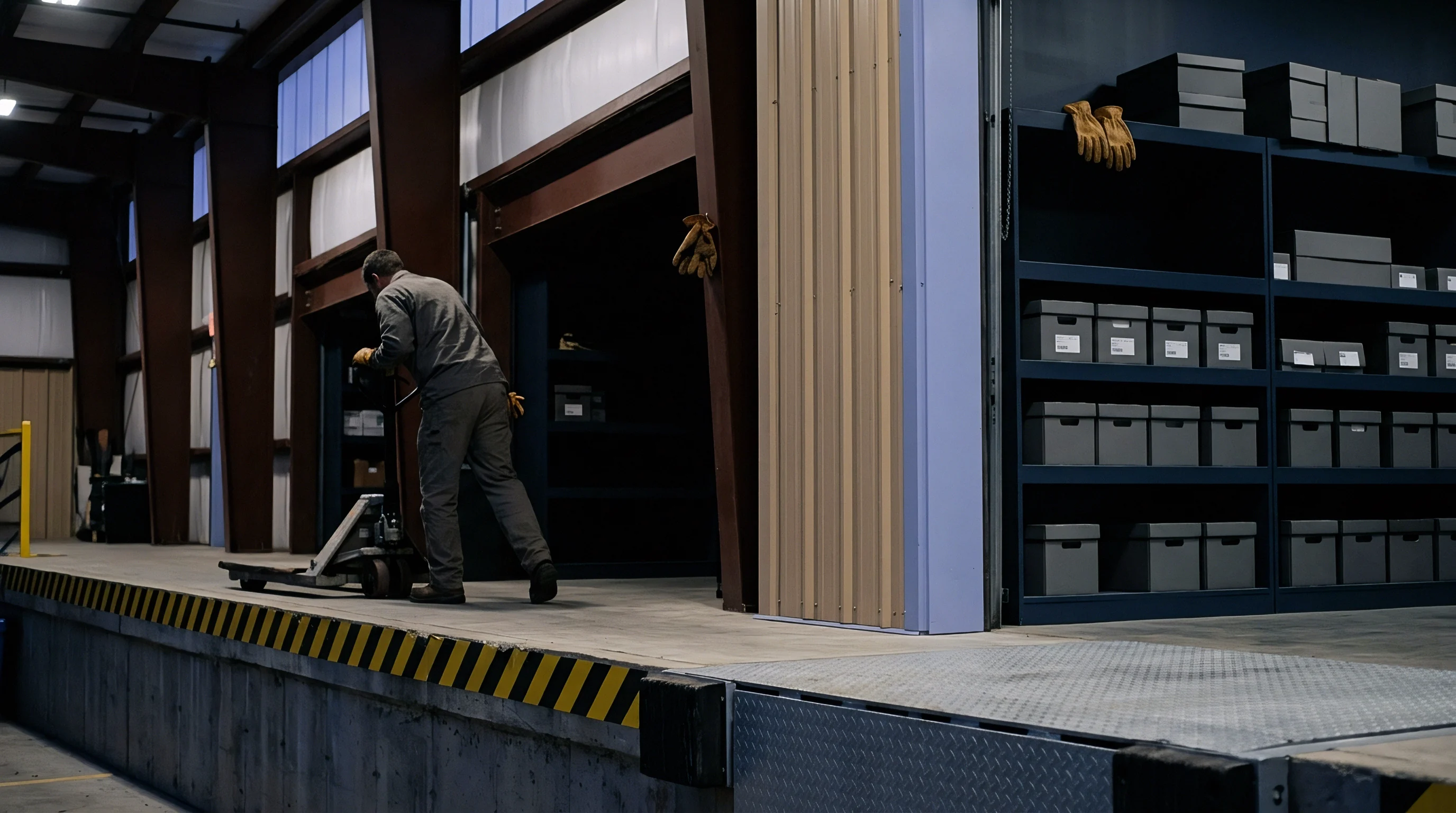
Bailment Principles and Tri-Party Mechanics
Valid bailment under commercial law hinges on physical dominion, public notice, and explicit acknowledgment by the bailee. In field warehousing, a specialized inventory management firm leases a specific footprint inside the borrower’s facility, installs physical barriers and signs, and stations dedicated staff on-site to control the space. In public 3PL warehouses, segregation relies on fenced bays, dedicated bin locations, and clear electronic tagging in the warehouse management system (WMS).
The underlying legal requirement is the same in both settings: the bailee must hold exclusive physical possession of the collateral under direct instruction from the secured lender.
In tri-party structures, the critical shift happens at inventory receipt. The warehouse manager has to issue a receipt confirming that specific goods arrived, match purchase documentation, and fall under the lender’s control. If the warehouse accepts inventory without acknowledging that lien, the stock blends into general inventory where third parties or unsecured creditors can assert competing claims.
The tri-party agreement must explicitly override the warehouse operator’s standard terms of service, which usually claim a general possessory lien over all stored goods for unpaid balances.
| Structural Model | Physical Control Mechanism | Lender Lien Perfection Method | Legal Risk Profile | Operational Cost (bps p.a.) |
|---|---|---|---|---|
| Field Warehousing | Leased partitioned space inside borrower facility with third-party manager on-site | Exclusive possessory bailment with physical signage and key access control | Low exposure to third-party commingling; higher risk of debtor key override | 125 to 250 |
| Public 3PL Attornment | Dedicated rack rows or fenced bays in commercial 3PL facility with shared WMS | Tri-party attornment notice signed by 3PL operator waiving general liens | Moderate exposure to 3PL lien assertions; reliance on electronic segregation | 45 to 90 |
| Direct Lease Assignment | Lender takes collateral lease assignment of 3PL warehouse space directly | Direct tenancy lease with third-party landlord attornment and access rights | Lowest legal defect risk; complete physical exclusion of debtor personnel | 180 to 320 |

Legal Attornment and Warehouse Lien Waivers
Under Article 7 of the Uniform Commercial Code, a warehouse operator holds statutory possessory liens for unpaid storage, handling, insurance, and labor. These liens automatically trump a lender’s perfected Article 9 security interest unless the warehouse operator waives or subordinates them in writing. If a struggling borrower stops paying storage fees, accrued warehouse charges quickly eat into the net liquidation value of the goods.
A strong tri-party contract requires an absolute lien waiver, forcing the warehouse to look only to the borrower for payment while preserving the lender’s right to pull collateral upon default.
Attornment acts as a direct instruction from debtor to bailee. The debtor tells the 3PL manager to hold all current and incoming inventory for the secured lender’s account. The 3PL manager signs on, agreeing to execute release orders coming only from authorized lender reps.
That agreement stops the debtor from later arguing that the warehouse acted outside its authority by turning down shipment requests during a covenant breach or borrowing base default.
An absolute bailment clause prohibiting third-party commingling converts an unhedged inventory loan into a secured senior claim under bankruptcy proceedings.

Field Warehousing versus Public 3PL Control
Field warehousing provides high physical visibility, but it comes with substantial overhead. A field warehousing firm subleases a specific footprint inside the borrower’s plant for a nominal annual fee, puts up chain-link fencing, installs locked doors, and assigns a dedicated custodian. That custodian is often a former employee of the borrower re-hired by the warehouse firm, which can create loyalty conflicts under pressure.
While the lender gets physical security, the proximity to the borrower opens up risks if staff keep master keys or bypass controls on off-shifts.
Public 3PL facilities avoid internal employee conflicts by housing inventory off-site under independent management. Here, the risk shifts from physical key overrides to system controls and commingling. In a shared 3PL warehouse, identical components or commodities belonging to different clients frequently sit in the same rack rows or bulk bays.
Lenders have to insist on lot segregation, batch tracking, and independent WMS audit logs. If the 3PL commingles pledged materials with unpledged stock from another customer, ownership grows murky under legal commingling doctrines, undercutting the lender’s ability to enforce its claim in foreclosure.
Under Section 9-312 of the Uniform Commercial Code, attaching a non-negotiable notice of pledge with mandatory attornment obligates the warehouse operator to hold inventory solely for the lender, stripping the debtor of authority to ship goods without express release authorization.


Warrant
Pledging commodities or goods to a secured lender requires enforceable documents of title that separate legal ownership from physical possession. Warehouse receipts have long served as the primary instrument for establishing this obligation in inventory finance. Issued by a certified 3PL operator, a warehouse receipt acknowledges unconditionally that specific quantities, grades, and values of goods sit in storage under defined custody terms.
Holding title through these documents lets lenders perfect security interests via constructive possession, bypassing varied local filing rules across multiple warehouse jurisdictions.
Warehouse receipts define legal title. When negotiable, endorsing and physically delivering the receipt transfers full title to the holder. In modern asset-based lending, non-negotiable receipts issued directly in the lender’s name provide tighter operational control.
They state explicitly that stored goods will be released only to the named lender or upon written delivery orders signed by its authorized officers. This stops a borrower from pledging paper receipts to outside buyers or secondary lenders, shutting down competing claims over the inventory.

Negotiable Documents of Title and UCC Rights
Article 7 of the Uniform Commercial Code governs documents of title, establishing specific duties for warehouse keepers issuing receipts. A valid receipt must state the storage location, issue date, consecutive receipt number, storage and handling rates, description of the goods or packaging, and the warehouse operator’s signature. Leaving out mandatory elements under UCC Section 7-202 strips away statutory protections, potentially demoting a document of title to an informal bailment receipt.
That administrative error damages the lender’s claim to constructive possession during bankruptcy preference disputes.
Unnotarized warehouse receipts consistently fail to defend lender priority against purchase-money security interest holders in commercial credit disputes. Negotiable receipts also carry practical risks in modern supply chains. If a physical negotiable receipt is lost, stolen, or duplicated, the warehouse operator cannot release the inventory without a court order or an indemnity bond equal to twice the collateral’s market value.
Asset-based lenders generally prefer non-negotiable receipts paired with direct delivery order protocols, securing possessory control without slowing down distribution networks.
Paper receipts invite document fraud, making constant verification essential for secured credit.
- Defective Receipt Issuance omitting essential statutory fields under commercial law renders the lender an unsecured creditor during insolvency.
- Unrecorded Warehouse Liens taking priority over lender security interest when unpaid storage charges accumulate past sixty days.
- Inadequate Goods Description failing to specify batch identifiers or heat numbers, enabling debtor substitution of inferior product grades.
- Missing Attornment Confirmation leaving physical control with the warehouse manager without explicit acknowledgment of lender security rights.

Electronic Warehouse Receipts and Registry Security
Moving from paper receipts to electronic warehouse receipts (EWRs) replaces physical paper transfers with encrypted registries. Electronic platforms track transfers, pledges, and release authorizations across centralized or distributed ledgers. Under revised UCC Article 7 and the UNCITRAL Model Law on Electronic Transferable Records, electronic receipts hold full legal equivalence to paper documents of title, provided the underlying system reliably establishes single control over the transferable record.
Single control replaces physical possession. To establish system control, the registry must uniquely identify the lender as the owner or pledgee of the record. Any change, transfer, or cancellation of an electronic receipt requires the lender’s explicit digital authentication.
Connecting these registries directly into borrowing base calculation platforms automates credit tracking: as goods enter a 3PL facility, the WMS sends receipt data to the registry, issuing an authenticated receipt that updates credit availability without manual paper processing.
Collateral validity disappears the moment a third-party warehouse manager accepts shipping instructions directly from the borrower without lender approval.

Common Defects in Warehouse Documentation
Flaws in warehouse documentation often compromise collateral position long before financial distress hits. Common errors include vague descriptions of goods, ambiguous weights, or missing bay locations. A receipt describing collateral simply as fifty pallets of general merchandise lacks the specificity required to enforce a possessory lien against third parties.
Receipts need exact SKU numbers, serials, lot identifiers, or chemical grade designations so field auditors and trustees can distinguish pledged stock from general warehouse inventory.
Vague terms around storage fees introduce another major vulnerability. If a receipt notes that storage charges follow custom contract terms without detailing monthly rates or existing balances, the lender cannot calculate accrued warehouse lien liabilities. In bankruptcy, undisclosed storage, handling, and demurrage fees quickly eat into recovery proceeds.
Setting clear fee schedules inside the receipt or the attached attornment agreement protects lender recovery against unexpected operating expenses.
Industry practice is sometimes cited to justify releasing palletized inventory to the debtor prior to receiving signed bank releases when regional drivers refuse to wait for morning payment verification.


Vault
Preserving collateral value in third-party distribution nodes relies on physical segregation and frequent reconciliation between actual counts and ledger records. Contracts and receipts set legal title, but conditions on the warehouse floor dictate actual recovery rates. Off-site inventory faces physical risks: forklift damage, spoilage from temperature fluctuations, unapproved stock rotation, and unaccounted shrinkage.
Asset-based lenders have to view the warehouse space as a live collateral vault that requires ongoing physical audits, inventory checks, and material sampling.
Physical counts expose ledger errors, catching weight reductions from moisture loss and flagging obsolete inventory that carries zero value.
Managing inventory collateral requires continuous monitoring to cross-reference the borrower’s inventory reports against independent 3PL warehouse records. Discrepancies between the borrower’s ERP system and the 3PL’s WMS signal operational breakdowns or deliberate borrowing base manipulation. When those records diverge, field auditors need to get on site quickly to count physical stock, check packaging, and verify that pledged inventory stays segregated from non-collateral goods.

Physical Segregation and Lot Level Identification
Physical segregation prevents commingling and avoids ownership disputes if a facility suddenly closes. Pledged inventory should sit in designated, enclosed storage areas or clearly labeled rack bays. Signs stating Property of Secured Lender must be posted on all collateral racks.
For bulk commodities like grain, polymers, or raw metals, segregation demands dedicated silos, separate liquid tanks, or floor bays partitioned by concrete barriers.
Lot-level tracking builds a verifiable chain of custody for specialized inventory. Every pallet, bin, or container needs barcode or RFID tags detailing purchase orders, manufacturing batches, receipt dates, and quality certificates. During physical audits, inspectors reconcile physical tag data with the borrowing base schedule.
If physical lot numbers don’t match documented receipts, auditors flag the stock as ineligible, triggering immediate advance rate haircuts or requiring cash substitution from the borrower.

How Does Stock Segregation Fail under Audit?
Segregation breaks down when 3PL operators prioritize speed over collateral controls. During peak shipping seasons, warehouse workers often drop incoming stock into open overflow bays without updating bin locations in the WMS. Pledged goods then mix with unpledged merchant stock or competitor inventory.
When field auditors try to locate specific lots, missing bin entries prevent verification, forcing auditors to mark the stock as unlocated and drop it from the borrowing base.
Operational staff sometimes make unauthorized product substitutions. When a customer orders high-grade raw material, workers might fulfill the shipment using collateral-pledged stock while shifting lower-grade material into the lender’s pool. Without automated scanning and strict access controls, product substitution degrades collateral quality without triggering alerts in the lender’s monitoring system.
| Audit Mechanism | Sampling Frequency | Verification Tool | Discrepancy Tolerance | Lender Covenant Impact |
|---|---|---|---|---|
| Full Physical Count | Semi-annually or post-default | Manual double-blind count & optical barcode scan | 0.00% to 0.25% of total volume | Immediate borrowing base adjustment; mandatory cash deposit if shortfall exceeds $25,000 |
| Cycle Count Sampling | Monthly targeted sampling | WMS snapshot audit vs perpetual ledger cross-check | 0.50% SKU variance limit | Ineligibility of disputed SKU class; 10% advance rate haircut on adjacent inventory groups |
| Quality & Grade Testing | Quarterly physical sampling | Lab assay analysis & material test certificates | Zero tolerance for grade degradation | Immediate reclassification of damaged stock to scrap value; mandatory paydown notice |
| 3PL WMS Reconciliation | Weekly automated feed | EDI/API integration cross-referencing ERP data | Zero tolerance for line-item mismatch | Freezes borrowing base expansion until data reconciliation resolves variance |

Cycle Counting and Shrinkage Adjustments
Relying solely on annual counts leaves lenders exposed to inventory drift. Effective monitoring uses continuous cycle counting managed by independent auditors. Cycle counts sample inventory categories throughout the year, targeting high-value SKUs, liquid commodities, and fast-moving consumer electronics.
Continuous sampling catches shrinkage, misplacement, and damage early, preventing hidden collateral deficits from compounding.
- Pre-Audit Reconciliation cross-referencing borrowing base certificates against general ledger inventory records to establish baseline inventory counts.
- Physical Floor Verification counting physical SKUs inside third-party racks using double-blind sampling to identify missing or mislabeled pallets.
- Quality Assessment Sampling testing physical sample integrity against technical specifications to confirm raw material grade and prevent asset devaluation.
- Discrepancy Reconciliation Writing logging variances between physical counts and borrower reports directly to the loan covenant monitoring sheet.
Shrinkage models must account for natural loss patterns tied to specific commodities. Agricultural products, liquids, and volatile chemicals lose weight through evaporation, moisture shifts, or spillage. A liquid chemical pool might reflect ten thousand barrels on the borrowing base schedule, but physical gauging shows nine thousand seven hundred due to ambient evaporation.
Lenders need to set standard shrinkage deductions based on historical loss curves, adjusting gross inventory values before applying advance rates.
Field audits of cold-storage inventory revealed an average four percent unrecorded shrink rate across six bulk distribution facilities during annual turnover cycles.
Quality loss calls for immediate collateral write-downs. Stored materials remain exposed to contamination, roof leaks, humidity, and shelf-life limits. Cold-storage foods, adhesives, biopharmaceutical inputs, and electronics lose value quickly if storage conditions drift outside narrow parameters.
Field audits must cover temperature logs, packaging condition, and lab assay results for bulk materials. If quality drops below contract specs, the lender reclassifies the stock to scrap or liquidation status, taking it out of borrowing base calculations.
During an audit of a specialty chemical manufacturer, field inspectors found fifty bulk liquid totes stored in an unheated secondary bay at a Midwest 3PL facility. Moisture intrusion through damaged seals caused phase separation in twenty-five percent of the lot. The borrower carried the stock on its books at its full landed cost of four hundred eighty thousand dollars.
Lab tests confirmed the phase separation rendered the polymer resin useless for production. The lender applied an immediate one hundred percent haircut to the damaged lot, forcing a two hundred forty thousand dollar borrowing base reduction and triggering a mandatory cash paydown under the credit agreement.
An audit team absorbed forty-eight thousand dollars in unrecoverable legal and inspection fees after a regional third-party logistics operator misreported three bulk grain silos as fully bonded inventory.


Facility
Structuring revolving working capital lines against third-party inventory requires dynamic valuation models that translate physical stock into borrowing base capacity. Revolving facilities backed by inventory differ sharply from real estate or equipment loans. Real estate values remain fairly stable over quarters, but inventory balances move daily through receipts, production releases, transfers, and sales.
Credit agreements manage this fluctuating capacity through the borrowing base certificate (BBC), which calculates real-time borrowing availability by applying advance rates and contractual haircuts to eligible inventory.
Lenders structure borrowing base formulas around net orderly liquidation value rather than book cost. The core goal of inventory collateral management is ensuring that, if a borrower defaults, net proceeds from an orderly liquidation will fully cover outstanding facility advances ~ including accrued interest, legal fees, freight, and warehouse charges. Setting maximum leverage depends on determining net orderly liquidation value (NOLV) percentages through third-party appraisals conducted across operating seasons.

Borrowing Base Certificate Arithmetic and Advance Rates
The borrowing base formula determines available credit by multiplying the appraised value of eligible collateral by agreed advance rates, then subtracting designated reserves. Gross inventory reported on balance sheets reflects landed cost ~ purchase price plus freight, duty, and handling. The lender filters this gross figure down to establish the eligible pool.
Advance rates typically run between sixty and eighty-five percent of the lower of cost or net orderly liquidation value.
To see how this works, consider a company holding ten million dollars in inventory cost across three 3PL facilities. The lender applies eligibility filters, excluding two million dollars in obsolete stock, five hundred thousand dollars in work-in-process goods, and five hundred thousand dollars in unbonded overseas transit. That leaves an eligible inventory pool of seven million dollars at book cost.
An independent appraisal puts the net orderly liquidation value of that pool at seventy-five percent of cost, or five million two hundred fifty thousand dollars. Applying an eighty-five percent NOLV advance rate results in a gross borrowing base of four million four hundred sixty-two thousand five hundred dollars.
Stale inventory triggers immediate collateral haircuts, reducing overall borrowing availability.
- Ineligible Aging Thresholds excluding inventory held in third-party warehouses beyond one hundred twenty days to prevent carrying obsolete stock.
- Location Concentration Limits capping total facility advance rate at thirty percent for inventory stored within any single unbonded third-party warehouse.
- Work in Process Exclusions eliminating partially assembled goods due to illiquidity and high conversion costs during foreclosure.
- Cross-Border Transit Caps restricting borrowing base credit for offshore goods until entry documentation clears customs bonded facilities.

Eligibility Criteria and Haircut Calculations
Eligibility criteria protect lenders against structural illiquidity in the collateral pool. Credit agreements define specific inventory types that cannot support borrowing availability regardless of location. Ineligible categories typically include slow-moving stock, discontinued lines, damaged items, customer returns, custom packaging, and inventory restricted by third-party intellectual property rights.
Inventory at a 3PL facility lacking a signed lien waiver or tri-party attornment agreement is automatically reclassified as ineligible.
Borrowing base availability contracts instantly when third-party warehouse fees fall into thirty-day arrears.
Haircuts adjust credit availability for price volatility, concentration risks, and storage liabilities. A concentration haircut reduces advance rates if more than twenty-five percent of total inventory sits in a single 3PL warehouse, limiting exposure to local disasters, labor strikes, or operator insolvency. Storage fee reserves deduct three months of estimated warehouse, handling, and freight charges directly from the borrowing base.
This reserve ensures that if the lender takes control of the warehouse during default, funds are set aside to satisfy possessory liens and cover operating costs during liquidation.

Monitoring Fees and Inspection Costs
Monitoring collateral inside third-party logistics facilities generates ongoing operational expenses that must be factored into facility pricing. Standard covenants require the borrower to reimburse the lender for field audits, appraisal updates, attornment drafting, and system integration. Audit frequency tracks credit health: healthy borrowers typically undergo one annual count and appraisal update, while borrowers facing tight covenants or financial stress trigger quarterly audits and monthly desktop reviews.
Monitoring costs cover monthly management fees, per-location inspection charges, and electronic receipt registry fees. For a borrower using ten separate 3PL hubs for national distribution, audit expenses add up fast. Field logistics require sending audit teams to multiple locations at once for concurrent counts, stopping the borrower from shifting inventory between sites to hide shortfalls.
Maintaining collateral control, including appraisal and audit fees, adds thirty-five to seventy-five basis points annually to effective borrowing costs.
Whether senior lenders will accept automated Internet of Things telemetry logs as primary legal proof of possession without requiring physical third-party collateral audits remains undecided across major commercial court jurisdictions.


Release
Controlled inventory withdrawals and liquidations demand tight coordination between payment clearing and physical dispatch. When inventory sits under bailment in a 3PL warehouse, the operator cannot ship goods without explicit lender authorization. Release mechanisms vary from paper delivery orders signed by bank officers to automated electronic release protocols embedded in ERP and warehouse management systems.
Clear release controls prevent inventory leakage, ensuring physical goods convert directly into cash or pledged receivables.
Orderly liquidation requires quick action, relying on cash sweeps to prevent inventory leakage and immediate default notices to freeze warehouse dispatches.
The release framework has to balance commercial speed against legal security. If a buyer needs immediate delivery of pledged raw materials to keep production running, waiting a full day for manual bank approval creates friction. Modern setups often use dynamic release caps, allowing the 3PL operator to ship inventory up to pre-approved daily limits ~ provided the borrower complies with borrowing base covenants and sends customer receipts straight to a lender-controlled lockbox.

Delivery Orders and Automated Dispatch Triggers
A delivery order acts as the legal instruction telling a bailee to deliver stored goods to a specified recipient. In manual setups, the lender issues numbered, single-use delivery orders detailing exact SKUs, lot numbers, and carrier information. The warehouse keeper verifies the order against master signatures before releasing goods to drivers.
Releasing inventory without a verified order breaches the bailment contract, making the 3PL operator liable to the lender for the full market value of the unapproved release.
Automated release triggers link credit monitoring systems to the 3PL’s warehouse management system through APIs. When a borrower logs a sales order, the system checks borrowing base availability, confirms lockbox receipts, and verifies covenant compliance. If everything checks out, the system sends a digital release authorization to the 3PL WMS, clearing the inventory for fulfillment.
If borrowing base capacity goes negative or a covenant default occurs, the system blocks releases instantly across all third-party sites.

Cash Sweeps and Partial Collateral Paydowns
Releasing inventory collateral reduces borrowing base capacity, requiring offsetting cash inflows to keep the facility in balance. Under a standard cash sweep, all revenues from inventory sales flow into a blocked bank account governed by a deposit account control agreement (DACA). The lender sweeps cleared funds daily, applying proceeds to reduce revolving balances before releasing subsequent collateral batches for production.
Partial release formulas apply when inventory is drawn down incrementally for ongoing operations. The credit agreement sets a minimum release value, requiring the borrower to deposit cash into the blocked account equal to a set percentage of the inventory’s landed cost or liquidation value before dispatch. For instance, if a borrower needs five hundred thousand dollars in raw materials released, the protocol might require a pre-funding cash paydown of four hundred twenty-five thousand dollars ~ matching the eighty-five percent advance rate previously extended on that lot.
Pre-funding prevents borrowing base deficits by ensuring advances never exceed remaining collateral value.
| Liquidation Channel | Orderly vs Forced Discount | Third-Party Freight & Handling Cost | Net Recovery Percentage | Execution Timeline |
|---|---|---|---|---|
| OEM Supply Chain Repurchase | 5% to 15% discount off invoice cost | 2% to 4% of gross asset value | 80% to 92% of book value | 30 to 60 days |
| Secondary Market Bulk Liquidation | 30% to 50% discount off invoice cost | 5% to 8% of gross asset value | 45% to 62% of book value | 60 to 90 days |
| Auction Distressed Clearance | 60% to 80% discount off invoice cost | 10% to 15% of gross asset value | 15% to 35% of book value | 15 to 30 days |

Enforcement Procedures during Debtor Insolvency
When a borrower enters insolvency or defaults on a material covenant, the lender shifts immediately from routine monitoring to collateral preservation and enforcement. The first step is serving written notices of default and foreclosure on all 3PL operators holding pledged stock. The notice revokes borrower access, cancels automated release triggers, and directs the warehouse to hold all goods exclusively for the lender.
Under the tri-party attornment agreement, the 3PL operator must immediately deny physical access to borrower personnel, change lock combinations on dedicated bays, and stop all outbound shipments.
Physical enforcement must happen alongside legal notice. Lenders deploy independent security guards and audit teams to 3PL facilities to take control of storage bays, verify gate logs, and reconcile remaining physical inventory against final WMS dispatch records. In shared multi-tenant parks, securing access gates prevents unauthorized off-hour removals by distressed management or trade creditors trying to reclaim unpaid goods.
Once the site is secured, the lender retains specialized liquidators or auctioneers to clear the inventory and apply net proceeds toward loan payoff.
Executing inventory sweeps during borrower insolvency requires securing physical control of warehouse access points before serving formal notice of default on third-party logistics managers.