Upfront Inventory Capitalization Rules and Credit Agreement EBITDA Calculations
Capitalizing upfront inventory costs defers expenses to the balance sheet, inflating current credit agreement EBITDA during inventory build-up.

Absorption

Landed Cost Elements and Accounting Rules
Accounting standards dictate how costs attach to purchased stock. Under US GAAP ASC 330 and IFRS IAS 2, companies record raw materials, work in progress, and finished goods at acquisition expenditure plus every cost needed to bring items to their present location and condition. Inbound freight, ocean bill of lading fees, customs clearance surcharges, and import duties enter balance sheet asset values immediately.
Direct labor and factory overhead absorb into inventory on manufacturing balance sheets, sitting as a current asset until the goods leave the warehouse in a commercial sale.
Costs incurred after goods reach their final storage point follow a different path. Storage during active production ~ like aging spirits or drying timber ~ absorbs into inventory values. In contrast, routine holding costs at a distribution center are expensed immediately as operating overhead.
Selling costs, outbound freight to final buyers, and administrative overhead are also period costs, entering the income statement as paid or accrued. How expenditures are divided between capitalization and immediate expensing dictates when earnings are recognized.
| Expenditure Category | US GAAP (ASC 330) Accounting | IFRS (IAS 2) Accounting | Balance Sheet vs P&L Effect |
|---|---|---|---|
| Inbound Ocean Freight and Duty | Capitalized into inventory unit cost | Capitalized into inventory unit cost | Deferred to balance sheet asset |
| Intermediate Processing Storage | Capitalized if necessary for process | Capitalized if necessary for process | Deferred until product sale |
| Finished Goods Central Storage | Expensed as operating overhead | Expensed as operating overhead | Recognized in current period P&L |
| Abnormal Freight Surcharges | Expensed immediately if excessive | Expensed immediately as abnormal cost | Recognized in current period P&L |
| Offsite Pre-Production Holding | Capitalization subject to policy rules | Capitalized only if process required | Varies by auditor classification |
| Classification derived from ASC 330-10-30 and IAS 2.15 guidance regarding necessary expenditures versus period overheads. | |||
Abnormal handling and unexpected freight costs must be expensed immediately. When port congestion forces vessel rerouting or demurrage fees build up unexpectedly, accounting policies govern whether those charges attach to unit inventory or hit period operating income. ASC 330-10-30 obliges entities to write off abnormal amounts of idle facility expense, freight, handling costs, and wasted material as current-period charges.
Capitalizing abnormal expenditures improperly inflates inventory values and violates reporting standards, which is why auditors scrutinize variance accounts to verify that standard costs reflect normal operational volume rather than absorbed waste.
Overhead allocation rests on normal operating capacity. If production drops significantly below benchmark levels, unallocated fixed overhead stays in period costs ~ dropping into cost of goods sold in the period incurred rather than absorbing into reduced unit volumes. During periods of elevated production, fixed overhead allocated to each unit decreases, preventing inventory capitalization above actual cost.
These allocation mechanisms directly alter reported operating margins.
- Inbound Freight Expenditure includes ocean container shipping, terminal handling charges, drayage fees, and inland trucking required to move stock to the primary receiving facility.
- Import Tariff Capitalization covers non-refundable customs duties, border processing assessments, and government trade surcharges levied at the port of entry.
- Offsite Storage Allocation encompasses third-party logistics warehousing charges incurred prior to final product assembly or chemical transformation steps.
- Direct Handling Expenditures covers offloading labor, staging fees, quality inspection testing, and palette placement costs incurred before initial inventory placement.
The line between product costs and period expenses shapes the top of the income statement. Capitalizing landed costs keeps cash outlays off current operating expenses. Cash leaves the bank account immediately to clear customs and pay freight forwarders, yet no matching charge hits the P&L. Operating income looks protected from supply chain cost spikes during heavy inventory accumulation.
But that insulation ends the moment stock moves off the floor.
Cash balances fall while operating income remains stable. This split creates a timing gap between cash expenditure and P&L recognition. Financial managers focused solely on earnings metrics miss the concurrent drainage of bank liquidity: every dollar of capitalized freight reduces cash balances without touching current earnings.
Capitalized expenditures sitting on balance sheets eventually migrate into cost of goods sold, setting up deferred gross margin compression.
A dollar spent on ocean freight enhances balance sheet asset values today and depresses reported gross margin in six months.


Timing

Earnings Distortion across Stock Cycles
Building up inventory delays cost recognition on the income statement. When a business purchases five million dollars of stock and incurs one million dollars of capitalized landed freight, six million dollars enters current asset accounts. Operating expenses on the P&L ignore the ocean freight charges completely, leaving Consolidated Net Income unburdened by the cash outflow.
EBITDA reflects full revenue from period sales without deducting the cash spent on incoming inventory.
This structure generates artificial earnings expansion during aggressive stock accumulation. Companies building buffer inventory or stocking up ahead of tariff increases experience a temporary surge in reported operating results. Higher purchasing volumes pull fixed warehouse overhead and landed shipping expenditures onto balance sheet lines.
Reported gross profit margins expand because cost of goods sold carries only historical unit costs while current fixed overhead absorbs into balance sheet inventory assets. The cash balance drops, even as reported EBITDA reaches local peaks.
| Metric / Financial Line | Baseline Operations | Inventory Accumulation Phase | Inventory Liquidation Phase |
|---|---|---|---|
| Purchasing & Freight Cash Outflow | $10,000,000 | $18,000,000 | $4,000,000 |
| Capitalized Costs to Asset Account | $10,000,000 | $18,000,000 | $4,000,000 |
| Recognized Cost of Goods Sold | $10,000,000 | $10,500,000 | $15,000,000 |
| Reported Consolidated EBITDA | $4,000,000 | $5,200,000 | $1,800,000 |
| Free Operating Cash Flow | $2,500,000 | ($3,800,000) | $8,200,000 |
| Reported Senior Net Debt / EBITDA Ratio | 2.50x | 2.88x | 4.44x |
The dynamic flips during inventory liquidation. When sales outpace new purchase orders, historical stock flows off the balance sheet into cost of goods sold. Capitalized landed expenditures from prior quarters land squarely in current P&L calculations.
Gross margins compress as older, higher unit costs hit revenue streams. Cash flow turns strongly positive as buyers convert old stock into bank deposits without placing replacement orders, filling bank accounts even as EBITDA drops.
Capitalized freight defers expense recognition until product sale, creating a temporary disconnect between operating cash flow and credit agreement earnings metrics.
Credit agreement leverage tests evaluate debt against twelve-month trailing Consolidated EBITDA. During liquidation, trailing twelve-month EBITDA absorbs prior capitalized costs without receiving new overhead absorption benefits, causing reported EBITDA to decline rapidly. Even if management applies liquid cash proceeds toward debt reduction, the drop in reported EBITDA can outpace the debt paydown rate, driving leverage ratios up and threatening covenant compliance precisely when operational cash generation is highest.
This gap between operating cash flow and covenant EBITDA catches borrowers off guard. A company expanding its warehouse footprint spends cash up front to secure inventory before peak selling seasons. Credit facility drawings rise to fund purchasing commitments, raising total outstanding net debt.
Because inventory capitalization defers landed expenditures, EBITDA stays temporarily elevated, masking the true leverage burden. When sales slow down and purchasing stops, delayed costs flow through the income statement, cutting EBITDA right when debt levels remain elevated.
Unadjusted GAAP financial statements aggregate capitalized inventory costs within cost of goods sold without isolating landed freight or absorbed storage. Credit analysts who fail to unpack these movements mistake inventory build cycles for genuine operational expansion. Leverage ratios calculated off unadjusted trailing EBITDA yield misleading signals regarding true solvency, leaving borrowers exposed to default penalties when standard inventory decumulation triggers covenant breaches.


Rack

Physical Storage Realities and Asset Reserves
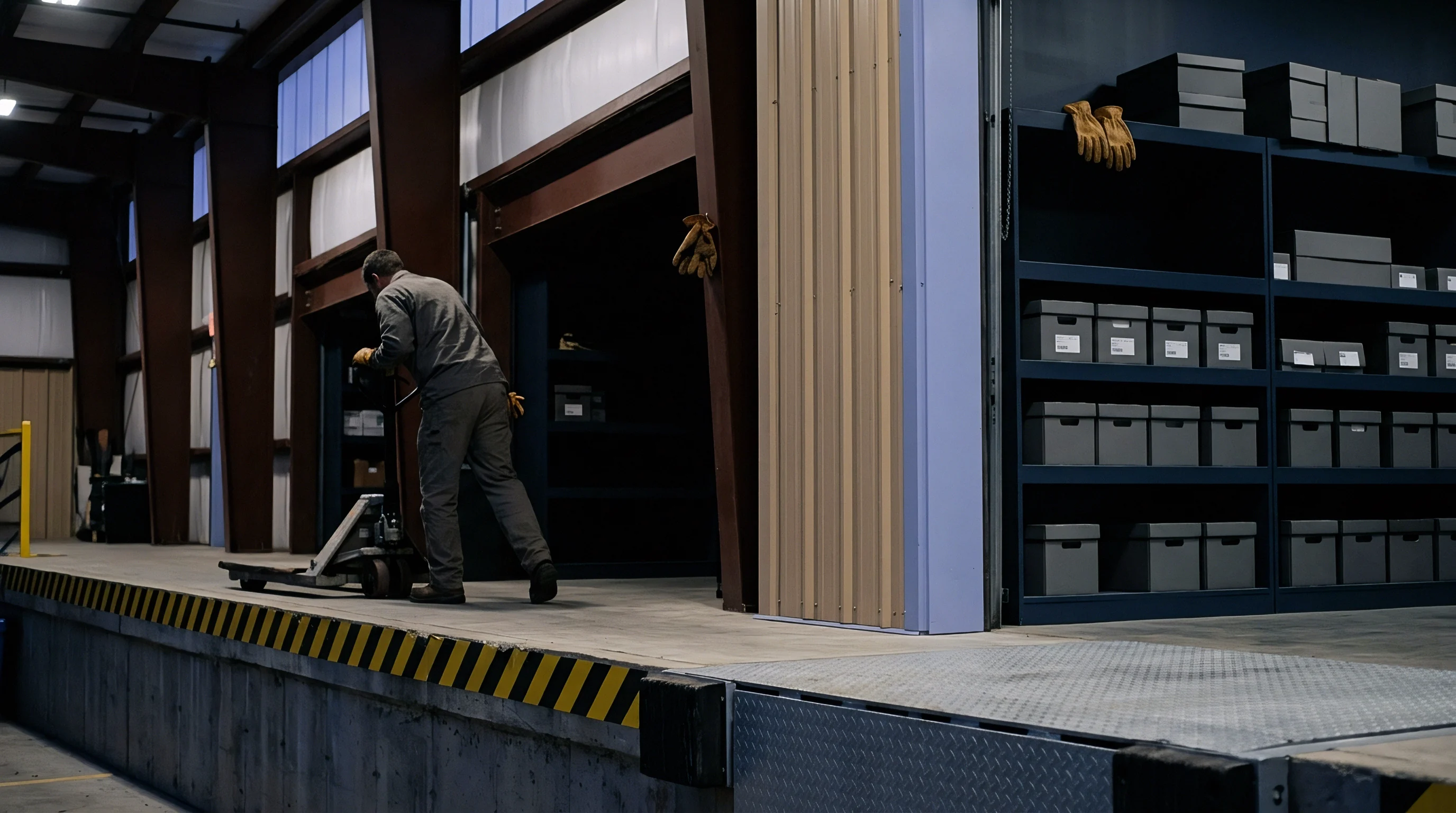
Warehouse staging spaces hold physical inventory that directly represents cash committed under credit terms. Materials parked on pallet racks absorb ongoing holding costs ~ bay rental, temperature management, forklift operations, and insurance. Financial accounting rules mandate that routine holding costs at primary facilities remain period operating overhead.
When goods sit in secondary storage locations due to supply chain bottlenecks, finance departments frequently attempt to capitalize these temporary holding charges into inventory valuation accounts.
Auditors disallow holding cost capitalization when goods sit in storage without undergoing active manufacturing or chemical alteration. Storing finished goods offsite adds no value under ASC 330 or IAS 2 standards. The costs incurred to park excess inventory at third-party logistics centers hit current period operating expenses immediately.
When management teams incorrectly push storage invoices into inventory asset accounts, balance sheet adjustments inevitably follow during year-end audits.
- Review third-party logistics warehousing invoices to separate active handling fees from long-term storage line items.
- Audit inventory movement records to identify stock parked offsite without undergoing secondary assembly or packaging processes.
- Reclassify unallowable holding cost entries from current inventory assets into period operating expense lines.
- Recalculate trailing twelve-month Consolidated EBITDA using corrected cost of goods sold and operating expense figures.
- Test balance sheet inventory against Lower of Cost and Net Realizable Value thresholds to identify required valuation reserves.
- Quantify non-cash inventory write-downs to determine potential credit agreement covenant add-back eligibility.
Lower of Cost and Net Realizable Value tests create sudden, non-cash inventory write-downs. Under ASC 330-10-35, inventory asset carrying values must undergo markdown when net realizable value drops below capitalized cost. Net realizable value represents estimated selling prices in the ordinary course of business, less reasonably predictable costs of completion, disposal, and transportation.
Market price declines, product obsolescence, physical damage, and slow moving stock force immediate balance sheet write-downs.
Inventory write-downs reduce balance sheet carrying values immediately and flow into current period cost of goods sold unless explicitly isolated in financial statements.
Inventory valuation write-downs hit cost of goods sold or operating expense lines depending on corporate income statement presentation. A three million dollar stock write-down directly reduces current period operating income and Consolidated EBITDA under standard GAAP presentation. The cash outflow for that stock occurred in prior quarters, yet the income statement penalty arrives in the current reporting period.
Credit agreement definitions frequently determine whether these non-cash write-downs qualify for EBITDA add-backs.
Ocean carriers sometimes hold container ships offshore and bill unexpected detention charges beyond original contract estimates.


Drafting

Credit Agreement EBITDA Definitions and Add Back Clauses
Credit agreement definitions of Consolidated Net Income and Consolidated EBITDA establish the legal framework for leverage covenant calculations. Debt agreements start calculations with GAAP or IFRS Consolidated Net Income, then add back specific charges like interest expense, income taxes, depreciation, and amortization. Lenders and borrowers negotiate explicit add-backs to neutralize specific non-cash charges or non-recurring operating distortions.
The precise legal phrasing in these definition clauses dictates whether capitalized inventory timing distortions breach covenants.
Borrowers negotiate for explicit add-back provisions covering non-cash inventory valuation reserves and write-downs. A typical credit agreement clause permits adding back non-cash charges reducing Consolidated Net Income, provided that if any such non-cash charge represents an accrual or reserve for potential cash items in future periods, the borrower selects specific handling rules. When inventory write-downs hit cost of goods sold, an explicit non-cash add-back restores EBITDA headroom.
Without explicit drafting, non-cash inventory impairment charges cut Consolidated EBITDA dollar for dollar.
Credit agreement definitions overriding standard GAAP treatment determine whether inventory reserves and non-recurring freight charges restore reported leverage headroom.
Spikes in landed freight costs present severe covenant risk when supply chain expenses fluctuate. Borrowers seek add-backs for extraordinary, non-recurring, or unusual freight charges incurred during global disruptions. Lenders resist open-ended freight add-backs, pointing out that freight represents a core operating cost of inventory procurement.
Negotiated credit agreements frequently impose strict caps, restricting extraordinary supply chain add-backs to ten or fifteen percent of Consolidated EBITDA, with mandatory audit verification requirements.

How Do Credit Agreement Definitions Handle Freight Surcharges?
Credit agreements address freight surcharges through precise definitions of Consolidated EBITDA adjustments, distinguishing routine shipping expenditures from extraordinary supply chain disruptions. Standard credit definitions require landed freight charges to pass through normal GAAP absorption rules without special adjustment, directly impacting cost of goods sold as inventory turns. Advanced facilities include specific carve-outs allowing temporary add-backs for supply chain surcharges, subject to board certification and dollar caps.
- Non Cash Reserve Add Backs permit restoring earnings reductions caused by lower of cost or net realizable value adjustments, provided no cash outlays occur.
- FIFO To LIFO Normalization Clauses neutralize artificial profit swings resulting from historical cost accounting differences during inflationary purchasing environments.
- Capitalized Freight Cap Provisions establish clear numerical boundaries on the maximum dollar amount of supply chain surcharges allowed as EBITDA add-backs.
- Unusual Storage Cost Adjustments allow borrowers to add back temporary holding expenditures forced by port delays, subject to lender approval.
Accounting policy consistency clauses prevent borrowers from changing inventory capitalization methods to artificially manipulate covenant calculations. Credit agreements routinely state that financial ratios must use accounting principles consistent with those applied in preparing audited baseline financial statements. If a borrower switches from expensing offsite storage to capitalizing offsite storage under ASC 330, the facility obliges the company to recalculate prior period financial statements for covenant testing purposes or calculate EBITDA under the original baseline rules.
Section 1.01 of a standard senior secured credit agreement specifies that Consolidated EBITDA shall exclude any extraordinary, unusual, or non-recurring charges, provided that inventory write-downs shall only be excluded to the extent they constitute non-cash adjustments recorded in accordance with GAAP.


Arithmetic

Financial Walk Forward and Covenant Sensitivity
Evaluating the practical effect of inventory capitalization rules requires walking an explicit numerical scenario forward across multiple accounting treatments and credit agreement definitions. Consider a middle-market distribution business with baseline annual revenue of $60,000,000, baseline inventory of $10,000,000, and senior funded net debt of $12,000,000. The company faces a maximum Senior Net Leverage Ratio covenant set at 3.25x EBITDA.
During the fiscal year, the business purchases $35,000,000 of stock, while incurring $4,000,000 in inbound freight and duties, plus $1,500,000 in temporary offsite storage charges caused by warehouse capacity constraints.
Two distinct accounting policies apply to identical physical purchases and cash outlays. Under Policy A (Conservative Expensing), the company capitalizes inbound freight into inventory assets, but expenses the $1,500,000 offsite storage charge immediately as an operating overhead item. Under Policy B (Aggressive Capitalization), the company capitalizes both the $4,000,000 inbound freight and the $1,500,000 offsite storage charge into inventory asset carrying values on the balance sheet.
During the year, the company sells sixty percent of the newly acquired stock, while forty percent remains on pallet racks at year-end.
In addition, at year-end, the company conducts a physical stock assessment and identifies $1,000,000 of aged inventory requiring a lower of cost or net realizable value write-down. Compliance falls under two credit agreement definitions: Definition 1 permits no add-backs for inventory write-downs or storage expenses; Definition 2 permits an explicit add-back for non-cash inventory write-downs.
| Financial Statement Line Item | Policy A (Expensed Storage) / Credit Def 1 | Policy B (Capitalized Storage) / Credit Def 1 | Policy B (Capitalized Storage) / Credit Def 2 |
|---|---|---|---|
| Gross Revenue | $60,000,000 | $60,000,000 | $60,000,000 |
| Purchased Inventory & Landed Freight Cash | ($40,500,000) | ($40,500,000) | ($40,500,000) |
| Capitalized Inventory Asset Value (Year-End) | $15,600,000 | $16,200,000 | $16,200,000 |
| Cost of Goods Sold (Excluding Write-Down) | $23,400,000 | $24,300,000 | $24,300,000 |
| Inventory LCM Non-Cash Write-Down | $1,000,000 | $1,000,000 | $1,000,000 |
| Operating Expenses (Storage + SG&A) | $32,000,000 | $30,500,000 | $30,500,000 |
| Consolidated Net Income (GAAP) | $3,600,000 | $4,200,000 | $4,200,000 |
| Consolidated EBITDA (Under Definition) | $3,600,000 | $4,200,000 | $5,200,000 |
| Senior Funded Net Debt | $14,500,000 | $14,500,000 | $14,500,000 |
| Reported Senior Net Leverage Ratio | 4.03x | 3.45x | 2.79x |
| Credit Covenant Status (Target <= 3.25x) | BREACH | BREACH | COMPLIANT |
The math reveals the practical impact of accounting choices and legal drafting. Under Policy A with Credit Definition 1, expensing offsite storage alongside the unadjusted write-down leaves GAAP EBITDA at $3,600,000. Senior Net Debt of $14,500,000 generates a Senior Net Leverage Ratio of 4.03x, creating a severe covenant default.
Yet bank balances and total physical debt remain identical across all scenarios.
Switching to Policy B moves $600,000 of storage expense off the P&L and onto the balance sheet (forty percent of $1,500,000 remaining in year-end inventory). Capitalization increases reported GAAP EBITDA from $3,600,000 to $4,200,000, dropping reported leverage from 4.03x to 3.45x. While leverage improves significantly, the borrower stays in default under Definition 1 because 3.45x still exceeds the 3.25x limit.
Combining Policy B with Credit Definition 2 alters the outcome completely. Definition 2 permits adding back the $1,000,000 non-cash inventory write-down to Consolidated EBITDA, bringing it to $5,200,000. The Senior Net Leverage Ratio drops to 2.79x, placing the borrower comfortably below the 3.25x covenant threshold.
The company moves from a severe default to full covenant compliance purely through accounting treatment and legal add-back definitions.
Capitalization choices and credit agreement add-back clauses alter calculated leverage ratios by over a full turn without changing underlying cash balances or funded debt levels.
This scenario shows how operational decisions on storage and freight absorption directly drive credit compliance. Financial managers who assume GAAP compliance guarantees covenant compliance risk sudden leverage breaches. As inventory turns, capitalized costs move into COGS at varying speeds, continuously shifting calculated leverage ratios throughout the fiscal year.
How do lenders verify that capitalized storage charges represent valid product costs rather than operating overhead during quarterly compliance reviews?


Sanction

Lender Remedies and Working Capital Borrowing Base Realities
Covenant breaches triggered by leverage ratio spikes empower lenders to exercise legal remedies under facility agreements. When unexpected inventory decumulation or write-downs cause EBITDA to drop, leverage ratios cross contractual thresholds. Lenders issue formal default notices, freeze revolving credit drawings, elevate interest rates by standard default spreads, and demand immediate remediation plans.
A borrower generating positive operational cash flow from stock sales can simultaneously face facility acceleration due to backward-looking covenant formulas.
Asset-based lending facilities evaluate inventory differently than cash-flow credit agreements. While cash-flow credit agreements focus on EBITDA leverage ratios, asset-based facilities rely on Borrowing Base certificates governed by explicit advance rates and reserve provisions. Asset-based lenders conduct periodic inventory appraisals to establish Net Ineligible Percentages and Orderly Liquidation Values.
Capitalized freight and landed expenditures sitting on balance sheets get carved out of eligible inventory definitions if appraisers determine those costs add no recoverable value in a forced liquidation scenario.
Lender-imposed inventory reserves cut borrowing capacity immediately. When an asset-based lender establishes an inventory reserve for slow-moving stock, offsite holding charges, or valuation uncertainties, the borrowing base shrinks dollar for dollar. The borrower experiences an immediate liquidity reduction despite maintaining nominal inventory asset balances on audited balance sheets.
This liquidity contraction limits the enterprise’s ability to draw revolving loans, creating acute cash shortages during peak operational cycles.
Auditor sign-offs and compliance certificates require meticulous reconciliation between balance sheet inventory valuations and credit agreement definitions. Chief financial officers must submit quarterly compliance certificates confirming the accuracy of Consolidated EBITDA calculations. Including disallowed inventory cost capitalizations in EBITDA numbers exposes management to misrepresentation claims and loan default penalties.
Finance teams must maintain clear audit trails tracking freight absorption, storage allocations, and non-cash reserve write-downs.
Managing growth requires aligning purchasing commitments, balance sheet accounting choices, and credit agreement definition structures. Enterprises expanding inventory positions must secure explicit credit agreement carve-outs for capitalized landed expenditures, extraordinary freight surcharges, and non-cash inventory write-downs prior to executing large supply contracts. Alignment across procurement desk actions, accounting ledger entries, and credit agreement covenants protects ongoing liquidity and prevents accounting timing shifts from triggering default sanctions.