Balance Sheet Accounting and Qualification Delays in Overseas Vendor Tooling
Unqualified overseas tooling prepayments trap liquidity in uncollateralized balances that invite asset impairment and breach debt covenants.


Title
Cash moves months before the first qualified stamping leaves an overseas press. When an enterprise funds the fabrication of custom injection molds, stamping dies, or casting fixtures at a foreign contract manufacturer, the disbursement initially appears on the balance sheet as an advance to suppliers or capital work in process. Commercial reality splits from financial reporting the moment physical custody diverges from legal ownership.
Under both US GAAP ASC 360 and IFRS IAS 16, capitalization of tooling assets requires the enterprise to retain control of the resource and establish that future economic benefits will flow to the business. Ownership rights remain paper assertions if the vendor holds the physical metal, operates behind overseas corporate registries, and conditions asset release on disputed pre-production yields.
Cash drains quickly. Corporate buyers routinely disburse thirty to fifty percent of total tooling purchase orders upon design sign-off, another forty percent upon delivery of initial samples, and hold a ten percent retention pending production part approval. If the contract fails to specify explicit title transfer upon progress disbursements, foreign enterprise bankruptcy regimes or local statutory liens classify those prepayments as unsecured commercial claims.
The balance sheet reflects a capitalized asset or a deferred asset account, yet the enterprise possesses neither the operational machinery nor the legal power to repossess it without local court intervention.
Under commercial terms where title passes only upon final site acceptance, unapproved tooling advances represent unsecured debtor exposure rather than capital fixed assets.
Tangible net worth calculations become distorted during these production intervals. Bank lenders scrutinizing asset-based lending facilities routinely exclude cross-border tooling advances from borrowing base determinations. Lenders evaluate those advances through the prism of liquidation value in jurisdiction.
A multi-cavity injection mold located in Shenzhen or Penang carries virtually zero recovery value to a domestic secured lender once the relationship with the overseas manufacturing partner deteriorates. Tooling deposits parked in non-current other assets absorb available cash lines without generating eligible collateral.

Why Do Fabrication Prepayments Distort Current Ratios?
Treating tooling advances as current assets creates an optical preservation of working capital that collapses during statutory audits. When fabrication cycles stretch from ninety days into three quarters due to gate review failures, auditors mandate reclassification of advance balances into long-term investment or capital work in process accounts. Current ratios decline instantly upon reclassification, altering covenant calculations without a single dollar of incremental expenditure.
- Progress Advance Structures split tooling disbursements into chronological tranches tied to engineering build stages, creating unverified balance sheet balances if toolmaker milestones proceed without independent physical inspection.
- Bailment Agreements govern the physical hosting of buyer-owned tooling within foreign plants, dictating strict asset segregation and property plate tagging to prevent third-party creditor attachment.
- Bilateral Title Vesting defines the precise legal junction where property rights transfer to the buyer, which determines whether the advance converts to construction in progress or remains an unsecured trade receivable.
- Security Lien Registrations establish legal priority against local creditors in the toolmaker jurisdiction, though foreign enforcement mechanics frequently erode their practical recovery value.
Incoterms designations embedded in tooling contracts govern the physical transfer of risk. A purchase contract specifying Delivered at Place overseas leaves the operational risk of transit and initial commissioning with the supplier, yet title retention language often remains ambiguous. Standard tooling contracts incorporate a title reservation clause stating: Legal title to tooling, fixtures, and specialized dies transfers to the buyer immediately upon release of initial milestone disbursements, with the vendor assuming bailee obligations and holding physical possession strictly at buyer discretion.

Mold
Physical tooling undergoes severe thermal and mechanical stresses during initial proofing cycles. Steel block selection determines whether an injection mold sustains five hundred thousand shots or exhibits cavity deformation after fifty thousand cycles. When purchasing agents contract with overseas vendors, tooling quotations often cite standard tool steels such as P20, H13, or S136.
Without independent metallurgical composition testing via optical emission spectrometry, tooling fabricators facing compressed project margins may substitute sub-grade domestic tool steels. The resulting core inserts lack dimensional stability under production cycle temperatures.
Capital remains trapped. When pre-hardening tolerances fail to match design drawings, the overseas vendor undertakes successive rounds of electrical discharge machining, cavity welding, and manual polishing to bring off-tooling parts within tolerance limits. Every remedial intervention alters critical wall thickness, cooling line proximities, and gate geometry.
The cycle time extends past initial economic models, transforming a forecasted thirty-second cycle into a forty-five-second cycle. That extra time expands per-unit conversion costs across the product lifecycle.
| Tooling Phase Gate | Verification Metric | Accounting Classification | Covenant Impact Profile |
|---|---|---|---|
| T0 Initial Cut | Block Dimension Inspection | Prepayment to Vendor | Excluded from Borrowing Base |
| T1 First Off-Tool | Cpk Greater Than 1.00 | Capital Work in Process | Non-Current Asset Allocation |
| T2 Tool Tuning | Cpk Greater Than 1.33 | Capital Work in Process | Restricted Liquidity Absorption |
| T3 Production Pilot | Full Cavity Part Approval | Placed in Service PP&E | Depreciation Commences in COGS |
Inspection logs reveal drift. Dimensional reports generated on coordinate measuring machines within the vendor facility frequently diverge from verification scans run on domestic receiving benches. Environmental controls within foreign tooling shops explain part of this variance, as temperature swings of ten degrees Celsius in non-climate-controlled inspection rooms distort measurements on complex resin geometries.
Tooling verification dossiers submitted for engineering review often mask non-conforming dimensions by reporting average readings rather than multi-cavity capability indices.
A manufacturing process displaying process capability indices below 1.33 generates continuous scrap rates that prevent formal capitalization under international reporting standards.
The vendor justifies dimensional non-compliance by claiming resin batch inconsistency, barrel temperature fluctuations, or customer design errors. Overseas tooling managers regularly explain these delays by stating that the customer drawing requirements demand unreasonable mold tolerances that local resin shrinkage characteristics cannot physically sustain.

Drift
Production Part Approval Process submissions represent the formal boundary between capital development and commercial manufacturing. Level 3 submissions mandate dimensional verification across all cavities, statistical process control verification, material laboratory certifications, and process capability studies demonstrating minimum capability indices of 1.33 for standard dimensions and 1.67 for critical characteristics. When prototype parts exhibit dimensional drift across qualification batches, the asset cannot achieve the technical milestone required to trigger formal balance sheet capitalization.
Yield drops sharply. Production yields below targeted thresholds generate persistent engineering scrap. If a sixteen-cavity tooling set yields three out-of-spec cavities due to uneven runner balancing or thermal variation across the tool face, production planners face an operational impasse.
Blocking the non-conforming cavities reduces gross output by nearly nineteen percent per cycle. Operating an unbalanced mold risks uneven clamping plate wear and flash formation on the remaining active cavities, shortening tool lifespan.
| Delay Interval | Unamortized Tooling Deposit | Safety Stock Holding Cost | EBITDA Drag Run Rate |
|---|---|---|---|
| 60 Days Past Gate | $250,000 | $42,000 | $18,000 Monthly |
| 120 Days Past Gate | $250,000 | $98,000 | $36,000 Monthly |
| 180 Days Past Gate | $250,000 | $164,000 | $58,000 Monthly |
| 270 Days Past Gate | $250,000 | $275,000 | $94,000 Monthly |
| Assumes a baseline tooling commitment of $250,000 across a two-tool program with airfreight mitigation and domestic bridge tooling outlays. | |||
The commercial gap widens when product release schedules fail to adjust for mold rectification. Sales commitments made to downstream distributors force purchasing teams to commission domestic bridge tooling or authorize premium airfreight on interim partial production runs. A temporary single-cavity prototype mold machined from aluminum bridges immediate market supply gaps, but unit economics degrade immediately.
The unit purchase cost of aluminum-molded components runs three to five times higher than production-cavity output, driving down realized gross margins.
Audit scrutiny intensifies fast. Finance directors must defend the balance sheet position of stalled tooling balances during interim reporting periods. When assets languish in capital work in process accounts past planned commercial launch dates without reaching production gate sign-offs, independent auditors demand formal impairment assessments under ASC 360 or IAS 36.
If technical feasibility or commercial recovery remains unproven, corporate accounting policies mandate immediate write-offs through operating expense channels, directly depressing operating profit.
Unresolved qualification cycles destroy projected product gross margins through unbudgeted expensed rework, bridge fabrication, and airfreight charges that quickly exceed the original capital cost of the overseas tooling program.

Writeoff
Impairment tests become unavoidable when vendor qualification cycles exceed contractual lead times by more than two reporting quarters. Accounting standard ASC 360-10-35 dictates that a long-lived asset grouped with other assets must be tested for recoverability whenever events or changes in circumstances indicate that its carrying amount cannot be recovered. Long-term qualification stalls represent trigger events under GAAP.
If the undiscounted future cash flows directly attributable to the commercial product manufactured by the tooling fall below the asset carrying value, the enterprise must record an impairment loss equal to the excess of the carrying amount over fair market value.
The asset freezes. Fair market value for specialized overseas tooling is notoriously low. A custom injection mold engineered specifically for a proprietary consumer device housing has no secondary market value outside of scrap metal recovery.
A tool carried on the books at three hundred thousand dollars will carry an appraised fair value of less than three thousand dollars on an open scrap basis. The resulting write-down flows straight through the income statement, lowering operating income in the quarter of determination.
Equipment engineered solely for proprietary component geometries possesses zero liquidation recovery value outside raw scrap pricing upon commercial cancellation.
Consider an operational case where an enterprise funds a four-cavity hot-runner tooling set contracted at $400,000 with a manufacturer in Taiwan. The buyer disburses eighty percent of contract value, representing $320,000, across nine months. The vendor repeatedly fails Level 3 approval due to gate blush and warpage exceeding 0.35 millimeters across the primary mating flange.
The buyer contracts with an independent engineering firm to inspect the mold, discovering that the vendor used non-specified structural plate dimensions, causing frame flexing under standard tonnage injection pressures. Modifying the base structure requires total replacement of the manifold and cavity blocks, estimated at $220,000.
The accounting choices diverge under financial reporting guidelines:
- Full Immediate Impairment writes down the unamortized $320,000 balance to estimated net realizable value of $4,000 in salvage steel, recognizing an operating loss of $316,000 in the current quarter while terminating the supply relationship.
- Capitalization of Modification Costs treats the additional $220,000 repair outlay as an incremental asset component under ASC 360, provided future cash flow projections demonstrate positive undiscounted margins that fully absorb the adjusted $540,000 basis over the remaining commercial lifecycle.
- Litigation Reclassification converts the $320,000 balance from an active capital asset into a contested non-trade receivable against the vendor, establishing a specific credit loss reserve under CECL or IFRS 9 based on jurisdictional enforceability metrics.
Debt covenants tighten. Bank lenders monitoring fixed charge coverage ratios and debt-to-tangible-net-worth covenants treat asset impairment charges with extreme caution. An unbudgeted $316,000 write-off lowers retained earnings, immediately contracting tangible net worth.
If the loan agreement defines covenant thresholds without add-backs for non-cash long-lived asset impairment charges, a single failed tooling development program can breach debt terms, triggering facility repricing or demanding accelerated debt paydowns.
Capital deployed into unverified production tooling behaves like an unhedged speculative loan until formal qualification documentation validates the operational asset.
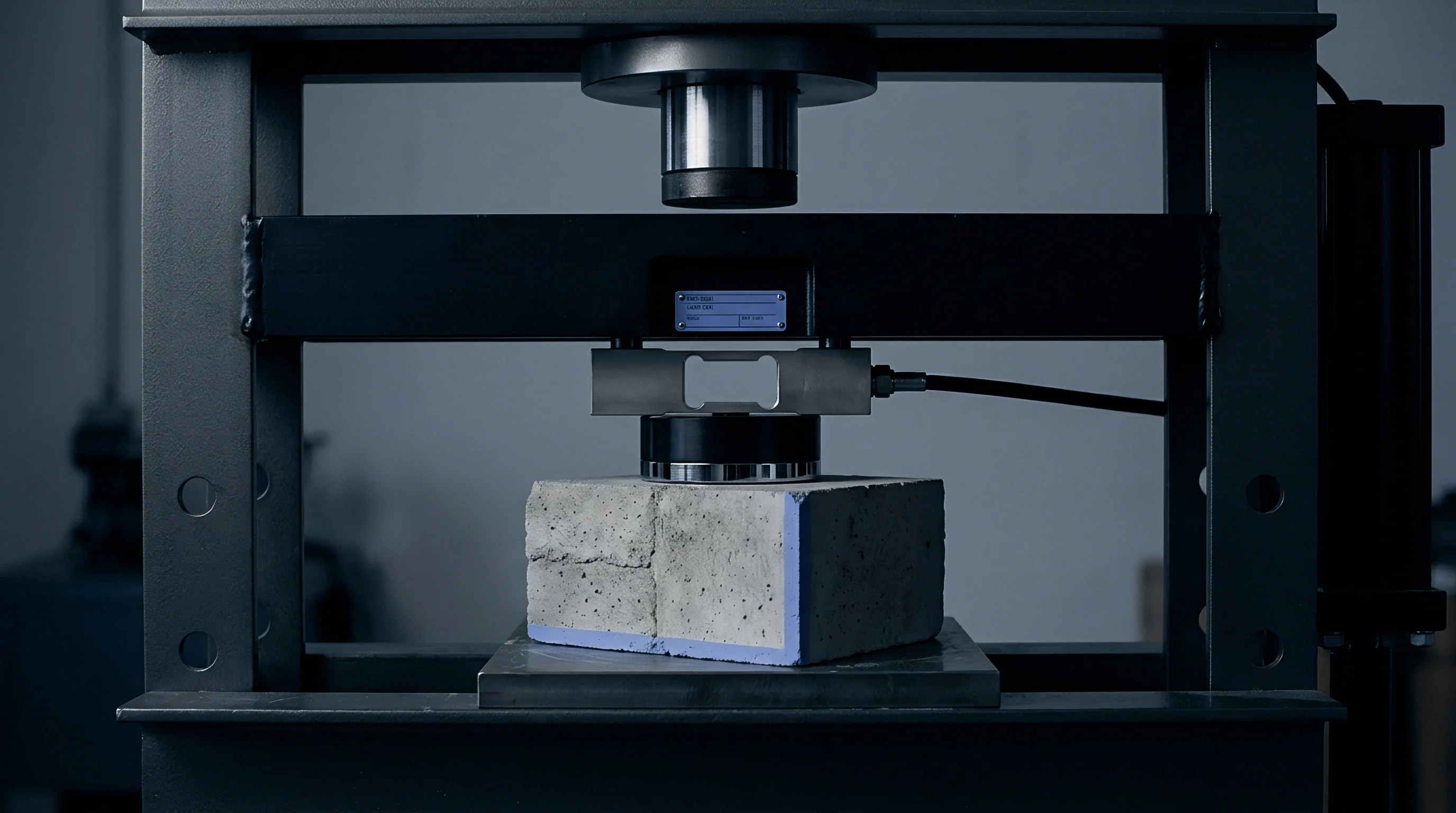

Recourse
Protecting balance sheet equity against overseas qualification stalls demands structural legal mechanics deployed prior to purchase order issuance. Commercial contracts must separate tooling fabrication payments from general trade supplier credit lines. Tooling contracts require express bailment terms, independent metallurgical sign-offs, and progressive title vestiture verified by on-site third-party inspectors before fund release.
Placing progress payments into an escrow facility controlled by third-party technical qualification gates prevents the loss of capital leverage that typically occurs after direct wire transfers to overseas accounts.
Steel sits unworked. When a vendor realizes that milestone funds remain locked in escrow until independent CMM scans confirm part dimensions, engineering priority shifts back to tool optimization. Commercial contracts must specify explicit liquidated damages for qualification delays attributable to vendor workmanship.
While contract damages under common law must represent reasonable estimates of anticipated harm, setting per-week delay assessments directly offsets the balance sheet drag of carrying unamortized capital work in process accounts.

Whose Books Carry the Idle Steel?
Determining which entity bears the financial burden of incomplete tooling requires analyzing contractual risk-of-loss provisions against local commercial statutory codes. If the supply agreement conditions asset acceptance exclusively on Production Part Approval Process Level 3 sign-off, the economic risk of fabrication failure remains with the toolmaker under standard commercial frameworks. The practical enforcement of that allocation breaks down when the buyer has already released cash advances without taking physical possession of the asset.
The buyer holds the balance sheet exposure, while the vendor retains physical possession of the steel.
The bank inspects ledgers. Facility credit agreements require regular disclosure of long-term capital commitments and overseas assets. Finance teams protect liquidity by structuring standby letters of credit or requiring advance payment refund bonds from overseas suppliers.
Under an advance payment refund bond issued through an international financial institution, any contractual failure by the toolmaker to deliver qualified parts within the agreed timeframe gives the buyer the right to draw upon the bond. This mechanism recovers the disbursed cash advance without navigating local civil litigation channels.
Where tooling is deployed in foreign jurisdictions, legal repossession protocols demand pre-registered asset identification plates stamped directly onto mold bases. The plates state buyer ownership, corporate registration data, and the precise serial identification assigned in corporate asset registers. When contract termination becomes necessary, physical identification documentation enables local legal counsel to secure preliminary injunctive relief and impound the tool, establishing clean ownership chains that auditors and asset appraisers accept when verifying asset existence and carrying value.