
Resolving Thermal Air Boundary Refraction in Laser Line Profilometry
Resolving thermal boundary refraction in laser profilometry requires laminar air purging or dual-wavelength dispersion matrix compensation.
Resolving thermal boundary refraction in laser profilometry requires laminar air purging or dual-wavelength dispersion matrix compensation.

Tactile metrology of elastomers requires sub-0.02 N trigger forces and zero-load extrapolation to prevent viscoelastic creep from corrupting part dimensions.

Process capability mechanics during engineering scale-up require separating short-term within-subgroup variation from long-term drift to prevent early yield overestimation.

Auditing closed corrective actions requires matching machine telemetry and statistical capability data against physical root-cause elimination.

Optical CMM capability on sub-millimeter molded features requires material-specific bias correction and telecentric backlighting to maintain GR&R under 20%.
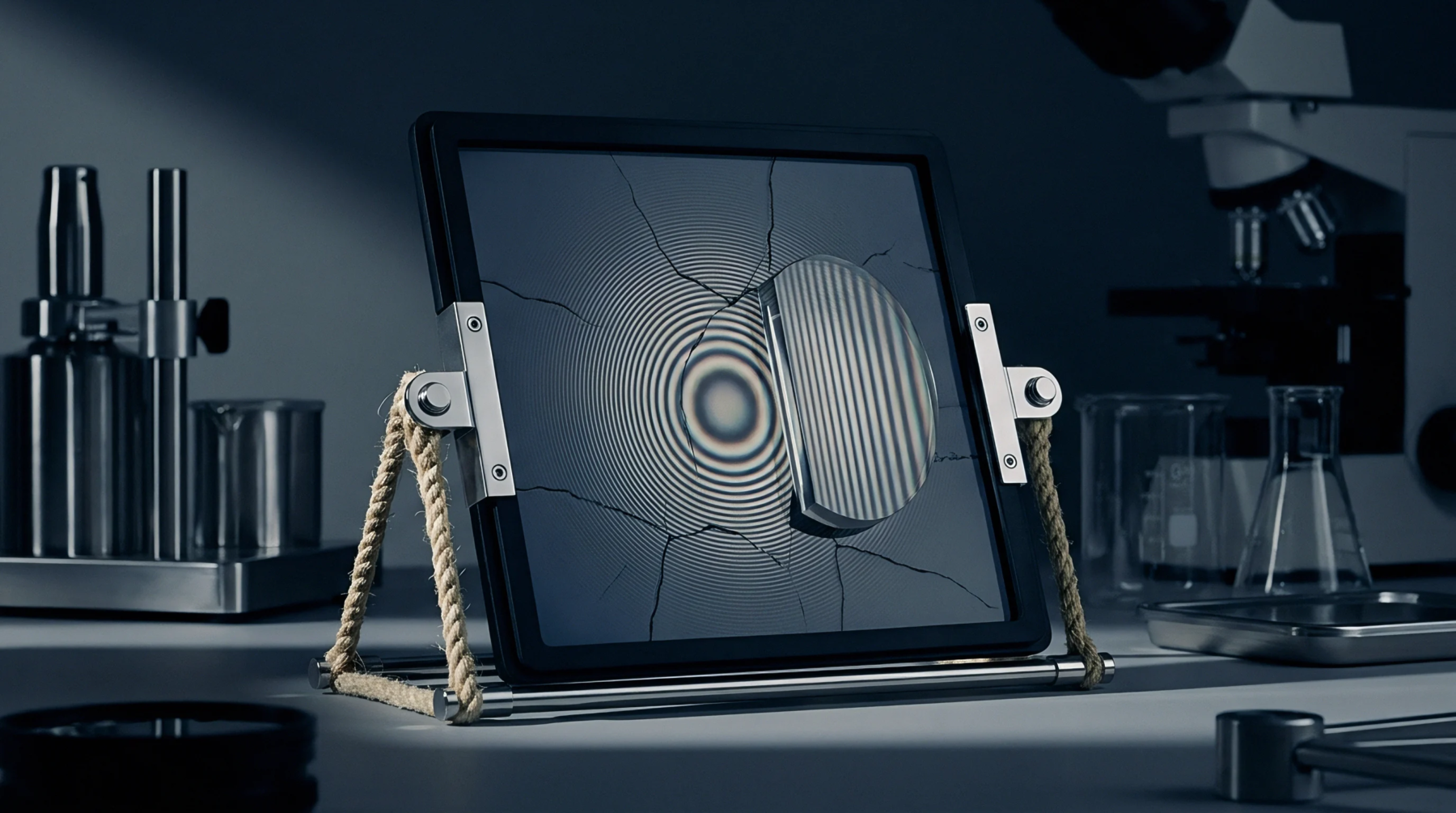
Polymer tooling qualification requires thermal soak logging, restrained datum fixturing, and optical translucency guardbands to guarantee cavity precision.
Expertise is a utility, not a secret. sentiention™ publishes its working knowledge as open reference: intelligence layer covering the materials it sources, the markets it enters, and the reference that serves both.