Predictive Multiphysics Modeling of Viscoelastic Boundary Instabilities under Transient High Throughput Conditions
Viscoelastic boundary stability under rapid throughput acceleration relies on modeling dynamic slip kinetics and controlling transient stress relaxation times.


Melt
When polymeric fluids undergo rapid volumetric acceleration, their molecular chains store elastic energy and alter boundary stress states. Non-Newtonian flow during transient high-throughput processing departs sharply from steady-state assumptions. Polymer relaxation times dictate how fast chains untangle and realign under sudden velocity shifts.
Because linear viscoelastic models miss stress buildup at high strain rates, predictive multiphysics simulations rely on non-linear constitutive equations to track anisotropic normal stress differences, shear thinning, and strain hardening.

Polymer Relaxation Kinetics
Deformation history dictates how long-chain macromolecules recover their structure. During flow through narrow die passages, polymer chains act like microscopic springs that rapidly store elastic strain. The ratio between relaxation time and characteristic process time defines the dimensionless Weissenberg number; once it crosses critical thresholds, normal stress differentials trigger secondary flow patterns and spatial stress concentrations.
High strain rates distort polymer chains.
Modeling transient viscoelastic behavior relies on differential equations built with memory functions. The Oldroyd-B model captures linear elasticity well enough, but overpredicts extensional viscosity as strain rates climb. Differential formulations like Giesekus and Phan-Thien-Tanner incorporate relaxation mechanisms that better reflect polymer dynamics under severe strain.
Viscoelastic relaxation times set the physical speed ceiling regardless of applied pressure.
Choosing the right constitutive model determines predictive accuracy in multiphysics runs. Non-linear models account for physical limits on chain stretching, preventing infinite stress singularities around sharp geometric corners.
| Constitutive Model | Weissenberg Limit | Transient Stress Accuracy | Dynamic Slip Coupling | Computational Overhead |
|---|---|---|---|---|
| Oldroyd-B | 0.5 | Low | Uncoupled | Baseline |
| Giesekus | 3.2 | High | Moderate | 1.8x Baseline |
| Phan-Thien-Tanner (PTT) | 5.0 | High | Direct | 2.1x Baseline |
| Rolie-Poly | 8.5 | Very High | Direct | 4.5x Baseline |

Transient Shear Stress Localization
Rapid acceleration spikes normal stress ratios inside narrow die land sections, distorting local stress fields. Wall shear stress concentrations grow exponentially near die exit orifices during acceleration ramps. At the same time, shear thinning lowers fluid viscosity next to solid walls and creates steep velocity gradients.
Friction from intense shear generates localized viscous heating, forming coupled thermal-rheological boundary layers that destabilize bulk flow.
Overlooking localized viscoelastic stress leads to costly tooling overhauls, unexpected line shutdowns, and high optical defect rates in finished extrudates.


Slip
Interfacial adhesion between molten polymer and die steel degrades rapidly beyond critical wall shear thresholds. Fluid directly contacting solid walls shifts from zero velocity to dynamic slip as shear stresses spike. While slip relieves stress in highly entangled melt, it introduces localized velocity discontinuities.
Transient throughput fluctuations then destabilize the interfacial lubrication film, setting off periodic stick-slip cycles along the wall.

Interfacial Disentanglement Mechanisms
Polymer molecules detach and untangle from adsorbed wall layers during high-speed processing. Wall slip begins when local shear stress exceeds the thermodynamic cohesion limit between polymer segments and die surface coatings. Non-linear Navier slip formulations govern these velocity jumps, directly linking slip speed to local wall shear stress and temperature.
This microscopic detachment quickly destabilizes macro-scale velocity profiles.
Surface roughness directly affects interfacial adhesion kinetics. Mirror-polished die lands minimize mechanical anchoring, encouraging uniform wall slip at lower shear stresses. By contrast, micro-textured surfaces create localized stress risers that trigger melt fracture before bulk slip can develop.
Wall shear stress spikes preceding slip destabilization originate in the interfacial molecular disentanglement layer.

Periodic Stick Flow Transitions
Alternating wall adhesion and release produces characteristic saw-tooth pressure signatures. As wall shear stress hits a critical threshold, the fluid accelerates abruptly and relieves stored elastic stress. Once stress drops below the level needed to maintain slip, the melt re-adheres to the die wall, initiating melt fracture.
This cyclic switching creates severe surface distortion during high-throughput runs.
Boundary failure modes emerge in distinct patterns depending on flow rates and molecular weight distribution:
- Sharkskin Surface Distortion presents as high-frequency periodic surface roughness caused by localized tensile stress failure at the die exit edge.
- Stick Slip Oscillations alternate between continuous wall slip and complete adhesion, producing macro-scale periodic volumetric throughput variations.
- Gross Melt Fracture manifests as severe chaotic structural breakdown across the entire extrudate profile under extreme shear rates.
- Interfacial Cavitation Drops develop when negative pressure fields near boundary zones exceed localized fluid cohesion limits.
Additive masterbatches eliminate boundary distortions without modifying thermal profiles.


Solver
Maintaining numerical stability in transient non-Newtonian flow models requires deliberate spatial and temporal discretization strategies. Coupling Navier-Stokes formulations with viscoelastic transport equations imparts a hyperbolic character to the system, causing instabilities at high Weissenberg numbers. Standard finite element methods produce numerical oscillations near flow singularities, so advanced stabilization techniques are required to prevent divergence during rapid acceleration ramps.

Navier Stokes Rheology Coupling
Coupling momentum conservation with viscoelastic stress tensors requires continuous tracking of localized flow history. Discrete Elastic Viscous Split Stress (DEVSS) schemes separate the extra stress tensor into viscous and elastic components. Numerical integration routines must maintain positive definiteness of the conformation tensor to preserve physical validity during sudden velocity shifts.
As viscous dissipation alters local temperatures, coupled energy equations track this thermal feedback to update localized viscosity fields.
Time integration schemes operate under strict Courant-Friedrichs-Lewy (CFL) limits. Explicit temporal solvers that capture high-frequency boundary oscillations consume heavy computation cycles, whereas implicit schemes rely on robust iterative linear solvers to handle non-linear viscoelastic coupling.

Mesh Refinement Boundary Layer Gradients
Steep velocity gradient zones near solid boundaries demand dense spatial meshing, especially where rapid die swell occurs. The mesh must resolve the microscopic boundary layer where wall slip and viscous heating concentrate. Adaptive mesh refinement dynamically subdivides spatial grids in areas experiencing sharp stress gradients during throughput ramps.
Simulating complex non-Newtonian flows demands systematic verification steps to ensure solution accuracy:
- Elastic Tensor Positivity confirms that the numerical solver preserves positive definite states for polymer conformation tensors across all elements.
- Mesh Convergence Ratios establish spatial independence by comparing wall shear stress values across progressively refined boundary element layers.
- Viscous Heating Corrections integrate dynamic temperature updates into local fluid relaxation models to prevent artificial stress accumulation.
- Transient Step Sizing limits temporal advancement increments to resolve high-frequency stick-slip frequency components without numerical damping.
Determining the ideal spatial grid resolution requires balancing computational execution time against stress precision during transient acceleration ramps.
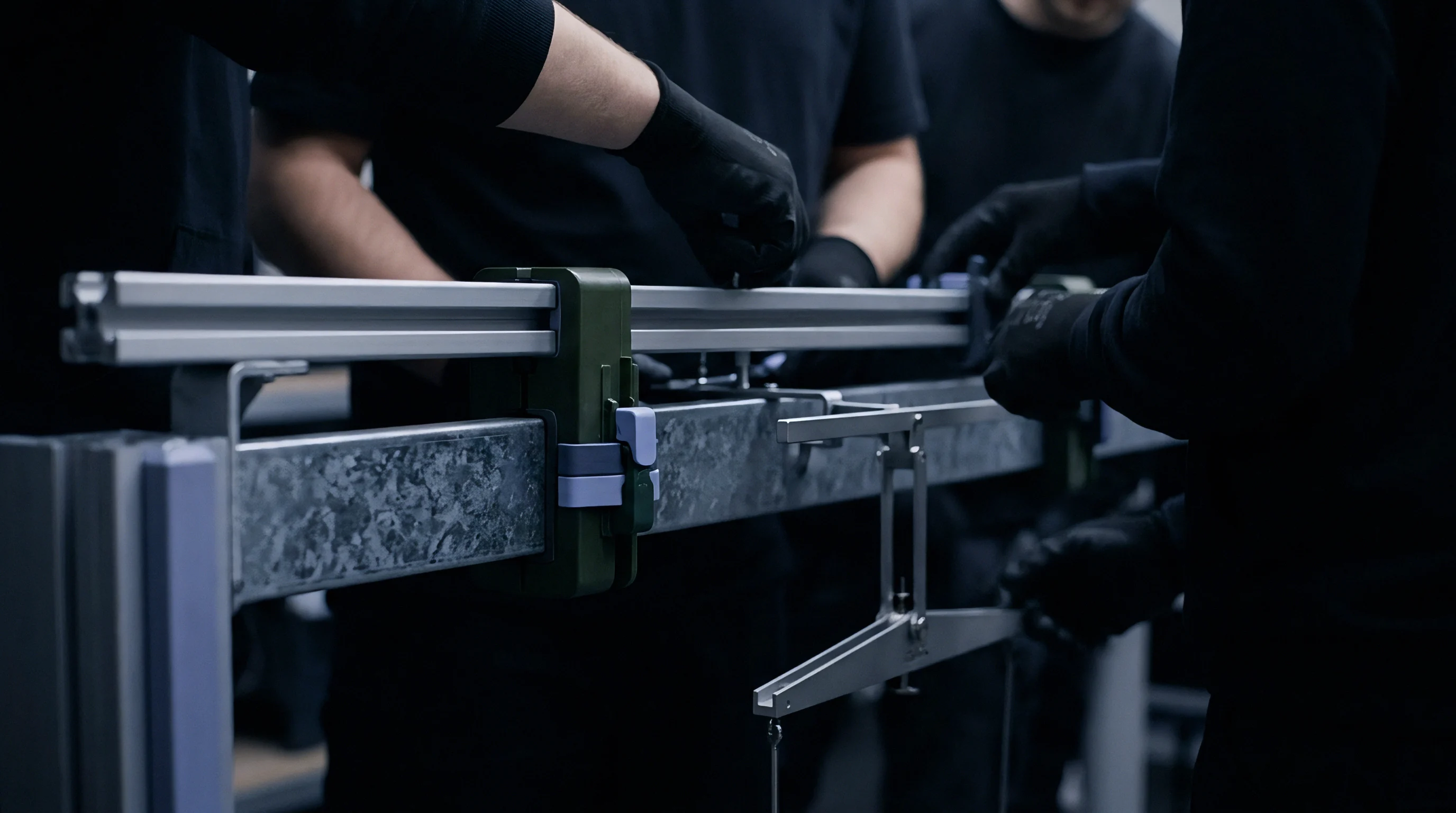

Bench
Measuring viscoelastic properties at strain rates above 10,000 s^-1 is experimentally difficult. Standard rotational rheometers cannot reach the shear rates typical of high-throughput manufacturing. Capillary rheometry, combined with high-frequency pressure transducers, provides the empirical baseline needed to calibrate predictive multiphysics solvers.
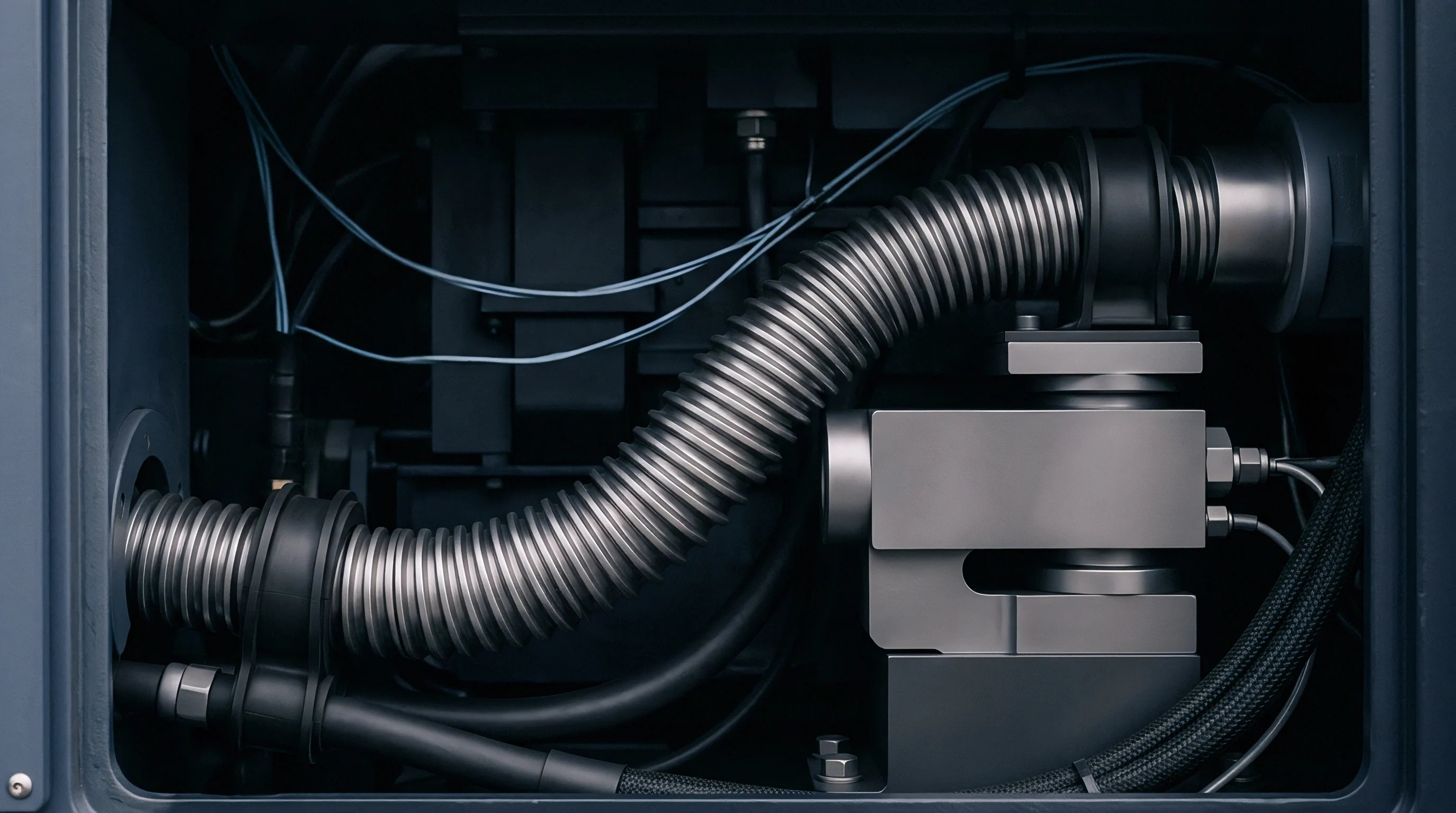
Capillary Rheometry Entrance Correction
Extruding polymer through short dies generates substantial convergent pressure drops that linear models cannot describe. Bagley corrections evaluate these entrance and exit losses by comparing pressure across capillary dies with varying length-to-diameter ratios. Rabinowitsch corrections then adjust nominal shear rates to account for non-Newtonian velocity profile flattening inside narrow die lands.
Compliance with ASTM D3835 mandates capillary die length to diameter ratios exceeding thirty to eliminate entrance pressure losses.
| Strain Method | Measurable Variable | Deformation Range | Critical Output |
|---|---|---|---|
| High-Shear Capillary | Apparent Wall Shear Stress | 10^2 to 10^6 s^-1 | Critical Slip Stress Threshold |
| Large Amplitude Oscillatory Shear | Non-Linear Storage Moduli | 0.1 to 1000% Strain | Higher-Harmonic Fourier Spectra |
| Transient Filament Extension | Extensional Viscosity Growth | 0.1 to 100 s^-1 Strain Rate | Strain Hardening Factor |
| Dynamic Mechanical Analysis | Complex Shear Modulus | 0.1 to 500 rad/s | Molecular Relaxation Spectrum |
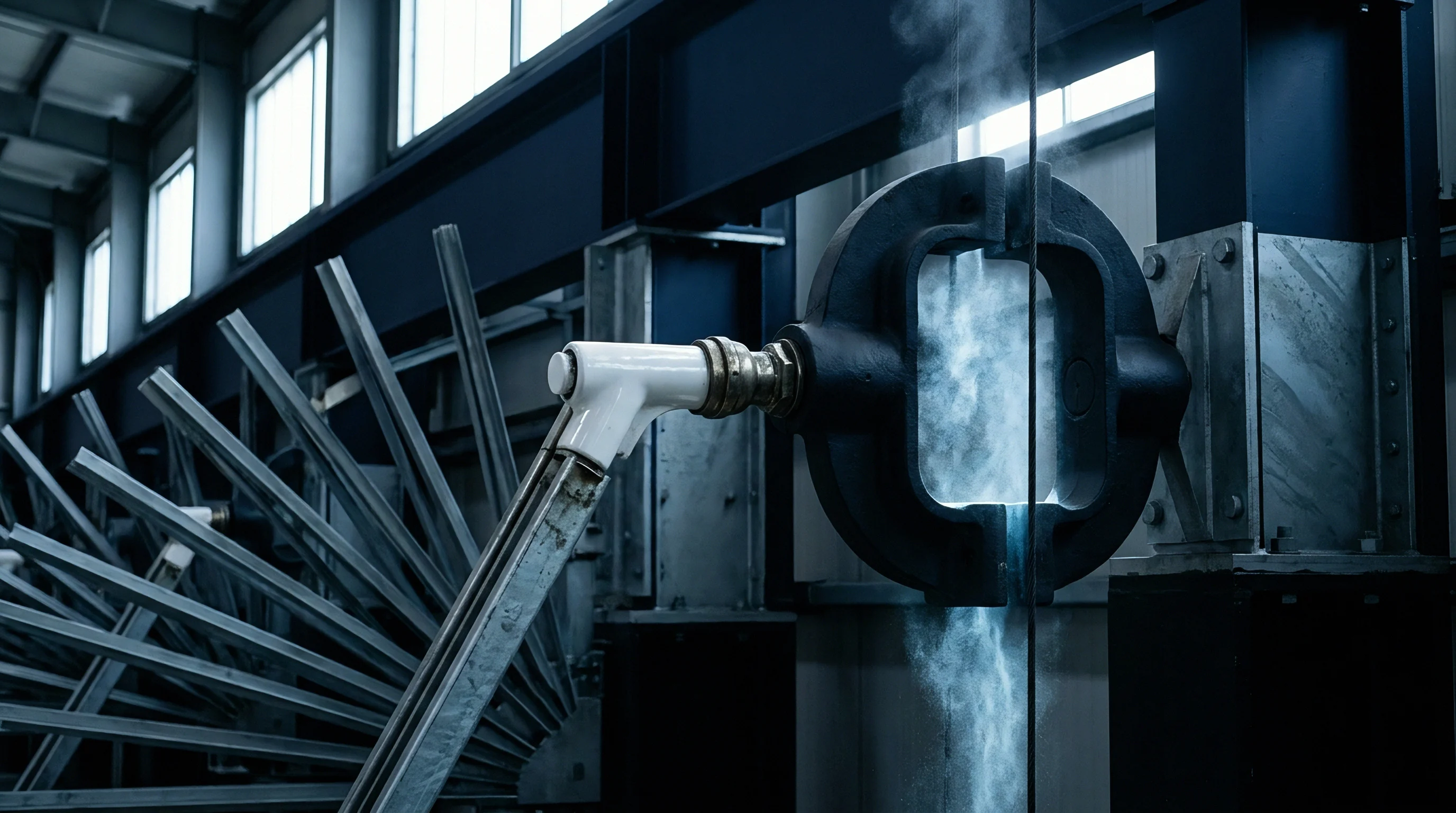
What Strain Rate Triggers Interfacial Fracture?
Exceeding critical shear thresholds forces polymer chains to disengage from solid boundaries. Capillary slit dies equipped with quartz optical windows allow direct observation of boundary layer detachment using high-speed laser Doppler velocimetry. Physical measurements confirm that surface haze emerges precisely when local wall shear stress reaches fluid-specific critical thresholds.
Testing under ISO 11443 section 6.2 mandates strict temperature stabilization, requiring thermal equilibrium within half a degree Celsius across capillary barrels before recording transient viscosity data.


Margin
Accelerating throughput on an extrusion line shifts the primary constraint from thermal dissipation to fluid elasticity. Running near instability boundaries maximizes volumetric output but increases defect risk. Multiphysics modeling identifies these operational limits, pin-pointing maximum line speeds before stick-slip transitions corrupt product geometry.
Transient Acceleration Rate Ramps
Step changes in line velocity induce severe stress overshoots compared to steady operation. Abrupt acceleration causes temporary elastic stress spikes that exceed steady-state melt fracture thresholds. Controlled linear speed ramps distribute stress buildup over longer intervals, protecting extrudate surface quality during high-speed startups.
Exceeding a Weissenberg number of six during startup acceleration generates self-sustaining melt fracture across fluoropolymer dies.

Yield Optimization Boundary Limits
Production throughput ceilings depend directly on suppressing high-speed melt distortions. Commissioning extrusion hardware under transient conditions follows systematic rate adjustments:
- Establish steady baseline operating temperatures across die regions.
- Increase line velocity at increment rates below five percent per minute.
- Monitor wall pressure transducer readings for high frequency pressure spikes.
- Adjust internal fluid temperature setpoints upon detecting initial optical haze.
Operating below seventy percent of critical wall shear stress prevents sudden surface defects during transient line speed variations.