Meaning
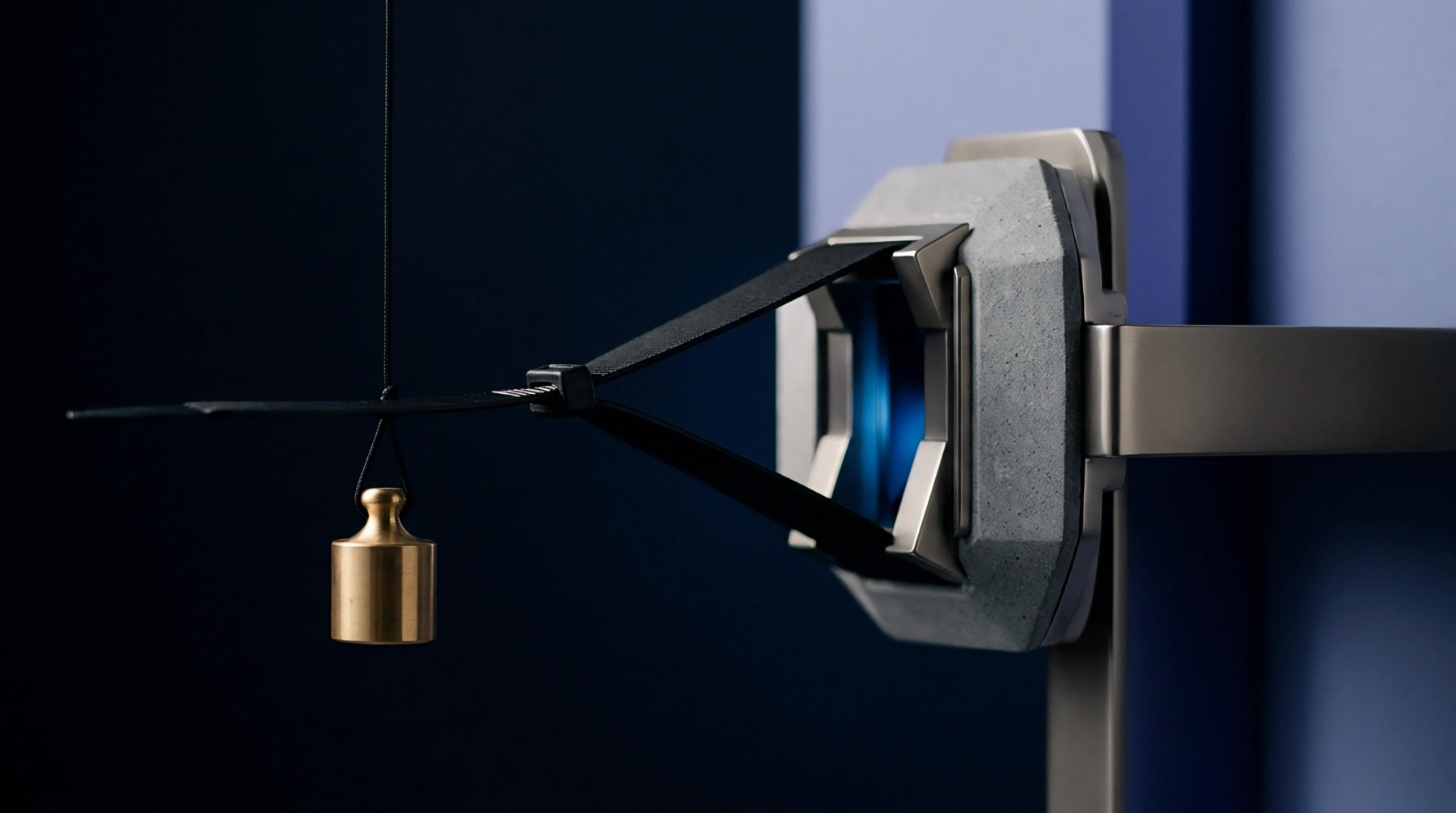
The maximum temperature gradient or heat load a solid component can withstand before the resulting thermal stresses exceed its tensile strength. Understanding the thermal fracture limit is essential for designing high-power laser systems and optical windows exposed to intense thermal environments.
Stress Origin
Non-uniform heating or cooling creates thermal gradients that cause different regions of a component to expand at different rates. These expansion differences generate internal stresses, and when these stresses surpass the material’s mechanical strength, they reach the thermal fracture limit. The outer surfaces, which are typically cooler, experience tensile stress while the hotter core is under compression.
Cracks initiate at surface defects where the tensile stresses are concentrated.
Material Parameter
Several intrinsic physical properties determine the capacity of a material to resist heat-induced mechanical failure. The thermal fracture limit is directly proportional to both the thermal conductivity and the fracture toughness of the material, while being inversely proportional to the thermal expansion coefficient and Young’s modulus. Materials with high thermal conductivity dissipate heat quickly, which reduces the temperature gradients.
In contrast, high thermal expansion increases the strain generated by a given temperature difference.
System Consequence
Exceeding this boundary leads to catastrophic mechanical failure that destroys the optical component and risks damage to surrounding hardware. Designers must operate well below the calculated thermal fracture limit by incorporating safety margins and optimized cooling geometries. Active cooling using water or micro-channel heat sinks is often necessary to handle high-power loads.
Regular inspections are conducted to detect microscopic surface cracks before they can propagate under thermal stress.