Meaning
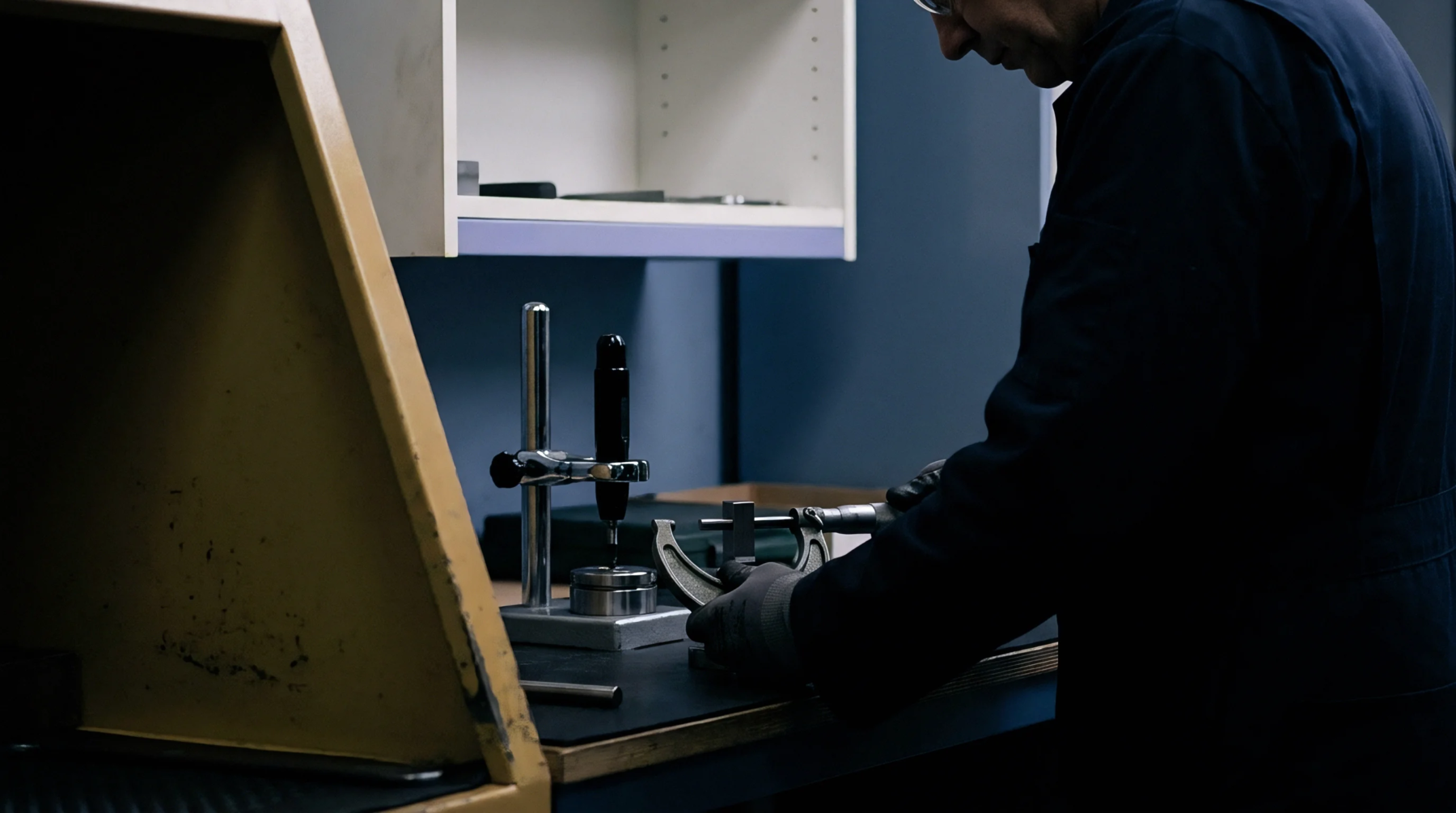
Metrology instruments determine the physical dimensions of manufactured parts by acquiring the spatial coordinates of discrete surface points. Automated manufacturing lines utilize coordinate measuring systems to verify that fabricated components comply with strict dimensional tolerances. These instruments employ tactile probes or optical sensors to register point locations relative to a defined reference frame.
The boundary of their application is reached when part surface roughness or transparency interferes with the feedback mechanisms of the sensor.
System Accuracy
Mechanical alignment of the guiding axes and the rigidity of the support structure govern the precision of the coordinate data. Small geometry errors in the machine rails propagate into the calculated coordinates of the inspected part. Regular calibration using certified reference spheres ensures that coordinate measuring systems maintain their volumetric accuracy within sub-micron limits.
Environmental Sensitivity
Temperature fluctuations in the inspection area cause thermal expansion of both the measuring instrument and the component being measured. Maintaining a stable temperature of twenty degrees Celsius is standard practice for high-precision metrology laboratories. Even a minor thermal gradient of one degree Celsius along the machine axis can shift the recorded positions of the points, necessitating real-time mathematical compensation of the encoder signals to prevent measurement drift.
Without these compensations, the reported dimensions of a production run will vary based entirely on the time of day the audit occurs.
Operational Throughput
Integrating automated inspection routines directly into the production flow reduces the cycle time for quality assurance. High-speed scanning heads capture thousands of points per second without stopping at each discrete location. This continuous acquisition increases the frequency of part audits, allowing manufacturing processes to be adjusted before deviations exceed the allowable tolerance bands.