Resolving Non-Equilibrium Multiphase Hold-Up Uncertainties within Continuous Industrial Process Plant Project Escrow Settlement Contracts
Resolving multiphase hold-up uncertainties requires non-equilibrium drift-flux modeling and tomographic density scans bound into structured escrow true-up contracts.

Swell
Continuous multiphase reactors and high-pressure separators experience phase slip, entrainment, and flash vaporisation during performance acceptance trials. Mass balance verification becomes volatile when operating fluid mixtures deviate from thermodynamic equilibrium assumptions. Liquid hold-up within columns, knock-out drums, and interconnecting pipe networks varies dynamically with minor pressure fluctuations and chemical feed variations.
Static level transmitters misread liquid inventories when gas bubbles remain entrained inside liquid columns or when dense foams form at phase boundaries.
Engineering, procurement, and construction contracts link major escrow releases to strict material balance closure across process boundaries. Standard acceptance testing assumes steady-state liquid inventory within processing vessels during the seventy-two-hour performance run. Dynamic liquid expansion and entrainment disrupt this assumption.
Differential pressure transmitters calculate fluid density using liquid phase values, ignoring void fractions introduced by non-equilibrium gas evolution. The resulting inventory error scales directly with vessel volume, creating mass discrepancies between recorded feed inputs and measured product outputs.
Process equipment operating at elevated pressures exhibits delayed thermodynamic equilibrium. Dissolved light hydrocarbons or reactive gases flash out of solution downstream of primary control valves, creating transient vapor pockets that alter hold-up volume. Standard flowmeters placed at battery limits record total mass entered, yet internal plant hold-up absorbs or releases mass without changing externally visible vessel levels.
Dynamic inventory shifts confuse contract verification audits, as unrecorded fluid mass remains trapped in vessel packing, internal trays, and recirculation lines.
Continuous slurry reactors under transient gas velocities exhibit up to eighteen percent variance between differential pressure mass readings and real hydrodynamic fluid mass.
Vessel architecture dictates how non-equilibrium fluids distribute across processing units. Deep liquid pools in bottom sumps experience hydrostatic pressure gradients that suppress vapor bubble growth, creating non-uniform density profiles along the vertical elevation of high-pressure distillation columns. External differential pressure cells measure pressure drop across fixed taps, translating that reading into an assumed average liquid level.
Gas volume fractions within the pool lower the apparent fluid density, causing level instruments to report lower liquid mass than the vessel physically contains.
| Vessel Designation | Operating Pressure Regime | Primary Multiphase Phenomenon | Observed Inventory Error Bounds |
|---|---|---|---|
| High-Pressure Hydrocracker Separator | 12.0 to 15.0 MPa | Dissolved Gas Flash Delays | Plus or minus 8.4 percent true liquid mass |
| Continuous Stirred Slurry Reactor | 3.5 to 5.0 MPa | Interfacial Gas Slip and Drag | Plus or minus 14.2 percent true fluid mass |
| Packed Distillation Column Sump | 0.8 to 1.5 MPa | Foam Accumulation and Entrainment | Plus or minus 11.0 percent true liquid mass |
| Gas-Liquid Knock-Out Vessel | 2.0 to 4.0 MPa | Droplet Entrainment in Vapor Phase | Plus or minus 6.1 percent true liquid mass |
Contractual settlement provisions encounter severe friction when plant inventory shifts mirror performance deficiencies. Engineering auditors face difficult choices when identifying whether missing mass stems from physical operational losses or transient internal accumulation. Liquid holdup uncertainties destabilize performance guarantee verifications.
Establishing clear physical mechanisms behind non-equilibrium fluid volume shifts remains essential before evaluating financial escrow retainage disputes.
Dynamic holdup mechanisms degrade the accuracy of standard mass balance logs across complex plant sections. Operators observing transient process conditions often record conflicting mass closure data during commissioning runs:
- Interfacial drag variance shifts liquid retention times inside packed beds, altering actual fluid mass independent of liquid level indicator readings.
- Thermodynamic flash delay prevents immediate vapor bubble release, generating sub-cooled liquid zones that hold dissolved vapor mass beyond theoretical equilibrium predictions.
- Foam layer accumulation creates expanded phase boundary zones, forcing differential pressure instruments to report false liquid level positions.
- Recirculation eddy retention traps high-density liquid fractions in vessel sumps and reboiler lines, withholding mass from main discharge flowmeters.
Miscalculating baseline fluid mass during acceptance testing triggers unwarranted damages claims while leaving true plant throughput unverified.

Discrepancy
Operational accounting records frequently conflict with engineering material balances during plant commissioning performance tests. Operating data logs extract flow rates from mass flowmeters located at facility boundaries, while internal vessel balance calculations rely on static level instrumentation calibrated for single-phase liquid. Diligence audits comparing plant production data against contractual yield targets reveal systemic gaps between physical inventory and accounting receipts.
Discrepancies magnify during ramp-up phases when thermal and hydraulic steady-state conditions remain elusive. During continuous forty-eight-hour testing windows, continuous process units shift between operating regimes, continuously altering internal fluid density and liquid-gas hold-up ratios. The plant telemetry system registers continuous feed input, but product yield calculations fail to achieve theoretical ninety-nine percent mass closure.
The unaccounted mass sits inside vessel packing, piping loops, and phase boundary emulsions.
Under ISO 5167 measurement conditions, dynamic fluid density variations exceeding three percent invalidate single-phase differential flow calculations across standard orifice plates.
Engineering examiners scrutinize instrument calibration records to isolate measurement errors from non-equilibrium fluid physics. Standard differential pressure instruments report mass by assuming constant phase densities derived from offline physical property packages. When actual process fluids undergo transient temperature or pressure shifts, phase density assumptions break down entirely, rendering raw telemetry values unreliable for contract settlement calculations.
- Extract high-frequency telemetry data for pressure, temperature, and volumetric throughput across all process boundary nodes.
- Conduct gamma densitometry tomographic scans along vertical vessel axes to locate emulsion zones and phase inversion interfaces.
- Inject chemical tracer isotopes into liquid feeds to establish true residence time distribution curves under steady operating parameters.
- Reconcile total system fluid volume against static drain-down calibration figures obtained during initial water runs.
Discrepancy resolution relies on verifying physical operational evidence against raw instrumentation logs. Plant owners demanding full escrow release often cite battery limit flowmeter totals, while EPC contractors point to unmeasured internal holdup expansion as the source of apparent material losses. Resolving this friction demands independent physical verification protocols applied directly to non-equilibrium process nodes.
EPC contractors routinely attribute mass inventory imbalances to unexpected changes in raw feed gas composition rather than hydraulic hold-up miscalculations within vessel internals.
Model
Quantifying fluid inventory across continuous process units requires coupled hydrodynamic drift-flux equations and non-equilibrium equation-of-state calculations. Traditional process simulators assume instantaneous vapor-liquid equilibrium within flash calculations, underpredicting liquid hold-up in high-velocity separators. Accurate financial settlement models incorporate dynamic slip ratios and finite phase-change kinetic rate constants to reconcile physical inventory hold-up variations with financial escrow conditions.

Hydrodynamic Inventory Modeling Formulations
Dynamic drift-flux modeling establishes the spatial distribution of vapor and liquid phases within vertical and horizontal processing vessels. The total mass holdup within a continuous vessel represents the integrated sum of localized phase volume fractions multiplied by their respective dynamic densities. Dynamic gas void fraction relies heavily on superficial gas velocity, fluid viscosity, and column pressure gradients.
Equation-of-state models utilizing Peng-Robinson or Perturbed-Chain Statistical Associating Fluid Theory parameters generate realistic non-equilibrium liquid densities across rapid pressure drops.
Consider a three-stage gas-liquid separation train operating at a nominal total mass feed rate of 450 tonnes per hour under an operating pressure of 7.5 MPa. Standard equilibrium design models calculate a static liquid hold-up of 42.5 tonnes inside the primary separator vessel sump. Dynamic drift-flux corrections accounting for non-equilibrium flash lags reveal an additional 4.8 tonnes of gas mass dissolved in sub-cooled liquid, while phase slip reduces true liquid volume fraction by 14.2 percent across vessel internals.
Incorporating drift-flux corrections changes calculated plant inventory substantially, altering material balance closure results for escrow evaluation.
| Process Node / Vessel Section | Equilibrium Model Hold-Up Estimate | Non-Equilibrium Drift-Flux Hold-Up | Net Accounting Discrepancy | Escrow Settlement Impact Value |
|---|---|---|---|---|
| Primary High-Pressure Separator | 42.5 tonnes | 47.3 tonnes | Plus 4.8 tonnes | Retention adjustment required |
| Secondary Intermediate Separator | 18.2 tonnes | 15.9 tonnes | Minus 2.3 tonnes | Yield target offset cleared |
| Interconnecting Gas-Liquid Lines | 8.6 tonnes | 12.1 tonnes | Plus 3.5 tonnes | Material balance true-up applied |
| Column Bottoms Reboiler Loop | 14.1 tonnes | 15.0 tonnes | Plus 0.9 tonnes | Within acceptable error band |
The total reconciled system holdup shifts from 83.4 tonnes under static equilibrium assumptions to 90.3 tonnes under non-equilibrium multiphase flow conditions. This 6.9-tonne variance represents 1.53 percent of hourly plant mass throughput. Across a seventy-two-hour performance test, uncorrected model errors accumulate to 496.8 tonnes of unaccounted product, exceeding typical contract dispute thresholds for escrow release.
Phase slip always concentrates the denser liquid component inside process piping relative to total volumetric feed proportions.
Validating non-equilibrium hold-up models requires calibrating numerical predictions against measured plant operating parameters. Engine models that ignore dynamic liquid swell create false performance deficits during plant handover audits. Adjusting computational thermodynamic parameters ensures contractual inventory true-ups reflect actual hydrodynamics rather than unverified mathematical assumptions.
Incorporating API Technical Data Book Chapter 8 non-equilibrium liquid density routines into contract balance calculations eliminates arbitrary inventory adjustments during final performance true-up.


Arbitration
Resolving escrow disputes over performance guarantees requires structured financial retainage release schedules tied to empirical measurement bounds. Commercial escrow settlement contracts contain retainage clauses that lock up between five and fifteen percent of total EPC contract value until plant performance metrics clear verified thresholds. Escrow settlement mechanisms must account for inherent non-equilibrium hold-up uncertainties rather than treating unmeasured mass variance as contractor default.
Can Tomographic Scans Resolve Holdup Inventory Disputes?
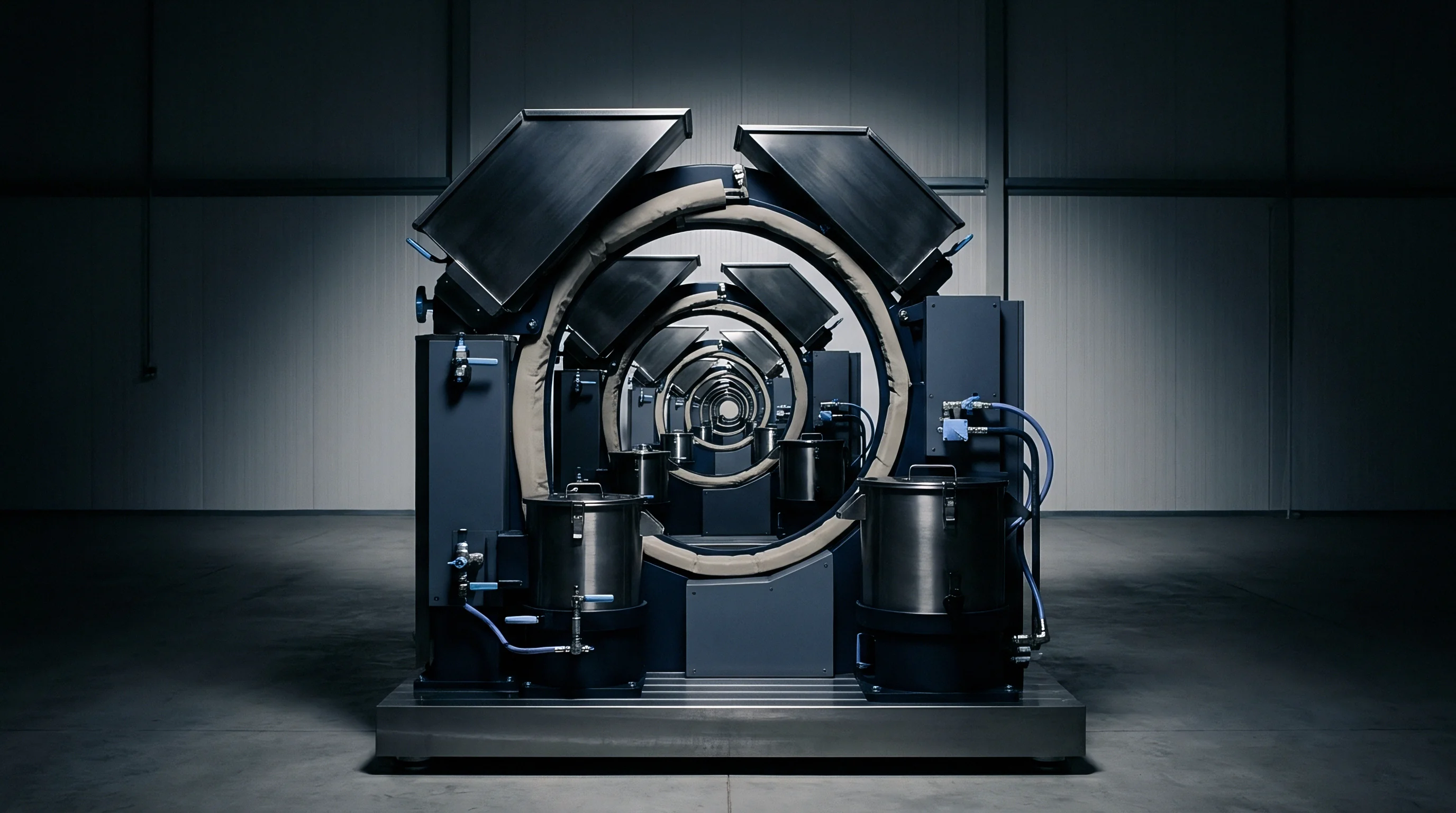
Gamma densitometry tomographic scanning provides non-intrusive physical mapping of fluid density distributions inside live operating vessels during performance runs. Independent engineering auditors utilize dual-energy gamma scans along column shells to verify liquid levels, foam heights, and vapor void fractions in real time. Comparing tomographic spatial density maps against process model predictions yields verifiable proof of dynamic hold-up mass.
Validated tomographic evidence allows escrow agents to issue partial retainage disbursements while final material balance true-ups remain underway.
| Mass Balance Closure Tier | Multiphase Hold-Up Uncertainty Band | Escrow Release Percentage | Contractual Remedy Action |
|---|---|---|---|
| Tier 1: Full Technical Closure | Less than plus or minus 1.5 percent | 100 percent of retainage | Unconditional contract discharge |
| Tier 2: Validated Hydrodynamic Deviation | 1.5 to 3.5 percent with model proof | 85 percent of retainage | Provisional release; 90-day true-up |
| Tier 3: Unresolved Non-Equilibrium Discrepancy | 3.5 to 6.0 percent unverified | 50 percent of retainage | Mandatory joint engineering audit |
| Tier 4: Material Performance Deficit | Greater than 6.0 percent mass gap | 0 percent of retainage | Draw down performance security bond |
Contractual settlement terms structure retainage releases around verified technical performance tiers. Staging financial distributions protects plant owners from unverified capacity claims while providing EPC contractors liquidity upon proving physical operational integrity.
Escrow release structures collapse when contracts define performance guarantees on unmeasurable transient equilibrium states.
Sequential audit protocols protect both commercial parties during settlement negotiations. Establishing clear evidentiary rules prevents endless legal technicalities over physical measurement limitations:
- Baseline static calibration establishes static vessel volumes during initial fluid fill runs before thermal ignition or gas pressurisation.
- Transient performance logging isolates dynamic hold-up variance across seventy-two hours of uninterrupted design throughput testing.
- Independent engineering reconciliation calculates final mass inventory true-ups using pre-agreed thermodynamic equation sets.
- Tranche release execution transfers escrow funds based on verified mass closure percentages rather than single-point throughput figures.
The open issue remains whether real-time tomographic dense-phase scanning can replace post-test financial retainage adjustments entirely in next-generation process plant contracts.
Settlement
Final financial release between plant owners and engineering constructors hinges on binding true-up terms executed post-commissioning. Commercial settlement agreements must convert physical multiphase hold-up uncertainties into quantified financial risk boundaries. Rather than litigating theoretical mass imbalances, structured settlement contracts establish post-commissioning true-up windows during which plant operating data settles into steady-state equilibrium.
Cash flows move when dynamic operational parameters align with commercial terms.
Risk-adjusted indemnity caps limit financial liability arising from multiphase inventory measurement limits. Owners and contractors manage residual mass balance risks by defining explicit materiality caps inside settlement schedules. Liquid volume uncertainties within verified hydrodynamic ranges trigger direct financial true-up calculations based on raw material purchase costs, bypassing contract breach declarations.
Contract drafting controls how non-equilibrium uncertainties resolve during final financial audits. Strategic settlement frameworks establish objective technical criteria for releasing held-back capital:
- Thermodynamic equation agreement binds both parties to a single computational fluid dynamic package for all post-test inventory reconciliations.
- Holdback retainage caps limit maximum cash exposure to ten percent of total project EPC contract value during performance verification.
- Measurement uncertainty thresholds define exact percentage bounds where financial true-up provisions trigger without contractual default penalties.
- Post-commissioning auditing windows specify a ninety-day operational window to capture continuous steady-state inventory shifts under commercial loads.
Escrow clauses drafted around dynamic physical measurements always protect cash flows better than clauses drafted around theoretical balance sheet assumptions.