Dynamic Hydraulic Pressure Profiling under Transient Viscoelastic Rheology Shifts in High Speed Coating
Dynamic hydraulic profiling identifies viscoelastic normal stress surges inside the die land, defining true speed limits before bead breakup causes film scrap.
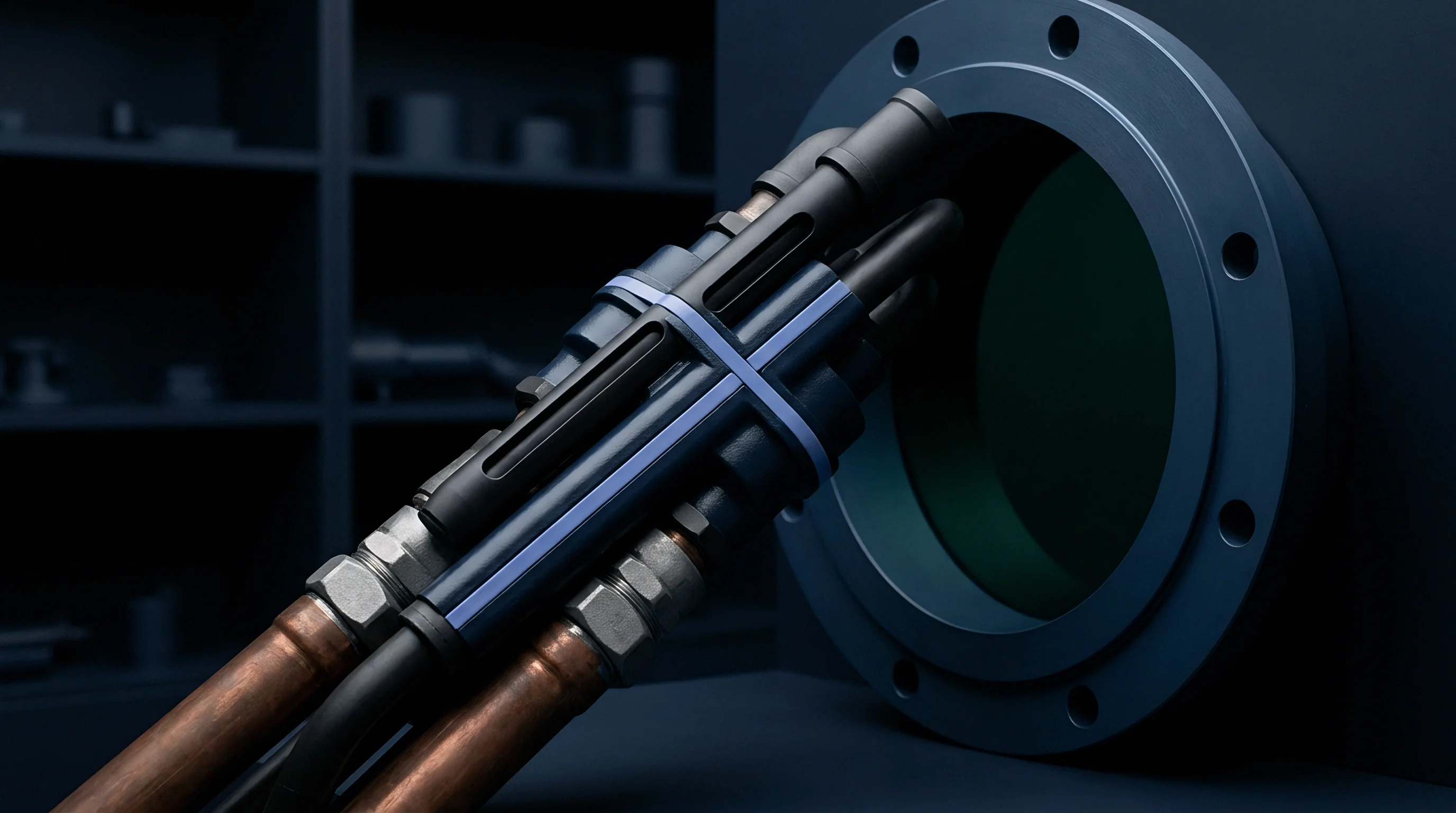

Land
Slot die coating lips establish the fluid boundary where feed pressure converts into web film thickness. At line speeds above eight hundred meters per minute, fluid elements traverse the final distribution channel in fractions of a millisecond. Standard Newtonian lubrication calculations predict a steady parabolic pressure drop across this boundary.
Polymer solutions and formulated functional dispersions break that assumption. When long-chain polymers or concentrated colloidal binders experience shear rates above one hundred thousand reciprocal seconds, fluid elasticity generates significant first normal stress differences. These normal stresses exert an extra upward force against the die lips, distorting the expected hydraulic gradient.
The gap between the lower die lip and the moving substrate forms the coating bead. In this confined zone, fluid undergoes simultaneous shear deformation against the web and extensional stretching near the downstream meniscus. Fluid elasticity manifests as a non-monotonic pressure profile.
Instead of a uniform monotonic decay from the internal manifold port to atmospheric exit, the local hydraulic pressure spikes near contraction zones and exhibits sudden drops near expanding geometries. Sensors installed along the land record these deviations as transient departures from steady-state Hagen-Poiseuille predictions.
Substrate speed sets the deformation rate. Faster lines shrink fluid transit time below the relaxation time of high-molecular-weight additives. As Deborah numbers exceed unity, the liquid resists instantaneous conformational adjustment.
The resulting stress accumulation creates upstream pressure peaks that push fluid laterally toward the deckles. Plant operators observe this as edge beads, irregular wet edges, or intermittent weeping at the feed slot entry. When the upstream pressure exceeds the vacuum box hold-down capability, the liquid bridge destabilizes immediately.
The measured hydraulic pressure profile deviates from lubrication models by more than forty percent when the Weissenberg number surpasses two.
Viscoelastic tension along stream lines alters the meniscus curvature. The downstream wet film caliper depends directly on the net pressure drop across the coating bead. If internal elastic stresses fluctuate due to batch-to-batch variations in molecular weight distribution, the hydraulic force acting across the die land shifts dynamically.
Web tension fluctuations compound the problem by changing the effective mechanical clearance between the backing roll and the die face.
Operators attempting to correct cross-web caliper errors by mechanical micro-adjusters often worsen the underlying hydraulic imbalance. Adjusting lip bolts alters the local shear field, which triggers localized changes in polymer normal stress. The fluid responds with localized normal force surges that counteract bolt travel.
Coating plants running high-solids emulsions or high-molecular-weight optical coatings encounter chronic yield losses when line speed ramps outpace the relaxation dynamics of the coating fluid. Film splitting lines develop across the substrate, leaving permanent streak defects that scrap entire production rolls.


Relaxation
Polymer chains require discrete time intervals to reorient after experiencing sudden kinematics shifts. Inside the die manifold, fluid velocities remain low and shear rates rarely exceed one hundred reciprocal seconds. As fluid turns ninety degrees into the feed slot, channel convergence accelerates the stream into a high-shear regime within three millimeters of travel.
This abrupt contraction subjects the fluid to intense planar elongation combined with simple shear. The transition happens over several milliseconds, which falls directly within the spectrum of polymer conformational relaxation times.
Stress growth functions govern the rheological state during this entry flow. While steady shear rheometers report shear thinning behavior at elevated deformation rates, transient extensional rheology reveals pronounced strain hardening in solutions containing high-molecular-weight fractions. The fluid stiffens along the flow direction before reaching the lip exit.
Consequently, hydraulic resistance through the slot land becomes history-dependent. A fluid element carrying memory of manifold contraction stresses arrives at the coating gap in an unrelaxed state.
What Drives Upstream Pressure Build under Extension?
Extensional viscosity surges create localized flow resistance far exceeding pure shear predictions. In converging die channels, fluid acceleration forces macromolecules to uncoil along the centerline. The fluid builds an extra extensional stress component that adds directly to the isotropic hydraulic pressure measured by wall transducers.
If the die land length is insufficient to permit molecular relaxation, this stress carries straight into the coating bead.
Relaxation length defines the minimum channel travel distance needed for normal stresses to decay toward steady-state levels. Dividing mean stream velocity by the characteristic fluid relaxation rate yields this physical dimension. When high coating speeds push line throughput beyond line design points, the actual slot land length falls well below the required relaxation length.
Fluid enters the atmospheric coating gap under severe residual elastic tension.
| Viscoelastic Formulation Type | Characteristic Relaxation Time (ms) | Operating Weissenberg Number | Operating Deborah Number | Observed Hydraulic Gradient Regime |
|---|---|---|---|---|
| Aqueous Polyvinyl Alcohol Binder (4 wt%) | 1.2 | 0.85 | 0.34 | Quasi-Viscous Decay |
| Solvent Polyurethane Acrylate (28 wt%) | 4.6 | 3.20 | 1.31 | Nonlinear Stress Build |
| Cellulose Acetate Butyrate Complex (15 wt%) | 8.5 | 5.90 | 2.42 | Localized Upstream Pressure Surge |
| High-MW Polyethylene Oxide Doped Dispersion | 14.0 | 9.80 | 4.00 | Elastic Voiding and Upstream Weeping |
Transient elasticity creates a severe phase lag between line acceleration and flow equilibrium. Ramping line speed from four hundred to eight hundred meters per minute doubles the wall shear rate, which cuts apparent viscosity in shear-thinning fluids. However, the fourfold reduction in passage time prevents polymer chains from reaching steady-state orientation.
The fluid exhibits elevated resistance to flow during the entire acceleration window.
Feed pump control systems relying solely on steady-state viscosity tables deliver incorrect mass flow rates throughout line speed transitions. The positive displacement pump encounters unexpected backpressure spikes during speed ramps. Pressure control loops destabilize because the process fluid behaves like an active elastic spring rather than a passive viscous damper.
Web lines experience transient wet film starvation followed by heavy laydown surges as the accumulated elastic stress discharges into the bead.
Die land lengths must exceed the fluid relaxation length to prevent unrelaxed extensional stresses from distorting the coating bead.
Diagnostic verification of this behavior demands high-frequency oscillatory shear testing alongside extensional index measurements. Standard single-point rotational viscometers completely obscure the relaxation time constant. Quality control certificates documenting simple Brookfield viscosity guarantee zero predictability regarding coating bead stability at operational web velocities.
Formulation engineers adjust solids loading or solvent ratios to modify steady shear figures, yet the underlying molecular weight tail remains unaltered, preserving the disruptive elastic memory.

Instability
Hydrodynamic stability in the coating bead hinges on maintaining a continuous, stable meniscus line across the entire machine width. When fluid normal stresses reach magnitude parity with capillary pressures, the free surface buckles. The capillary pressure jump across the liquid-gas interface scales inversely with meniscus radius of curvature according to the Young-Laplace relation.
Viscoelastic normal stresses act in direct opposition to this capillary containment force, promoting lateral air finger penetration.
Meniscus ribbing emerges when lateral pressure gradients develop along the downstream wet line. In Newtonian fluids, ribbing initiates at critical capillary numbers determined purely by viscosity, surface tension, and web velocity. Viscoelastic fluids initiate ribbing at drastically lower line speeds.
The elastic normal stress difference introduces a hoop stress along streamline curves that pulls fluid into discrete flow bundles, breaking uniform cross-web film distribution into periodic corduroy-like bands.

Will Channel Convergence Suppress Meniscus Breakup?
Accelerating the fluid through a tapered lip geometry increases local shear rates but shortens residence times. While geometric contraction sharpens the stream velocity profile, it amplifies extensional stresses at the exit throat. Transducers placed near the downstream lip tip record violent pressure oscillations when these elastic instabilities manifest.
Line operators encounter distinct defect classes as viscoelastic stress levels fluctuate during production runs:
- Ribbing bands develop along machine direction lines when downstream normal stresses overwhelm capillary surface tension at critical Weissenberg thresholds.
- Air entrainment fingers puncture the upstream meniscus when dynamic contact line wetting failure occurs under severe viscoelastic normal stress resistance.
- Edge weeping beads accumulate on the die face when upstream hydraulic pressure exceeds applied vacuum box differential limits during line accelerations.
- Cross-web chatter bars form periodically across the web when elastic stress buildup and discharge cycles establish self-excited hydraulic oscillations in the slot land.
Air entrainment represents the terminal speed limit for high-speed continuous coating. Ambient air forms a moving boundary layer on the incoming web surface. Wetting line displacement requires the coating fluid to displace this air film within microsecond contact intervals.
Viscoelastic fluids resist rapid wetting line deformation due to high transient extensional viscosity at the dynamic contact line. The meniscus lifts off the substrate, allowing micro-bubbles to ingest into the wet film.
Under ISO 28158 coating standards, microscopic air entrainment voids exceeding ten micrometers mandate immediate reel rejection for high-barrier films.
Upstream vacuum boxes counteract air entrainment by applying a negative pressure differential across the bead. This vacuum holds the upstream meniscus in place against web drag forces. However, viscoelastic hydraulic pressure spikes inside the bead alter the force equilibrium.
When internal hydraulic pressure surges upward, it neutralizes the stabilizing effect of the vacuum differential. The upstream meniscus breaks forward, initiating instant cascade bubbles or wet film skips.
Equipment vendors often claim that increasing vacuum box suction pressure resolves high-speed wetting failures. This assertion ignores the elastic root cause. Higher vacuum suction draws excess unrelaxed fluid into the vacuum chamber, fouling filtration traps and causing severe bead oscillation without suppressing microscopic air entrainment.

Transducer
Tracking rapid viscoelastic pressure shifts demands specialized high-frequency instrumentation integrated directly into the die face. Conventional melt pressure transmitters isolated behind thick isolation diaphragms or long capillary tubes introduce unacceptable signal attenuation. Their response frequencies rarely exceed ten hertz, which completely masks hydraulic spikes occurring on millisecond timescales.
Precision profiling requires flush-mounted piezoelectric or optical Fabry-Perot micro-sensors capable of recording transient pressure variations up to fifty kilohertz.
Sensor placement must map the critical hydraulic transition points. Installing transducers exclusively in the distribution manifold provides zero diagnostic visibility into coating bead mechanics. A robust diagnostic array positions miniature sensor ports along the internal feed slot land, at the convergence throat, and across the downstream lip surface.
Differential pressure profiling between the upstream vacuum chamber, the slot land throat, and the atmospheric exit reveals the exact instant when normal stresses overturn viscous lubrication flow.
Consider a production line operating with an acrylic dispersion formulation running through a standard slot die. The worked example below details the hydraulic mechanics under baseline Newtonian assumptions versus actual transient viscoelastic conditions:
- Line parameters: Web speed equals 900 meters per minute (15 meters per second); slot lip clearance is 120 micrometers; slot land length is 1.5 millimeters; wet target film thickness is 35 micrometers.
- Nominal shear rate across lip land: Velocity divided by gap yields an operational wall shear rate of 125,000 reciprocal seconds.
- Newtonian lubrication baseline: Assuming steady apparent viscosity of 0.045 Pascal-seconds, the calculated viscous pressure drop across the 1.5-millimeter land length equals 56.25 kilopascals.
- Viscoelastic measurement: Flush-mounted piezoresistive sensors record an actual upstream entry pressure of 108.50 kilopascals, representing an unaccounted pressure surplus of 52.25 kilopascals.
- First normal stress difference calculation: The measured extra hydraulic pressure corresponds directly to an extensional normal stress contribution of 52.25 kilopascals generated by uncoiling polymer chains during slot contraction.
- Vacuum box compensation requirement: To balance this 52.25-kilopascal internal hydraulic push and prevent upstream bead blow-out, operators would need to pull a vacuum level that exceeds the air-entrainment limit of the incoming dry web, causing system lockup.
Signal processing protocols must isolate flow-induced pressure signals from mechanical roll runout vibrations. Backing rolls invariably exhibit mechanical eccentricity, bearing rumble, and thermal crown deviations. These mechanical imperfections generate low-frequency pressure oscillations between two and fifty hertz.
Digital bandpass filtering and phase-locked cross-correlation against backing roll encoder pulses isolate pure hydrodynamic rheological signals from mechanical noise.
| Measurement Station Location | Transducer Sensing Mechanism | Bandwidth Rating | Spatial Resolution | Diagnostic Target Phenomenon |
|---|---|---|---|---|
| Die Manifold Centerline | Piezoresistive Diaphragm | 0 – 500 Hz | 25 mm Pitch | Primary Mass Flow Distribution |
| Slot Land Throat Contraction | Flush Piezoelectric Quartz | 10 Hz – 50 kHz | 5 mm Pitch | Transient Extensional Normal Stresses |
| Downstream Lip Meniscus Zone | Miniature Optical Fabry-Perot | 0 – 20 kHz | 2 mm Pitch | Bead Cavitation and Ribbing Inception |
| Upstream Vacuum Lip Edge | Differential Capacitive Micromachined | 0 – 2 kHz | 10 mm Pitch | Meniscus Blow-Out and Edge Weeping |
Real-time cross-web pressure profiling provides immediate detection of molecular weight shifts between raw material lots. If a replacement raw material lot contains a subtle high-molecular-weight tail, steady shear viscosity may show minimal deviation during bench testing. However, as the fluid reaches operating speed on the line, flush sensors at the slot land throat instantly record elevated normal stress surges.
Process control networks can capture these pressure signatures long before optical film scanning gates detect physical caliper defects down-web.
How do micro-scale temperature gradients across the lip land modify these transient normal stress profiles?

Tolerance
Operating boundaries for high-speed viscoelastic coating dictate strict limits on throughput scaling. Plant leadership frequently assumes that coating line speed can scale linearly with mechanical drive power. Hydraulic profiling demonstrates that viscoelastic limits cap line velocity long before drive motors reach torque boundaries.
The true binding constraint on machine throughput is the stable hydrodynamic window defined by fluid relaxation rates and lip clearances.
Process windows contract dramatically as line velocities approach one thousand meters per minute. At lower speeds, operators maintain acceptable wet film uniformity across a wide range of vacuum levels and die clearances. At elevated speeds, this operating window collapses into a narrow corridor.
A speed increase of merely ten percent can shift the Deborah number past the threshold where steady laminar bead flow dissolves into self-sustaining ribbing patterns.
Maintaining stable production requires matching lip land geometry directly to formulation relaxation scales. Facilities producing multiple product grades on a single die body experience chronic scrap rates during grade changes. A fixed slot land geometry optimized for a low-elasticity primer generates catastrophic normal stress surges when converted to a viscoelastic barrier topcoat.
Tooling designs must incorporate replaceable lip inserts to tailor land lengths to specific fluid relaxation constants.
Supply agreements for custom polymers frequently omit transient rheology specifications, creating legal ambiguity when high-speed coating lines fail to achieve rated capacity. Standard raw material purchase contracts stipulate shear viscosity limits between specific spindle speeds on rotational viscometers, leaving manufacturers contractually obligated to accept polymer lots whose extensional relaxation times fluctuate widely enough to halt high-speed production.