Designing High Frequency Vibration Telemetry Systems for CNC Machining Centers
High frequency tool telemetry requires 40 kHz oversampling and inductive power coupling to survive CNC coolant and centrifugal loads for real-time chatter abort.


Bandwidth
Machining titanium alloys or nickel superalloys at spindle rates between 12,000 and 24,000 revolutions per minute generates tooth-passing frequencies above 1.5 kHz, accompanied by micro-impact harmonics extending past 15 kHz. When chatter develops during end milling, this dynamic instability registers within tens of milliseconds as high-frequency acceleration spikes before visible chatter marks scar the workpiece surface. Capturing these micro-events demands an uninterrupted measurement chain positioned as close to the cutting edge as mechanical balance allows.
Spindle bearing vibration measured at the stationary housing attenuates high-frequency signals by 18 to 28 decibels because the transfer path crosses rotating bearings, oil films, and structural interfaces, while tool runout further amplifies chatter excitation.
To preserve spectral fidelity up to a 10 kHz analysis boundary, the sensor and analogue-to-digital converter assembly samples vibration at a minimum of 40 kilo-samples per second per axis. Nyquist criteria dictate an absolute minimum of twice the target frequency, yet anti-aliasing filter roll-off rates in miniature telemetry transmitters require a four-fold oversampling factor to prevent phase distortion and spectral foldover. In high-speed aerospace milling, single-point tool breakages register as shock transients with rise times below 25 microseconds.
A telemetry node operating below 30 kilo-samples per second misses the peak amplitude of that shock pulse completely, recording only the smoothed ringing of the tool holder structure.
A telemetry sampling rate below forty kilo-samples per second flattens peak impact amplitudes during insert chipping under heavy chip loads.
Dynamic range represents an equally strict gating parameter. Accelerations produced by centrifugal rotation on a rotating tool holder easily reach 500 g to 1,200 g at high spindle velocities, while the subtle micro-vibrations indicative of impending chatter measure between 0.05 g and 0.5 g. The measurement system must resolve fractions of a gravity unit while floating atop a massive steady-state centrifugal offset.
A 12-bit converter divides the measurement span into 4,096 discrete steps, putting the quantization noise floor around 0.3 g when tuned to a 1,200 g full scale ~ a resolution that hides early subsurface fatigue crack initiation. Integrating a 24-bit delta-sigma converter lowers the theoretical noise floor below 0.001 g, though thermal drift and supply ripple on the spinning assembly typically bound practical resolution to 18 effective bits.
Spectral Dynamics and Sensor Selection
Piezoelectric accelerometers offer wide bandwidth extending beyond 25 kHz, combined with operational survival under severe vibration shock loads. Their high output impedance mandates charge amplification circuits mounted directly adjacent to the sensing crystal. Placing miniature charge converters on a rapidly spinning tool body introduces susceptibility to localized thermal gradients created by hot cutting chips striking the tool body.
Modern capacitive micro-electromechanical sensors incorporate integrated signal conditioning within a single silicon die, resisting thermal shocks more effectively than discrete piezoelectric arrangements. Their upper frequency threshold historically capped usable data at 5 kHz, though recent capacitive sensors reach resonance above 22 kHz, where unfiltered noise can trigger emergency stops.
| Transducer Architecture | Usable Bandwidth | Centrifugal Limit | Dynamic Range | Thermal Drift Rate |
|---|---|---|---|---|
| Single-Axis Piezoelectric Shear | 100 Hz to 24 kHz | 2,500 g | 110 dB | 0.08 percent per Kelvin |
| Tri-Axial Capacitive Silicon Die | Direct Current to 12 kHz | 1,800 g | 96 dB | 0.02 percent per Kelvin |
| Piezoresistive Strain Membrane | Direct Current to 45 kHz | 3,200 g | 84 dB | 0.15 percent per Kelvin |
| Optical Deflection Micro-Cavity | 10 Hz to 35 kHz | 1,200 g | 78 dB | 0.22 percent per Kelvin |
Mounting methods alter the installed resonance of the sensor package. Threaded stud attachments preserve sensor response up to ninety percent of the bare transducer resonance, whereas cyanoacrylate adhesives damp signals above 8 kHz and fail catastrophically when bathed in synthetic cutting fluids. The designer locks the mechanical resonance of the enclosed transmitter housing above 35 kHz through stiff symmetrical geometry.
Dynamic ringing of the transmitter casing corrupts diagnostic FFT spectra, producing phantom harmonic sidebands that mimic outer-race bearing defects. Higher sensor bandwidth delivers actionable diagnostic signal only when mechanical transmission paths remain exceptionally stiff.

Collar
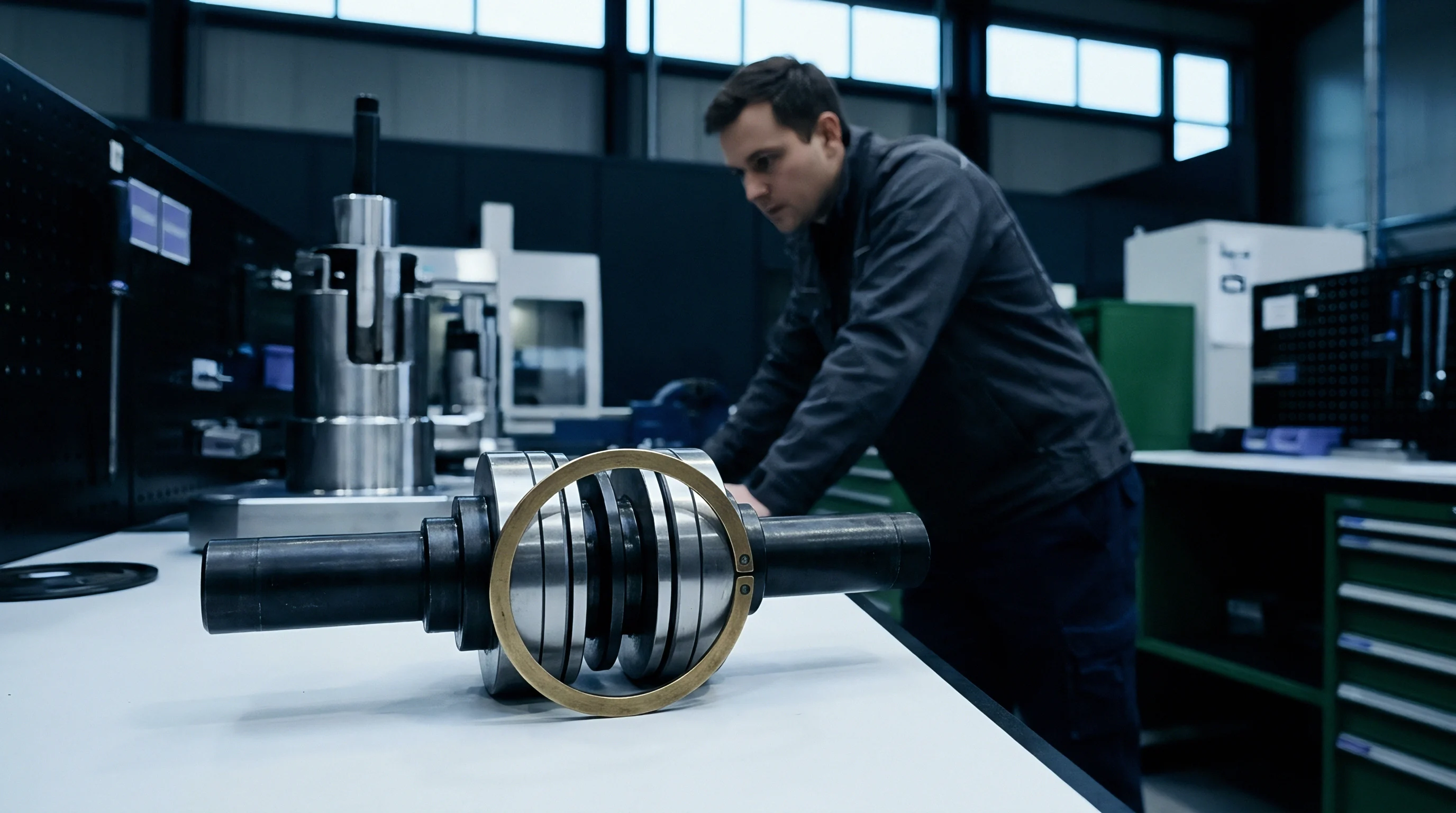
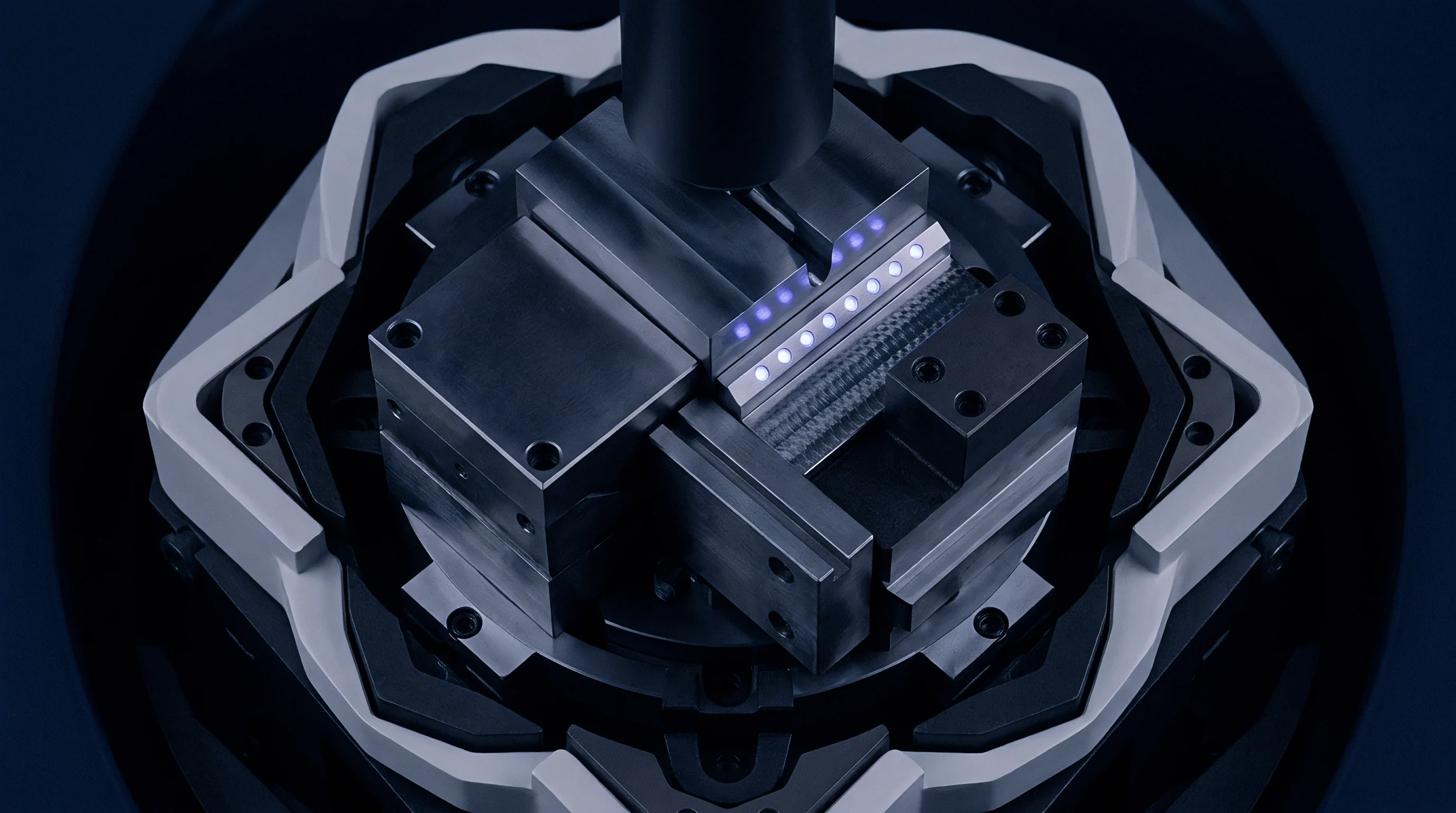
Rotating mass attached to a tool shank alters the dynamic balance of the entire spindle assembly. An asymmetric telemetry ring clamped to an HSK-63A tool holder introduces severe unbalance forces that grow with the square of spindle velocity. At 18,000 revolutions per minute, an eccentricity of merely five grams at a fifty-millimeter radius produces an unbalance force exceeding 350 Newtons.
That unbalance accelerates spindle bearing wear, degrades surface finish tolerances, and induces cyclic runout errors across milled pockets. Telemetry packaging balances the mass distribution around the central axis of rotation to meet ISO 1940-1 Grade G2.5 specifications prior to installation, as rotational balance directly governs bearing life.
Centrifugal stress presents severe structural integrity hazards during high-velocity milling passes. Tool steel or aerospace-grade aluminium alloy 7075-T6 forms the structural shell enclosing the telemetry instrumentation. Finite element calculations confirm that housing ring deflection remains below five micrometers under peak rotational velocities to avoid unseating the internal circuit boards or breaking potting material bonds.
Encapsulation with dense epoxy resins prevents component displacement, yet introduces differential thermal expansion stresses that fracture surface-mount solder joints during operational heating, so centrifugal loads ultimately dictate housing wall thickness.
Power Delivery Mechanics and Thermal Equilibrium
Direct battery power in spinning holders imposes finite runtime limits and introduces hazardous failure points. Coin-cell lithium batteries lose capacity under elevated centrifugal force as internal layers compress, while high-drain rechargeable chemistries suffer rapid degradation when cutting temperatures elevate holder temperatures past 65 degrees Celsius. Battery replacement interrupts continuous production cycles, inflating machine downtime across multiple shifts, reflecting how battery chemistry bounds operating temperatures.
Inductive coupling circuits transfer electrical energy across an air gap between a stationary ring mounted on the spindle face and a pickup coil situated on the rotating tool collar. A gap tolerance between 1.5 and 3.0 millimetres accommodates thermal growth and axis deflection during heavy hogging cuts. Operating the inductive link at frequencies between 100 kHz and 13.56 MHz avoids interference with motor drive harmonics while generating ten to twenty watts of regulated power for internal sensors, amplifiers, and high-frequency digital transmitters even as inductive gaps vary under load.
Coil misalignments greater than two millimetres collapse power transfer efficiency by sixty percent across an inductive spindle interface.
Thermal management defines the secondary operational challenge for collar-based electronics. Heat generated by spindle motor windings, bearing friction, and chip friction conducts directly into the tool holder shank. Tool shanks reach 80 degrees Celsius during sustained face milling of cast iron.
Without dedicated thermal isolation barriers, this conductive heat saturates the instrumentation cavity, inducing frequency drift in internal quartz oscillator clocks and degrading ADC conversion accuracy. Ceramic thermal isolator rings placed between the metallic holder shank and the electronics collar shield the measurement circuitry from rapid thermal expansion waves.
- Centrifugal clamping collars resist radial expansion by utilizing counter-balanced split rings secured with high-tensile titanium fasteners.
- Elastomeric potting polymers absorb high-frequency acoustic shock waves while matching the mean thermal expansion coefficient of ceramic printed circuit substrates.
- Inductive receiver coils utilize high-permeability manganese-zinc ferrite shielding to prevent electromagnetic heating of the central tool shank steel.
- Hermetic seal gaskets prevent ingress of synthetic cutting fluids under hydrostatic pressures exceeding eight bar inside the machine envelope.
Failing to verify mechanical stress concentrations and balancing integrity yields shattered collar housings that destroy high-cost spindle taper surfaces and eject high-velocity debris across the machining enclosure.
Carrier
Radio frequency communication inside an enclosed CNC machining centre occurs within an extreme multipath reverberation chamber. Solid cast-iron beds, stainless steel enclosure walls, and tempered glass viewing panels create an environment characterized by heavy signal reflection and destructive phase cancellation. Signals transmitted at 2.4 GHz encounter standing-wave nulls spaced mere centimetres apart throughout the interior working volume.
As the spindle moves across its travel axes during toolpaths, the transmitter sweeps through these destructive interference points, resulting in dropped data packets and corrupted telemetry streams.
Liquid flood coolant introduces catastrophic radio frequency attenuation. Water-miscible oil emulsions containing eight to twelve percent mineral oil exhibit high dielectric losses at typical industrial scientific and medical radio bands. A dense curtain of high-pressure coolant enveloping the rotating tool collar absorbs electromagnetic energy, reducing received signal strength by twenty to thirty-five decibels.
Direct line-of-sight propagation paths between the tool collar and a stationary receiving antenna mounted on the enclosure ceiling vanish instantly upon coolant pump activation, as coolant flood effectively blinds direct optical paths.
Modulation Protocols and Frequency Selection
Standard Bluetooth and Wi-Fi networks buckle under the severe data rate and latency demands of high-frequency tool telemetry. Bluetooth Low Energy caps effective raw throughput around one to two megabits per second while introducing packet delivery latencies between seven and twenty milliseconds. Such delays render the data useless for real-time tool breakage emergency retraction, which requires response times under three milliseconds before latency penalties destroy carbide inserts.
Ultra-wideband transmission architectures operating between 3.5 GHz and 6.5 GHz provide superior resilience against multipath reflections inside metal-lined machine enclosures. Spreading the transmitted energy across a 500 MHz channel bandwidth reduces the impact of localized spectral nulls caused by reflective sheet metal. Ultra-wideband signals deliver instantaneous transmission speeds reaching twenty megabits per second, allowing raw 24-bit 40 kilo-samples per second dual-axis acceleration streams to exit the machine enclosure without lossy on-rotor data compression or receiver front-end saturation from signal reflections.
| Wireless Channel Technology | Center Frequency | Effective Air Bitrate | Packet Latency | Coolant Attenuation |
|---|---|---|---|---|
| Proprietary Ultra-Wideband (UWB) | 4.4 GHz | 27.5 Mbps | 0.8 ms | 14 dB per metre |
| Industrial Bluetooth Low Energy | 2.4 GHz | 1.4 Mbps | 12.5 ms | 26 dB per metre |
| Industrial Wi-Fi (IEEE 802.11ax) | 5.8 GHz | 54.0 Mbps | 8.0 ms | 31 dB per metre |
| Near-Field Inductive RF Link | 13.56 MHz | 0.8 Mbps | 0.3 ms | 2 dB per metre |
Receiver antenna placement dictates link stability across the entire working volume of a multi-axis CNC machine. Positioning a single patch antenna in the corner of the ceiling exposes the signal path to intermittent shadowing by the moving spindle head, automatic tool changer arms, and high-pressure coolant nozzles. Robust architectures employ dual-antenna spatial diversity receivers coupled via low-loss coaxial cabling to an external combiner.
One antenna mounts directly adjacent to the spindle nose cap, capturing near-field radiation from the collar, while a secondary antenna surveys the wider workspace to maintain communication when the spindle retracts during automated tool indexing cycles.
Software retransmission routines running on the internal microcontroller stack are intended to mitigate packet delivery drops.

Payload
Digital processing conducted on the rotating collar balances battery endurance against communications throughput limits. Transmitting continuous uncompressed three-axis vibration data sampled at 50 kilo-samples per second with 24-bit resolution requires an uncorrupted payload rate of 3.6 megabits per second. Continuous packetization at this rate consumes elevated power, pushing transmitter heat dissipation beyond passive cooling capabilities and saturating the factory bus with raw data.
Implementing an on-collar field-programmable gate array or an ARM Cortex-M7 digital signal processor enables edge feature extraction directly adjacent to the sensing crystal. The processor executes time-domain calculations including root-mean-square acceleration, kurtosis, peak-to-peak amplitude, and crest factor over configurable rolling windows of 1,024 to 4,096 samples. These statistical metrics condense the transmission payload from 3.6 megabits per second down to modest telemetry packets dispatched at one hundred Hertz, requiring less than 50 kilobits per second of wireless bandwidth to prevent false triggers from halting production lines.

Trigger Logic and Anomaly Detection Thresholds
Tool condition monitoring relies on detecting spectral shifts that precede catastrophic fracture. As a carbide milling cutter wears, the contact mechanics alter, elevating harmonic peaks at high frequencies while exciting structural resonances of the machine arbor. When an edge processor computes fast Fourier transforms locally, it partitions the vibration spectrum into discrete frequency bands: runout frequencies, tooth-passing harmonics, and high-frequency friction bands extending between 8 kHz and 16 kHz.
Telemetry packages report energy ratios across these dedicated bins instead of streaming raw time-series records.
- Baseline calibration execution records baseline spectral profiles across healthy cutting tools during initial entry cuts under standardized feed and speed conditions.
- Adaptive band tracking recalculates expected tooth-passing frequencies dynamically using real-time spindle tachometer signals to prevent false threshold crossings during axis acceleration.
- Kurtosis spike qualification isolates transient impact spikes associated with chipped insert flutes from random broad-spectrum noise spikes caused by chip re-cutting.
- Emergency stop triggering drives an optocoupled digital line directly into the CNC controller emergency stop circuit when acceleration exceeds pre-programmed shock envelopes.
Data integrity audits reveal serious operational gaps when edge telemetry platforms drop raw records in favour of summarized metrics. Machine operators often cannot diagnose why an autonomous tool retract triggered because the transient vibration waveform that caused the trip was never archived to permanent memory. Modern systems employ circular ring buffers in high-speed static random-access memory on the collar.
The processor freezes the prior two seconds of raw high-resolution waveform data whenever a limit trip occurs, transmitting this crash dossier to the machine archive immediately upon tool disengagement for engineering root-cause analysis.
Section 4.2 of ISO 13373-2 mandates recording broadband vibration time histories alongside processed spectra whenever machinery diagnostic limits undergo baseline re-evaluation.
Under ISO 13373-2 compliance specifications, an audit team will reject vibration health records that lack raw time-domain waveforms corresponding to automated shutdown events, invalidating warranty claims on prematurely failed spindle cartridge bearings.
Payback
Capital investments in rotating telemetry systems demand clear justification through measurable scrap reduction, cycle time compression, and spindle asset preservation. Tooling wear monitoring in exotic aerospace alloys typically operates on conservative tool life estimates based on accumulated in-cut minutes. Machine tools running expensive nickel-chromium alloys discard carbide inserts with thirty to forty percent of usable operational life remaining to guard against catastrophic in-process breakage that would scrap parts and erode machining margins.
Installing high-frequency vibration telemetry allows manufacturers to transition from arbitrary conservative timer limits to true condition-based insert replacement. Real-time acceleration data identifies the onset of micro-chipping and flank wear immediately, allowing inserts to run until physical degradation begins rather than halting cuts at arbitrary schedule milestones. In high-volume production cells, extending insert utilization by twenty-five percent generates significant annual savings in consumable tooling spend while cutting secondary burr-removal benchwork.
Constraint Diagnostics and Line Integration
Machine downtime during telemetry commissioning creates production scheduling friction that must be quantified prior to capital authorization. Retrofitting a five-axis machining center with an inductive collar, stationary pickup coils, receiver antennas, and controller interface cards requires twelve to twenty-four hours of uninterrupted machine access. If commissioning encounters unbalance faults or software communication handshake delays, the line stalls.
Operations directors price commissioning downtime against production value: an idle heavy gantry milling machine burns between 250 and 600 dollars per hour in unrealized capacity cost.
| Production Variable | Conventional Timer Baseline | Telemetry Integrated Operation | Measured Economic Variance |
|---|---|---|---|
| Tool Insert Utilization Rate | 68 percent of nominal life | 94 percent of nominal life | +26 percent tooling life gain |
| Unplanned Spindle Crash Events | 1.8 incidents per 10,000 hours | 0.2 incidents per 10,000 hours | -89 percent rebuild expense |
| Part Scrap from Chipped Inserts | 2.4 percent of finished parts | 0.3 percent of finished parts | -2.1 percent yield improvement |
| Annual Machine Unplanned Stoppage | 142 operational hours | 38 operational hours | +104 net production hours |
Telemetry integration requires explicit gating parameters before committing production capital to line-wide rollouts. A single pilot machine proves wireless reliability across minimum operational thresholds under continuous coolant flood before purchasing hardware for secondary cells. Integration teams audit receiver communication stability over four weeks of continuous three-shift production.
The go-decision requires zero uncommanded line halts and less than 0.01 percent data packet loss under full heavy-roughing passes.
Whether shop-floor maintenance teams possess the instrumentation skills to re-balance complex tool holders to ISO G2.5 standards following high-speed insert swaps remains an open organizational question across high-mix facilities.