Athermalization Limits and Active Cooling Fluid Vibration Coupling in Kilowatt Laser Scanning Optical Submounts
Active microchannel cooling bounds thermal bow in kilowatt scan mirrors but couples fluid pressure ripple into microradian pointing jitter unless isolated.

Chill
Ten kilowatts of collimated beam power passing through a thirty-millimeter clear aperture deposits between five and twenty watts of direct thermal energy into a galvo scanning mirror. High-reflectivity dielectric multilayer stacks rated at 99.95 percent reflectance still permit fractional absorption, which migrates into the substrate within fifty milliseconds of continuous irradiation. If that thermal energy sits trapped in the optical body, localized thermal expansion curves the reflective face, altering wavefront sphericity and degrading spot focus at the workpiece.
Dissipating that heat requires forced convective cooling directly adjacent to or inside the scanning substrate. Thermal gradients warp optical wavefronts.
Microchannel liquid cooled jackets bonded directly to the rear surfaces of scan mirrors provide thermal convection coefficients between 15,000 and 45,000 watts per square meter Kelvin. The coolant flow rate sets the wall temperature, yet moving deionized water at three to eight liters per minute through narrow hydraulic channels generates substantial viscous friction and hydraulic drag. Pressure drops across microchannel passages measuring two hundred micrometers wide by eight hundred micrometers deep frequently exceed 250 kilopascals.
Water flow generates dynamic pressure heads.
A water-glycol coolant delivery loop operating at 4.2 liters per minute across a 250-micrometer channel array yields a convection coefficient of 22,500 watts per square meter Kelvin at thirty degrees Celsius.

Thermal Load Absorption in Fast Optical Scanners
Dielectric coating degradation accelerates when laser flux exceeds fifty kilowatts per square centimeter during continuous multi-axis processing. Surface contamination from volatile airborne particulates or laser-induced spatter raises the coating absorption fraction from 50 parts per million to beyond 400 parts per million over two hundred hours of production runs. Absorptance climbs with contamination.
When mirror absorption reaches 0.08 percent on a ten-kilowatt laser scanning head, the optical body absorbs eight watts of sustained thermal input. The physical cross section of a lightweight beryllium or silicon carbide scan mirror offers minimal thermal mass, meaning steady-state equilibrium establishes within twelve seconds. Without active cooling, substrate core temperatures elevate by forty degrees Celsius above ambient ambient air, shifting the focal plane past the Rayleigh range.
Moving mirror systems present severe geometric boundaries for fluid coupling. Galvo scanners rotate through angular sweeps of plus or minus twenty degrees at cycle frequencies reaching 1.2 kilohertz. Flexible polymer delivery tubing routed across moving mirror shafts fatigues rapidly under continuous cyclic torsion, introducing rotational drag that impairs galvo motor positioning bandwidth.
For high-speed galvo axes, direct fluid circulation into the moving mirror substrate remains restricted to specialized rotary joints or stationary close-coupled heat exchangers that accept radiant and convective transfer across microscopic gas gaps. Stationary fold mirrors and dynamic focusing units accommodate direct active microchannel plates, leaving the final galvo scan pair as the limiting thermal bottleneck in kilowatt optical delivery heads.

Convective Heat Flux Constraints in Microchannels
Laminar boundary layers inside microchannel cooling passages impose conductive resistance that caps heat transfer rates. Forcing the fluid into a transitional or fully turbulent regime with Reynolds numbers exceeding 2,800 thins the boundary layer and boosts the local Nusselt number, enhancing thermal removal. Turbulent flow induces structural flutter.
The mechanical consequence of this elevated velocity is high-frequency static wall pressure fluctuation that transmits directly into the mirror face sheet.
Pumping deionized water through restrictive internal passages creates localized shear stresses along the channel walls. Viscous shear heats the fluid boundary. Balancing the necessary thermal convection coefficient against the induced mechanical disturbances defines the engineering trade-off for kilowatt-class scan heads.
Operating with sub-optimal fluid flow allows steady-state thermal blooming to blur the laser focal spot, whereas increasing flow velocity introduces mechanical jitter that destabilizes laser spot pointing across the process field, resulting in irregular bead placement, inconsistent weld penetration, and discarded production workpieces.
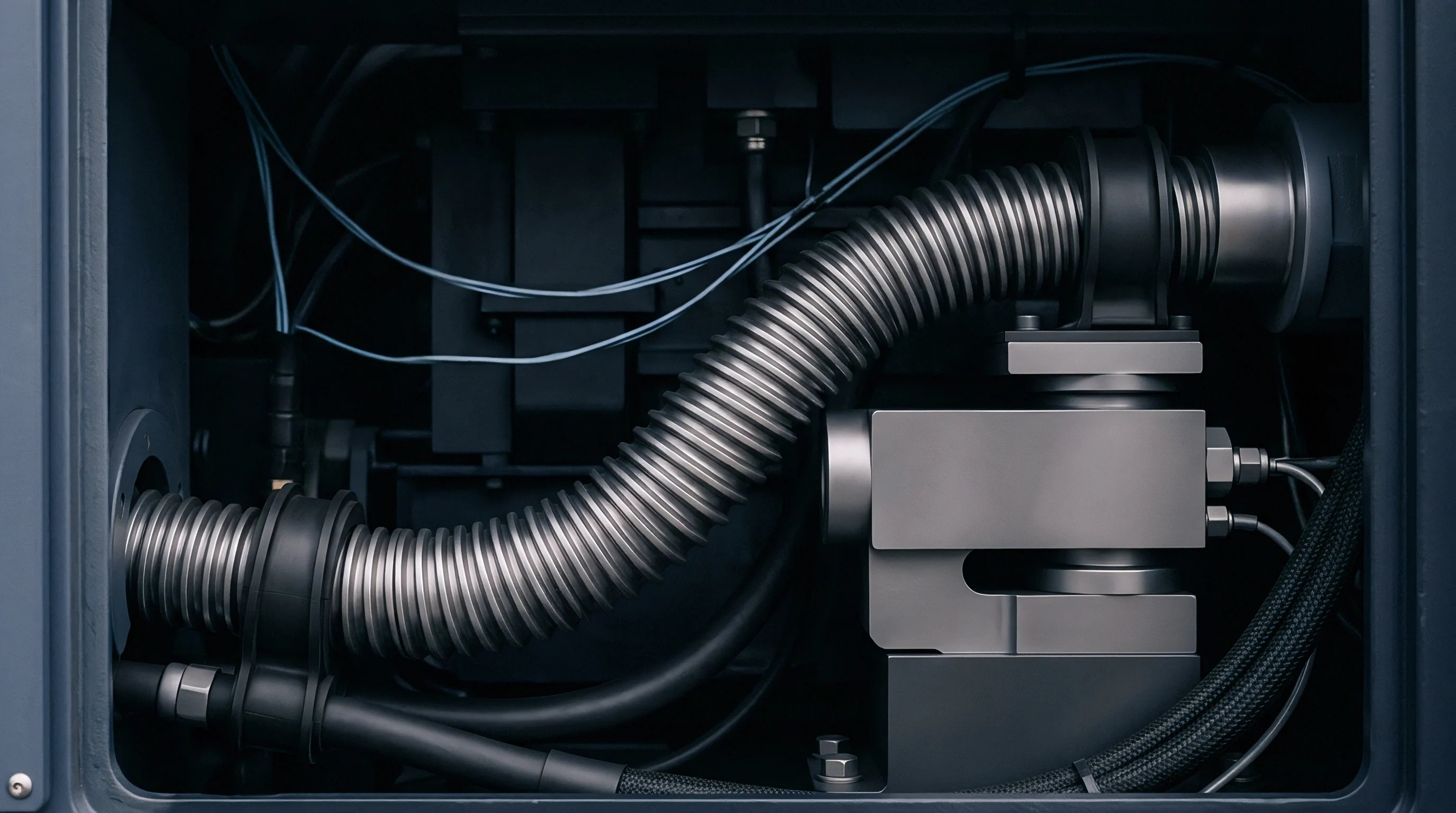

Bow
Silicon mirror blanks subjected to asymmetric thermal loads curl toward the incident beam because the illuminated front surface expands faster than the actively cooled rear face. The mechanical displacement across the mirror face, known as thermal bow or surface sag, introduces optical power into an aligned beam train, transforming a flat reflective optic into a curved mirror. Silicon carbide limits surface bow.
A peak-to-valley surface figure deformation of just sixty-three nanometers at a 1070-nanometer laser wavelength introduces lambda-sixteenth wavefront error, enough to degrade the Maréchal criterion and decrease peak irradiance on the focal spot.
Thermal bowing scales directly with the material thermal expansion coefficient and inversely with thermal conductivity. Designing optical submounts for kilowatt scanning heads demands balancing the structural modulus, density, and thermal conductivity of the mirror blank. Reaction-bonded silicon carbide, chemical vapor deposited silicon carbide, single-crystal silicon, and beryllium compete across these performance metrics, each imposing distinct manufacturing and polishing constraints.
Sintered carbide resists mechanical deflection.
Surface sag on a clamped optical reflector correlates linearly with the absorbed thermal power and inversely with the thermal conductivity of the underlying structural substrate.
Thermoelastic Figures of Merit across Optical Substrates
Material selection for kilowatt scanning optics centers on maximizing the thermal distortion figure of merit, defined as thermal conductivity divided by the coefficient of thermal expansion, alongside the specific stiffness parameter, defined as Young’s modulus divided by density. Sintered silicon carbide provides a thermal conductivity of 250 watts per meter Kelvin and a thermal expansion coefficient of 2.4 parts per million per Kelvin at room temperature, yielding an exceptional thermal distortion figure of merit of 104 watts per micrometer. Single-crystal silicon offers a thermal conductivity of 148 watts per meter Kelvin and an expansion coefficient of 2.6 parts per million per Kelvin, giving 57 watts per micrometer.
Fused silica delivers a thermal distortion figure of merit below 3 watts per micrometer, making uncooled fused silica unsuitable for multi-kilowatt reflective scanning optics.
| Material Substrate | Thermal Conductivity (W/m·K) | Expansion Coefficient (10⁻⁶/K) | Young Modulus (GPa) | Density (g/cm³) | Distortion Merit (W/µm) |
|---|---|---|---|---|---|
| Chemical Vapor Deposited Silicon Carbide | 270 | 2.2 | 460 | 3.21 | 122.7 |
| Reaction Bonded Silicon Carbide | 190 | 2.6 | 380 | 3.05 | 73.1 |
| Single Crystal Silicon | 148 | 2.6 | 130 | 2.33 | 56.9 |
| Aluminum Beryllium Metal Matrix | 210 | 13.9 | 193 | 2.07 | 15.1 |
| Copper OFHC Submount Base | 390 | 16.5 | 117 | 8.96 | 23.6 |
| Fused Silica Reflector Blank | 1.38 | 0.52 | 72 | 2.20 | 2.65 |
Submount materials must match the thermal expansion of the mirror substrate to prevent interfacial bimetallic bending. Clamping or brazing a silicon carbide optical mirror directly to an oxygen-free high-conductivity copper cooling block creates severe thermoelastic shear strain along the joint during temperature excursions. Copper expands at 16.5 parts per million per Kelvin, whereas silicon carbide expands at 2.4 parts per million per Kelvin.
A temperature shift of thirty degrees Celsius induces interface stresses that exceed the tensile shear strength of typical optical adhesives, shearing the bond line or introducing astigmatic mechanical warping into the polished mirror face. Mirror bow defocuses the focal waist.
Wavefront Distortion from Asymmetric Heat Extraction
Non-uniform fluid flow inside cooling jackets generates localized cold spots directly beneath cooling channels, alternating with warm zones above internal structural ribs. This periodic temperature distribution creates thermal ripple across the mirror aperture, manifesting as high-order optical aberrations that cannot be compensated by standard focus-tuning optics. Zernike polynomial analysis of thermally loaded scan mirrors reveals pronounced trefoil and spherical aberration terms directly correlated with internal cooling channel geometry.
Thermal gradients also generate localized stress birefringence in transmitting optical elements and reflective coating phase shifts on mirrors. In polarization-sensitive industrial applications, such as laser cutting of reflective alloys, phase retarding shifts induced by non-uniform mechanical strain rotate the polarization vector, altering cutting edge squareness and reducing process consistency across the workpiece surface.
- Interfacial shear delamination propagates across rigid adhesive layers when thermal expansion mismatches between the mirror substrate and metal submount exceed five parts per million per Kelvin during thermal cycling.
- Localized astigmatic warping occurs when asymmetric coolant manifold geometry extracts heat faster along one mirror axis, degrading laser spot circularity.
- High order wavefront ripple generates stray energy side lobes outside the central beam waist, damaging protective aperture stops within the scan head housing.
- Transient thermal defocus shifts the focal waist by more than two Rayleigh lengths during the first twenty seconds of laser activation, altering penetration depth on processed parts.
Mirror vendors frequently assert that dynamic thermal bow remains fully predictable under steady-state finite element models, yet manufacturing tolerances in channel rib thickness and irregular adhesive bond lines inevitably distort those idealized calculations.
Turbulence
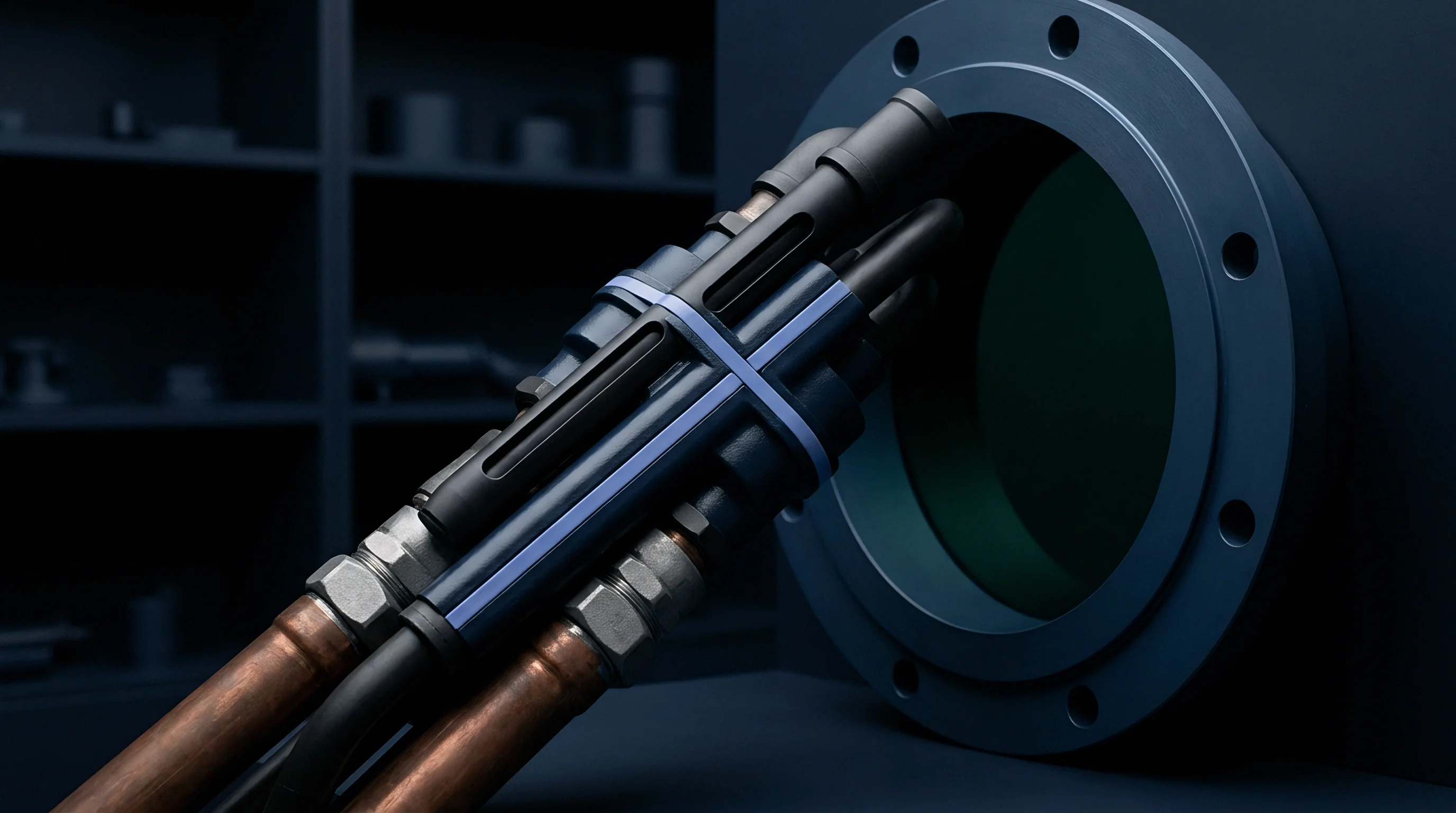
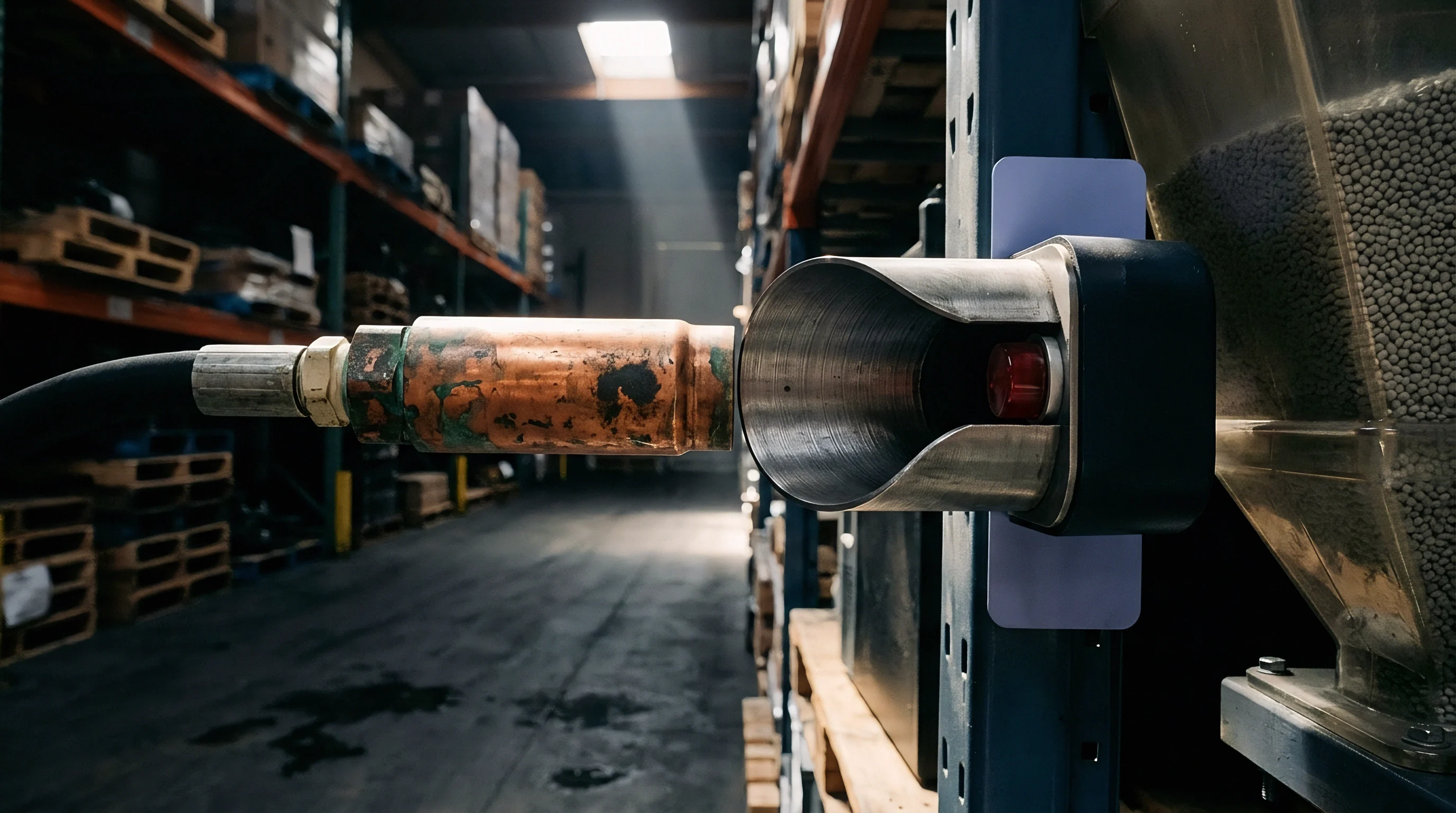
Fluid moving through an optical cooling block exerts unsteady dynamic wall shear and pressure fluctuations directly upon the rear surface of the scanning mirror. The energy spectrum of turbulent flow contains broadband pressure variations that span frequencies from tens of hertz to several kilohertz. If fluid-induced pressure frequencies align with the structural resonances of the mirror submount, the mechanical system enters a coupled vibration regime that translates into micro-radian angular jitter of the reflected laser beam.
Angular jitter ruins focal spot circularity.
Flow-induced vibration mechanisms divide into internal turbulence buffetting, vortex shedding behind manifold internal flow dividers, and cavitation phenomena around channel sharp bends. Centrifugal impellers eliminate pump ripple. Positive displacement pumps, such as gear or peristaltic pumps, introduce severe harmonic pressure pulses matching the pump tooth meshing frequency, producing discrete optical line wander on the work plane.
Specification ISO 23125 requires that machine tool positioning axes limit structural jitter to values that prevent process path deviations exceeding five percent of nominal beam diameter.

Can Fluid Pressure Ripple Degrade Spot Pointing?
Dynamic pressure ripples within the coolant delivery loop translate directly into mechanical moments across mirror pivots. In a scanning head utilizing a 500-millimeter focal length telecentric field lens, an angular mirror deflection of just two microradians shifts the focal spot position on the workpiece by two micrometers. For precision powder bed fusion or micromachining operations where spot diameters measure thirty micrometers, a two-micrometer high-frequency jitter broadens the effective melt pool track by over thirteen percent, altering metallurgical density and degrading surface roughness.
Experimental trials evaluate dynamic pressure ripple by placing piezoelectric pressure transducers inside cooling submount plenums. Fluid pressure pulsations as low as three kilopascals root-mean-square at 180 hertz, typical of unattenuated vane pump discharge, generate detectable pointing oscillations of 1.8 microradians peak-to-peak on an eight-gram reaction-bonded silicon carbide galvo mirror. The mechanical stiffness of the galvo motor rotor shaft, typically rated between 0.05 and 0.2 Newton-meters per microradian, determines the resulting angular deflection.
Clamping the submount rigidly to the scanner chassis shifts the resonant frequency higher but fails to isolate the optical face from high-frequency hydraulic impulses.

Vortex Shedding Frequencies and Submount Resonances
Coolant entering internal manifold distribution headers encounters geometry changes, structural support ribs, and flow-splitting pins. These obstacles generate periodic vortices that detach alternately from opposite sides of the obstruction. The Strouhal relationship determines the shedding frequency, which scales directly with fluid velocity and inversely with obstruction diameter.
A five-millimeter manifold inlet port conveying coolant at three meters per second generates vortex shedding around 120 hertz, assuming a characteristic Strouhal number of 0.2.
When the fluid shedding frequency coincides with a torsional resonance mode of the mirror assembly, mechanical amplification occurs. Finite element modal analysis demonstrates that typical lightweight scan mirrors possess first torsional bending modes between 1.5 and 4.2 kilohertz, depending on mirror thickness and shaft mounting architecture. Higher fluid flow velocities increase convective cooling capacity, yet simultaneously drive vortex shedding frequencies toward these structural eigenmodes, precipitating sudden jumps in pointing jitter amplitude once a critical threshold velocity is reached.
Cavitation bubbles erode internal channels.
- Inlet manifold velocity damper isolates the incoming coolant supply line from rigid submount fittings using flexible elastomeric decoupling boots.
- Inline acoustic attenuation chamber suppresses pump harmonic pressure waves upstream of the optical mounting interface using tuned quarter-wave stubs.
- Pin fin flow distributor prevents coherent vortex street formation by breaking large coherent fluid eddies into sub-millimeter turbulent vortices.
- Differential pressure sensor array monitors hydraulic line loss to detect incipient channel clogging before thermal runaways occur.
Whether active cooling vibration can be suppressed below one microradian RMS across the entire four-liter-per-minute operational flow window remains an open challenge for high-power scanning optical assemblies.
Mount
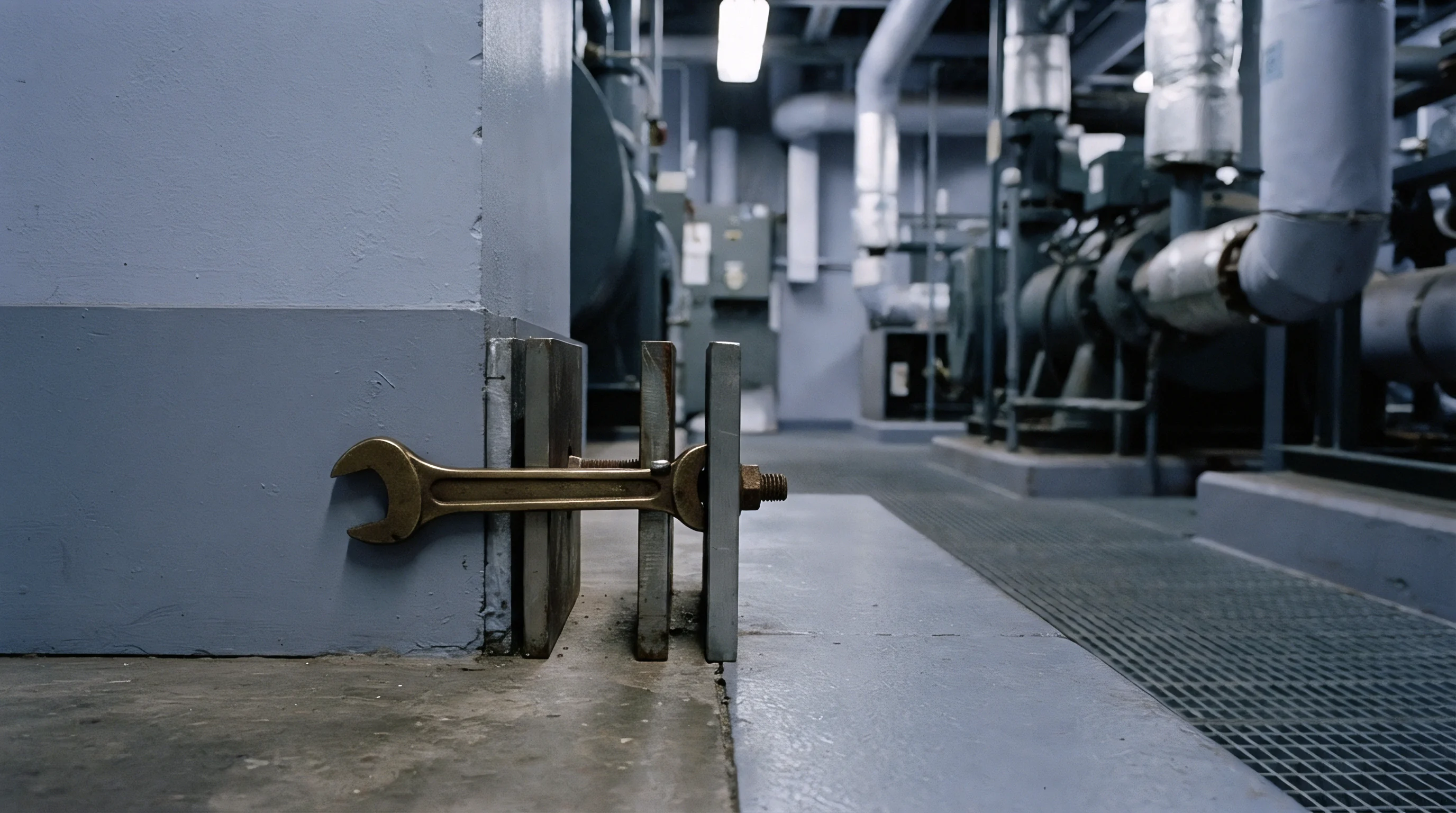
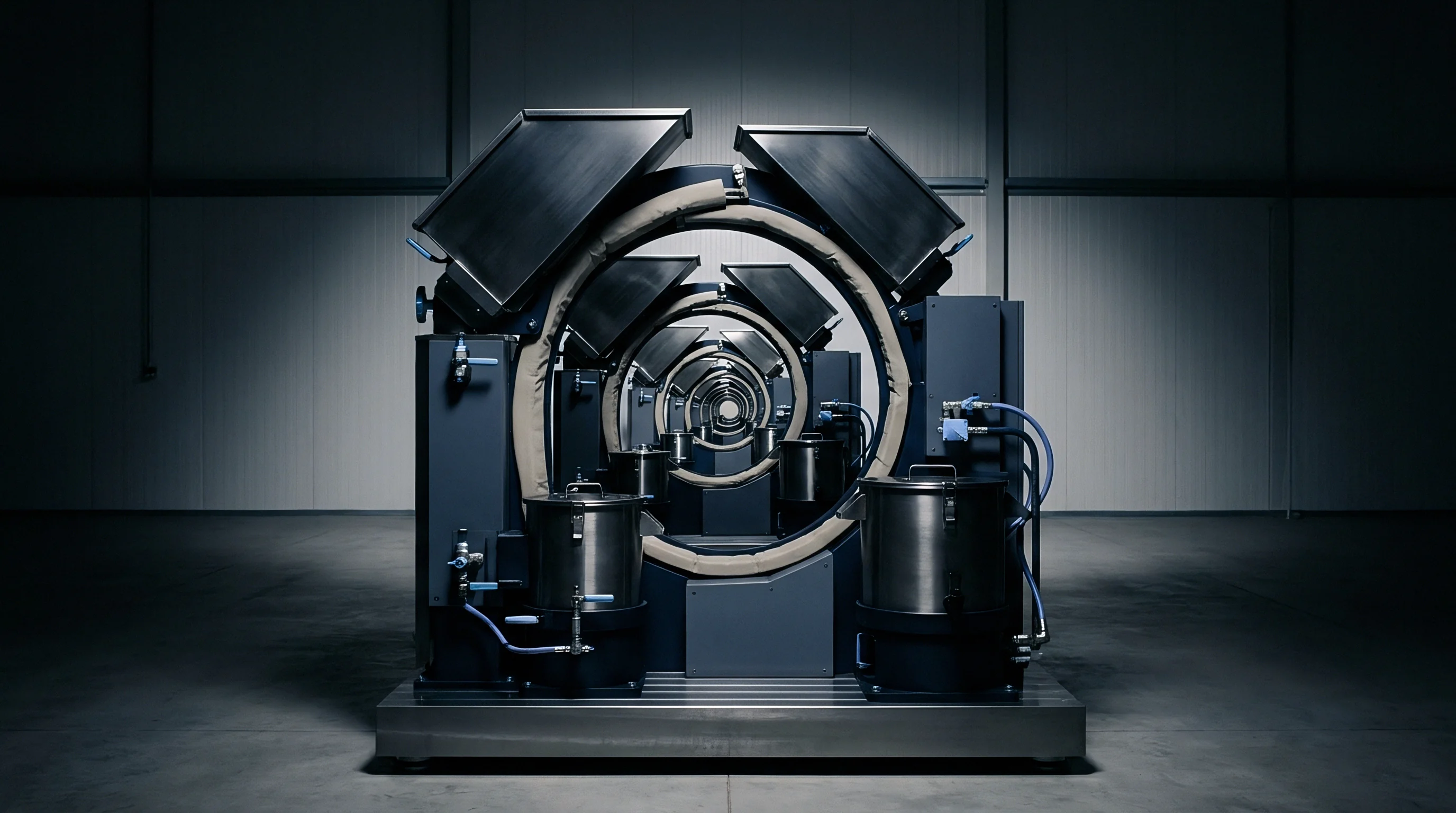
Mechanical decoupling between the fluid delivery housing and the optical substrate prevents hydraulic pressure forces from distorting the polished mirror surface. Kinematic bipods isolate mirror strains. Rather than machining cooling channels directly into the mirror blank, decoupled designs attach an independent cooling jacket to the submount through compliant flexures, transferring heat across a thin fluid film or thermally conductive silicone elastomer without transmitting hydraulic stresses.
Rigid mounting amplifies coolant vibration.
The structural trade-off in decoupled submount assemblies balances dynamic mechanical stiffness against thermal conduction efficiency. An optical submount must exhibit sufficient mechanical rigidity to track dynamic galvo accelerations exceeding 1,000 radians per second squared without experiencing elastic whipping. Introducing compliant isolation joints reduces fluid-induced vibration transmission into the mirror face, but decreases the mechanical natural frequency of the scanner assembly, limiting maximum servo loop gain and scan speeds.

Which Manifold Geometry Bounds Fluid Induced Jitter?
Internal fluid routing architecture governs both heat extraction uniformity and dynamic wall pressure levels. Single-pass linear microchannels demonstrate high heat transfer rates near the fluid inlet, yet establish a steep thermal gradient across the mirror width as the coolant absorbs energy along its path. Counter-flow double-pass microchannel networks balance the temperature profile across the optical clear aperture, eliminating asymmetric thermal bow.
Counter-flow designs introduce flow redirection bends that elevate pressure loss and excite secondary vortex motions.
| Manifold Architecture | Flow Rate (L/min) | Pressure Drop (kPa) | Convection Coeff (W/m²·K) | Submount Jitter (µrad RMS) |
|---|---|---|---|---|
| Linear Microchannel (Single Pass) | 3.5 | 185 | 31,000 | 2.4 |
| Counter Flow Microchannel (Dual Pass) | 3.8 | 265 | 28,500 | 3.1 |
| Staggered Micro-Pin Fin Array | 4.2 | 140 | 36,000 | 1.2 |
| Direct Jet Impingement Matrix | 5.0 | 310 | 44,000 | 4.6 |
| Radial Diverging Porous Metal Plate | 2.8 | 95 | 22,000 | 0.8 |
Pin fin arrays provide an effective compromise for kilowatt optical submounts. Distributing staggered diamond-shaped or circular pins across the fluid cavity breaks up boundary layers, yielding heat transfer coefficients above 35,000 watts per square meter Kelvin at moderate pressure drops. Staggered pins disrupt large coherent vortex structures, distributing fluid excitation energy across a broad spectrum of high frequencies where the mechanical impedance of the mirror substrate is high, preventing resonant pointing jitter.
Compliant mounting structures that isolate fluid vibrations necessarily reduce the mechanical control bandwidth of rapid galvanometric scan axes.

Kinematic Flexures and Decoupled Coolant Delivery
Precision flexure mounts separate mechanical positioning functions from thermal expansion constraints. Three-point kinematic bipod flexures machined from titanium alloy Ti-6Al-4V allow the mirror substrate to expand isotropically during thermal transients without transmitting bending moments into the optic. The low thermal conductivity of titanium, measuring 6.7 watts per meter Kelvin, isolates the galvo motor shaft from mirror heat, preserving motor encoder calibration and bearing lubricant lifespan.
Fluid connections entering the submount must avoid mechanical stiffening of the kinematic suspension. High-pressure braided stainless steel lines act as stiff mechanical springs that bypass isolation flexures, transmitting pump noise directly to the mirror. Replacing braided lines with coiled fluoropolymer tubing or silicone fluidic jumpers routed along the neutral bending axis of the suspension preserves kinematic isolation.
Uncut copper manifolds creep under torque. In high-power industrial installations, coolant fluid supply manifolds attach directly to the rigid scanner outer housing, bridging the gap to the floating optical submount via non-contact labyrinth seals or low-durometer bellows.
- Submount structural resonance characterization executes modal tap testing with miniature impulse hammers to map baseline mechanical frequencies without coolant flow.
- Static pressure seal verification subjects the cooling chamber to 600 kilopascals of nitrogen holding pressure to confirm gasket integrity before fluid charging.
- Fluidic loop frequency scanning throttles pump speed from twenty to one hundred percent capacity while laser Doppler vibrometers track mirror face out-of-plane displacement.
- Dynamic closed loop pointing audit monitors reflected beam centroids across a lateral effect detector to measure optical jitter under full thermal and hydraulic operating conditions.
As a baseline operational guideline, isolation flexure compliance should remain at least ten times greater than the internal compliance of the mirror substrate itself.
Ledger
Procuring kilowatt scan subassemblies requires balancing fabrication costs against production downtime risks. Silicon carbide mirrors featuring integrated internal microchannels cost three to five times more than standard solid silicon or fused silica mirrors. Integrating complex cooling passages within silicon carbide requires green-state ultrasonic machining followed by high-temperature vacuum reaction bonding or chemical vapor deposition over sacrificial mandrels.
Yield rates for internally cooled silicon carbide scan mirrors often sit below sixty-five percent during initial fabrication runs, driving unit costs past twelve thousand dollars per mirror set.
Operational financial exposure extends far beyond initial component procurement. In high-throughput industrial laser powder bed fusion systems, a focal shift of one hundred micrometers caused by mirror thermal bow or a pointing jitter of three microradians ruins full component builds that take fifty hours to print, consuming thousands of dollars in metal powder stock and equipment time. Subassembly validation protocols in the factory must identify thermal distortion and vibration coupling issues before scan heads are installed on production lines.
Factory Acceptance Criteria for Dynamic Thermal Metrology
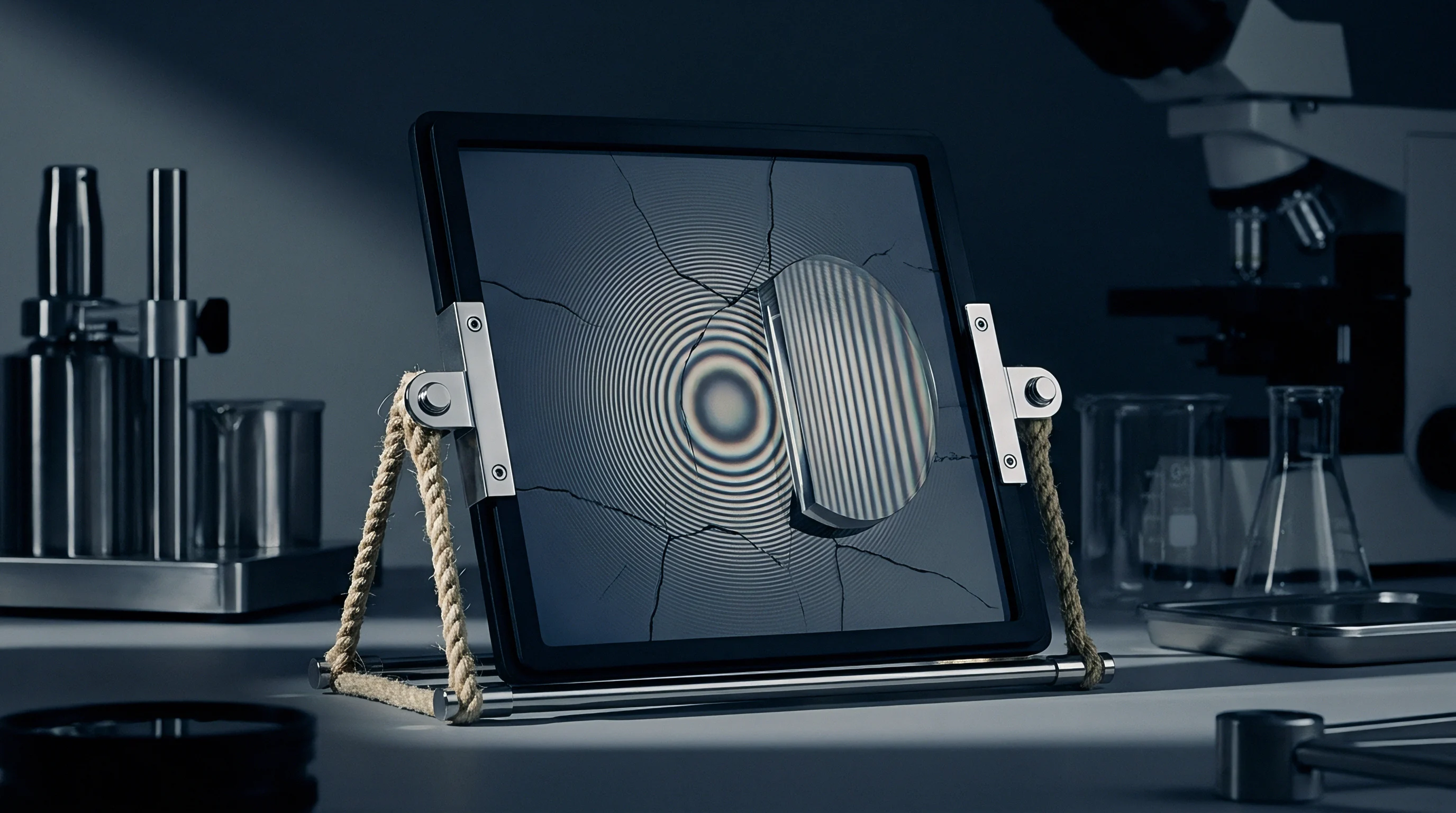
Standard quality documentation often limits verification to static interferometric surface figures measured at twenty degrees Celsius. This static verification misses the dynamic deformations that appear once full laser flux and coolant flow engage simultaneously. A production-ready factory acceptance test requires testing the optical submount under simultaneous thermal loading and fluid circulation.
Simulating kilowatt laser heating in an acceptance test bench utilizes high-power diode laser arrays directed onto a high-emissivity graphite coating temporarily applied to the mirror rear, or direct absorption from a kilowatt source into an absorbing test optic. Wavefront sensors, such as Shack-Hartmann or shearing interferometers, measure optical aberrations in real time while laser Doppler vibrometry maps surface vibration spectrums across the mirror clear aperture. Thermal drift and jitter figures documented in acceptance dossiers must reflect these coupled multi-physics operating conditions.
Procurement Clauses for High Power Optical Subassemblies
Procurement agreements for multi-kilowatt scan heads must stipulate hard quantitative ceilings for both thermal wavefront drift and flow-induced angular jitter. Relying on commercial catalog specifications that quote RMS surface roughness and static flatness guarantees nothing regarding dynamic operational performance.
The reported thermal performance of an actively cooled mirror rests on specific coolant fluid properties. Standard manufacturer ratings typically assume chilled water at twenty degrees Celsius with an inlet flow of four liters per minute. If the actual production environment utilizes a water-glycol mixture at thirty-five degrees Celsius to prevent condensation in humid facilities, the fluid viscosity increases by over forty percent while the specific heat capacity drops by fifteen percent.
These shifts degrade the convective heat transfer coefficient by up to thirty percent, invalidating supplier thermal ratings. The desk currently cannot fully defend industry claims that micro-channel pin-fin coolers maintain surface flatness below lambda-eighth at twenty kilowatts of laser power; buyers must demand physical multi-sensor bench test logs executed under client-specified fluid temperatures and pressures before authorizing final production lot shipments.
Purchase contracts should stipulate that dynamic beam pointing jitter exceeding 1.5 microradians root-mean-square under nominal coolant flow rates of 3.5 liters per minute constitutes non-conformance under ISO 9001 quality acceptance frameworks, entitling the buyer to full component rejection and supplier-funded replacement.