Contractual Risk Allocation for Secondary Crystallization and Hygroscopic Dimensional Drift in Cross Border Supply Chains
Contractual risk allocation for polymer dimensional drift requires linking geometric tolerances directly to defined material moisture equilibrium states at inspection.


Envelope

Dimensional Instability in Semi-Crystalline Engineering Thermoplastics
Injection-molded polyamides, polybutylene terephthalate, and polyoxymethylene components undergo continuous post-mold structural reorganization long after initial cooling cycles terminate. In cross-border procurement contracts, parties routinely conflate machining tolerances at the supplier gate with operational dimensional envelope specifications at destination assembly plants. Semi-crystalline polymers solidify rapidly within injection tools, freezing polymer chains in non-equilibrium amorphous arrangements alongside developing crystalline lamellae.
Mold shrinkage values published in resin supplier data sheets represent brief 24-hour equilibrium intervals measured under standardized laboratory conditions such as ISO 294-4. Real-world structural equilibrium demands weeks or months, governed by thermal history and ambient water vapor activity across sea voyages.
Engineering resin matrices exhibit two distinct physical mechanisms that shift part geometry during international transit. Secondary crystallization involves the ongoing rearrangement of kinetically trapped amorphous polymer segments into denser crystalline regions over extended periods. This post-crystallization process increases volumetric density, inducing volumetric shrinkage and warpage along differential flow vectors.
Hygroscopic expansion counteracts this densification when polar polymers absorb atmospheric water molecules through diffusion governed by Fickian mechanics. Water molecules disrupt interchain hydrogen bonding within amorphous zones, swelling the free volume of the matrix while depressing the glass transition temperature. The glass transition temperature of standard polyamide 6 drops from approximately 65 degrees Celsius in a dry state to below zero degrees Celsius at saturation, allowing chain mobility and cold crystallization to proceed at ordinary container temperatures.
Part geometries drift predictably when ambient moisture absorption depresses polymer glass transition thresholds below oceanic shipping temperatures.

Partition of Physical Expansion and Contraction Phenomena
Precision component drawings often indicate tight geometric dimensioning and tolerancing limits down to plus or minus 25 micrometers on critical press-fit diameters or snap-latch assemblies. Toolmakers apply linear shrinkage factors based on dry-as-molded metrics. When parts travel via ocean freight through equatorial trade lanes, shipping containers routinely register relative humidity levels above 85 percent and internal air temperatures exceeding 50 degrees Celsius.
These conditions drive continuous chemical-physical transitions. Unfilled PA66 absorbs up to 8.5 percent water by weight at full immersion, and roughly 2.5 percent at 50 percent relative humidity, expanding roughly 0.2 to 0.3 percent per weight percent of absorbed water. Concurrently, secondary crystallization in under-annealed moldings generates net shrinkage between 0.1 and 0.5 percent depending on original mold surface temperatures and gate freeze times.
| Polymer Matrix Type | Equilibrium Water Uptake at 23C and 50% RH | Linear Hygroscopic Expansion Coefficient | Post-Mold Secondary Crystallization Shrinkage | Net Geometry Variance Range |
|---|---|---|---|---|
| Polyamide 6 (Unfilled) | 2.4 to 2.8 wt% | 0.22 to 0.26 %/wt% H2O | 0.25 to 0.45% | +0.15 to +0.35% (Net Swell) |
| Polyamide 66 (30% Glass Filled) | 1.5 to 1.8 wt% | 0.10 to 0.14 %/wt% H2O | 0.10 to 0.20% | +0.05 to +0.12% (Net Swell) |
| Polyoxymethylene Copolymer | 0.20 to 0.25 wt% | 0.03 to 0.05 %/wt% H2O | 0.30 to 0.60% | -0.25 to -0.55% (Net Shrink) |
| Polybutylene Terephthalate (Unfilled) | 0.15 to 0.20 wt% | 0.02 to 0.04 %/wt% H2O | 0.20 to 0.35% | -0.18 to -0.32% (Net Shrink) |
Net part dimensions reflect the direct summation of these opposing vectors over chronological transit time. A component exhibiting nominal dimensions at the point of origin packaging line arrives at the receiving port either oversized from moisture uptake or undersized from accelerated crystal rearrangement. Conventional sale of goods contracts allocate transit risk under crude delivery terms that fail to account for reversible versus irreversible material transitions.
Suppliers defend rejections by demonstrating origin factory lot compliance. Receiving facilities reject shipments because out-of-round automotive connectors jam high-speed assembly feeders. A stable process window exists only where the legal drafting reflects the physical polymer equilibrium state rather than arbitrary point-in-time measurements.
Dimensional stability never outlasts an unconditioned shipping barrier.

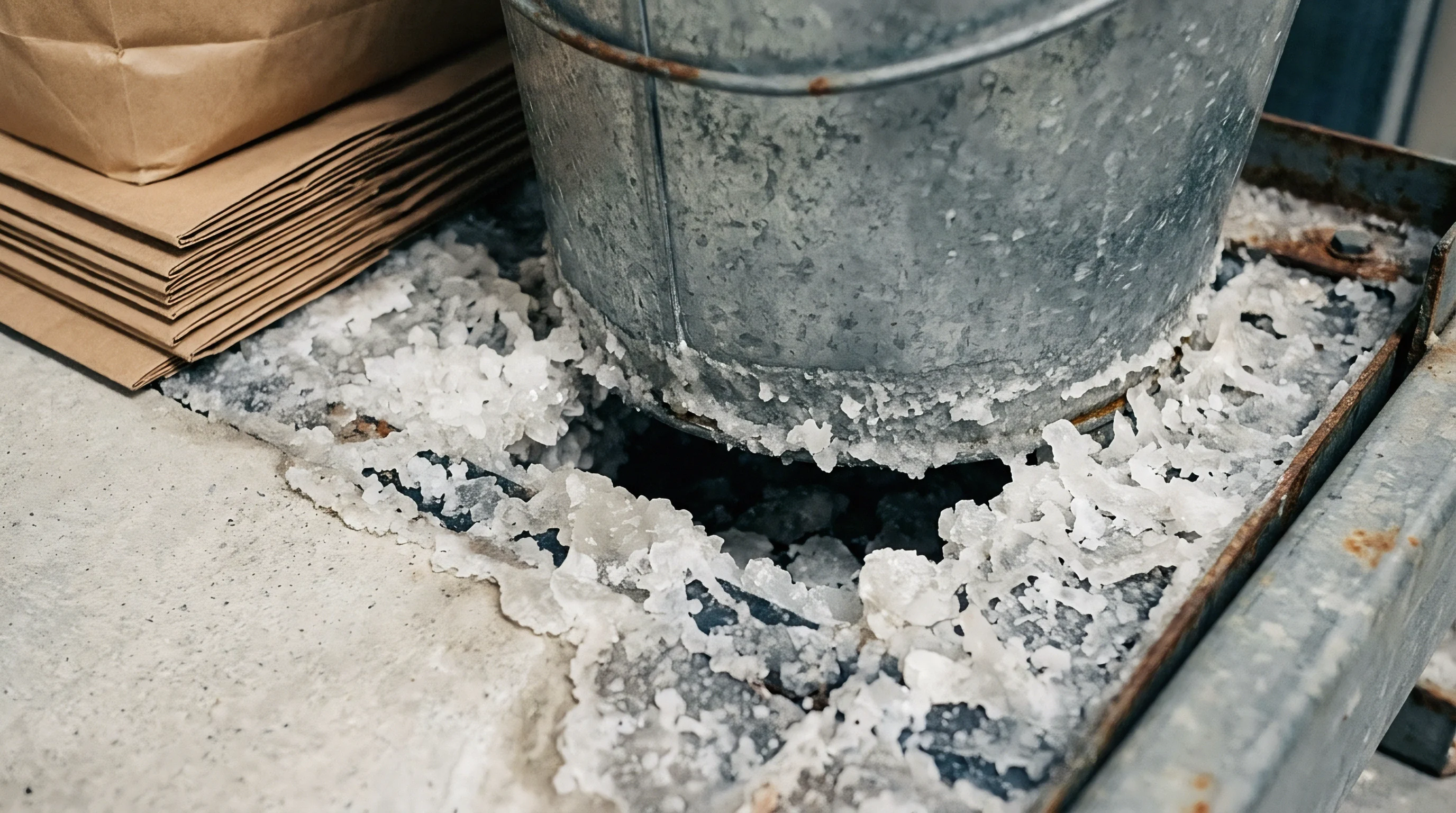
Kinetics

Diffusion Mechanics and Glass Transition Depression
Moisture absorption kinetics within hygroscopic polymers conform to classical non-steady-state diffusion laws. Fickian behavior establishes that the sorption rate correlates with the concentration gradient across the wall thickness and the temperature-dependent diffusion coefficient. The diffusion coefficient follows an Arrhenius relationship, accelerating substantially as cargo holds traverse warm marine sectors.
In thin-walled electronic enclosures with nominal nominal wall sections of 1.2 millimeters, saturation proceeds rapidly. Thick-walled industrial gears with cross-sections exceeding 6 millimeters experience differential saturation, establishing deep internal stress profiles. The outer shell expands through hydration while the core remains dry and contracted.
This moisture gradient alters molecular packing density. Hydroxyl groups in water establish preferential bonds with amide groups along polyamide chains, severing inter-chain van der Waals forces. This plasticization increases free volume.
Chains slide past one another under lower activation energies. Internal molded-in shear stresses relax spontaneously, precipitating warp and twist deformations. Annealing cycles run by suppliers directly alter initial relative crystallinity.
A supplier running mold cavity temperatures at 40 degrees Celsius produces components with elevated amorphous fractions compared to tools running at 90 degrees Celsius. Low-crystallinity parts possess high initial dimensional accuracy because rapid cooling suppresses immediate shrinkage inside the tool. These identical parts remain chemically active, presenting extreme vulnerability to post-mold secondary crystallization when exposed to marine thermal cycling.
Equilibrium moisture saturation at 23 degrees Celsius and 50 percent relative humidity lowers unmodified polyamide 66 glass transition temperatures from 68 to below 15 degrees Celsius.

Calculated Equilibrium and Non-Equilibrium Drift Bands
Consider a precision automotive electrical connector housing molded from unfilled polyamide 66 with a specified outer latching span of 45.000 millimeters, carrying a bilateral tolerance of plus or minus 0.040 millimeters. The supplier operates in an inland Asian industrial zone with an ambient indoor humidity of 30 percent and a tool temperature of 50 degrees Celsius. Parts pass automated coordinate measuring machine checks exactly 4 hours after ejection, reading 45.010 millimeters, comfortably within the tolerance band.
The supplier places parts into non-hermetic polybags inside corrugated cartons and loads them into a standard dry sea freight container bound for an assembly plant across the ocean.
Transit takes 34 days through equatorial waters where internal container temperatures reach 48 degrees Celsius and container humidity holds at 90 percent. During this duration, water diffusion penetrates 0.8 millimeters into the part walls. The material absorbs 1.9 percent moisture by weight, expanding the exterior latch width by 0.42 percent, equal to plus 0.189 millimeters.
Simultaneously, exposure to 48 degrees Celsius, well above the plasticized glass transition threshold of approximately 8 degrees Celsius, triggers secondary crystallization of the unstable amorphous phase. This crystallization contracts the overall volume by 0.20 percent, or minus 0.090 millimeters. Calculating net drift yield:
45.010 mm + 0.189 mm – 0.090 mm = 45.109 mm
The dimension exceeds the upper engineering drawing tolerance limit by 0.069 millimeters upon arrival. The parts will not seat inside mating automotive harnesses without excessive insertion force. The buyer raises an immediate non-conformance ticket.
The supplier counters with origin inspection certificates proving that zero defective units exited the mold cell. Without explicit allocation of post-cure drift risk, commercial deadlock follows instantly.
Uncontrolled kinetic relaxation generates complete scrap of complex precision assemblies when automated insertion lines seize on out-of-spec guide pins.


Transit

Container Microclimates and Oceanic Thermal Spikes
Ocean freight containers generate internal thermal dynamics independent of external ambient air parameters. Solar radiation striking steel container roof panels causes severe thermal peaking, frequently reaching internal temperatures between 55 and 65 degrees Celsius during vessel deck transit or quayside terminal staging. This solar loading evaporates free moisture from wooden shipping pallets and corrugated packaging media.
The resulting vapor creates container sweat phenomena, driving relative humidity to 100 percent condensing conditions during nighttime cooling phases.
Thermoplastic parts packaged in permeable packaging cycle through repeated sorption and desorption loops throughout these crossings. Each thermal cycle acts as an uncontrolled annealing process. At elevated temperatures, polymer chains acquire kinetic energy necessary to fold into crystalline lamellae.
As temperatures dip at night, relative humidity climbs, accelerating water intake into newly exposed amorphous zones. Moisture ingress occurs non-uniformly throughout pallet layouts. Outer carton rows experience immediate vapor contact, while inner core cartons insulate parts from thermal and moisture spikes for weeks.
Parts pulled from corner boxes show vastly different physical dimensions than parts sampled from the center core of the identical pallet. Standard receiving inspection sample plans, such as ISO 2859-1 general inspection level II, select cartons randomly across accessible perimeter pallet faces, amplifying variance in acceptance testing.
| Transport Segment | Typical Temperature Band | Internal Container RH Band | Dominant Polymer Mechanism | Paced Inspection Impact |
|---|---|---|---|---|
| Factory Floor Staging (Origin) | 20 to 25 C | 30 to 45% | Elastic recovery, minimal diffusion | Passes baseline quality release |
| Port Terminal Staging (Equatorial) | 35 to 58 C | 60 to 95% | Surface hydration, thermal expansion | Reversible dimensional shift begins |
| Ocean Vessel Hold / Deck Crossing | 25 to 65 C | 70 to 100% (Condensing) | Secondary crystallization, deep sorption | Permanent crystal rearrangement |
| Inland Rail / Truck Drayage | 15 to 40 C | 40 to 80% | Slow desorption, stress localization | Localized warping along wall ribs |
| Destination Warehouse Staging | 18 to 24 C | 45 to 55% | Asymmetric desorption toward equilibrium | Inspection reveals out-of-tolerance drift |
Data loggers placed inside ocean containers verify that temperature excursions are neither smooth nor predictable. Vessel routing changes, canal transit congestion, and terminal dwell times multiply cumulative thermal exposures. When cargo sits on open dock aprons for two weeks awaiting customs clearance, the thermal dose far exceeds supplier qualification test profiles.
Standard quality agreements treat transit as an inert logistical pipeline. The cross-border marine route behaves instead as an active, uncontrolled post-molding reactor.
The parts matched the approved production print when they were packed into the export container, so warehouse storage at destination must have swollen the components.

Crate

Primary Barrier Specifications and Desiccant Mass Formulations
Mitigating hygroscopic drift requires isolating precision components from environmental moisture exchange. Standard polyethylene stretch wrap and single-layer low-density polyethylene bags offer virtually no barrier against water vapor transmission over thirty-day maritime journeys. Water vapor transmission rates for standard 50-micrometer low-density polyethylene films hover near 10 to 15 grams per square meter per 24 hours under tropical conditions of 38 degrees Celsius and 90 percent relative humidity.
Maintaining dimensionally stable polyamides demands metalized barrier laminates.
Effective moisture barrier bags utilize aluminum foil structures conforming to MIL-PRF-131K Class 1, exhibiting water vapor transmission rates below 0.005 grams per square meter per 24 hours. The packaging design must balance internal residual moisture against external transmission. Desiccant sizing cannot rely on generic rules of thumb.
Packaging engineers apply formulas defined in standards such as DIN 55474 or standard industrial packaging guides. Desiccant unit calculations incorporate internal air volume, packaging barrier surface area, duration of transport, and the equilibrium moisture capacity of the specific desiccant clay or molecular sieve at target internal temperatures.
DIN 55474 requires packaging barrier systems to maintain internal package humidity below 20 percent relative humidity across sixty days of oceanic transport to prevent polymer chain reorganization.
Beyond external moisture protection, part condition at packing sets the internal equilibrium state. Supplying dry-as-molded parts inside moisture barrier bags locks in an unstable non-equilibrium condition. When end-use assemblies operate in humid ambient environments, post-assembly expansion remains inevitable.
Conditioning parts at the origin factory stabilizes dimensions before shipment. Suppliers achieve this by exposing parts to controlled humidity and temperature chambers to bring components to equilibrium moisture content before bagging. This process pre-swells the parts to their operational size and allows secondary crystallization to complete within the manufacturing facility under controlled conditions.
Origin conditioning protocols require precise parameter definitions within purchase specifications:
- Conditioning Chamber Temperature must track resin matrix limits to avoid surface degradation, maintaining 70 degrees Celsius with tolerances held to plus or minus 2 degrees.
- Relative Chamber Humidity balances speed against saturation risk, set strictly to 62 percent moisture concentration.
- Chamber Dwell Duration ensures core saturation across maximum wall thicknesses, running 48 hours for nominal 2.0-millimeter sections.
- Packaging Stage Gate enforces sealed pouch encapsulation within 4 hours of chamber extraction to stop unmonitored atmospheric desorption.
Section 14.3 of the Master Supply Agreement specifies that components conditioned to moisture equilibrium prior to sealing inside certified metalized barrier pouches shift all post-opening dimensional variances onto the buyer.

Default

Incoterms Transfer Points versus Material Latency
Standard commercial delivery terms fail to assign responsibility for post-transfer molecular shifts. International commercial terms establish the exact geographical coordinates where cost, insurance, and risk of loss pass from seller to buyer. Under Free Carrier or Free on Board agreements, title and risk transfer the moment goods clear the ship rail or enter carrier custody at the origin port.
If goods conform to technical prints at that precise second, the seller discharges primary contractual duties under standard sale of goods legislation, including the United Nations Convention on Contracts for the International Sale of Goods.
Physical conformity at origin does not guarantee commercial utility at destination. Latent material defects typically refer to hidden internal voids, improper resin mixtures, or contamination present during production. Secondary crystallization and hygroscopic drift occupy a contested legal category: predictable physical transformations inherent to the specified polymer chemistry, accelerated by logistical transit conditions.
If a buyer specifies an unfilled polyamide 66 resin without mandating thermal annealing, moisture pre-conditioning, or hermetic barrier packaging, courts and arbitration tribunals frequently rule that the buyer assumed the risk of natural polymer behavior. The seller delivers conforming goods; ambient physics alters them en route. Conversely, when contracts define dimensional compliance strictly at incoming receiving inspection stations, suppliers face catastrophic warranty exposure for environmental variables outside supplier control.
| Allocation Strategy | Inspection Point of Record | Packaging Responsibility | Conditioning Requirement | Commercial Exposure Bearer |
|---|---|---|---|---|
| Origin Gate Release | Origin factory dock, dry-as-molded within 4h | Standard export packaging, poly-lined boxes | Zero conditioning; parts shipped dry | Buyer absorbs all transit drift and warpage |
| Destination Gate Release | Buyer incoming dock, 48h post-unsealing | Standard export packaging, supplier discretion | Supplier discretion to meet drawing | Supplier absorbs maritime climate degradation |
| Conditioned State Delivery | Buyer dock, tested immediately upon unbagging | Foil-laminate barrier bags with desiccants | Origin accelerated conditioning to 50% RH eq | Shared: Supplier guarantees state; Buyer manages ambient |
| Split Risk Mechanism | Origin lot acceptance with sealed witness coupons | Hermetic foil packaging verified by logger | Controlled post-mold annealing cycle | Party violating environmental profile assumes cost |

Drafting Enforceable Equilibrium and Inspection Windows
Carefully structured supply agreements bypass this conflict by decouple raw geometric tolerances from absolute environmental conditions. Master supply contracts for precision semi-crystalline components must define dimensions as a function of temperature, relative moisture content, and stabilization time. Drawing blocks that state nominal dimensions without specifying environmental moisture equilibrium states invite legal disputes.
Contractual clauses resolving these exposures delineate explicit inspection staging sequences:
- Incoming Package Verification checks that hermetic foil seals remain unbroken and internal relative humidity indicator cards register below 15 percent upon arrival.
- Coupon Equilibrium Verification pulls pre-conditioned sacrificial test bars co-packaged with the production lot to verify moisture weight percentage via loss-on-drying analyzers.
- Thermal Normalization Staging holds unbagged components inside the destination metrology laboratory at 23 degrees Celsius and 50 percent relative humidity for 40 hours prior to final measurement.
- Secondary Dispute Arbitration re-evaluates non-conforming lots by performing full vacuum drying followed by controlled laboratory equilibrium, isolating permanent crystalline shrinkage from reversible water swelling.
Technical definitions form the core of commercial protection. Precision manufacturing agreements define dimensions alongside exact material conditions: dry-as-molded, conditioned to equilibrium at 50 percent relative humidity, or completely dried. The agreement sets which party calculates and pays for the barrier packaging system, which party bears the loss if shipping delays exceed forty-five days, and which metrology laboratory arbitrates disputed dimensions.
Environmental loggers inside shipping containers provide objective, tamper-proof records of transit conditions. When ambient maritime temperatures exceed agreed thermal ceilings, liability shifts directly to the freight forwarder or logistics underwriter under extended cargo insurance provisions. Without these dated, measurable stage-gate requirements incorporated directly into purchase orders, supply chain partners waste capital disputing physical polymer behaviors that simple engineering chemistry predicts with complete reliability.