Allocating Intermodal Desiccant Saturation Risk in Sealed Polymer Container Transits
Calculated desiccant dosing and verified polymer barrier permeability prevent container rain damage while clear contract clauses enforce risk allocation.


Sorption
The microclimate inside an intermodal freight container functions as a dynamic thermal engine. Air enclosed within the cargo space expands and contracts under external ambient temperature fluctuations, shifting the vapor pressure balance between the internal atmosphere, packaging materials, and payload. When warm, humid air contacts container surfaces cooled by marine winds or clear night skies, the local relative humidity reaches one hundred percent.
Condensation forms on metal walls and ceilings. Container rain damages vulnerable freight.
Desiccant agents placed within sealed polymer container systems arrest this condensation cycle by binding water molecules from the headspace. Adsorption performance relies on the thermodynamic equilibrium between the sorbent material and the surrounding atmosphere. Dynamic vapor sorption dynamics differ markedly between calcium chloride salts, bentonite clay, silica gel, and synthetic zeolites.
Silica gel and clay desiccants exhibit linear adsorption isotherms, binding water through physical capillary condensation. Their adsorption headroom drops significantly when ambient temperatures rise above forty degrees Celsius, turning saturated clay into a potential moisture source during extreme thermal excursions.
Moisture equilibrium inside a sealed shipping volume shifts continuously as ambient ocean temperatures swing between day and night cycles.
Calcium chloride compounds utilize chemical absorption alongside physical binding. Calcium chloride reacts with atmospheric water vapor to form a liquid brine, which is immobilized using starch, gelling agents, or cross-linked polymers. This chemical reaction allows calcium chloride to bind up to three hundred percent of its dry mass in water at high relative humidity levels.
Sorbent selection determines the functional operating envelope of the moisture barrier system.

Adsorption Isotherms and Desiccant Classifications
Selecting sorbent media requires evaluating adsorption isotherms across expected operational temperature ranges. Physical adsorbents operate through physisorption, relying on Van der Waals forces within porous microstructures. Chemical absorbents undergo phase changes as water molecule uptake progresses, forming hydrated crystalline complexes.
Adsorption capacity varies as a function of vapor pressure and ambient thermal energy. Silica gel achieves maximum moisture retention at twenty-five degrees Celsius under ninety percent relative humidity. Thermal loading above forty-five degrees Celsius desorbs weakly bound water molecules back into the container headspace, accelerating condensation risk on cargo surfaces.
Calcium chloride modified with polymeric thickeners maintains chemical binding stability up to sixty degrees Celsius, locking absorbed water into an insoluble gel matrix.
Packaging suppliers routinely claim that desiccant capacity degradation stems entirely from improper container loading exposure during rainy terminal staging, citing post-transit binder breakdown as secondary.
Barrier
Sealed polymer liners and flexible container structures retard moisture ingress through physical mass transfer resistance. Polymeric materials such as low-density polyethylene, polypropylene, and co-extruded barrier films limit water vapor transmission rates between the ambient ocean atmosphere and the container cargo payload. Fickian diffusion governs water vapor movement through non-porous polymer walls, driven by concentration gradients across the film thickness.
Water vapor transmission rates vary based on polymer density, crystallinity, orientation, and plasticizer formulation. Biaxially oriented polypropylene and metalized polyethylene terephthalate laminates yield extremely low transmission values, whereas standard polyethylene films permit gradual moisture migration over extended transits. Mechanical stress during loading, transport vibration, and thermal expansion degrades barrier performance by creating micro-voids and seal fractures.

Polymer Permeability and Transmission Rates
Evaluating film selection involves testing water vapor transmission under standardized temperature and relative humidity differentials. Standard test protocols measure total water vapor mass passing through a specified surface area over twenty-four hours.
| Polymer Film Formulation | Thickness (microns) | WVTR at 23°C and 85% RH (g/m²/day) | WVTR at 38°C and 90% RH (g/m²/day) | Primary Degradation Mode |
|---|---|---|---|---|
| Monolayer Low-Density Polyethylene | 125 | 1.85 | 8.40 | High vapor permeability at elevated temperatures |
| Co-extruded High-Density Polyethylene | 100 | 0.65 | 3.10 | Flex fatigue under cyclic mechanical vibration |
| Linear Low-Density Polyethylene / Nylon Co-extrusion | 90 | 0.45 | 2.15 | Hygroscopic expansion of nylon layer under direct moisture |
| Aluminum Foil Laminate (PET/ALU/PE) | 75 | 0.01 | 0.05 | Pinhole development along severe fold angles |
| Data compiled according to ASTM E96 gravimetric water vapor transmission testing methods. | ||||
Polymer films leak ambient moisture. Pinholes destroy barrier performance. Mechanical handling during container stuffing subjects polymer liners to localized tension and puncture risks.
Small tears negate the low permeability properties of high-performance laminates, allowing ambient air exchange to bypass film resistance entirely.

Structural Failure Modes in Sealed Container Liners
Container liner bags must maintain structural continuity across sea, rail, and highway movements. Deficiencies in liner construction or installation lead to moisture intrusion paths that exceed calculated desiccant adsorption capacity.
- Flex Cracking Microscopic fractures along polyolefin folds allow bulk vapor movement during container handling.
- Thermal Seal Delamination Heat stress at heat-sealed margins weakens bond integrity, creating micro-gaps.
- Pinhole Proliferation Abrasion between outer polymer walls and corrugated packaging perforates thin moisture membranes.
- Gasket Creep Mechanical deformation under latching pressure reduces elastomeric compression across container doors.
Door seals and fitment valves represent vulnerable perimeter boundary points. Elastomeric gaskets suffer compression set when subjected to prolonged mechanical clamping and extreme ambient temperature ranges, diminishing sealing force over long maritime transits.
A polymer container seal that withstands static warehouse pressure often leaks moisture rapidly when subject to sea-rail intermodal vibration.
Failing to account for polymer pinhole proliferation under high-humidity flexing leaves sensitive electronics or dry bulk chemicals exposed to free water condensate, resulting in complete cargo rejection at the destination port.
Route
Intermodal transport legs impose variable thermal and barometric loads across ocean, rail, and road segments. Freight moving through equatorial maritime corridors experiences high ambient temperatures and solar radiation, driving container internal temperatures well above ambient air measurements. Dark metal container roofs reach surface temperatures exceeding seventy degrees Celsius during peak sunlight exposure.
Temperature swings drive dew point shifts. Air expandability within sealed polymer systems causes barometric breathing when seal integrity is incomplete. Pressure differentials force external humid ocean air into the container space during cooling cycles, loading installed desiccant charges with external ambient moisture.
How Does Transit Temperature Cycling Accelerate Moisture Transfer?
Solar heating rapidly increases the vapor holding capacity of air within the container headspace. Water contained within wooden pallets, corrugated cartons, and cargo products evaporates into the warmer atmosphere. Nighttime cooling reverses this equilibrium rapidly.
Container walls cool faster than the central cargo mass, causing moisture to condense onto interior steel surfaces and top polymer liner layers before desiccants can clear the headspace humidity.
- Map thermal zones and transit durations across all intermodal transport legs.
- Measure ambient relative humidity and temperature at intermediate transfer terminals.
- Calculate cumulative vapor pressure differentials for peak exposure periods.
- Inspect container seals and structural wall integrity prior to stuffing operations.
- Verify initial moisture content of all internal packaging materials.
Rail transit introduces severe vibrational stress. Equatorial ocean routes increase thermal loads. Port terminal dwell times compound exposure risks when containers sit staged on asphalt aprons without environmental shielding for extended days, accelerating desiccant consumption before ocean transit commences.
Whether ocean carriers will eventually accept real-time container relative humidity telemetry as binding proof of transit temperature spikes remains unresolved across maritime freight arbitration boards.


Calculation
Determining desiccant mass requirements involves balancing water vapor ingress against internal equilibrium targets. Math models incorporate initial air mass moisture, total moisture content of internal wood and paper packaging, vapor permeability of polymer boundary walls, and total transit duration across target thermal profiles.
Sizing errors trigger early saturation. Clay desiccants release water under heat. Calculating desiccant mass without auditing initial packaging moisture leads to premature desiccant exhaustion before vessel arrival.
Mathematical Sizing of Container Desiccant Loads
Consider a standard forty-foot dry intermodal container loaded with electrical components packaged in corrugated boxes on softwood pallets, wrapped inside a polyethylene liner bag. The container internal volume equals seventy-six point four cubic meters. Initial air temp sits at thirty degrees Celsius with eighty-five percent relative humidity, equating to twenty-five point seven grams of water per cubic meter of air.
Initial headspace air moisture contributes one thousand nine hundred sixty-three grams of water vapor. Five hundred kilograms of wooden pallets loaded at fourteen percent moisture content contain seventy kilograms of total water. If thermal cycles cause three percent of this wood moisture to exchange into the internal headspace during transit, two thousand one hundred grams of water enter the air mass from packaging materials alone.
Polymer liner surface area covers eighty-five square meters. A high-density polyethylene liner with a water vapor transmission rate of three point one grams per square meter per day at thirty-eight degrees Celsius and ninety percent relative humidity transmits two hundred sixty-three point five grams of water per day. Over a thirty-five day transit, water vapor ingress through the polymer barrier totals nine thousand two hundred twenty-two grams.
Total moisture load requiring desiccant capture sums to thirteen thousand two hundred eighty-five grams of water. To maintain container relative humidity below sixty percent at forty degrees Celsius, calcium chloride desiccant with a net adsorption capacity of two hundred percent by dry weight requires six point sixty-four kilograms of active desiccant media. Standard clay desiccant operating at twenty-five percent net capacity under identical thermal conditions requires fifty-three point fourteen kilograms of material.
| Desiccant Active Compound | Adsorption Mechanism | Capacity at 25°C / 50% RH (% dry mass) | Capacity at 40°C / 90% RH (% dry mass) | Thermal Desorption Risk |
|---|---|---|---|---|
| Bentonite Clay | Physisorption | 18.5 | 12.0 | High above 45°C |
| Silica Gel (Type A) | Physisorption | 28.0 | 14.5 | Moderate above 50°C |
| Molecular Sieve (4A) | Crystalline Adsorption | 19.0 | 17.5 | Low below 150°C |
| Calcium Chloride / Starch Polymer | Chemisorption / Gelling | 110.0 | 285.0 | Negligible (gelled matrix) |
Desiccant Allocation and Placement Guidelines
Proper allocation of calculated desiccant units prevents localized saturation pockets within the shipping container. Hanging desiccant bags along container top wall rings intercepts ceiling condensation before liquid droplets fall onto packaged goods.
- Initial Moisture Audit Measure baseline moisture content of all wooden pallets, corrugated boxes, and dunnage before loading.
- Volume Sizing Adjustment Scale active desiccant weight upward when cargo space contains large unvented air voids.
- Thermal Excursion Allowance Reserve extra adsorption capacity for transits crossing tropical shipping lanes.
- Desiccant Placement Distribution Hang high-capacity calcium chloride bags uniformly along top container rings to intercept ceiling drop.
Calcium chloride desiccants absorb up to three hundred percent of their dry weight in moisture when relative humidity exceeds eighty percent at thirty degrees Celsius.
A desiccant charge calculated solely for static warehousing will always saturate before an ocean vessel completes a cross-equatorial transit.


Clause
Commercial agreements divide financial responsibility for cargo damage resulting from transit condensation across buyers, sellers, and logistics providers. Standard Incoterms rules establish the exact geographic point where loss risk transfers, but standard carriage contracts rarely define specific relative humidity boundaries inside sealed containers.
Wet cargo causes immediate port rejection. Ocean carriers reject sweat damage claims. Marine cargo underwriters regularly dispute moisture loss claims when desiccant calculations rely on unverified carrier transit duration estimates rather than recorded intermodal delays.

Incoterms and Transfer of Moisture Saturation Risk
Allocating moisture risk requires clear contractual terms mapping desiccant validation obligations to transfer points. Under Free on Board (FOB) terms, the seller assumes moisture protection responsibility until cargo loads onto the ocean vessel, leaving destination condensation risks with the buyer unless specific packaging specifications govern the entire journey.
| Incoterm Designation | Risk Transfer Location | Desiccant Sizing Obligation | Moisture Damage Proof Burden |
|---|---|---|---|
| Ex Works (EXW) | Seller Facility Ramp | Buyer assumes total specification responsibility | Buyer proves packaging defect occurred prior to dispatch |
| Free on Board (FOB) | Vessel Rail at Load Port | Seller validates initial moisture load and desiccant dose | Party holding risk proves container seal breach vs packaging failure |
| Cost, Insurance, Freight (CIF) | Vessel Rail at Load Port | Seller provides insurance covering transit sweat damage | Buyer presents destination unsealing sensor logs to insurer |
| Delivered Duty Paid (DDP) | Buyer Destination Premises | Seller maintains complete environmental control chain | Seller absorbs total cargo rejection loss upon delivery failure |

Documenting Moisture Risk Transfer
Proving compliance with desiccant risk allocation terms requires comprehensive data collection prior to container sealing. Missing baseline records invalidates insurance subrogation claims following cargo arrival damage.
- Tare Weight Records Documented initial weight of desiccant units before container insertion.
- Calibrated Sensor Logs Sealed electronic temperature and humidity records retrieved at unsealing.
- Pre-Loading Packaging Dossiers Certified moisture percentage measurements for all wooden packaging materials.
- Visual Container Inspection Certificates Signed logs confirming wall integrity and door gasket sealing prior to stuffing.
Standard ocean charter clauses disclaim carrier liability for sweat damage whenever container ventilation ports remain structurally sealed during transit.
Inserting a maximum allowable internal relative humidity threshold of sixty percent measured upon unsealing shifts the burden of desiccant sizing validation entirely onto the seller under CIF carriage terms.

Testing
Empirical verification of container atmospheric conditions validates desiccant performance and risk boundary models. Pre-shipment moisture content auditing establishes baseline water masses within organic packaging materials, establishing total initial environmental loading.
Unsealing logs confirm packaging moisture levels. Gravimetric checks verify initial dry mass. Combining gravimetric verification with calibrated electronic telemetry provides definitive proof of container atmospheric history across all intermodal legs.
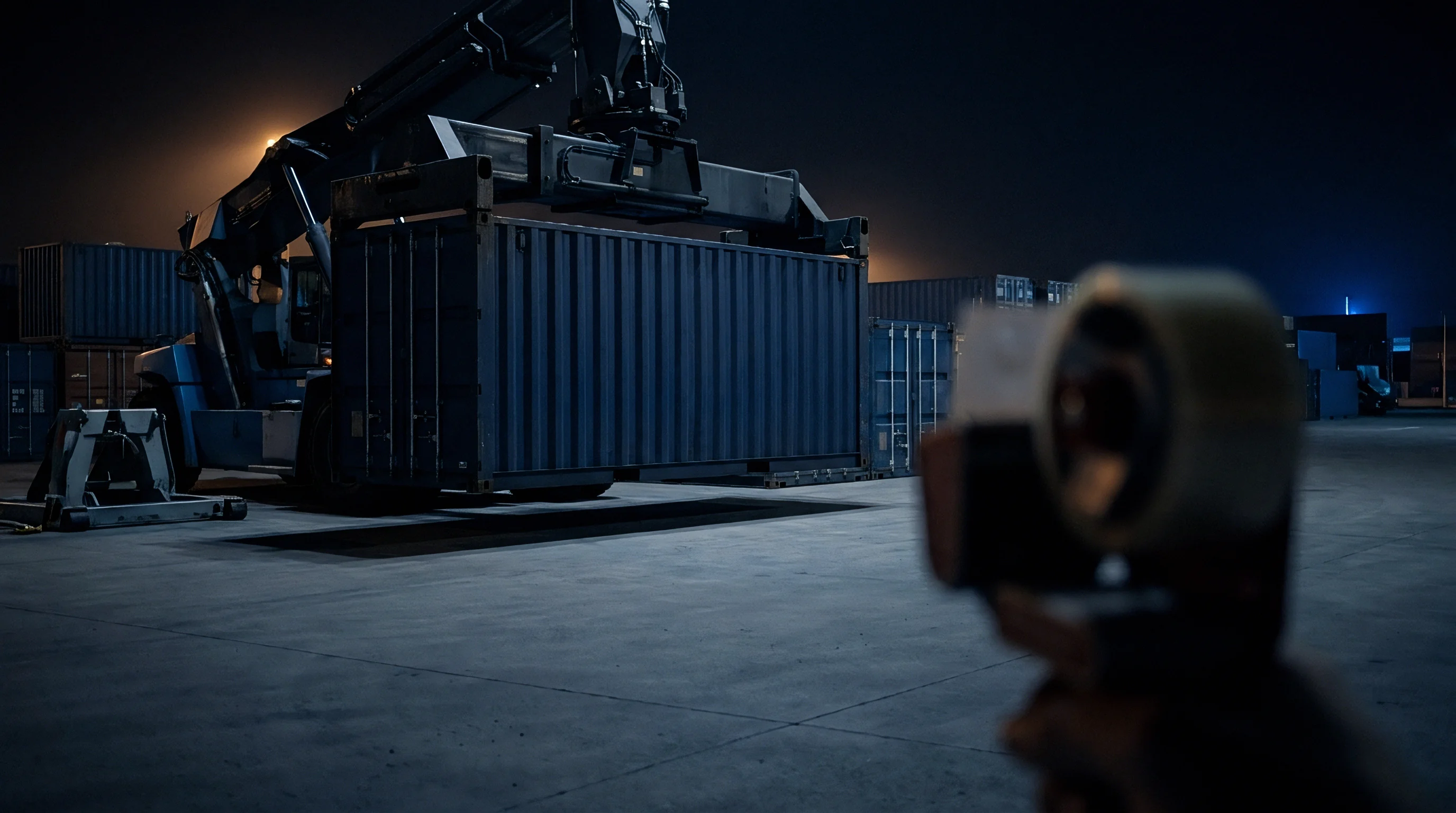
Gravimetric and Telemetric Quality Audits
Gravimetric desiccant audits involve weighing designated test pouches immediately before container sealing and within one hour of destination unsealing. Mass increase calculations reveal the exact total water mass absorbed during transport. Comparing actual uptake against maximum theoretical adsorption capacity indicates remaining safety headroom.
Electronic dataloggers placed within cargo pallets continuously record temperature and relative humidity at hourly intervals. Telemetry profiles identify exact geographic locations where relative humidity spikes or dew point crossings occur, pinpointing thermal management failures during terminal staging or vessel carriage.
Gravimetric verification of test pouches retrieved at the discharge port establishes the exact remaining ad-sorption headroom across every pallet position in the container.