Polymer Degradation Metrics in High Stress Cadence Mechanisms
Polymer degradation metrics under dynamic stress demand explicit engineering sign-off rights to prevent high cadence schedules from triggering dynamic fatigue failure.


Shear
When semi-crystalline thermoplastic components face dynamic mechanical stress at frequencies above three hertz, heat builds up locally inside the polymer. High-velocity assemblies cause rapid oscillatory displacements that stretch polymer chains past their linear viscoelastic threshold, lowering yield stress and accelerating localized creep strain. Continuous reciprocation without adequate cooling can cause micro-yielding long before a part hits its nominal laboratory tensile limit.
Engineering teams easily miss this degradation because static tests measure strength under isolated ambient conditions, while dynamic cycles continuously convert mechanical work into internal heat through hysteresis loss ~ effectively depressing the component’s glass transition temperature in operation.
A viscoelastic material’s mechanical response hinges on both temperature and loading rate. At high speeds, strain rates above 100 reciprocal seconds turn normally ductile polymers like polyamide 66 or polyoxymethylene brittle and vulnerable to catastrophic crazing. Microstructural orientation dictates how shear stress moves through crystalline regions; flow paths from resin injection create anisotropic molecular alignment, leaving weak spots along weld lines and gate locations.
When rapid strokes apply dynamic shear along these alignment planes, molecular slip starts at loads far lower than standard stress-strain models predict. Material datasheets usually assume linear stress-displacement behavior, overlooking how high-frequency inputs lower the friction barrier that resists chain sliding.
Auditing high-speed actuator housings across European manufacturing sites revealed this exact dynamic. Operational targets had raised duty cycles from two cycles per minute to twelve cycles per minute without modifying polymer formulation or housing geometry. Within forty hours of continuous production testing, internal drive bushings grew irreversibly by more than three percent.
The failure was not caused by impact overload, but by steady mechanical dissipation pushing the polymer’s core temperature past its heat deflection limit. When thermal energy accumulates faster than the surface can dissipate it through conduction or convection, the inner matrix softens while the outer surface stays cool, hiding degradation deep within the wall.
| Polymer Matrix Grade | Glass Transition (Degrees C) | Dynamic Storage Modulus at 25C (GPa) | Dynamic Storage Modulus at 85C (GPa) | Fatigue Failure Cycles at 5 Hz (10^6 Cycles) | Maximum Hysteresis Heat Rise Rate (C/min) |
|---|---|---|---|---|---|
| Polyamide 66 Glass Reinforced 30% | 65 | 8.5 | 3.8 | 2.4 | 4.2 |
| Polyether Ether Ketone Unfilled | 143 | 3.9 | 3.4 | 12.8 | 0.8 |
| Polyoxymethylene Copolymer | -60 | 2.8 | 1.2 | 1.1 | 6.5 |
| Ultra High Molecular Weight PE | -120 | 0.7 | 0.3 | 8.5 | 1.9 |
Managing operational cadence alongside polymer fatigue demands alignment between technical sign-off authority and production schedules. Failures in dynamic polymer parts usually start at internal stress concentrations ~ sharp radii, pin bosses, or wall thickness transitions ~ where high stroke frequencies generate localized stresses above dynamic fatigue limits. When production demands higher cycle rates, engineering must re-validate the reduced fatigue envelope at elevated operating temperatures.
Skipping technical qualification to meet delivery dates introduces unquantified risk into the field, which is why quality managers need direct authority to stop assembly lines whenever dynamic fatigue metrics cross safe thermal stability thresholds.
Organizational silos often separate polymer selection from duty cycle governance. Design teams hand finished CAD models to production without specifying maximum continuous stroke durations or surface temperature limits. Plant operations then increase cycle rates to boost throughput, unaware that small frequency gains cause exponential increases in internal heating.
Setting explicit authority thresholds ensures that any change to stroke frequency, stroke length, or ambient operating temperature requires dynamic re-qualification of the housing. Without that gate, degradation advances silently until sudden field failures occur that packaging inspections cannot detect.
Polyamide components operating at 120 degrees Celsius under a continuous 4 Hertz dynamic stroke exhibit a 38 percent reduction in flexural yield strength after 250 operational hours.
Dynamic mechanical characterization sets the safe operating limits for high-cadence polymer components. Tracking storage modulus retention under elevated temperatures shows how much rigidity a material maintains over extended runs. When the dynamic loss modulus spikes relative to storage modulus, the polymer converts mechanical work into heat, accelerating microstructural decay.
Selection must account for static load demands and dynamic heat dissipation at maximum operating speeds; ignoring viscoelastic heating results in rapid creep deformation, loss of preload, and total mechanical failure.
Published fatigue curves reflect idealized lab conditions, meaning micro-voiding under complex multi-axial dynamic loading falls outside standard batch quality guarantees.

Chain
Molecular weight distribution dictates how well structural polymers resist thermo-oxidative breakdown during aggressive operating cycles. High mechanical stress accelerates chemical degradation by severing covalent bonds in the backbone. Mechanochemical scission occurs when concentrated forces pull chain molecules taut, transferring mechanical energy directly onto carbon-carbon bonds.
Once a chain snaps, reactive free radicals form at the exposed ends and react instantly with atmospheric oxygen. This triggers an oxidative cascade that lowers molecular weight throughout the bulk material, degrading impact toughness, environmental stress crack resistance, and dynamic fatigue life.
Tracking shifts in molecular weight distribution offers early warning of structural decay long before surface cracks appear. Gel Permeation Chromatography measures weight-average and number-average molecular weights in degraded parts, where a curve shifting toward lower molecular weight signals widespread chain scission. Fourier-Transform Infrared Spectroscopy monitors carbonyl group formation along the polymer chain to calculate the Carbonyl Index.
When thermo-mechanical fatigue pushes the Carbonyl Index past baseline limits, the polymer matrix turns brittle, drastically lowering the energy needed to initiate cracks under cyclic loading.
High cadence production environments present distinct challenges for chemical stability verification during material processing and assembly:
- Sample five representative polymer components directly from the dynamic testing loop at fifty-hour operation intervals.
- Extract three milligram core specimens from high-stress geometric cross-sections using low-speed mechanical drilling to prevent thermal bias.
- Dissolve extracted specimens in hexafluoroisopropanol or trichlobenzene solvent maintained at calibrated solution temperatures.
- Run high-resolution Gel Permeation Chromatography to determine weight-average molecular weight retention percentages relative to virgin resin.
- Perform Fourier-Transform Infrared analysis on thin sliced films to calculate baseline and operational Carbonyl Index values.
- Flag any component lot exhibiting a molecular weight retention drop exceeding seven percent for immediate technical sign-off review.
Once radical formation begins, thermal autoxidation loops self-propagate through branching pathways, degrading adjacent polymer chains. Hydrolysis poses an equally serious threat to moisture-sensitive polymers like polyamides, polyesters, and polyurethanes. In warm, humid environments, water molecules attack ester or amide linkages in the backbone, rapidly reducing molecular weight and triggering abrupt losses in ductility.
Preventing this requires thorough resin drying before injection molding and tight control over moisture exposure during dynamic testing.
Organizational delegation rules must set strict limits on material verification procedures. Sign-off authority for batch release belongs to materials engineers rather than plant managers focused on volume targets. When schedule pressures mount, verification steps get compressed or deferred unless quality deviations trigger automatic escalation whenever molecular weight retention falls below safety thresholds.
Protecting structural integrity requires separating quality oversight from production quotas so degraded polymer lots are quarantined before reaching critical assemblies.
Clear escalation paths prevent gradual erosion of the engineering baseline. Raw material batches from suppliers often carry subtle variations in stabilizer packages, antioxidant concentrations, or initial molecular weight distributions. A batch lacking sufficient thermal antioxidants degrades rapidly under dynamic loading, even if standard tensile tests match published specification sheets.
Differential Scanning Calorimetry measures Oxidation Induction Time to reveal the remaining functional life of antioxidant additives in molded parts. Maintaining strict raw material acceptance criteria keeps inferior resin out of high-stress production streams.
When melt flow testing reveals rising variance between raw pellets and finished dynamic parts, chemical breakdown has already compromised structural durability.

Bench
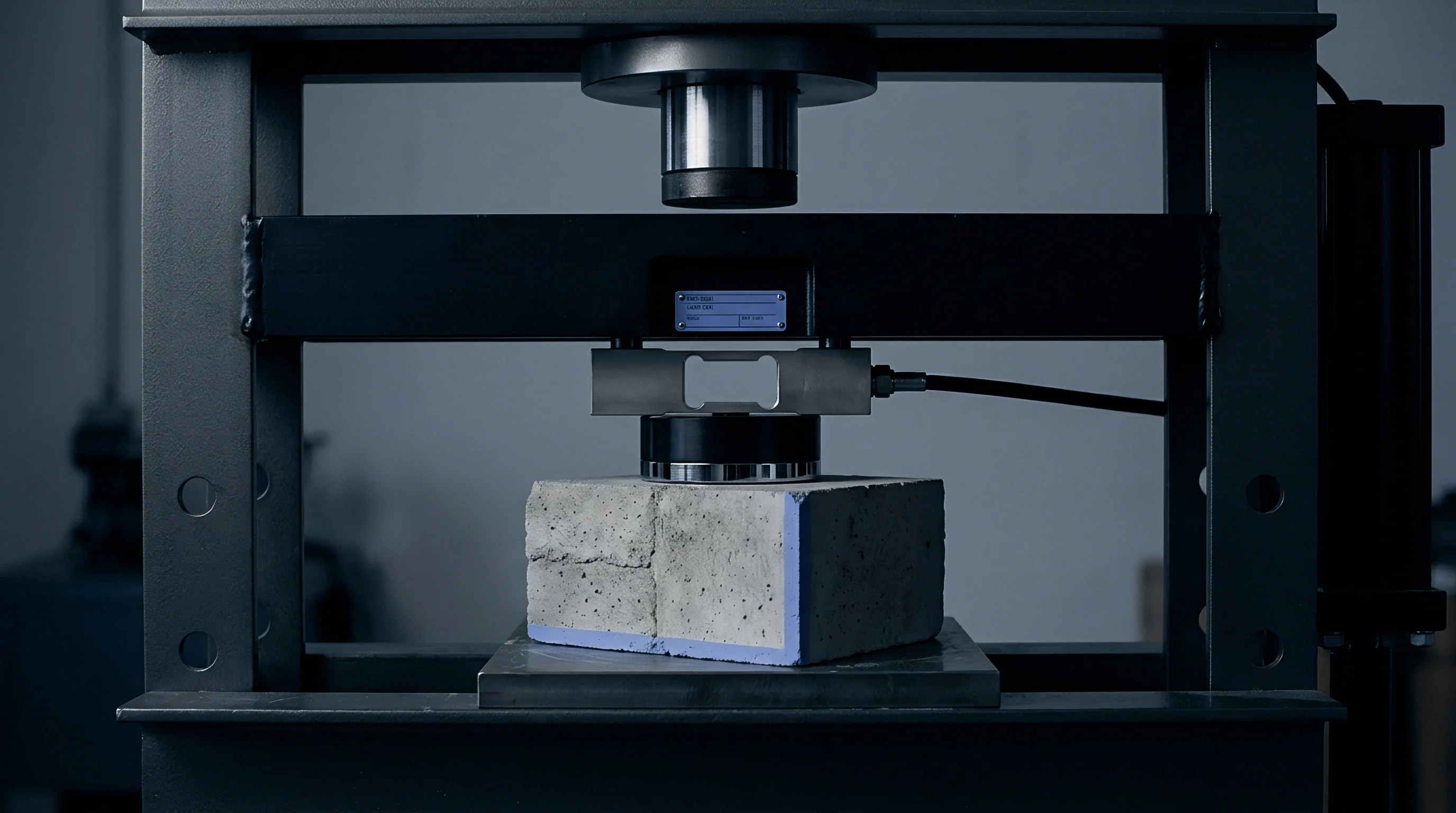
Simulating dynamic mechanical loading in the laboratory requires replicating multi-axial stress fields rather than relying on unidirectional pull tests. Test benches for high-cadence mechanisms must apply cyclic forces across complete frequency spectra while monitoring heat generation inside the sample in real time. Standard static datasheets fail to capture how strain rate, internal temperature, and structural decay interact under load.
Effective dynamic testing relies on closed-loop electro-dynamic actuators that reproduce field displacement profiles ~ including harmonic overtones and transient shock pulses ~ while continuously measuring input force, strain, and surface temperature to establish realistic fatigue limits.
Dynamic Mechanical Analysis (DMA) is the primary technique for evaluating polymer behavior under sinusoidal stress. By sweeping across temperature and frequency ranges, DMA breaks complex modulus into storage and loss components. The loss factor, or tan delta, measures the ratio of dissipated energy to stored energy per cycle.
An upward shift in tan delta indicates that the polymer matrix is shifting into a viscous dissipation regime, accelerating heat generation and softening the structure. Test protocols must set explicit tan delta thresholds to flag components before they enter thermal runaway and deform catastrophically during extended runs.

What Metric Predicts Structural Degradation before Micro-Cracking?
Dynamic mechanical analysis tracks storage modulus loss across thermal cycles long before surface inspection reveals micro-voids. A drop in storage modulus reflects chain scission, void coalescence, and phase separation within polymer blends. When testing filled compounds like glass-reinforced polyamides, monitoring loss modulus trends separates matrix degradation from fiber pull-out.
A continuous drop in storage modulus at constant temperature points to structural softening long before cracks show up under optical magnification, making continuous modulus tracking essential during qualification.
| Degradation Indicator | Primary Measurement Method | Detection Limit | Operational Threshold for Rejection | Instrumentation Type |
|---|---|---|---|---|
| Storage Modulus Retention | Dynamic Mechanical Analysis | 0.5% Modulus Shift | 12% Drop from Baseline | Resonant Beam Rheometer |
| Antioxidant Depletion | Differential Scanning Calorimetry | 0.1 Minute OIT | OIT | High-Pressure DSC |
| Carbonyl Index Rise | FTIR Spectroscopy | 0.01 Absorbance Ratio | 0.15 Index Increase | Attenuated Total Reflectance FTIR |
| Viscoelastic Hysteresis Shift | Infrared Thermography / Force Sensors | 0.1 Degree C Delta | Core Temp > HDT Limit | Calibrated Thermal Imaging Camera |
Accelerated life testing uses time-temperature superposition to compress months of operational stress into days of lab exposure. Technicians apply shift factors to construct master curves that predict long-term dynamic behavior from short-term, multi-frequency data. However, these superposition models break down under high stress cadences, where excessive thermal acceleration can trigger secondary relaxation transitions that never occur during normal operation.
Test protocols must keep accelerated conditions within realistic physical bounds so applied stresses do not force the polymer past secondary glass transitions or cause phase changes that invalidate lifetime projections.
Accelerated laboratory thermal cycling yields valid lifetime predictions only when test frequencies stay below the glass transition heat dissipation limit.
Establishing reliable correlation between lab tests and field performance requires careful instrumentation of dynamic test samples. Measuring internal core temperature is difficult because physical thermocouples create stress concentrations that skew failure modes. While non-contact infrared thermography yields detailed surface temperature maps, internal peaks inside thick-walled parts can exceed surface readings by fifteen to twenty degrees Celsius.
Advanced setups use embedded optical fiber Bragg grating sensors to track internal thermal expansion and localized strain without disrupting structural integrity, providing precise heat dissipation gradients across complex part geometries.
Interim engineering leadership must review lab testing routines to confirm qualification protocols match real-world operational demands. Test methods frequently reflect historical habits rather than current cycle speeds. Moving from legacy static pull testing to high-frequency dynamic characterization requires modern instrumentation and updated technical skills.
Building internal capability in viscoelastic failure analysis helps engineering teams catch material flaws early, avoiding expensive redesigns and unbudgeted recall costs.
Early laboratory setups failed to capture internal frictional heating during high-frequency stroke cycles, causing a thirty-six thousand euro re-testing charge and invalidating three months of qualification data.

Mandate
Organizational structures require explicit decision limits governing material substitutions and specification releases. Authority must flow through clearly defined delegation frameworks that specify who holds sign-off power for formulations, quality thresholds, and process modifications. In high-cadence manufacturing, commercial pressures often push operations teams to adopt alternative resin grades or alter molding parameters during supply shortages.
Without firm structural boundaries, unapproved material changes reach production lines, degrading dynamic performance and exposing the business to severe product liability risks. Ultimate decision rights for material selection must rest strictly with qualified engineering leaders.
Structuring second-line technical management requires clear escalation paths tied to measurable degradation metrics. Effective governance sets firm thresholds where technical issues automatically escalate to senior executives or board committees ~ such as when testing shows a ten percent drop in storage modulus or a distinct rise in Carbonyl Index. The lead materials engineer needs absolute veto authority over batch shipments, completely independent of production schedules or output targets.
Separating technical sign-off from operational targets protects material quality against commercial compromise.
To establish effective technical governance over polymer component integrity, engineering organizations implement formal review checklists for material approval:
- Specification Authority Limit establishes the maximum allowable percentage variance in resin molecular weight distribution before executive engineering approval is mandatory.
- Substitution Approval Rule mandates dual sign-off from both Chief Material Specialist and Lead Reliability Manager for any change in polymer supplier or grade.
- Thermal Stability Boundary defines the maximum peak operating temperature a dynamic component can reach before structural redesign becomes compulsory.
- Quality Audit Right grants the Quality Assurance Lead immediate operational authority to halt assembly lines upon detecting out-of-spec viscoelastic properties.
- Field Escalation Protocol dictates board notification parameters when field component degradation rates exceed historical warranty baseline estimates.
Interim management assignments focused on scaling production must prioritize auditing decision rights and sign-off chains. The interim mandate placed full material rejection authority with the Lead Quality Specialist. During rapid growth, decision paths easily blur, allowing plant managers or procurement officers to make informal technical concessions.
An interim leader restores operational discipline by establishing clear decision boundaries, updating role descriptions, and enforcing formal engineering change request procedures. Documenting every concession in a transparent tracking system ensures full accountability across all manufacturing facilities.
ISO 13485 section 7.3.9 mandates that any change in material formulation requires written approval from the designated Lead Quality Authority before production deployment.
Delegated authority structures must balance operational flexibility with strict material compliance limits. While plant-level engineers need latitude for routine adjustments, material selection, core process parameters, and acceptance limits must remain locked. Revising the mandate established explicit dollar thresholds, risk tiers, and technical boundaries for engineering sign-offs.
Setting these controls prevents junior personnel from approving high-risk material substitutions under pressure from delivery schedules, preserving overall product integrity.
Paragraph 4.2 of the engineering governance charter strips production managers of unilateral resin substitution rights, returning sole release authority to the Quality Assurance Lead.

Toll
The financial consequences of polymer degradation in high-stress mechanisms accumulate far beyond direct scrap costs. Premature material failure triggers secondary mechanical damage throughout drive trains, leading to unplanned downtime, expedited shipping fees, and labor-intensive field retrofits. Warranty reserves calculated from static strength data underfund real-world financial risk when components run under aggressive dynamic cadences.
Accounting systems must capture the true cost of material failures by linking warranty claims, assembly downtime, and customer penalty fees directly to polymer quality concessions, exposing the true financial impact of premature degradation.
Commercial contracts between equipment manufacturers and resin compounders often misallocate financial liability for premature material degradation. Supplier warranties typically cover only raw resin replacement, excluding indirect damage, field repair labor, and lost revenue. When dynamic fatigue causes component failure despite resin meeting static batch certificates, the equipment manufacturer absorbs the financial loss.
Risk management teams should embed technical tolerance bands and dynamic performance requirements directly into procurement contracts so suppliers share financial accountability for performance variations during dynamic operation.
Failure modes in technical governance during high-cadence production reveal common operational vulnerabilities:
- Unilateral Schedule Acceleration occurs when operations management increases mechanism stroke rates without securing engineering re-qualification of polymer component fatigue limits.
- Commercial Resin Substitution happens when procurement teams purchase lower-cost alternative polymer grades that meet static data sheets but fail dynamic viscoelastic testing.
- Compressed Verification Windows emerge when tight product launch dates force material testing teams to truncate accelerated life testing cycles, missing long-term thermal degradation signals.
- Isolated Quality Oversight develops when quality assurance personnel report directly to plant managers evaluated on production volume rather than product reliability.
- Omitted Environmental Factors arise when laboratory testing fails to replicate operational humidity, chemical exposures, or ambient temperature extremes present in real-world applications.
Mapping cost structures across active product lines isolated material degradation expenses. Scrap rates previously attributed to molding flaws were actually caused by micro-cracking during automated high-speed assembly: the press inserted steel pins into polymer housings faster than the viscoelastic matrix could relax, inducing localized stresses that opened structural cracks hours after assembly. Slowing insertion cadence slightly and specifying a toughened polymer grade eliminated assembly scrap, saving hundreds of thousands of euros in annual component costs.
Aligning manufacturing processes with viscoelastic behavior prevents these hidden losses during high-velocity production.
| Polymer Degradation Mode | Root Technical Cause | Direct Cost per Failure Incident (Euros) | Indirect Warranty Exposure Tier | Recommended Warranty Reserve Adjustment |
|---|---|---|---|---|
| Viscoelastic Thermal Runaway | Excessive Stroke Cadence / Hysteresis | 14,500 | Severe (Line Stoppage) | +3.5% of Unit Production Cost |
| Thermo-Oxidative Embrittlement | Antioxidant Depletion / High Temp | 2,800 | Moderate (Field Wear) | +1.2% of Unit Production Cost |
| Hydrolytic Chain Scission | Inadequate Drying / Humid Environment | 8,900 | High (System Failure) | +2.8% of Unit Production Cost |
| Mechanochemical Crazing | Unrelieved Internal Stress / Fatigue | 6,100 | Moderate (Cracking) | +1.8% of Unit Production Cost |
Key-person dependencies in material selection create substantial financial risk for expanding manufacturing firms. When institutional knowledge about polymer behavior resides in a single senior engineer, the company faces operational disruption if that engineer leaves. Decisions on material suppliers, process parameters, and quality tolerances lose consistency, leading to uncoordinated specification changes and higher defect rates.
Building formal material qualification databases and documenting technical decision logic mitigates key-person risk, preserving continuity across leadership transitions.
Unplanned material substitution during cadence acceleration increases overall warranty escrow expenditure far beyond initial resin savings.
Incentive structures for procurement and plant management should emphasize product durability over immediate unit cost savings. Rewarding purchasing teams purely for cutting raw material expenses encourages sourcing lower-grade polymers that drive up field failure rates. Compensation metrics ought to incorporate warranty reserve performance and dynamic scrap rates over a two-year evaluation window.
Aligning sourcing incentives with long-term material stability protects product reliability and prevents short-term savings from spawning heavy long-term warranty liabilities.
Commercial contracts often leave vague the exact percentage of indirect recall costs that resin compounders absorb when dynamic fatigue limits fail prematurely during documented field operations.

Vigil
Sustained material integrity depends on institutionalizing test routines and sign-off authority beyond key individual personnel. Effective oversight relies on structural mechanisms that enforce quality standards across all facilities regardless of executive turnover or schedule pressures. Codifying test protocols, acceptance limits, and change control procedures into centralized systems prevents local plant personnel from compromising material standards, preserving quality across shifts, product lines, and manufacturing sites worldwide.
Handover dossiers prepared during leadership transitions must provide comprehensive documentation of material qualification baselines, supplier audit results, and dynamic failure histories. When an interim manager hands authority to a permanent successor, complete visibility into past technical decisions is critical. The handover dossier records all approved material concessions, outstanding quality deviations, and ongoing life test data.
Leaving behind undocumented technical debt forces incoming leaders to manage unquantified risks, raising the likelihood of operational missteps during the transition.
Engineering handover dossiers for high-cadence mechanism manufacturing mandate complete structural documentation:
- Material Baseline Qualification Record provides dynamic viscoelastic characterization curves, DMA data, and thermal deflection maps for all approved polymer grades.
- Supplier Audit History documents manufacturing process audits, batch consistency logs, and raw resin quality certificates across active compounders.
- Escalation and Concession Log details every temporary engineering change request, material concession, and process modification granted during the preceding operational cycle.
- Active Life Testing Dossier tracks real-time dynamic fatigue test results, ongoing accelerated life testing master curves, and observed failure modes.
- Regulatory and Compliance File contains current ISO material validation documentation, safety data sheets, and environmental regulatory filings.
Building long-term asset continuity requires embedding technical oversight directly into corporate governance structures. Works councils and co-determination boards play important roles in reviewing structural investments in product quality and manufacturing safety. Presenting dynamic material metrics and structural risk analyses to executive oversight bodies elevates material reliability to a core strategic priority.
Senior leadership visibility over engineering quality prevents short-term financial pressure from undermining technical standards, maintaining long-term market competitiveness.
Contractual frameworks governing key technical appointments should write long-term quality metrics directly into executive compensation packages. Tying performance bonuses to warranty stability and material quality retention discourages short-term operational compromises that damage product reputation over time. Rigorous contract design aligns executive compensation with sustained engineering performance, ensuring today’s decisions protect product integrity for years to come.
When the permanent Chief Engineer assumes authority, the audit trail established during the interim mandate provides complete visibility over material supplier compliance, batch variance histories, and stress envelope boundary approvals.