Defining Decision Rights for Second Line Plant Leadership
Delegated plant authority functions only when spending limits, equipment trip discretion, and staffing approvals sit inside signed numerical operating limits.


Spindle
Production halts run forty minutes longer when subordinate managers cannot approve machine overhauls on their own signature. Line supervisors walk across terminal corridors to seek wet signatures for minor parts replenishment while conveyors remain idle. Second line leadership in industrial plants encompasses the direct subordinate tier to the plant general manager: the operations head, the technical maintenance lead, the plant quality chief, and the continuous improvement lead.
Ambiguity across these seats forces routine operating decisions into the executive calendar, converting the general manager into an operational bottleneck. True organizational capacity expands when the second line exercises distinct jurisdictional authority over direct machinery interventions, local procurement commitments, and shift adjustments without prior executive clearance.
Every operational seat holds an inherent operational boundary. When an enterprise scales from a single continuous line to parallel production wings, the volume of immediate daily interventions outpaces any single executive calendar. Second line leaders frequently operate as clerical conduits rather than decision makers.
The structural remedy requires replacing open-ended job descriptions with precise authority boundaries. These boundaries specify the exact circumstances under which an operations lead commits funds, suspends a production line, or adjusts shift staffing without upward escalation.
The operations manager holds independent authority to reassign up to twelve operators across manufacturing cells during unexpected equipment failure.
A plant operating without a formal delegation charter relies on subjective sentiment and executive tolerance. This creates operational hesitation. A maintenance supervisor who waits for executive sign-off on a replacement motor bearing during night operations protects personal liability at the direct cost of enterprise run-time.
Second line authority establishes an explicit contractual envelope. Within that envelope, the subordinate manager operates as the final commercial and physical authority, accepting direct accountability for technical parameters and local throughput targets.
The distribution of authority requires formal documentation across four core operating domains: capital and expense commitments, equipment stoppage mandates, engineering modifications, and disciplinary interventions. When these domains lack explicit authority allocations, functional leaders default to defensive behavior. They escalate standard variance approvals upward while deferring corrective decisions.
The delegation structure protects enterprise velocity by locating technical accountability immediately adjacent to the physical equipment.
Clamp
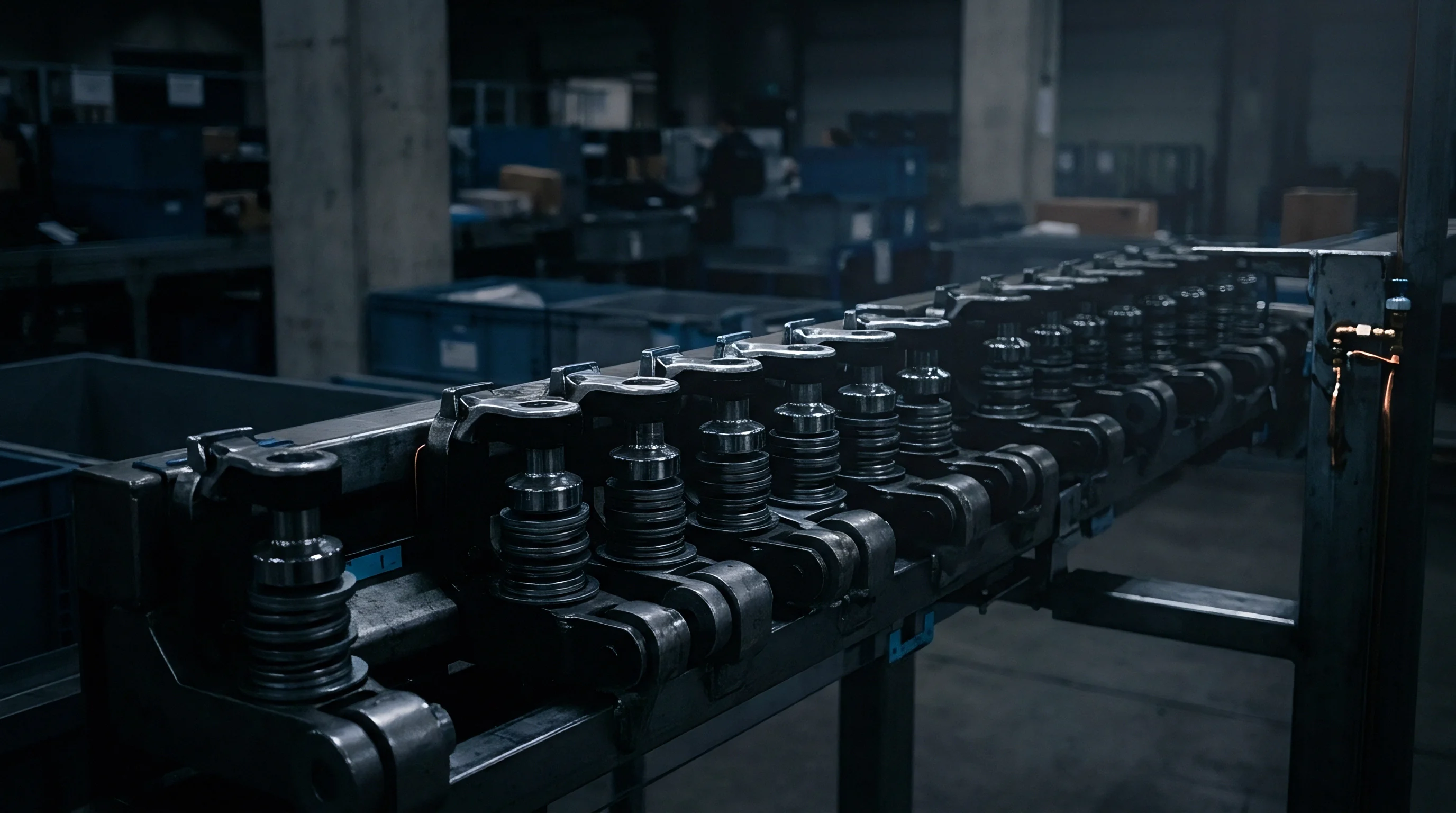
Industrial operations operate under distinct statutory and capital restrictions that prohibit indiscriminate authority distribution. The clamp represents the exact administrative and legal limit beyond which a second line leader cannot act independently. Statutory plant safety appointments under regulatory workplace frameworks impose direct legal accountability on specific named persons.
An operations manager cannot delegate statutory compliance obligations to subordinate shift leaders through an informal internal memorandum. The authority schedule mirrors the statutory exposure of the general manager while granting explicit operational autonomy beneath regulatory thresholds.
Financial delegations establish explicit currency thresholds for discretionary and non-discretionary commitments. An operations head possesses authority to approve expedited components procurement during machine breakdowns up to fifteen thousand euros, provided the action resolves a documented line stoppage. That same manager holds zero authority to modify the preventative maintenance contract vendor.
The distinction separates tactical execution from strategic supply commitments. Authority distribution without currency ceilings produces unchecked budget variances, whereas unworkable spending caps force five-hundred-euro component orders through executive board approvals.
| Decision Category | Shift Supervisor Tier | Second Line Department Head | Plant General Manager |
|---|---|---|---|
| Emergency Asset Stoppage | Full authority on safety hazard | Full authority on process deviation | Full authority across plant premises |
| Unplanned Maintenance Spend | Zero expenditure ceiling | Up to 15,000 EUR per event | Up to 100,000 EUR per event |
| Shift Pattern Adjustment | Intra-shift swap authority | Up to 72 hours forward scheduling | Indefinite roster changes |
| Scrap Lot Rejection | Up to 2,500 EUR product value | Up to 25,000 EUR product value | Unlimited scrap condemnation |
| Contractor Site Clearance | Routine access clearance | Hot work and confined space permits | Long-term vendor service access |
Production environments introduce acute operational friction between production output and quality clearance. Granting the second line production manager independent authority to bypass quality acceptance parameters creates immediate commercial liability. Quality sign-off sits exclusively within the technical quality department, establishing a structural check on throughput pressure.
A production head can redirect equipment capacity, reschedule batches, and authorize overtime. The authority to override a quarantine tag remains locked to the technical quality manager, preventing production output priorities from compromising customer technical specifications.
The authority to modify operational sequence definitions demands identical isolation. An engineering change notice cannot be executed through informal verbal instruction on the factory floor. Plant stability degrades rapidly when local leads adjust cycle times or temperature envelopes without formal engineering sign-off.
Authority schedules define the technical boundary: the operations head may alter equipment speeds within validated process windows, but moving outside the qualified parameter band demands sign-off from the technical engineering director. Establishing these parameters protects the manufacturing operation from undetected defect generation.
Subordinate leadership mandates function effectively only when emergency powers carry concrete containment limits. A technical maintenance lead holds authority to alter machinery wiring during an unscheduled electrical failure to maintain continuous operation. That intervention must carry an explicit twenty-four-hour operational expiration.
Temporary modifications without formal containment procedures accumulate technical debt and introduce workplace hazards. Structural discipline requires all temporary bypasses to trigger automatic engineering reviews before standard shifts resume. The corporate compliance manual confirms that undocumented operational bypasses invalidate commercial equipment warranties.

Gear
Execution mechanics convert written authority limits into daily operational habits across the plant floor. The interface between the general manager and the operational second line relies on predictable escalation cadences rather than continuous ad-hoc consultation. Weekly plant reviews, thirty-minute shift handovers, and red-amber-green production metrics track operational status.
Clear cadences release the second line to run operations inside defined envelopes. They alert senior management solely when parameters cross defined control limits.

Escalation Thresholds and Autonomous Triggers
Direct intervention triggers when physical variables exceed operational tolerance bands. Subordinate leaders manage variances autonomously within defined process spans, eliminating the need to brief senior executives on minor fluctuations. The production lead adjusts thermal controls and line cycle speeds within five percent of the standard bill of process without external notification.
Escalate only when deviation threatens delivery schedules, exceeds scrap budgets, or compromises operator safety.
- Level One Threshold triggers internally when cycle time variances stay under ten percent, authorizing the second line operations lead to implement line balance adjustments without executive intervention.
- Level Two Threshold activates when component scrap rates exceed four percent of daily output, compelling the quality lead to isolate the batch and initiate formal containment.
- Level Three Threshold engages when machine stoppage exceeds four contiguous hours, mandating direct notification to the general manager alongside an active recovery protocol.
- Level Four Threshold applies immediately to any statutory safety breach or severe injury, overriding subordinate autonomy and passing operational control to the executive crisis team.
Formal escalation ladders define the line between subordinate execution and executive accountability. Plant operations falter when shift supervisors manage minor issues in isolation until delivery dates fail. An escalation path provides subordinate leads with clear execution security: they manage issues within their tier and escalate according to documented thresholds.
Escalation represents adherence to operational control systems rather than operational weakness.
Mechanical breakdowns exceeding four continuous hours trigger automatic notification to corporate supply chain planners.
Shift-level autonomous governance requires daily rhythm. The second line team conducts a twenty-minute operational assessment at the start of each production cycle to evaluate machine availability, human resource allocation, and raw material status. The operations manager commits required resources based on these operational inputs.
Senior management evaluates operational outcomes through shift performance logs rather than real-time verbal inquiries. This structural barrier protects second line execution focus.
Standard reporting cadences must avoid generating excessive administrative overhead. Subordinate leaders spend their shifts managing shop-floor operations rather than assembling slide presentations for executive committees. Single-page daily operating summaries containing machine run-rates, scrap counts, and total labor hours supply sufficient executive visibility.
The reporting cadence serves to document executed actions within delegated authority boundaries rather than requesting permission for operational choices already authorized by internal protocols.

Strain
Operating structural handovers exposes the second line to severe operational friction during peak production periods. A significant structural failure occurs when an organization formally delegates decision rights while maintaining informal command-and-control practices. A plant manager who issues a delegated authority schedule but questions minor maintenance expenditures creates operational paralysis.
Subordinate leaders stop using their formal authority, returning all operational choices to senior executives. Authority delegation requires leadership restraint: when an operations lead acts within approved authority limits, executive management supports the outcome even when alternate decisions were available.
The second structural failure involves delegating authority without corresponding budget or technical capability. An enterprise that grants a technical maintenance head authority to commission capital repairs up to twenty-five thousand euros while maintaining two-week vendor purchase order validation cycles renders that authority meaningless. True decision authority requires coordinated alignment across finance, supply chain, and operational systems.
If enterprise resource planning platforms require general manager approval for small inventory requisitions, the written delegation schedule remains ineffective.
Measuring the real distribution of authority requires tracking where operational choices actually occur. When eighty percent of equipment work orders still require general manager authorization, the operational delegation program has failed. Subordinate plant directors frequently cite enterprise liability concerns when refusing to exercise granted authority.
Unclear corporate indemnity policies encourage operational hesitation. Second line leaders need written confirmation that choices made within approved delegation limits carry standard corporate insurance protections.
Contractual indemnification protects technical managers from personal operational liability when executing emergency line shutdowns.
Plant expansions highlight the structural cost of centralized decision structures. Doubling facility throughput under centralized operational management doubles senior management communications, stalling core operations. Conversely, well-defined authority distributions scale efficiently.
The second line manages direct operational variances, and senior plant management concentrates on cross-site supply chain coordination, multi-year asset planning, and strategic investment programs. Operational velocity depends entirely on structural clarity.
Equipping subordinate leaders to handle operational autonomy requires deliberate procedural development. Plants often promote exceptional technical operators into second line management positions without training them on operational risk calculations or asset governance frameworks. If a newly appointed operations head lacks training on the financial consequences of equipment shutdowns, they struggle to make rapid, balanced operating choices.
Structured delegation requires developing second line business capabilities, including variance analysis, labor compliance, and asset life-cycle management. When technical leads understand both equipment parameters and financial constraints, operational delegation functions as intended.
Unresolved operational frictions emerge around cross-departmental coordination between second line peers. When the maintenance manager demands an urgent line shutdown for critical motor servicing while the operations manager refuses downtime to hit shift targets, unresolved authority deadlocks the plant floor. Formal protocols must specify which function yields under competing priorities: asset integrity parameters always override volume schedules, or the dispute escalates immediately to the general manager for rapid settlement.


Charter
Transforming informal delegation practices into binding management structures requires executing a signed Plant Authority Charter. The charter functions as an internal operating agreement between the plant general manager and the operational leadership team. It translates abstract governance principles into clear, measurable authority boundaries.
Every operational seat receives a dedicated authority annex detailing specific commitments, line shutdown powers, staffing allowances, and mandatory reporting triggers. The charter establishes objective authority criteria, eliminating subjective assumptions about operational jurisdiction.

Operational Authority Mandate Specifications
Every operational leadership mandate document covers six structural dimensions to establish complete authority boundaries. Incomplete delegation schedules leave critical operating decisions unassigned, driving unresolved friction back up to senior executives.
- Statutory Appointment Boundaries define direct health, safety, and environmental legal obligations assigned to the operational seat, including specific regulatory reporting mandates.
- Capital Expenditure Thresholds set exact monetary limits for routine operating purchases, unexpected component acquisitions, and third-party specialist engineering services.
- Operational Stoppage Mandates specify direct authority to halt production equipment for safety deviations, process drift, or material non-conformance without prior approval.
- Workforce Deployment Rights establish boundaries for shift scheduling, mandatory overtime authorization, line reassignment, and temporary labor hiring.
- Process Modification Envelopes document exact operating parameter bands within which the lead can modify machinery operations without external engineering sign-off.
- Escalation Tripline Conditions identify critical equipment downtime durations, safety incidents, and scrap value limits that require immediate general manager notification.
Updating authority schedules is an essential continuous governance practice. As an industrial plant expands, introduces automated manufacturing assets, or changes shift structures, operational requirements adjust. An annual review of the Plant Authority Charter keeps delegations aligned with operating conditions.
Expanding operational limits reflects growing management competence and evolving operational footprints, preventing operational bottlenecks as business volumes grow.
Integrating the authority charter directly into employment agreements creates structural stability. When operational mandates sit within binding role contracts, second line leaders operate with defined authority boundaries. This formal clarity protects operational velocity, insulates the enterprise from key-person dependencies, and develops skilled operational leaders across the business.
The plant operates as a coordinated industrial system run by an empowered, accountable operational team.
A supplier operations contractor working under delegated site rules will often note that unwritten permissions invite blame whenever equipment fails under stress.