Interfacial Shear Threshold Dynamics in High Speed Polyolefin Extrusion
Stabilizing extrusion wall shear thresholds below 0.14 MPa prevents sharkskin defect costs and protects working capital headroom during throughput scaling.


Drag
High-speed extrusion of polyolefin resins hits physical limits when wall friction along the die surface becomes too high. As molten polymer moves through a steel die, the fluid layer against the channel surface transitions from zero-slip flow to localized interfacial slip. This occurs once wall shear stress hits a characteristic threshold: typically 0.10 MPa to 0.18 MPa for linear low-density polyethylene at standard processing temperatures, and 0.14 MPa to 0.25 MPa for high-density polyethylene, depending on density and melt temperature.
At these high shear levels, physical entanglements between adjacent polymer chains begin to uncoil under flow stress.
Below this critical stress, output scales directly with screw speed and die pressure drop. Crossing it changes how the melt behaves inside the die land. The polymer begins slipping against the metal, causing periodic velocity fluctuations across the extrudate profile that show up on film or pipe as sharkskin or a dull matte finish.
If shear stress continues to climb, the flow breaks down into an unstable stick-slip regime with heavy pressure oscillations and alternating rough and clear bands.

Capillary Wall Shear Stress Thresholds
Determining critical shear stress analytically requires capillary rheometry data. Measurements plot apparent shear stress against shear rate using long capillary dies to minimize entrance pressure losses. Applying the Bagley correction isolates true wall shear stress from end effects, while the Rabinowitsch correction adjusts apparent shear rates to account for non-Newtonian velocity profiles.
| Polyolefin Grade | Melt Flow Index (g/10min) | Density (g/cm3) | Critical Shear Stress (MPa) | Critical Shear Rate (1/s) | Observed Instability Type |
|---|---|---|---|---|---|
| LLDPE Hexene Copolymer | 1.0 | 0.918 | 0.12 | 140 | Sharkskin Melt Fracture |
| LLDPE Octene Copolymer | 0.8 | 0.920 | 0.14 | 165 | Sharkskin Melt Fracture |
| mLLDPE Metallocene | 1.0 | 0.916 | 0.10 | 95 | Early Stick-Slip Onset |
| HDPE Bimodal Film Grade | 0.05 | 0.952 | 0.18 | 210 | Gross Melt Fracture |
| HDPE Unimodal Pipe Grade | 0.25 | 0.949 | 0.22 | 280 | Stick-Slip Transition |
Metallocene-catalyzed linear low-density polyethylenes have narrower molecular weight distributions than conventional Ziegler-Natta resins. This uniform chain length lowers the point at which slip starts, making metallocene grades susceptible to surface defects at lower throughput rates. Rheological tests show metallocene LLDPE slipping at wall shear stresses as low as 0.10 MPa, whereas Ziegler-Natta grades withstand up to 0.14 MPa under identical thermal conditions.

Surface Melt Fracture and Slip Velocity Transition
Past the critical stress threshold, surface roughness develops because the polymer skin stretches heavily as it exits the die land. Leaving the constrained steel channel releases boundary stresses so quickly that the resulting tensile stress exceeds the melt strength of the surface layer. Microscopic tears open in that outer skin, creating the characteristic ridges of sharkskin melt fracture.
Once these surface tearing events become continuous across the die exit, full melt fracture takes hold.
Calculating slip velocity requires comparing actual volumetric throughput against what non-slip flow models predict. High-speed optical velocimetry and Mooney capillary analysis show that slip velocity follows a power-law function of wall shear stress once past the threshold. Higher melt temperatures reduce bulk viscosity and lower the overall pressure drop through the die, but they do not materially shift the critical shear stress itself, which depends on the interfacial bond energy between the polymer and the steel wall.
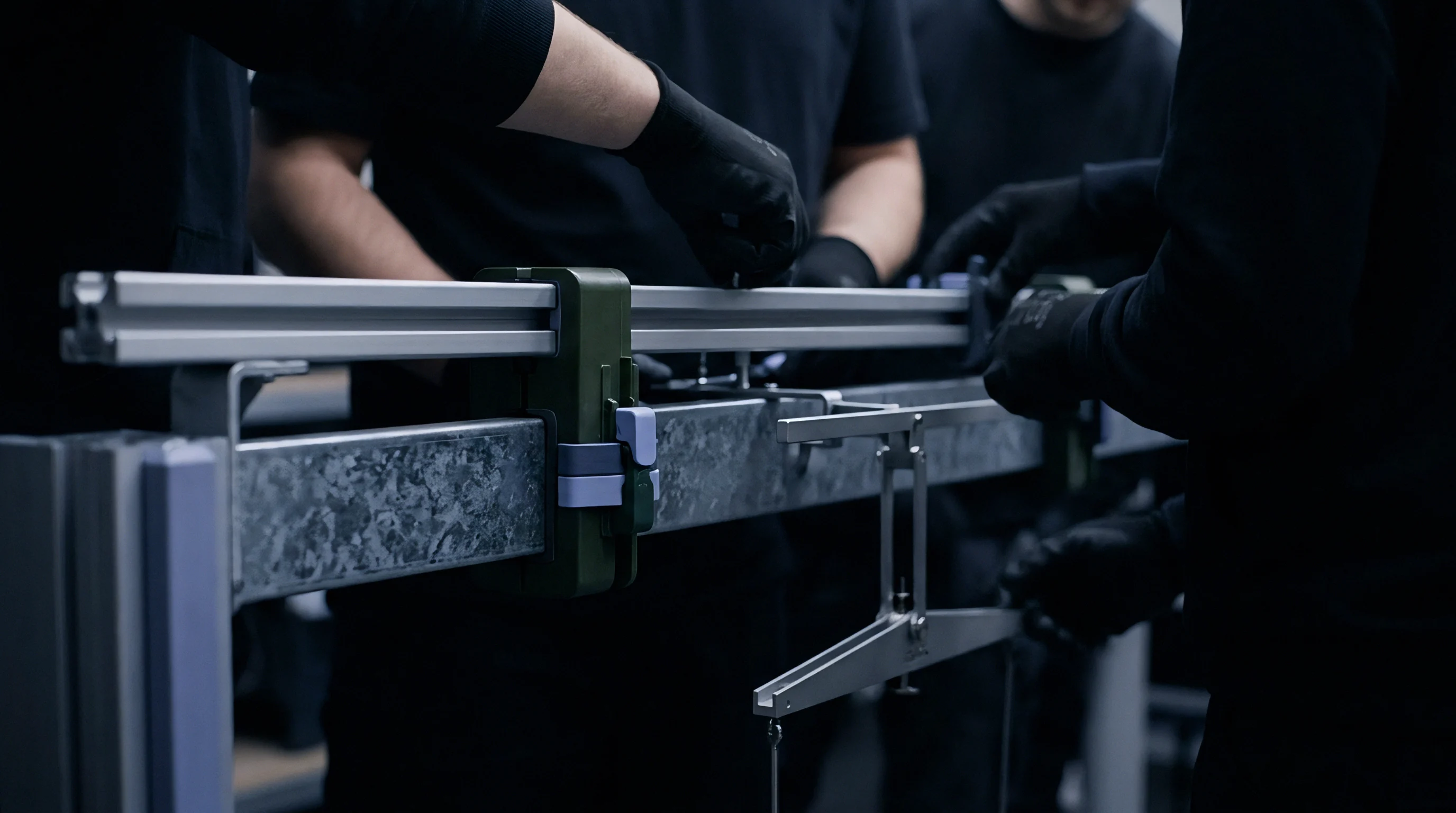
Under capillary flow at 190 degrees Celsius, linear low-density polyethylene displays sharkskin melt fracture when wall shear stress crosses 0.14 MPa.
Running an extrusion line past this critical stress limit ruins film clarity, creates immediate scrap, and forces costly shutdowns to clean the die land.

Rheology
A polyolefin melt’s viscoelastic properties dictate how stress accumulates and relaxes inside high-shear die zones. As the polymer flows through narrow channels, its chains align rapidly along the flow path. The ratio of first normal stress difference to wall shear stress measures the elastic memory stored in the melt.
When this ratio gets too high, that stored elastic energy releases abruptly at the die exit, aggravating interfacial instabilities.
As material moves faster near the boundary, local shear stress climbs rapidly across the outer fluid layers.
The Weissenberg number reflects the balance of elastic to viscous forces within the channel. Higher numbers signal strong elastic behavior, where molecular memory dictates surface distortion. Resins with broad molecular weight distributions carry long chains that spread out relaxation times, letting local shear stresses dissipate gradually along the die land.
Narrow distributions concentrate relaxation into a tight window, making the fluid far more vulnerable to sudden slip when line speeds increase.
Viscoelastic Relaxation Times and Die Exit Instabilities
Introducing long-chain branching into high-density polyethylene changes both shear thinning and melt elasticity. Highly branched resins exhibit strain hardening, which stabilizes the extrudate web as it expands after leaving the die. Linear polyolefins lack this strain hardening response, leaving their outer surfaces prone to tensile tearing under steep shear stress gradients at the exit.
Unchecked drag along the die walls quickly elevates off-spec production volume.
Die geometry directly impacts how well stress relaxes before exit. Longer land lengths give oriented chains time to relieve residual shear stress. A land-length-to-gap ratio below 15 pushes melt through steep stress gradients without sufficient time to relax, bringing on early melt fracture.
Increasing that ratio to 25 or 30 lowers local stress concentrations back below critical wall thresholds at the same output rates.
Does Fluoropolymer Coating Migration Stabilize Interfacial Slip Thresholds?
Fluoropolymer processing aids work by modifying the physical boundary layer between the steel die wall and the polyolefin melt. Dispersed as microscopic droplets in the base resin, these fluorocarbon polymers migrate toward the channel walls under shear flow due to differences in interfacial energy and viscosity. Once at the wall, the fluoropolymer phase coats the steel, creating a dynamic, low-energy surface layer.
Bare tool steel promotes erratic slip behavior once critical stress thresholds are breached.
This secondary layer replaces the high-friction polymer-on-steel interface with a smooth polymer-on-fluoropolymer contact, cutting wall friction substantially. The effective critical shear stress needed to trigger melt fracture rises, enabling higher screw speeds without surface defects. Building a continuous coating requires specific shear rates and dedicated accumulation time during startup.
- Critical Shear Acceleration speeds fluoropolymer droplet migration toward channel walls under continuous pressure gradients.
- Interfacial Energy Reduction lowers surface adhesion between polyolefin chains and bare tool steel surfaces.
- Continuous Slip Uniformity replaces erratic stick-slip behavior with a controlled, steady-state wall slip regime.
- Dynamic Coating Maintenance requires ongoing low-concentration additive feeding to offset mechanical stripping by fillers.
Broad molecular weight distributions buffer against flow oscillations, whereas narrow distributions demand tighter temperature control to prevent surface defects from spreading.

Additives
Processing aids are engineered to eliminate flow instabilities during high-shear polyolefin conversion. Commercial formulations typically combine semi-crystalline fluoroelastomers with polyether carrier blocks for better dispersion. Target loadings range from 200 ppm to 1000 ppm in finished film, delivered via masterbatches containing 2 percent to 5 percent active component in compatible carrier resins.
The concentration of additive in the melt determines how quickly a full coating builds on the die wall.
How well a fluoropolymer processing aid performs hinges on phase separation. The additive must stay immiscible in the melt at extrusion temperatures, forming discrete droplets between 0.5 and 2.0 microns. Droplets under 0.2 microns stay trapped in the core flow and fail to migrate to the wall, while droplets over 5.0 microns create optical gels and haze in thin films.

Fluoropolymer Interfacial Deposit Kinetics
Conditioning a clean die follows a predictable curve. Melt fracture persists initially until enough fluoropolymer builds up on the die land walls. As the coating spreads across high-shear zones, head pressure drops by 10 to 30 percent and surface roughness clears.
Reaching steady-state coverage requires running 20 kg to 100 kg of resin per square meter of die surface, depending on masterbatch loading.
Sudden spikes in head pressure disrupt the developing polymer layer and destabilize flow.
- Purge the die channel with baseline un-additivated resin to clean organic residue from steel surfaces.
- Raise melt temperature to the optimal processing window to lower base viscosity and ensure uniform dispersion.
- Introduce processing aid masterbatch at an elevated rate between 2000 ppm and 5000 ppm to accelerate coating formation.
- Monitor extrusion head pressure until a stable minimum confirms full coverage across the die lands.
- Reduce masterbatch feed to a maintenance level between 300 ppm and 800 ppm for standard production.

Pigment Adsorption Interference with Processing Aids
Inorganic additives frequently impair processing aid performance. Titanium dioxide pigments, calcium carbonate fillers, and silica anti-block agents have high surface areas that adsorb fluoropolymer droplets in the melt. This keeps the additive from reaching the die wall, delaying coating formation and forcing higher dosing rates.
Abrasive pigment particles can gradually strip the protective fluoropolymer layer off the metal surface.
Abrasive inorganic fillers scrape established fluoropolymer coatings off the steel land during long runs, while acidic pigments or residues can neutralize metal bonding sites and prevent initial adhesion. Extruding heavily filled compounds often requires specialized fluoropolymer grades with polar functional groups to resist mechanical stripping.
Purchasing contracts specifying masterbatch titanium dioxide loading above three percent mandate additional fluoropolymer processing aid dosing to prevent early die deposit saturation.
Persistent surface roughing often stems from uncalibrated purge routines or abrasive pigment grades rather than insufficient fluoropolymer dosing.

Economics
Throughput caps caused by melt fracture directly dictate line economics and equipment utilization. An extrusion line limited by surface defects runs below its mechanical capacity, driving up fixed overhead per kilogram of prime product. Eliminating melt fracture with processing aids allows higher screw speeds, boosting physical output without requiring capital investment in new machinery.
Hourly volumetric output directly determines the gross margin generated by the extrusion line.
Calculating the payback on processing aids means weighing masterbatch costs against gains in throughput and scrap reduction. Masterbatches carry a premium over base resin, raising direct material cost per tonne. However, higher yields, lower head pressure energy draw, and reduced off-spec scrap generally outweigh that added material expense.

Scrap Generation Ratios and Off-Spec Scrap Valuation
Line startups and product transitions produce off-spec inventory while waiting for flow at the die to stabilize. Rolls affected by melt fracture cannot be sold as prime film, forcing re-granulation or discounted secondary sales. Re-regrinding adds thermal cycles that degrade the resin, dropping its resale value by 30 to 60 percent compared to virgin material.
High scrap rates lock up operational working capital in unsellable or discounted roll stock.
| Operational Scenario | Line Output Rate (kg/hr) | Scrap Generation Rate (%) | Additive Cost ($/tonne) | Total Energy Draw (kW/kg) | Net Machine EBITDA ($/hr) |
|---|---|---|---|---|---|
| Unassisted Base Flow (Unstable) | 320 | 12.5 | 0.00 | 0.38 | 410.00 |
| Thermal Speed Reduction Limit | 240 | 1.5 | 0.00 | 0.42 | 385.00 |
| Low PPA Dosing (500 ppm) | 390 | 2.1 | 4.20 | 0.34 | 580.00 |
| Optimized PPA Dosing (800 ppm) | 450 | 0.8 | 6.72 | 0.31 | 710.00 |
| Over-Dosed PPA Range (2000 ppm) | 455 | 1.0 | 16.80 | 0.31 | 665.00 |
Running an un-additivated LLDPE resin at high speeds produces scrap rates over 12 percent from surface defects. Cutting line speed by 25 percent eliminates the defect without additives, but degrades hourly margin. Dosing 800 ppm of an optimized processing aid permits full line speed while keeping scrap below 1 percent, delivering the highest net hourly return despite the added additive cost.

Capital Working Limits in High-Speed Blown Film Extrusion
Working capital requirements hinge on scrap predictability and overall conversion efficiency. Unstable lines force plants to hold extra buffer stock to meet customer orders during scrap spikes. Stabilizing flow with processing aids reduces the need for finished-goods buffers, releasing cash tied up in warehouse inventory.
Carrying non-prime inventory on the warehouse floor adds continuous financial overhead day after day.
Consider a blown film plant operating three 500 kg/hr lines converting LLDPE resin into flexible packaging. The facility buys virgin resin at $1,400 per tonne and sells prime film at $2,200 per tonne. Without interfacial shear control, the plant must throttle output to 350 kg/hr to avoid melt fracture.
At that rate, monthly output is 756 tonnes, generating $604,800 in gross profit before fixed overhead.
Adding 600 ppm of a fluoropolymer processing aid lets the lines run at their full 500 kg/hr mechanical capacity without surface defects. The additive increases resin cost by $5.04 per tonne to $1,405.04 per tonne, but monthly output jumps to 1,080 tonnes. Monthly gross profit expands to $858,556 ~ a net gain of $253,756 for an additive spend of $5,443.
Higher processing temperatures lower resin viscosity, providing minor pressure relief at the die.
This shift improves cash conversion metrics across the facility. Spreading fixed depreciation and labor over higher volume lowers unit conversion cost from $0.35 per kg to $0.25 per kg. Cash generated from higher margins funds resin purchases directly, reducing reliance on short-term credit lines to finance raw material lead times.
Higher extrusion throughput increases polymer processing aid consumption while lowering unit fixed overhead allocation.
Standard resin supply contracts with strict off-grade thresholds allow buyers to debit suppliers for scrap generated when resin falls outside agreed thermal stability limits.


Liquidity
Plants funding resin through asset-backed credit facilities face borrowing constraints tied directly to inventory valuation. Lenders apply specific discounts across raw materials, work-in-progress, and finished goods. Prime film commands advance rates between 85 and 90 percent of net realizable value.
Off-spec stock from melt fracture suffers steep haircuts, dropping advance rates to 30 percent or disqualifying the material from the collateral pool entirely.
Lenders scrutinize off-grade inventory closely when auditing collateral base calculations.
Under IAS 2, inventory is carried at the lower of cost or net realizable value. Accumulating off-spec rolls requires write-downs that hit gross margins directly. These impairments erode net worth and quick ratios, endangering compliance with debt covenants.
- Collateral Eligibility Haircuts reduce borrowing base availability when scrap volume exceeds contract thresholds.
- Net Realizable Value Adjustments force immediate P&L write-downs under IAS 2 for accumulating off-spec roll stock.
- Cash Conversion Cycle Extensions occur when selling off-grade inventory requires extended liquidation cycles.
- Covenant Headroom Erosion weakens fixed-charge coverage ratios as lower margins hit reported earnings.
Maintaining high-speed output requires balancing die-level physics with working capital controls. Shifts in shear stress directly impact scrap rates, inventory liquidity, and credit line availability. Uncontrolled slip dynamics build up off-spec stock, draining cash and restricting operating flexibility.

Off-Grade Inventory Provisions under Accounting Standards
Monitoring shear thresholds protects working capital by keeping product quality inside prime specs. Routine processing aid management avoids unexpected production delays, supporting predictable inventory turnover and preserving borrowing base limits under credit agreements.

Covenant Headroom Management during High Rate Conversions
Lenders trim borrowing base availability when quarterly scrap rates rise, restricting credit until inventory turnover returns to baseline benchmarks.