Cross Border Scrap Inventory Bailee Rights and Asset Based Lender Collateral Perfection Mechanics
Cross-border scrap ABL perfection demands tri-party bailee waivers, dual-jurisdiction lien filings, and net realizable borrowing base haircuts against melt loss.


Heap

ISRI Specifications and Physical Commingling Risks
Physical inventory management in cross-border scrap trading depends heavily on early classification and bulk storage practices. Scrap metals move commercially under standardized trade definitions published by the Institute of Scrap Recycling Industries. Heavy Melting Steel grade one requires clean wrought iron or steel scrap at least one-quarter inch thick, with individual pieces capped at sixty inches by twenty-four inches so they fit charging boxes.
These premium grades command predictable pricing at domestic electric arc furnaces and overseas integrated mills. Non-ferrous scrap like Berry copper wire and Birch copper solids must remain clean, untinned, and uncoated to gain primary mill acceptance without penalty deductions. Market valuations drop rapidly when physical lots fail these structural specifications or show contamination from dirt, oil, slag, or excessive non-metallic residue.
Yard storage habits create immediate collateral vulnerabilities for asset-based lenders. Material arrives by railcar, dump trailer, or barge in raw, heterogeneous batches. Processors dump incoming shipments directly onto bare soil or aggregate pads, using material handlers fitted with grapples or magnets to stack unsegregated stock into massive loose piles.
These storage pads rarely feature hard physical boundaries between distinct purchase lots or material grades. Rain, wind, and heavy machinery break down particle sizes over time, driving small metallic fines into the sub-grade floor where economic recovery is impossible. Grade degradation happens just as quickly when yards mix dense heavy melting scrap with lighter, uncleaned sheet metal to conserve space.
Commingling in multi-tenant yards destroys individual lot traceability before processing even begins. Commercial operators frequently lease yard space to third-party brokers, taking in feeder stock under tolling or consignment arrangements. A single storage bay often holds material from several vendors, blending it into one indistinguishable pile of shredder feed.
Asset-based lending field examiners cannot isolate collateral belonging to a specific borrower once loader operators dump loose scrap onto an unsegregated stack. Holding physical possession of bulk metal without strict geographic isolation or physical barriers strips a lender of clear collateral identification. As a result, borrowing base formulas automatically haircut inventory values when yards fail to maintain marked boundaries between proprietary stock and third-party material.

Physical Custody Transfer and Yard Holding Logistics
Moving scrap inventory across national borders involves multi-modal transit networks where custody shifts repeatedly among independent transport carriers. Rail transport across the United States border into Northern Mexico requires railcar handoffs between Class I railroads and regional switching lines. Scrap metal often sits in open-top hopper cars or gondolas for long stretches during customs inspections at rail gateways like Laredo or Eagle Pass.
Possession along the way moves from the initial scrap collector to origin carriers, bridge authorities, customs brokers, and Mexican line-haul railways. Every transfer point creates potential possessory claims under local commercial codes for unpaid freight, terminal handling, or inspection fees.
Scrap yards operating near maritime ports present complex bailment environments for lenders. Exporters accumulate bulk metallic scrap over several weeks on deep-water docks to assemble full cargo holds for bulk carriers. Stevedoring firms and port terminal operators manage receiving, stacking, and loading operations.
Dockage and wharfage contracts frequently grant port operators statutory possessory liens over stored bulk cargo for unpaid tariffs, mooring fees, and handling charges.
Cross-border scrap metal shipments moving through port storage facilities retain priority possessory liens under local maritime tariffs that supersede recorded commercial security interests.
Bailment relationships crystallize the moment a scrap owner delivers raw material to an independent shredding, shearing, or sorting facility. Custom shredders take physical custody of unsegregated scrap to reduce auto bodies and structural steel into dense, magnetically separated fragments. Processing agreements determine whether the operator acts as a pure bailee holding property for conversion or as an independent buyer taking title under open credit terms.
If these agreements lack clear bailment definitions, local commercial courts usually interpret physical delivery as an outright transfer of title, leaving the original inventory owner with nothing more than an unsecured trade claim against the processor. A lender with a security interest in the borrower’s inventory loses direct access to physical collateral whenever a third-party yard enforces possessory rights after processing charges go unpaid.
Yard operators often assert possessory liens over stored material for past-due balances from prior, unrelated processing batches. General possessory lien rights allow a processor to hold onto current inventory even if the unpaid debt belongs to loads processed and shipped months earlier. Lenders structuring working capital facilities for scrap exporters must physically inspect yard setups, review historical throughput records, and confirm the exact boundaries of every third-party facility holding borrower collateral.
Maintaining real control over scrap stock requires continuous, documented supervision of material moving across yard gates, rail sidings, and dock edges.
Standard commercial practice across industrial scrap yards dictates that unsegregated bulk material held by a third-party processor slips into unsecured status whenever physical identification becomes impossible without laboratory metallurgical testing.


Paperwork

Contractual Structures of Cross-Border Yard Bailments
Documentary control over cross-border scrap metal requires legal instruments that bridge the gap between common law and civil law systems. United States scrap transactions operate under UCC Article 2 sales terms and Article 9 secured transaction rules, while shipments into Mexico or Canada fall under the Mexican Commercial Code and provincial Personal Property Security Acts, respectively. Establishing a valid bailment across these borders requires executed documentation that explicitly defines title retention, possessory conditions, and processing parameters before scrap ever leaves the borrower’s primary facility.
The underlying contract must specify that physical custody shifts solely for cleaning, shearing, shredding, or maritime staging, leaving legal title squarely with the seller or its designated secured lender.
Bills of lading and dock receipts serve as the legal documents of title governing scrap in transit. Negotiable bills of lading grant the holder constructive possession of cargo, preventing ocean carriers or rail lines from releasing material without document presentation. Non-negotiable straight bills of lading, commonly used in cross-border trucking, transfer delivery rights directly to the named consignee upon basic identification.
Asset-based lenders usually require cross-border bills of lading to list the bank or its collateral agent as the ultimate consignee, preventing the borrower or foreign processor from re-routing shipments mid-transit.
Retention of title clauses written into scrap sales agreements run into enforceability hurdles once material crosses international borders. Under Canadian provincial law, a retention of title clause is treated as a security interest requiring formal registration under the local Personal Property Security Act to maintain priority over third-party creditors. Mexican commercial law views title retention agreements as conditional sales, demanding formal recording in the Public Registry of Commerce to enforce rights against local insolvency administrators or third-party possessors.
Without these registrations, the original inventory owner becomes just another unsecured creditor under local law.

Mechanics of the Bailee Tripartite Agreement
Securing lender perfection over scrap metal stored at third-party processing plants requires a fully executed, three-party bailee waiver agreement. This tripartite contract binds the lender, the borrower, and the independent yard operator into a single legal framework. It forces the bailee to formally acknowledge the lender’s paramount security interest in all stored scrap, present and future.
In turn, the bailee waives all statutory, contractual, and possessory lien rights over the material, agreeing that its processing fees remain independent unsecured obligations of the borrower.
The tripartite contract places strict operational duties on the yard manager. The bailee must segregate the borrower’s scrap from all other customer inventory using physical fences, separate bays, or high-visibility markers. The facility operator also agrees to maintain real-time inventory ledgers tracking incoming tonnage, processed output, scrap loss, and outbound shipments, sending weekly balance confirmations straight to the lender’s field examiners.
Access provisions allow the lender’s authorized representatives to enter the premises without prior notice to inspect collateral, verify physical metrics, or repossess material after an event of default.
| Jurisdiction | Primary Security Statute | Bailee Lien Basis | Waiver Enforceability Requirement | Insolvency Priority Status |
|---|---|---|---|---|
| United States | UCC Article 9 | Statutory & Common Law Possessory | Written Tripartite Bailee Waiver | Secured Priority over Unperfected Bailee |
| Canada | Provincial PPSA | Repairers and Storage Liens Act | Signed PPSA Subordination Agreement | Super-Priority for Statutory Possessory Liens |
| Mexico | Ley General de Títulos y Operaciones de Crédito | Derecho de Retención (Civil Code) | Notarized RUG Waiver Registration | Possessory Retention Claims Prevail over Unregistered Securitization |
Cross-border tripartite agreements require specific jurisdictional tailoring to preserve enforcement rights. Contracts executed with Mexican yard facilities incorporate formal ratifications before a Mexican public notary to ensure immediate enforceability in commercial court proceedings. In Canadian bailee waivers, clauses explicitly cite relevant provincial repairer and storage lien statutes, confirming that the operator waives specific statutory retention rights alongside general common law possessory liens.
Lenders must have local counsel in the foreign jurisdiction review and validate the executed document to avoid procedural dismissals during repossession efforts.
Customs documentation forms an essential leg of the collateral paper trail. Material moving across the United States-Mexico border requires formal Mexican import entries known as Pedimentos, alongside United States Automated Export System filings. These documents detail the exact weight, tariff classification code, and declared value of each scrap lot.
Discrepancies between commercial invoices, bills of lading, and customs declarations trigger holds, fines, or cargo seizures by border authorities.
Contractual agreements governing third-party processing yards must include the specific clause: “The Bailee waives and releases all liens, claims, possessory retention rights, and security interests in the Subject Scrap Inventory, statutory or otherwise, and agrees that the Lender may enter the premises without judicial process to seize, load, and remove the Subject Scrap Inventory immediately upon receipt of a Notice of Default.”


Filing

Statutory Perfection Routes across Jurisdictional Lines
Perfecting a security interest in cross-border scrap metal requires strict compliance with statutory filing regimes in every jurisdiction where material sits or travels. United States lenders rely on Uniform Commercial Code Article 9 filings to establish initial priority, filing a UCC-1 financing statement in the debtor’s state of legal organization. The financing statement description must explicitly cover all inventory, raw materials, work-in-process, finished goods, and proceeds, including scrap metal held at third-party locations or transit staging grounds.
While filing in the debtor’s home jurisdiction protects collateral inside the United States, it offers limited protection once scrap crosses international borders.
Scrap inventory located in Canada falls under provincial Personal Property Security Acts, where perfection requires filing a PPSA financing statement in every province where material is stored or processed. A lender relying solely on a Delaware UCC-1 filing loses perfected status the moment scrap enters Ontario or Quebec, unless a corresponding provincial PPSA registration is made within the statutory grace period ~ typically fifteen days from physical entry. Canadian PPSA registrations require exact legal name matching for the debtor company, correct collateral classification ticks, and specific serial numbers whenever motorized processing equipment is included in the scrap inventory package.
Mexican collateral perfection operates under a distinct legal structure governed by the Commercial Code and the Ley General de Títulos y Operaciones de Crédito. Non-possessory pledges over inventory require execution of a formal pledge agreement, known as a Contrato de Prenda Sin Transmisión de Posesión. To enforce this pledge against third-party creditors, bailees, or local bankruptcy trustees, the security interest must be registered in the Registro Único de Garantías Mobiliarias (RUG), a centralized online national registry for movable property guarantees.
Registration requires formal Spanish translations, precise descriptions of the scrap collateral, and authentication using electronic signatures issued by Mexican tax authorities.

Priority Conflicts between Floating Liens and Statutory Bailee Liens
Floating liens over scrap inventory create ongoing perfection challenges as material moves through processing and transport. A senior lender’s blanket UCC Article 9 or Canadian PPSA floating lien automatically attaches to newly acquired scrap inventory as the borrower takes title, extending to identifiable cash and account proceeds when the borrower sells processed stock. Priority conflicts arise when third-party logistics providers, port operators, rail carriers, or scrap processors assert statutory possessory liens over the exact same material.
Statutory bailee liens generally take priority over previously recorded floating security interests under common law principles and statutory codes. Section 9-333 of the Uniform Commercial Code explicitly establishes that a possessory lien on materials or services furnished in the ordinary course of business maintains priority over a perfected security interest unless the governing statute explicitly states otherwise. Canadian provincial Repairers and Storage Liens Acts similarly grant processors super-priority possessory liens for unpaid work performed on scrap stock in their custody.
Consequently, a senior lender with a valid, early-filed UCC-1 financing statement loses collateral recovery rights to an unpaid shredder operator holding physical possession until all underlying processing fees are paid.
Purchase Money Security Interests give scrap suppliers a mechanism to secure priority over pre-existing blanket lender security interests. A supplier funding shipments on open credit can obtain PMSI priority under UCC Article 9-324 or equivalent Canadian PPSA provisions. To establish a valid inventory PMSI, the supplier must perfect its security interest before the borrower takes physical possession of the scrap, and issue written notice to all existing senior secured lenders holding floating liens on the borrower’s inventory.
That notice informs senior lenders that the supplier expects to take a purchase money security interest in specified scrap shipments.
Failing to satisfy every technical PMSI notice requirement destroys the supplier’s priority, reverting its claim to an unperfected or junior status subordinate to the lender’s blanket floating charge. Cross-border PMSI applications also introduce timing traps for foreign scrap traders. A United States scrap broker shipping raw metal into a Mexican buyer’s yard cannot enforce a US PMSI structure under Mexican law.
Instead, the seller must execute a formal Mexican pledge agreement and complete a RUG registration prior to cargo entry, or structure the transaction using ocean documents of title that preserve legal ownership until payment clears international banking channels.
Failure to execute dual filings under both home-country floating charge rules and host-country possessory registration registries exposed three million dollars of transit scrap collateral to unrecorded local warehouse liens.
Lenders financing cross-border scrap companies must actively monitor cargo movement to ensure perfection remains uninterrupted. Moving inventory from a home facility into an independent third-party processing plant shifts collateral status from self-contained inventory to bailed stock. If the lender fails to secure an executed bailee waiver prior to delivery, the yard operator’s statutory possessory lien instantly takes priority over the bank’s blanket floating lien.
Lenders maintain automated tracking of bill-of-lading filings and customs declarations to trigger immediate collateral exclusions in the borrowing base when scrap enters non-waivered foreign yards.
Collateral loss risks multiply when scrap moves into customs-bonded warehouses or foreign trade zones. Customs authorities hold statutory super-priority liens over all goods stored in bonded premises for unpaid duties, excise taxes, inspection fees, and administrative fines. No commercial security interest or possessory bailee lien takes precedence over foreign customs enforcement claims.
Lenders therefore require borrowers operating in bonded environments to maintain dedicated customs bond guarantees and keep duty payments completely current. Failing to pay even minor tariff fees can lead to summary seizure and public auction of entire stockpiles by foreign port authorities, extinguishing lender and bailee collateral positions alike.
Unregistered local transit liens that systematically prime recorded security interests can absorb four hundred and twenty thousand dollars in direct legal defense costs alone when recovering seized rail stock.
Securing perfected collateral rights in cross-border scrap inventory requires a multi-layered execution plan designed to neutralize statutory lien risks across all relevant jurisdictions:
- Jurisdictional Registration Audit mapping every state, province, and country where scrap inventory resides, travels, or undergoes processing to ensure active security filings exist across all governing registries.
- Debtor Name Verification running exact matching checks against official corporate registry certificates to prevent invalidation caused by minor spelling variances on UCC-1, PPSA, or RUG filings.
- Bailee Waiver Execution securing signed, legally binding waivers from every third-party shredder, sorter, dock operator, and warehouse manager holding borrower collateral prior to transfer.
- Documentary Title Control establishing master agreement protocols requiring ocean and rail bills of lading to name the lender or its collateral agent as primary consignee for international transit movements.
- Customs Compliance Monitoring auditing border clearance filings, customs bond statuses, and duty payment receipts to prevent government tariff seizures at border checkpoints.
- Proceeds Account Control Agreements executing formal deposit account control agreements over all domestic and foreign bank accounts receiving cash proceeds from cross-border scrap liquidation sales.


Purity

Chemical Transformation and Extinction of Inventory Security Interests
Processing scrap metal alters both the physical identity and chemical composition of the original collateral. Raw scrap consists of heterogeneous, unrefined metallic items like automobile frames, structural beams, copper cabling, and industrial turnings. Processors run this material through heavy mechanical shredders, magnetic separators, eddy current sorters, dense-media flotation plants, and high-temperature furnaces.
Mechanical shredding breaks bulk scrap into dense, uniform fragments while stripping out non-metallic contaminants like rubber, glass, and plastics. Melting scrap in an electric arc furnace or secondary smelter changes the material entirely, combining various grades with chemical fluxes to produce refined liquid metal that solidifies into rebar, wire rod, or commercial billets.
Chemical transformation creates distinct legal challenges under commercial security statutes. Under UCC Article 9-336, goods lose their individual identity when physically commingled into a product or mass. This happens when distinct lots of raw scrap melt together inside a furnace to form a single homogeneous batch of refined alloy.
The original security interest in the distinct raw scrap lot extinguishes at the moment of chemical transformation. Instead, the lender’s interest automatically attaches to the resulting product or mass, sharing priority on a pro-rata basis with other secured parties who held perfected interests in the original constituent materials.
Yield loss during processing reduces the physical volume of collateral available to satisfy lender claims. Melt loss occurs as volatile organics, moisture, dirt, paint coatings, and non-ferrous impurities burn off or turn to slag during high-temperature smelting. Heavy melting steel experiences typical melt losses ranging from three to seven percent, whereas uncleaned thin-gauge sheet metal, auto shredder residue, or oily aluminum turnings can suffer yield losses exceeding twenty-five percent.
Slag and flue dust carry zero collateral value and incur significant disposal costs. Lenders financing raw scrap apply haircut adjustments to borrowing base values to reflect expected process yield losses before calculating available credit advances.
| ISRI Scrap Metal Grade | Physical Description | Average Process Yield Loss (%) | Primary Contaminant Sources | ABL Collateral Haircut Range (%) |
|---|---|---|---|---|
| HMS 1 (ISRI 200) | Clean wrought iron or steel scrap > 1/4 inch | 2.5 – 4.5 | Surface rust, minor dirt attachments | 10 – 15 |
| Shredded Auto (ISRI 211) | Homogeneous iron and steel fragments | 6.0 – 9.0 | Auto shredder residue, foam, rubber, glass | 15 – 22 |
| Berry Copper (ISRI) | Clean, untinned, uncoated copper wire | 0.5 – 1.5 | Minor oxidation, surface oil traces | 5 – 8 |
| Birch/Cliff Copper (ISRI) | Miscellaneous copper solids and turnings | 4.0 – 8.0 | Solder joints, insulation traces, oil, lead | 18 – 25 |
| Tense Aluminum (ISRI) | Mixed auto cast aluminum scrap | 8.0 – 14.0 | Iron attachments, dirt, paint, zinc alloys | 20 – 30 |

Tolling Agreements and Proceeds Tracing Mechanics
Tolling arrangements introduce complex ownership boundaries into scrap conversion operations. Under a pure tolling agreement, a third-party owner delivers raw scrap to a toll processor while retaining absolute title throughout the processing cycle. The processor provides specialized shredding, sorting, or smelting services for a fixed fee per ton, returning the processed output or equivalent metal units to the owner.
Because the processor never takes legal title, an asset-based lender financing the processor cannot include tolled scrap in the borrower’s collateral pool, regardless of how much material sits physically on the yard floor.
Lenders must establish precise verification procedures to distinguish borrower-owned scrap from third-party tolled inventory. Processing yards should maintain physically segregated storage bays for tolled stock, clearly marked with high-visibility placards. Accounting records must track incoming tolled tonnage through dedicated job orders running parallel to proprietary inventory ledgers.
Failing to maintain strict physical and accounting segregation risks exposing third-party tolled inventory to the processor’s lender, setting off complex inter-creditor litigation if the lender attempts to repossess yard stock following a default.
Executing a structured proceeds tracing protocol ensures lender security interests survive inventory conversion and subsequent product sales:
- Confirm initial security interest perfection by filing UCC-1 financing statements, provincial PPSA filings, or Mexican RUG registrations covering all scrap inventory, accounts receivable, and proceeds.
- Establish contractually mandated Segregated Lockbox Accounts under absolute Deposit Account Control Agreements to capture customer payments directly.
- Perform weekly reconciliations matching outbound bills of lading and mass-balance weight certificates against specific sales invoices.
- Apply statutory lowest intermediate balance rules to trace cash proceeds entering commingled operating accounts.
- Enforce immediate borrowing base exclusions on accounts receivable arising from sales of commingled inventory that lack verifiable mass-balance conversion certificates.
Statutory tracing of proceeds under UCC Article 9-315 fails when cash receipts from commingled scrap sales pass through general operating accounts containing unsegregated payroll and trade vendor funds.
Tracing proceeds under UCC Article 9-315 or Canadian provincial equivalents requires mathematical proof connecting original scrap collateral to generated receivables and cash receipts. When a borrower converts raw scrap into refined ingot and sells the finished product on open credit terms, the lender’s security interest automatically shifts to the resulting account receivable. If the buyer pays into a commingled operating account containing non-collateral funds, the lender applies the lowest intermediate balance rule to establish its cash claim.
Under this doctrine, the lender’s interest in cash proceeds remains limited to the lowest balance recorded in the account between the deposit date and the time of enforcement.
“We cannot separate your copper scrap from the furnace charge once the heat reaches melting temperature,” the plant metallurgist explained, “and all furnace tap output automatically enters our unencumbered master ingot inventory under the terms of our regional utility supply contract.”


Audit

Borrowing Base Calculations and Ineligible Inventory Exclusions
Asset-based borrowing bases for scrap metal exporters translate physical yard inventory into credit availability. Lenders apply calculated advance rates against eligible inventory values to set maximum allowable loan drawdowns. Standard advance rates for scrap metal range between fifty and seventy percent of the lower of cost or net realizable value, determined by independent third-party appraisals.
Net realizable value accounts for immediate liquidation expenses, including freight to deep-water port terminals, stevedoring charges, processing throughput costs, and scrap broker liquidation discounts. Banks recalculate borrowing base limits weekly or monthly based on updated inventory summary reports supplied by the borrower.
Field examination protocols enforce strict ineligible inventory categories that strip high-risk scrap stock from the borrowing base entirely. Scrap located outside approved domestic jurisdictions automatically becomes ineligible unless covered by fully executed foreign inventory financing riders and foreign perfection filings. Scrap inventory residing at third-party processing facilities, public dock terminals, or custom shredder sites becomes fully ineligible if the lender lacks an executed, unconditional bailee waiver.
Material held in transit on open railcars or trucks lacks fixed physical security and stays excluded until it reaches a pre-approved, waivered location. Lenders continuously audit borrowing base certificate line items against underlying transport documents to catch unapproved transit classifications.
Excessive inventory age triggers mandatory borrowing base haircuts across scrap trading operations. Scrap held in yards for extended periods suffers physical deterioration from rust, scale loss, contamination, and grade breakdown. Asset-based credit agreements define slow-moving inventory as scrap stock remaining unworked or unsold beyond ninety or one hundred and eighty days.
Lenders enforce systematic eligibility reductions on slow-moving scrap, stepping down allowable advance rates by twenty-five percent per month until the material reaches complete ineligible status. Field examiners cross-check yard scale receipt dates against sales dispatch logs to prevent borrowers from rolling over old scrap stock to reset age calculations.
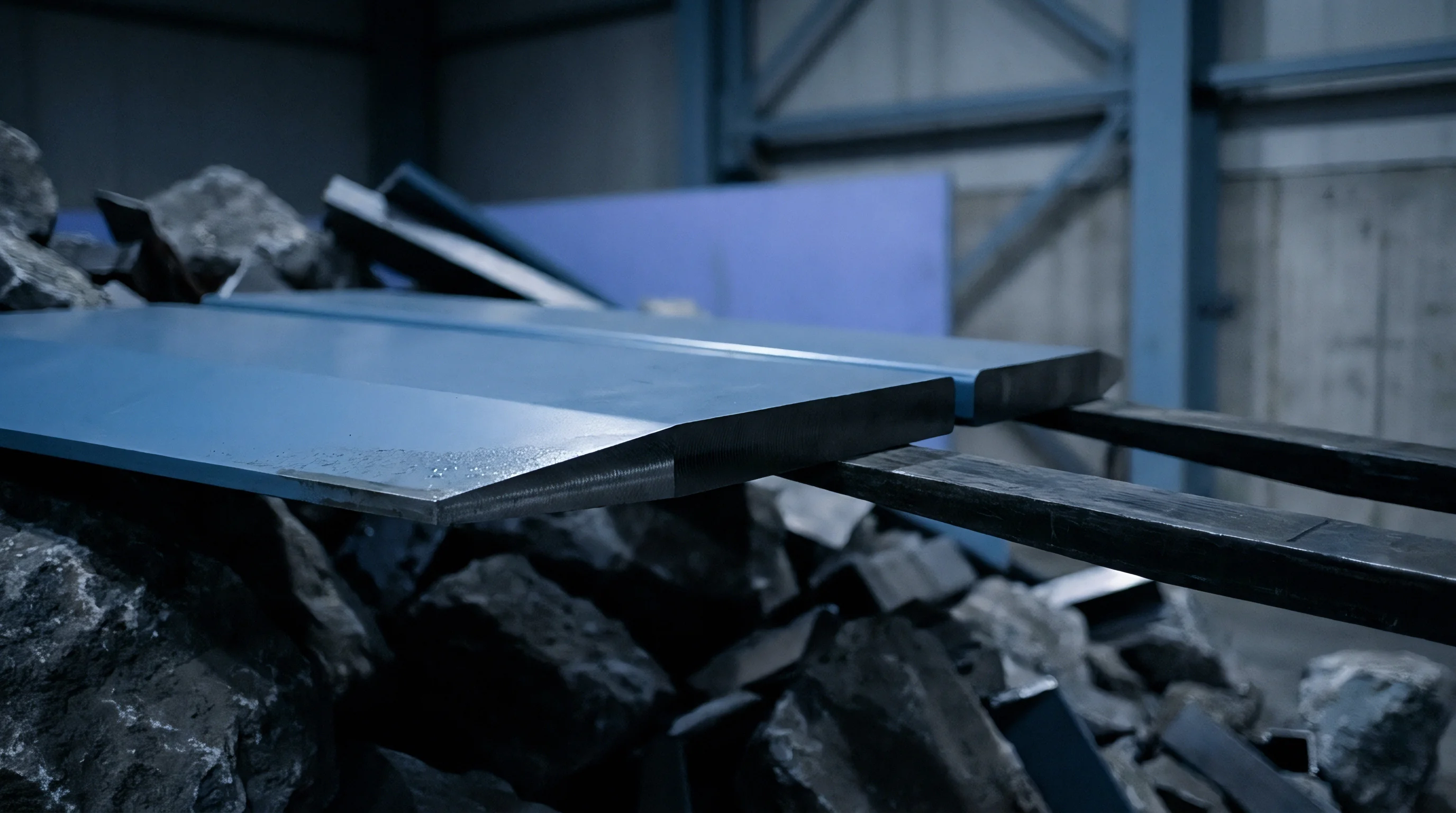
How Do Field Auditors Verify Grade in Commingled Scrap?
Verifying the precise material grade and volume of loose scrap stored in open yards requires specialized field auditing techniques. Lenders conduct comprehensive physical inspections at least twice a year. Auditors perform stack surveys using three-dimensional laser scanning or aerial drone photogrammetry to calculate total cubic volume across the yard floor.
Volume measurements are then multiplied by material bulk density metrics to estimate total weight in gross tons. Steel scrap bulk density varies widely based on physical preparation, ranging from forty pounds per cubic foot for loose shredder feed to over one hundred and twenty pounds per cubic foot for dense, hydraulically compressed structural bales.
Grade verification requires chemical and physical testing during site visits. Auditors use portable X-ray fluorescence analyzers to conduct random spot checks across non-ferrous and high-alloy scrap heaps. XRF analyzers deliver instant, non-destructive metallurgical readings, confirming whether a copper pile meets clean Berry specifications or contains unacceptable lead, tin, or nickel contaminants.
For ferrous heaps, auditors inspect piece size, gauge thickness, paint coatings, and non-metallic contamination, comparing physical findings against standard ISRI grade specification tables. If an auditor finds high levels of auto shredder residue or trash embedded inside a heavy melting steel stack, the bank forces an immediate downward grade reclassification across the whole stack, shrinking allowable inventory valuation.
Executing an asset-based loan field exam across multi-site cross-border scrap facilities requires strict adherence to a structured verification checklist:
- Scale Calibration Certification inspecting official state or regional regulatory calibration tags on all truck weighbridges and crane scales to confirm weight measurement accuracy.
- Mass-Balance Throughput Reconciliation auditing historical purchase tonnage, processing yield records, and outbound bill-of-lading scale weights to identify unrecorded inventory shrinkage or phantom material entries.
- Third-Party Confirmation Sampling sending formal written inventory confirmation letters directly to all independent bailee yards, port dock managers, and custom processors holding borrower scrap stock.
- Environmental Hazard Assessment inspecting yard pads, storm-water runoff drainage systems, and environmental compliance permits to quantify potential environmental lien exposure that could prime lender security claims.
- Customs Duty Reconciliation Audit reviewing border entry pedimentos, export filings, and customs duty payment receipts to ensure zero unpaid government tariff liabilities exist against inventory stock.
Physical inventory counts regularly reveal substantial volume discrepancies caused by ground settling and scale inaccuracy. Yards built on unpaved aggregate pads suffer material sinking, where heavy steel fragments get pushed deep into soft sub-grade soil under the weight of massive stacks. Field auditors estimate that between three and eight percent of historical stack volume disappears into the sub-base soil over time, becoming completely unrecoverable during standard operations.
Scales lacking recent certified calibration introduce systemic weighing errors across every incoming and outgoing load. Whenever stack heights exceed twenty feet on unpaved ground, audit teams enforce an immediate inventory reserve adjustment to absorb unrecoverable sub-base metal loss.
How can asset-based lenders maintain real-time borrowing base precision when cross-border scrap prices move twenty percent within a single monthly audit cycle?


Recovery

Repossession Execution in Foreign Yard Facilities
Executing a collateral liquidation across cross-border scrap metal operations requires immediate operational control of physical yard locations. Upon an event of default, the lender issues formal demand notices and revokes the borrower’s authority to sell or move inventory. Third-party workout specialists and security officers are dispatched to take control of owned and leased yard facilities.
Repossession teams secure access gates, shut down material handling equipment, and take over weighbridge computer systems to prevent unauthorized removal of scrap by borrower personnel or local creditors.
Enforcing collateral recovery rights inside third-party processing facilities depends on active bailee waiver agreements. The lender serves formal legal notices on foreign bailee yard managers, instructing them to freeze all borrower scrap stock and halt processing operations immediately. The waiver contract obliges the bailee to grant the lender’s liquidators full access to the premises, allowing them to bring in mobile cranes, material handlers, and trucks to haul out the scrap.
If a third-party bailee breaches the agreement and blocks access, lender counsel files emergency court applications for orders of replevin or injunctive relief to force entry.
Foreign legal jurisdictions introduce procedural roadblocks during repossession. Civil law systems in countries like Mexico do not recognize the self-help repossession mechanisms available under UCC Article 9. A lender attempting to forcibly enter a Mexican scrap yard without prior judicial authorization faces criminal trespassing and theft charges, along with immediate court injunctions.
Recovery teams must instead obtain formal judicial attachment orders ~ known as providencias precautorias ~ issued by a local commercial judge. The court then appoints an official judicial officer, the actuario , to accompany the lender’s representative to the yard, execute formal attachment papers, and supervise the physical removal of the scrap.

Cross-Border Insolvency Rules and Detainments
Cross-border insolvency proceedings introduce legal stays that halt unilateral liquidation efforts. When a scrap enterprise files for bankruptcy protection under United States Chapter 11, Section 362 of the Bankruptcy Code imposes an automatic stay on all collection actions, repossession efforts, and lien perfection steps. This stay applies globally to all debtor property, regardless of where the scrap metal sits.
Lenders seeking to repossess scrap held in foreign yards must file emergency motions for relief from the automatic stay, demonstrating that the debtor lacks equity in the collateral or that the bank lacks adequate protection against ongoing material loss or price degradation.
Securing cross-border recognition of bankruptcy court orders requires ancillary filings in the foreign host jurisdiction. Under the UNCITRAL Model Law on Cross-Border Insolvency ~ adopted in Chapter 15 of the United States Bankruptcy Code and in Canadian insolvency statutes ~ the court-appointed representative petitions foreign courts for formal recognition of the main insolvency proceeding. In Canada, filing under the Companies’ Creditors Arrangement Act or Bankruptcy and Insolvency Act secures judicial stays aligning with US court orders.
In Mexico, cross-border recognition falls under Chapter XII of the Ley de Concursos Mercantiles , requiring formal petitions to federal district judges to enforce stay protections over local scrap assets.
| Asset Location & Storage Type | Primary Jurisdictional Risks | Average Enforcement Delay (Days) | Gross Orderly Liquidation Value (%) | Net Realized Collateral Value (%) |
|---|---|---|---|---|
| Owned Domestic Yard (Paved Pad) | Minimal; Direct UCC-1 Self-Help Entry | 5 – 15 | 65 – 75 | 58 – 68 |
| Third-Party Domestic Bailee (Waivered) | Minor Bailee Lien Disputes; Access Delay | 15 – 30 | 60 – 70 | 50 – 60 |
| Canadian Transit Yard (Unwaivered) | PPSA Storage Lien Priority Claims | 30 – 60 | 50 – 65 | 38 – 50 |
| Mexican Smelter Facility (Bonded) | RUG Contests, Customs Holds, Actuario Delays | 60 – 120 | 40 – 55 | 25 – 38 |
| International Maritime Port Terminal | Super-Priority Maritime Wharfage & Stevedore Liens | 45 – 90 | 45 – 60 | 30 – 42 |
Cross-border scrap shipments face severe detention risks when foreign customs authorities intervene during insolvency. Customs officials order cargo detentions at border entry points if the insolvent exporter fails to clear pending duty assessments, export tax filings, or environmental clearance paperwork. Detained scrap sits in bonded holding yards or ocean containers, accruing heavy daily demurrage and storage penalties that erode underlying collateral value.
Stevedoring companies and port authorities assert statutory maritime possessory liens over detained cargo, refusing to release material for liquidation until all historical terminal handling charges and vessel charter fees clear international banking channels.
Lenders facing foreign scrap detentions negotiate specialized workout protocols with port operators and customs brokers to rescue distressed cargo. The bank executes direct payment guarantees to satisfy outstanding port tariffs and customs clearance expenses, securing immediate cargo release to pre-screened bulk buyers under emergency court-approved liquidation procedures. Liquidation proceeds flow directly into segregated lender-controlled accounts, allowing the bank to recover net asset value while avoiding extended foreign litigation delays.
Orderly liquidation values for scrap inventory drop rapidly as transport distances and foreign legal complications increase along cross-border routes. Scrap metal held in owned domestic yards on paved aggregate pads yields the highest recovery rates thanks to easy physical access, low liquidation overhead, and direct UCC Article 9 enforcement remedies. By contrast, bailed inventory sitting in foreign processing yards or bonded maritime terminals suffers heavy value haircuts from legal attachment delays, mandatory actuario fees, accrued port demurrage charges, and statutory bailee liens.
Lenders factor these cross-border liquidation haircuts directly into initial borrowing base advance rates, maintaining substantial margin buffers against unexpected legal and logistical recovery costs.