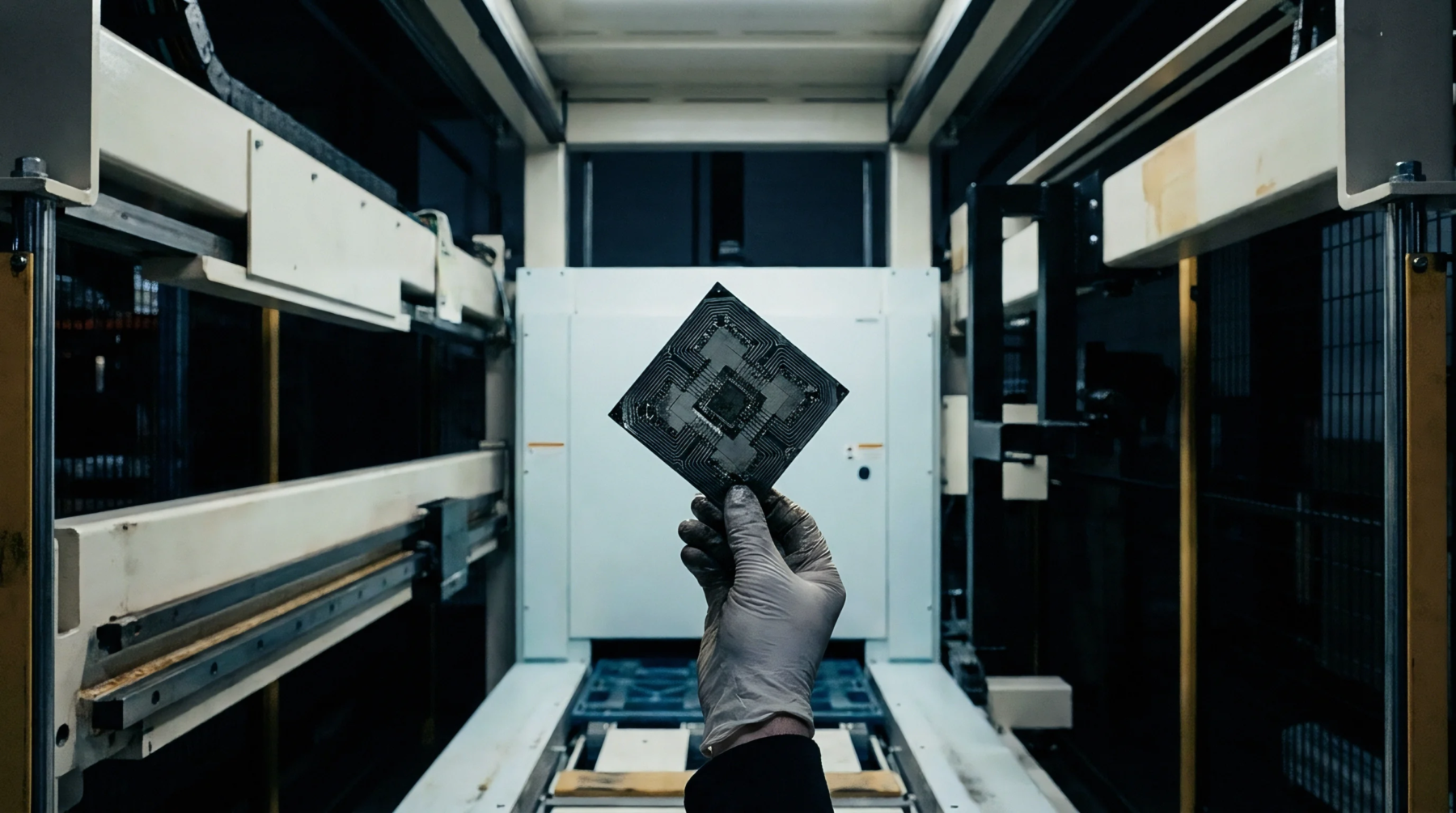
Interim Quality Mandates and Automated Production Stop Criteria Design
Interim quality mandates safeguard margins by embedding non-negotiable automated stop criteria into machine PLCs, bypassing floor overrides completely.
Programmed control sequences execute controlled decelerations to bring industrial machinery to rest along defined time, velocity, and positional profiles. A soft stop directs variable-frequency drives, servomotors, and proportional hydraulic valves to ramp down motive force smoothly without disengaging primary electrical power until motion ceases. The process governs routine shift terminations, inter-station queue holds, upstream packaging clearouts, and minor fault responses where sudden kinetic arrest would damage machinery or disrupt product orientation.
It stops applying once motion reaches zero, leaving primary physical isolation, hardware locking, and Category 0 emergency cutouts to dedicated safety circuits.
Initiated by a programmable logic controller upon receiving a routine cycle pause request or non-critical limit signal, the system calculates a predetermined deceleration curve. The controller modulates its analog or industrial Ethernet velocity commands to the servo drive, ramping down output frequency while continuously reading encoder positions. Braking resistors or regenerative power units absorb kinetic energy generated as the slowing electric motor temporarily functions as an electrical generator.
Throughout the ramp-down window, all mechanical axes maintain structural synchronization, ensuring robotic arms retract safely without mechanical collisions. Once rotational speed registers below safe cutoff thresholds, the drive cuts holding current and applies mechanical friction brakes to park the mechanism securely. The operational line remains primed for rapid restarting, requiring merely a start command rather than time-consuming mechanical realignment or hardware reset routines.
Prototype automation platforms frequently rely on blunt power-cut stopping mechanisms, neglecting the dynamic stresses experienced by precision mechanisms during repeated stops. During high-speed commercial production runs, employing a soft stop protects mechanical transmissions, delicate internal components, and expensive primary tooling from destructive inertial shock. Evaluating machinery readiness requires confirming that parts in transit do not slip, spill, or deform when the production line ramps down under maximum payload.
Plant supervisors occasionally confuse immediate hard stops with controlled operational pauses, attempting to use abrupt emergency cutouts for regular parts staging. Prematurely deploying machinery lacking validated deceleration tuning risks stripping planetary gearboxes, stretching drive belts, and scattering loose components across internal conveyors.
Ramping down motor velocity smoothly consumes several production seconds per pause event, slightly extending cycle intervals when lines experience frequent minor delays. If automated upstream systems command too many controlled pauses due to downstream sensor misalignments, the cumulative dwell time significantly degrades overall factory throughput. The deceleration window must be engineered precisely, because extending ramp times to protect machinery can allow nonconforming materials to pass downstream inspection gates before line velocity drops to zero.
Conversely, setting deceleration profiles too aggressively introduces mechanical bounce that destabilizes precision parts nests and causes component misfeeds upon system restart. Controlled ramping protocols maintain long-term tooling health and product physical integrity, preserving the structural alignment necessary for high-volume automated manufacturing.
Interim quality mandates safeguard margins by embedding non-negotiable automated stop criteria into machine PLCs, bypassing floor overrides completely.
Expertise is a utility, not a secret. sentiention™ publishes its working knowledge as open reference: intelligence layer covering the materials it sources, the markets it enters, and the reference that serves both.