Contractual Indemnification and Governance Frameworks for Delegated Plant Stop Work Authority in Cross Border Operations
Delegated plant stop work authority requires explicit contractual indemnity deeds aligning corporate governance thresholds with local statutory director liabilities.


Deed
Cross-border facility governance often breaks down where local safety statutes meet centralized corporate authority. When physical danger threatens a manufacturing site, plant staff face contradictory demands: parent company charters frequently reserve shutdown authority for executive committees six time zones away, while local environmental and safety laws hold resident plant directors personally criminally liable if they fail to stop unsafe equipment immediately. This conflict leads directly to paralysis during emergencies.
Local directors take on heavy personal legal risk whenever they act without explicit contractual protection. Standard corporate indemnities routinely exclude unauthorized operational pauses that cause financial loss. If a plant manager stops a continuous-processing line to prevent a runaway chemical reaction, corporate treasuries often treat the lost production as an unapproved operational variance.
The manager is left exposed to personal fines or imprisonment under local safety enforcement, while simultaneously facing contractual clawbacks or termination from the parent company. Resolving this conflict requires aligning indemnity agreements with where operational risk actually sits.
Operational safety protocols break down when executive authority stays at headquarters. The legal framework of the host jurisdiction determines whether an individual manager has the statutory right to freeze plant operations. Foreign subsidiaries in civil-law systems frequently place personal guarantor liability on plant managers for safety breaches on site.
As a result, indemnities drafted under common-law parent jurisdictions often carry no weight in local courts when host regulations treat safety non-compliance as a strict liability criminal offense.

Legal Mandates Vs Corporate Indemnity Limits
Regulators in industrial jurisdictions expect plant operators to intervene immediately. Under statutory safety regimes across Northern Europe and East Asia, plant directors hold personal duty-of-care obligations that cannot be delegated upward to a foreign holding company. If an employee is injured or containment fails because local managers waited for corporate clearance, local prosecutors bring charges directly against the resident director.
These statutory duties apply regardless of corporate delegation documents.
Corporate hold-harmless agreements typically contain exclusions for intentional loss, unauthorized operational pauses, and gross negligence. Finance teams write these carve-outs to protect the parent balance sheet against rogue decisions. Yet when an emergency occurs, host enforcement agencies treat any delay spent waiting for headquarters approval as negligence by the local director, leaving that manager trapped between criminal exposure under local law and financial ruin under corporate contract terms.
A subsidiary officer who halts production without board authorization retains statutory immunity under European safety directives while losing corporate contractual indemnification.
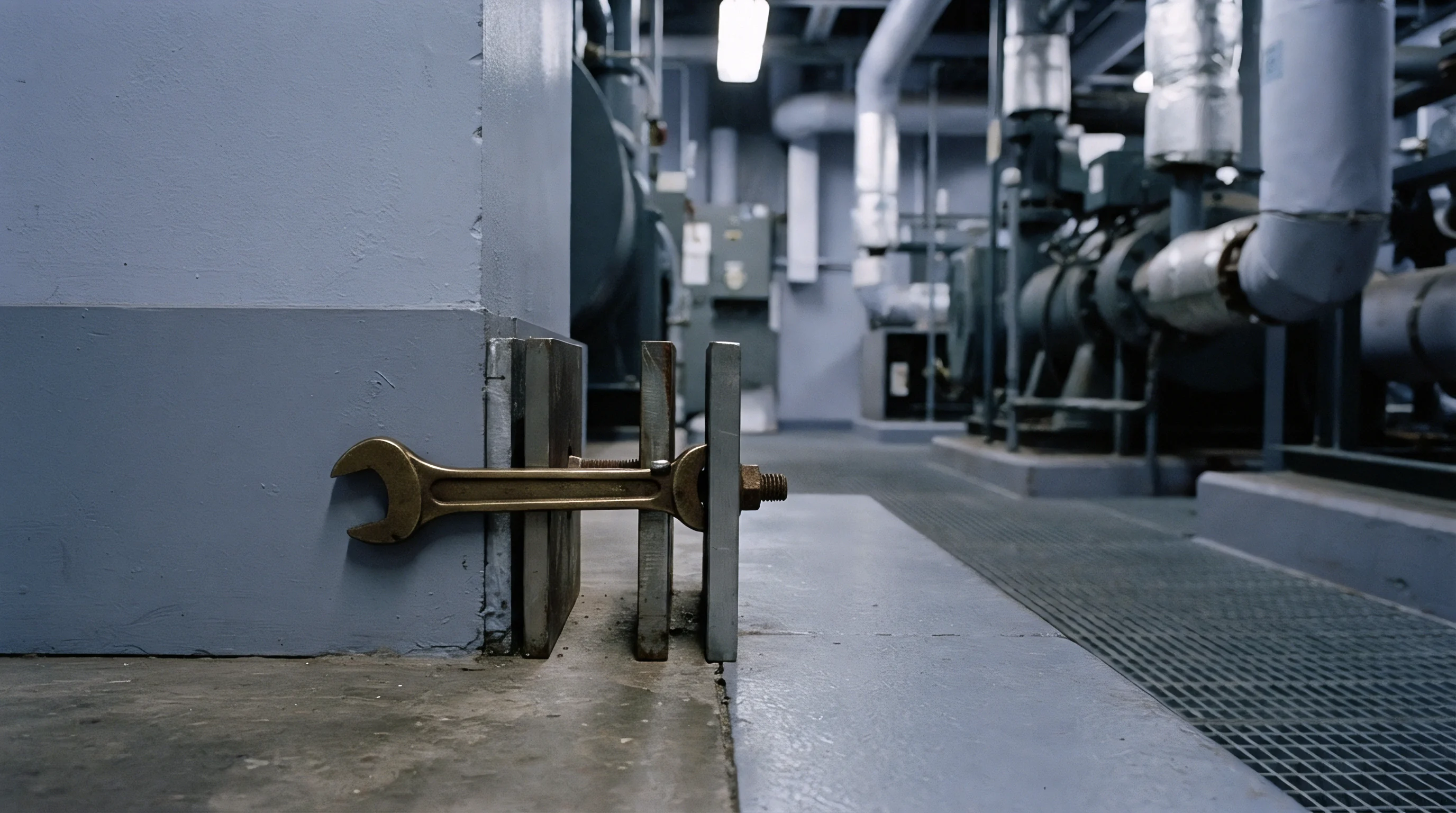
Structural Split in Cross Border Stop Work Decision Rights
The disconnect between nominal authority and legal responsibility is the fundamental flaw in multi-jurisdictional plant management. Organizational charts show neat decision trees from shift leaders up to group chief operating officers, but physical hazards on site unfold far faster than corporate consensus can form. Continuous manufacturing requires decision loops measured in minutes, while executive review cycles run across business days.
- Unilateral Local Freeze Authority permits designated site officers to halt high-hazard units immediately upon detecting critical process parameters without prior treasury authorization.
- Carve-Out Exclusion Clauses in parent indemnity contracts expose local plant directors to corporate civil suits if an emergency stop is later deemed commercially unjustified by headquarters auditors.
- Jurisdictional Choice Disconnects occur when indemnity contracts specify parent jurisdiction courts while host nation labor boards retain sole authority over site safety disputes.
- Regulatory Mandatory Disclosure laws force site managers to report safety incidents to host authorities immediately, exposing the company to regulatory fines even if parent officers attempt to suppress the event.
Resolving this conflict requires bilateral delegation instruments that explicitly redefine commercial loss. When a local officer shuts down a plant under defined emergency conditions, the corporate entity must contractually treat the financial disruption as an authorized risk transfer instead of a breach of employment duties. A clear indemnity clause should state: “The parent corporation unconditionally indemnifies local plant officers against civil liabilities and loss claims resulting from any emergency halt executed within host state statutory safety frameworks.”


Ladder
Hierarchy in high-hazard industrial operations needs to reflect physical risk rather than corporate bureaucracy. Building an effective stop-work framework across international sites requires a clear escalation model defining who can stop production, the monetary thresholds for each tier, and the exact time allowed for corporate review before decision rights fall back entirely to local site leadership.
Multinational companies operating chemical processing, metallurgy, or continuous automotive assembly plants utilize tiered decision trees to manage operational exposure. Tier-one interventions address localized unsafe acts where shift supervisors pause individual machine cells without impacting overall facility output. Tier-two interventions involve unit-level shutdowns that interrupt specific production streams and incur moderate restart costs.
Tier-three interventions freeze the entire facility, triggering massive financial costs and potential contractual default on customer delivery agreements. Cascading thresholds align financial risk with operational authority.

Tiered Authority Thresholds and Emergency Response Windows
Escalation mechanics must establish clear time boundaries for executive response. When an operational hazard threatens continuous process units, local managers notify corporate executive teams through predefined communication channels. If corporate leadership fails to issue a binding decision within the designated window, authority automatically drops to the resident site manager, preventing delays that create civil liability.
The structure prioritizes site safety over corporate approval latency.
- The shift supervisor identifies a primary containment risk or mechanical safety failure exceeding standard operational tolerances.
- The supervisor issues an immediate initial pause order to the affected cell and notifies the site general manager within fifteen minutes.
- The site general manager evaluates facility-wide containment risks and calculates the financial interruption burn rate.
- The site general manager transmits an emergency halt notification to the corporate operating committee, initiating a sixty-minute mandatory review window.
- The corporate committee reviews the technical parameters and either confirms the shutdown order or formally assumes direct legal liability for continuing operations.
- If the corporate committee fails to respond before the sixty-minute window expires, absolute stop work authority vests permanently with the site general manager.
This sequence prevents executive indecision from leading to physical catastrophe as financial exposure grows by the hour. By embedding automatic vesting mechanisms into the escalation architecture, local executives retain the functional ability to protect physical assets and human life without breaching corporate fiduciary obligations.

Multi Jurisdiction Reporting Lines and Statutory Safety Directives
Designing multi-jurisdictional reporting structures requires mapping host regulatory mandates against parent governance systems. Statutory safety rules in many host nations require local safety officers to maintain dual reporting lines: reporting functionally to facility managers for daily operations, and directly to national occupational health inspectors for regulatory compliance. Corporate headquarters often resists dual lines because they bypass internal communication filters.
| Jurisdiction | Statutory SWA Mandate | Corporate Approval Threshold | Escalation Response Window | Personal Officer Exposure |
|---|---|---|---|---|
| Germany | Mandatory Works Council Co-Determination | Local Operations Director | 30 Minutes | Strict Criminal and Civil Liability |
| United States (Texas) | OSHA Imminent Danger Clause | Corporate Vice President | 120 Minutes | Civil Regulatory Penalties |
| Singapore | Workplace Safety and Health Act | Resident Site Manager | 45 Minutes | Individual Director Fines |
| Brazil | NR-13 Regulatory Norm | Technical Responsible Engineer | 15 Minutes | Personal Criminal Liability |
Corporate policies must accommodate these jurisdictional differences without compromising local compliance, as contract terms cannot override local statute. A single global standard that restricts site-level halt authority creates non-compliance in jurisdictions with strong statutory rights, while an overly decentralized model causes uncontrolled financial variance in permissive environments. Striking the right balance requires tailoring policies by jurisdiction within the broader global indemnity framework.
Financial exposure during unprogrammed furnace shutdowns escalates at eighteen thousand dollars per hour once catalyst thermal cycling boundaries are breached.
Effective governance policies require local legal counsel to review all cross-border delegation agreements annually, ensuring they stay aligned with evolving host-country employment codes.


Shield
Legal instruments built to protect site executives during plant shutdowns must hold up in multiple judicial jurisdictions. Drafting an effective cross-border indemnity deed means insulating the resident plant officer from both third-party lawsuits and internal corporate retaliation. Standard employment contracts routinely fall short because they defer to parent company bylaws, which can be modified or revoked by board resolutions without the local manager’s consent.
Standalone deeds of indemnity establish direct contractual rights between the parent legal entity and the local executive. These instruments ensure that defense costs, regulatory fines, and civil damages incurred while executing plant stop work authority are fully covered by corporate funds. Without explicit standalone deeds, local officers face personal bankruptcy when host nation prosecutors target individual site leaders following industrial accidents.

Drafting Enforceable Indemnification Instruments across Legal Regimes
Legal enforceability comes down to how indemnified conduct is defined. Parent legal teams frequently try to limit coverage to actions taken in good faith and within explicit corporate authorization. In practice, emergency operational halts happen precisely because existing policies fail to cover the specific situation at hand.
The contract language must cover all operational interventions executed under the reasonable belief that physical hazard or regulatory breach was imminent.
D&O policies routinely exclude intentional acts, illegal conduct, and contractual penalties. If host-state laws classify an operational safety failure as a criminal misdemeanor, standard corporate insurance policies refuse to pay legal defense fees. Standalone indemnity deeds must require the parent corporation to advance defense costs directly, regardless of underlying insurance policy coverage exclusions, until a final non-appealable judicial determination establishes intentional misconduct.

Are Directors Personally Liable for Delayed Plant Shutdowns under Local Statutes?
Local laws in many jurisdictions penalize failure to act far more severely than proactive intervention. Where strict corporate governance statutes apply, plant directors face personal civil liability and criminal prosecution if they permit operations to continue despite known safety defects.
- Unconditional Legal Fee Advancement binds the parent company to pay defense expenses within fourteen days of invoice submission prior to case resolution.
- Gross Negligence Boundary Definitions restrict corporate clawback rights strictly to acts of deliberate sabotage or intentional criminal fraud confirmed by final court judgment.
- Independent Counsel Representation Rights grant local executives the absolute authority to retain local legal counsel at corporate expense during regulatory inquiries.
- Mirror Indemnity Security Escrows require parent corporations to fund offshore escrow accounts to ensure legal fees remain accessible if the parent entity enters restructuring.
- Retaliatory Discharge Immunity Provisions bar the parent entity from terminating employment or reducing compensation for two years following an emergency halt event.
Drafting these protective clauses requires careful alignment with local public policy boundaries. Certain civil-law regimes prohibit indemnification against criminal fines, meaning indemnities in those regions must focus on advancing pre-trial defense costs and securing civil liability releases from affected third parties.
Contractual indemnities that fail to account for local criminal liability leave site executives exposed to personal prosecution regardless of corporate parent backing.
When legal protections lack direct escrow funding or independent counsel guarantees, local plant officers facing critical safety choices routinely keep operations running to protect their jobs ~ exposing the entire enterprise to severe physical and legal loss.


Loss
Halting continuous manufacturing operations carries heavy financial consequences that ripple through global supply chains. A single unprogrammed stop at an integrated petrochemical facility or automated semiconductor plant causes immediate fixed-capital losses, equipment degradation, and customer contract penalties. Balancing these immediate shutdown costs against potential catastrophic liabilities provides the central economic argument for delegating stop-work authority.
Financial accounting frameworks must model emergency stop events as risk-mitigation investments rather than negative operational variances. When a plant director pauses production to investigate a turbine vibration or pressure excursion, the financial system records immediate unrecovered overhead costs and lost output margin. However, continuing operation under abnormal parameters introduces the risk of total physical asset destruction, environmental remediation liabilities, long-term regulatory suspension, and personal criminal sanctions for directors.

Financial Cost Walking a Chemical Facility Interruption
Evaluating the economic impact of an emergency stop requires analyzing costs across different operational stages. In a continuous chemical synthesis unit experiencing an unmonitored temperature surge, the resident manager must weigh the known cost of a 36-hour controlled shutdown against the unquantified catastrophic loss of an uncontrolled vessel rupture.
| Cost Category | Standard Parent Contract ($) | Explicit SWA Indemnity Deed ($) | Financial Variance ($) | Primary Operational Driver |
|---|---|---|---|---|
| Unrecovered Overhead & Idle Labor | 420,000 | 420,000 | 0 | Fixed Site Fixed Cost Burn Rate |
| Catalyst Scrap & Thermal Thermal Shock | 680,000 | 150,000 | -530,000 | Emergency Scram vs Controlled Degas Protocol |
| Customer Line Down Penalty Claims | 1,200,000 | 0 | -1,200,000 | Force Majeure Invocations Supported by SWA Dossier |
| Local Regulatory Fine Assessment | 850,000 | 0 | -850,000 | Statutory Safety Compliance Defense Verification |
| Executive Legal Defense Fees | 310,000 | 45,000 | -265,000 | Indemnity Advancement vs Individual Litigation |
| Methods Note: Calculated for a continuous chemical processing unit operating under European Union safety directives with a nominal daily gross product value of $1.8 million USD. | ||||
Total financial exposure under an ambiguous contractual regime reaches $3,460,000, whereas a structured framework caps total expenditure at $615,000. Clear delegation instruments enable local managers to execute controlled shutdown sequences that minimize hardware damage and preserve legal defenses against customer breach-of-contract claims.

Post Event Dossier Assembly and Evidentiary Verification Standards
Protecting the enterprise against secondary financial loss requires building a thorough post-halt evidentiary dossier. Following an emergency shutdown, regulatory agencies, insurance adjusters, and customer legal teams will demand operational telemetry to verify why the shutdown order was issued. Without documented physical telemetry confirming imminent hazard, insurance underwriters reject business interruption claims, leaving the operating entity fully liable for commercial damages.
- Continuous high-frequency sensor telemetry showing process parameters exceeding critical upper control limits immediately prior to the pause order.
- Calibration logs verifying the operational accuracy and recent maintenance records of all safety-critical instrumentation.
- Formal written statements from qualified site engineering specialists documenting the immediate physical threat to life or asset integrity.
- Complete chronological records of all communications transmitted between site management and corporate executive teams during the response window.
- Independent third-party inspection reports confirming the physical status of machinery prior to authorizing facility restart operations.
Documenting environmental baseline levels immediately following an operational pause prevents regulatory authorities from attributing pre-existing contamination to the emergency halt.
Assembling these evidentiary packages protects both the enterprise balance sheet and the individual plant executive while providing the transparency required by works councils. When corporate governance protocols mandate rigorous post-stop evidentiary collection, commercial counterparties find it virtually impossible to sustain contractual breach claims resulting from emergency production halts.


Breach
Disputes arising from cross-border stop-work decisions frequently escalate into complex international litigation. When a subsidiary executive halts production and causes financial losses for regional customers or joint venture partners, jurisdictional conflicts emerge quickly. Parent corporations often try to disavow the local officer’s action ~ claiming they exceeded delegated authority ~ in an effort to avoid corporate contractual liability.
Local labor courts and safety tribunals routinely reject corporate attempts to disown site-level decisions. Host nations prioritize worker safety and environmental protection over international commercial contracts. If a parent corporation retaliates against a local officer through termination or clawback proceedings, host nation courts issue immediate injunctions, freezing subsidiary bank accounts and seizing local physical assets.

Cross Border Dispute Allocation and Local Enforcement Interventions
Jurisdictional venue clauses in indemnification agreements dictate where operational disputes are arbitrated. Parent entities usually prefer arbitrating in major legal centers such as London, New York, or Singapore, but local plant directors in overseas markets cannot effectively defend themselves in distant venues. Indemnity frameworks should specify that legal proceedings involving local statutory duties take place in the host jurisdiction under local law.
Local enforcement agencies hold broad powers to intervene in plant operations after a contested shutdown. Regional safety inspectors can issue prohibition orders that block a restart long after corporate executives order production to resume. If headquarters attempts to bypass local management and restart a factory without regulatory sign-off, local tribunals levy criminal sanctions directly against both resident managers and visiting international executives.

Plant Restart Authorization Protocols and Governance Handover
Restoring production after an emergency halt requires a formal handover protocol that mirrors the original stop-work decision structure. The local manager who issued the halt order must retain sole authority to certify that conditions are safe to restart; bypassing that officer compromises safety and invalidates corporate insurance coverage.
The governance handover sequence requires written concurrence among site technical specialists, local safety directors, and corporate executive officers. Before main power or chemical feeds are restored, an independent audit team must inspect the affected units, verify calibration tolerances, and issue a formal safety certificate. The site manager then signs a formal restart document, re-establishing standard operational authority structures.
This restart protocol prevents secondary accidents caused by premature operational resumption under commercial pressure. If corporate leadership forces a plant restart without fulfilling local technical sign-off criteria, any subsequent industrial accident is legally classified as intentional misconduct, stripping the enterprise of liability protections and exposing executive leadership to direct criminal prosecution across multiple jurisdictions.
What contractual mechanisms can effectively bridge the gap when host-nation safety mandates force an immediate plant stop that directly conflicts with long-term corporate supply agreements governed by foreign commercial courts?