Evaluating Reversionary Diminution Mechanics across Decarbonized Secondary Industrial Estates under Regulatory Energy Compliance Friction
Statutory energy compliance supersedes terminal dilapidations claims on secondary industrial estates, shifting thermal retrofit costs onto the reversion.


Friction

Statutory Disconnect across Secondary Assets
Terminal capitalization yields for non-prime industrial estates face severe downward valuation adjustments when secondary utility infrastructure collides with decarbonization mandates. Commercial leases traditionally treat dilapidations under Section 18 of the Landlord and Tenant Act 1927 as a physical repair calculus. When Minimum Energy Efficiency Standard rules bar letting any commercial property carrying an Energy Performance Certificate below rating B by 2030, an accrued repair claim ceases to reflect actual capital reinstatement.
The reversion encounters statutory friction: an incoming occupier cannot legally occupy the premises without substantial landlord capital expenditure, regardless of whether a tenant performed covenants under a standard institutional lease.
The gap centers on terminal condition liabilities versus operational performance standards. Secondary distribution sheds built before 1995 feature uninsulated building envelopes, aging low-voltage distribution boards, and distribution network operator supplies limited to seventy kilovolt-amperes per bay. Landlords attempting to recover terminal dilapidations discover that physical replacement in kind yields an unlettable building.
A valuer assessing diminution in value of the reversion discovers that energy compliance costs wipe out the entire conventional damage claim.
A Section 18 valuation ceiling collapses to zero when non-compliant envelope fabric requires wholesale replacement regardless of tenant wear.
Statutory enforcement shifts the burden of decarbonization into the lease-end accounting transaction. If an asset cannot legally be let, the conventional repair liability is superseded by an economic obsolescence event. The valuer isolates standard cyclical wear from the structural upgrading required to clear statutory hurdles.
The tenant escapes liability for obsolete systems while the landlord absorbs the capital shortfall.
The institutional mechanism creates a direct reduction in the capital value of the freehold reversion. Appraisers who apply standard yield models without pricing localized utility constraints fail to identify the capital destruction underway across older logistics parks. Secondary real estate value is severed from historic replacement benchmarks.

Drag

Quantifying Reversionary Diminution Mechanics
Establishing the diminution of the reversion requires running two independent valuation calculations under RICS guidance. The appraiser determines the market value of the freehold interest assuming the tenant complied with every covenant within the lease schedule. The appraiser then calculates the market value of the asset in its actual, deteriorated condition at lease expiry.
The difference forms the statutory ceiling on what the landlord can legally recover under Section 18.
Energy friction distorts both calculations by introducing mandatory capital drag. Consider a twenty-thousand square foot warehouse unit constructed in 1988 with an EPC rating of G, expiring at Michaelmas. The landlord prepares a costed schedule of dilapidations demanding four hundred thousand pounds to restore profiled steel cladding, patch single-glazed roof lights, and replace worn gas-fired radiant heaters with identical units.
The appraiser conducts the compliance calculation.
| Valuation Parameter | Traditional Repair (£) | Compliance Upgrade (£) | Differential Impact (£) |
|---|---|---|---|
| Hypothetical Value in Covenant Repair | 2,400,000 | 2,150,000 | -250,000 |
| Unimproved As-Is Market Value | 1,800,000 | 1,450,000 | -350,000 |
| Theoretical Diminution Ceiling | 600,000 | 700,000 | 100,000 |
| Superseded Dilapidations Works | 400,000 | 65,000 | -335,000 |
| Net Recoverable Terminal Claim | 400,000 | 65,000 | -335,000 |
The calculation reveals severe supersession. The gas-fired heaters demanded by the landlord cannot remain in service if the asset is to reach an EPC B rating. An incoming institutional tenant requires air-source heat pumps, roof-mounted photovoltaics, and an insulated composite envelope.
Installing the gas heaters would be useless waste because an incoming investor strips them out immediately. The tenant successfully strikes three hundred and thirty-five thousand pounds from the claim because statutory obsolescence supersedes physical damage.
The Supersession Discount
Assessing supersession in energy compliance cases involves three distinct documentary stages. The asset manager isolates the tenant covenant breaches from mandatory thermal upgrades. The following procedure isolates tenant exposure:
- Fabric condition analysis separates biological degradation or impact damage from systemic thermal transmission failures of the envelope.
- Building service inspection segregates ordinary maintenance defects from banned refrigerants and fossil-fuel combustion apparatus.
- Grid capacity verification confirms whether existing incoming supply boards support electrification without sub-station reinforcement.
- Reversionary yield adjustment factors structural leasing voids caused by municipal planning delays for substation upgrades.
Valuation case law establishes that an owner cannot claim damages for a building element that will be demolished or replaced as part of mandatory asset repositioning. The reversion faces economic erosion because compliance costs cannot be shifted to outgoing occupiers. Capital expenditure plans across industrial estates stall while owners absorb this liability.

Grid

The Primary Bottleneck on Estate Decarbonization
The physical constraint governing secondary estate repositioning is electrical capacity at the local substation. Converting a sixty-thousand-square-foot industrial cluster from gas space heating to variable refrigerant flow heat pumps and fleet charging raises site demand from two hundred kilovolt-amperes to 1.4 megavolt-amperes. The local distribution network operator will quote upgrade timelines extending from twenty-four to sixty months when upstream eleven-kilovolt feeders are congested.
Assets subject to long grid connection delays suffer severe void expansion. A landlord who intends to carry out decarbonization works upon tenant vacation cannot legally market the premises without a valid energy certificate. If heat pump systems sit idle waiting for an energized connection, the asset remains unlettable under statutory rules.
A forty-eight month distribution operator reinforcement window converts an ordinary reversionary transition into four years of frozen unlettable yield.
Valuation models must reflect this delay by discounting the terminal freehold value. The discount applies not only to the capital expense of the connection but to lost rent throughout the extended void. The cost of local battery storage or temporary generation systems lowers net cash flow, depressing the yield further.
Are Private Wire Networks Viable Alternatives?
Industrial estate operators consider private wire networks to bypass distribution constraints by connecting adjacent photovoltaic arrays directly to multiple units. Private wire arrangements introduce intricate legal frameworks that compromise title quality. Section 5 of the Electricity Act 1989 prohibits unlicensed distribution of electricity unless the operation falls within Class C exemptions of the Electricity (Class Exemptions from the Requirement for a Licence) Order 2001.
Submetering across multiple occupier titles creates private network operator obligations. An asset manager who runs a private wire assumes billing, technical balancing, and equipment maintenance risks typically handled by public utilities. If a private wire operator enters liquidation, secondary occupiers face power loss without recourse to the statutory safety net.
Institutional purchasers impose yield penalties between seventy-five and one hundred and fifty basis points on estates dependent on non-standard private electrical infrastructure.
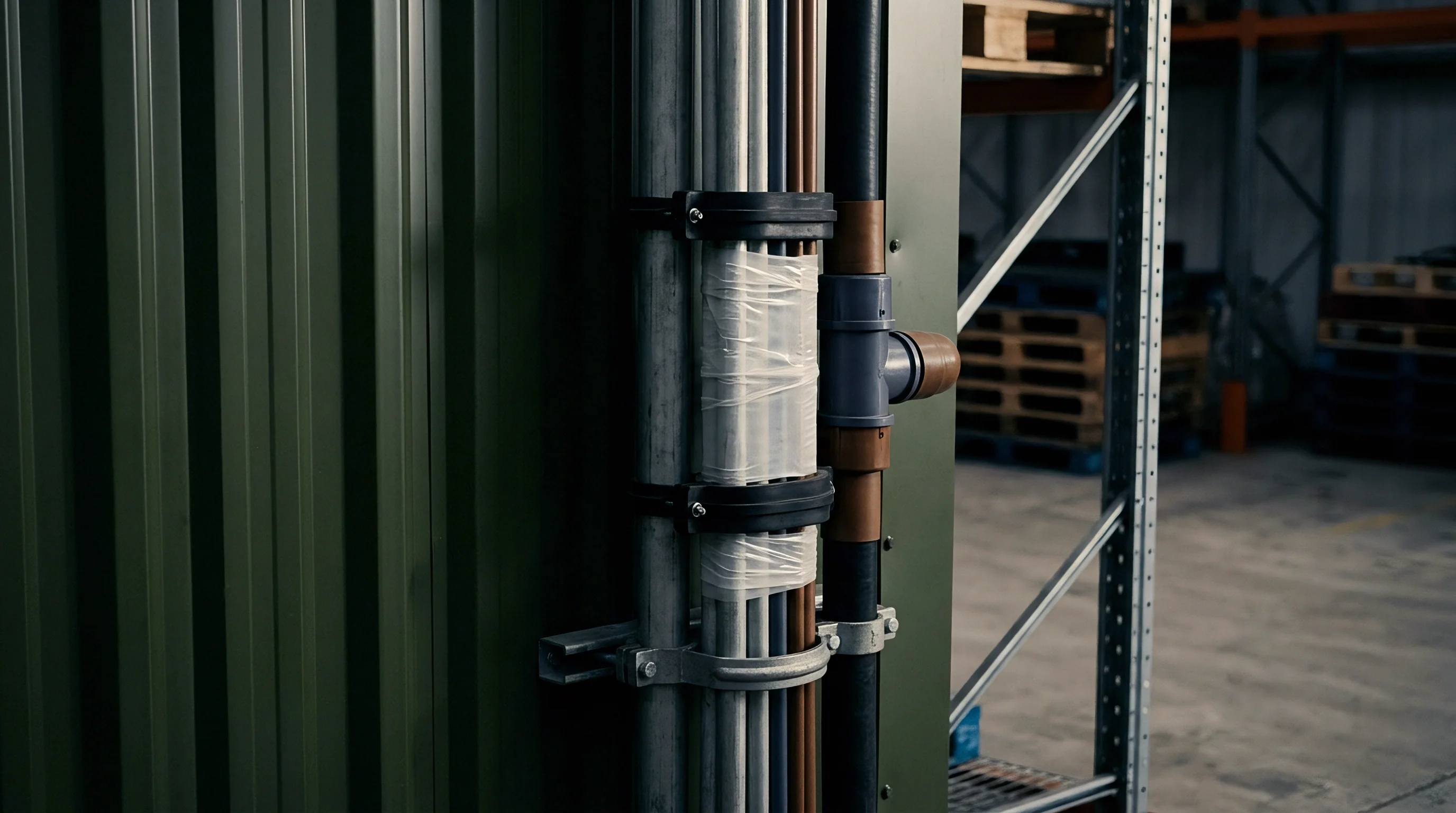

Dock

Physical Demarcation and Heavy Infrastructure Deficits
The physical architecture of a secondary industrial asset limits low-carbon modifications. Loading bays, yards, and slabs installed thirty years ago were not engineered to carry the weights or clearance envelopes of modern sustainable equipment. An engineer inspecting an older estate notices heavy structural deficits immediately upon arrival at the unloading apron.
Reinforced concrete ground-bearing slabs from the late twentieth century were poured with twenty-five to thirty-five kilonewton per square metre distributed load capacities. Upgrading an interior for heavy battery energy storage systems, industrial heat recovery systems, or heavy automation requires localized slab loadings exceeding fifty kilonewtons per square metre. Cutting and pinning existing ground-bearing slabs causes substantial downtime and structural differential settlement risk across internal partition lines.
| Building Element | Typical 1980–1995 Specification | Decarbonization Requirement | Capital Cost per Sq Ft (£) |
|---|---|---|---|
| Ground Slab | 25–30 kN/sq m, uninsulated | 50+ kN/sq m, localized plinths | 12.50 to 22.00 |
| Roof Truss / Purlins | 12 kg/sq m spare capacity | 35–45 kg/sq m for PV and cable trays | 18.00 to 34.00 |
| Bay Cladding | Single skin or 40mm composite | 120mm mineral wool (U-value 0.16) | 45.00 to 75.00 |
| Yard / Service Apron | Unreinforced tarmac, 25m depth | 40m concrete apron, EV chargers | 30.00 to 55.00 |
| Service Trenches | Clay ducts, low amperage | High-voltage containment trenches | 8.00 to 16.00 |
Roofs present equal physical limits. Cold-rolled steel purlins and shallow pitch trusses built under legacy codes cannot carry the dead weight of modern high-density photovoltaic systems alongside heavy snow loads. Reinforcing the steel frame requires installing internal secondary columns or welding web stiffeners to existing portal spans.
Works of this scope cannot take place during active tenancy, enforcing long vacancy periods at lease expiry.
Yard space presents an operational conflict between heavy goods vehicle turning circles and electrical switchgear enclosures. Adding containerized battery storage units and ground-mounted transformer kiosks reduces operational parking spaces. If an estate loses two articulated vehicle docking stations to house cooling units and power enclosures, the rental value of the distribution bay drops.
The landlord loses operational utility to achieve paper energy compliance.
Heavy charging infrastructure on the service apron introduces complex civil engineering costs. Trenching through existing concrete aprons damages perimeter storm drainage, demanding deep interceptors to handle runoff from charging bays. The structural upgrades accumulate until total refurbishment costs equal seventy percent of total site rebuild value.
The contractor often notes that ground substructure holds unrecorded utilities that inflate civil works pricing beyond initial estimates.


Yield

Underwriting Secondary Reversions under Capital Drag
Investment underwriters pricing secondary logistics parks must adjust terminal yield assumptions to reflect future decarbonization liabilities. Traditional discounted cash flow models assumed terminal yields twenty-five to fifty basis points wider than acquisition yields to account for general structural aging. That convention understates the risk profile when an asset faces compliance deadlines.
Valuation modeling under modern statutory conditions demands an explicit deduction of upfront capital works combined with a terminal yield widened by one hundred and twenty-five to two hundred basis points. The penalty reflects limited market liquidity for secondary assets that do not meet environmental criteria required by institutional pension funds and real estate investment trusts. If secondary assets cannot secure green financing, debt costs increase significantly.
Underwriters who fail to dock terminal asset value for substation capital costs find their discounted cash flow projections overstate internal rates of return by four hundred basis points.
The calculation sequence begins with analyzing lease expiry clusters across the estate. A fragmented industrial park with staggered tenant terminations forces a landlord into incremental modernization projects. Incremental upgrades cost up to forty percent more than a single coordinated estate refurbishment program.
Small-scale electrical additions run up higher contractor overheads and duplicate planning fees.
The investor structures the underwriting sequence through a disciplined four-stage capital filter:
- Lease profile alignment maps the exact date each bay falls vacant against statutory compliance cutoffs.
- Grid energization cost indexing provisions for non-refundable distribution network operator feasibility deposits and infrastructure reinforcements.
- Void cash flow modeling strips out rental income across an eighteen-month statutory refurbishment cycle for every vacant bay.
- Reversionary yield adjustment prices debt premiums applied by institutional lenders refusing secondary industrial collateral lacking verified B ratings.
A buyer applying this underwriting discipline refuses acquisitions where the terminal liability exceeds the net present value of reversionary rent increases. If an existing owner cannot finance the transformation, fire-sale disposals to opportunistic redevelopment funds follow at severe land-value discounts.


Dossier

Audit Records and Lease Execution Defenses
Surviving a contested reversionary diminution dispute requires compiling an exhaustive technical record during the final twenty-four months of a commercial tenancy. Landlords and tenants assemble competing dossiers to substantiate or defeat dilapidations claims adjusted for energy friction. Casual inspection notes and simple EPC certificates cannot withstand judicial scrutiny during a formal court valuation hearing.
The evidence file requires third-party technical verifications covering mechanical, electrical, and structural systems. The parties establish whether a defect stems from occupier misuse or from functional obsolescence accelerated by environmental statutes. Without verifiable evidence, claims fail under legal challenge.
| Record Category | Document Specification | Evidence Threshold | Legal Risk Mitigated |
|---|---|---|---|
| Building Fabric | CIBSE TM54 Operational Energy Model | Independent thermal bridge modeling | Defeats supersession claims on cladding |
| Electrical Supply | DNO Capacity Register & Point of Connection Quote | Formal Section 16 connection agreement | Validates grid delay void projections |
| Heating Equipment | Refrigerant Logbook & F-Gas Audit | Complete maintenance log since installation | Resolves plant replacement covenant duties |
| Reversion Value | Dual RICS Red Book Valuation | Paired market evidence of EPC B vs EPC E units | Caps total Section 18 statutory liability |
Tenants defend against inflated claims by proving that a landlord has no settled intention to repair the existing installations. If an owner submits planning applications for estate-wide heat pump installation, a claim for servicing old gas boilers is instantly superseded. The tenant’s surveyor obtains planning documents and board records to demonstrate that the original plant faced demolition regardless of lease covenants.
Landlords protect claims by proving that tenant neglect caused structural decay that prevented simple energy retrofits. For example, uncleaned gutters leading to corroded purlins may render a roof incapable of supporting light PV panels. The cost to repair the purlins remains recoverable because the physical fault directly impedes the landlord’s statutory energy upgrade.
Dilapidations claims survive only when linked to baseline structural preservation.
Every commercial industrial lease being executed today must adapt to this operational reality. Drafting teams incorporate green lease provisions that define how statutory energy improvements are split between the parties. Without express terms allocating compliance burdens, the common law and Section 18 leave landlords to shoulder the cost of the green transition.
The tenant yields the keys, clears the bays, and leaves the freehold owner holding an unlettable, grid-locked asset.