Evaluating Polymer Concrete Damping Performance in Multi Axis Machine Tools
Polymer concrete machine beds achieve loss factors near 0.025, suppressing multi-axis dynamic chatter and improving cutting precision under variable frequency loads.


Matrix

Resin Binder Systems and Aggregate Fuller Curves
Structural damping in mineral casting relies on mechanical energy dissipation across polymer chain interfaces and aggregate boundaries. Mineral synthetics combine graded quartz or basalt aggregate with thermosetting resin systems, typically bisphenol A or bisphenol F epoxy formulations paired with cycloaliphatic amine curing agents. Aggregate mass fraction ranges between 88 percent and 93 percent of total weight, leaving binder content between 7 percent and 12 percent.
Void content must remain below 0.5 percent by volume to prevent structural degradation under high cyclic loads.
Particle size distribution follows a modified Fuller parabolic grading curve expressed by the relation where cumulative passing percentage matches particle diameter ratio to the power of 0.35 to 0.45. Maximum aggregate size reaches 16 millimeters in heavy beds, while micro-silica flours down to 2 micrometers fill micro-voids between larger grains. Viscoelastic friction converts movement into heat.
Matrix deformation absorbs kinetic energy during high-frequency axis motion, generating structural loss factors five to ten times greater than conventional gray cast iron.
Loss factors for epoxy-granite formulations measure between 0.018 and 0.032 at 20 degrees Celsius under standard modal impact tests.
Binder chemistry governs thermal expansion, chemical resistance, and long-term creep rate. Epoxy resins provide dimensional shrinkage during cure below 0.1 percent linear change, compared to polyester systems which shrink up to 1.5 percent. Compressive strength of cured mineral synthetic ranges from 120 MPa to 150 MPa, while tensile strength remains lower at 12 MPa to 18 MPa.
Steel stiffness exceeds polymer concrete. Design calculations must incorporate internal steel reinforcement or prestressed structural elements when flexural tensile loads threaten section integrity.
Mechanical Property Comparison across Structural Foundation Materials
Selecting base materials for multi-axis machinery requires balancing static stiffness, dynamic attenuation, thermal response, and total component density. High mass density increases foundational inertia but demands larger drive motors during rapid acceleration phases. Low thermal conductivity reduces machine structure sensitivity to short-term ambient temperature spikes, shielding critical rail alignments from immediate thermal distortion.
| Material Parameter | Polymer Concrete (Epoxy-Granite) | Gray Cast Iron (EN-GJL-250) | Structural Steel (S355) | Ultra-High Performance Concrete (UHPC) |
|---|---|---|---|---|
| Density (kg/m³) | 2300 – 2400 | 7150 – 7250 | 7850 | 2400 – 2500 |
| Young’s Modulus (GPa) | 35 – 42 | 100 – 120 | 210 | 50 – 60 |
| Structural Loss Factor (η) | 0.018 – 0.035 | 0.002 – 0.004 | 0.001 – 0.0015 | 0.004 – 0.008 |
| Thermal Conductivity (W/m·K) | 1.3 – 1.7 | 45 – 50 | 50 | 1.8 – 2.3 |
| Expansion Coefficient (10⁻⁶/K) | 12 – 15 | 10.5 – 11.5 | 11.5 – 12.0 | 10.0 – 12.0 |
| Compressive Strength (MPa) | 130 – 150 | 250 – 350 | 350 – 450 | 150 – 180 |
| Values recorded at standard room temperature of 20 degrees Celsius under dry conditions per DIN 50100 testing guidelines. | ||||
Specific modulus defines structural efficiency by dividing elasticity by material density. Polymer concrete delivers a specific modulus of 15 to 18 MPa per kg/m³, whereas structural steel reaches 26 MPa per kg/m³. Structural designers compensate for lower modulus values by increasing section wall thickness without exceeding the weight limits of cast iron equivalents.
Material cost savings accumulate through direct cold-casting methods that eliminate stress-relieving heat treatments.
Foundry representatives frequently claim their mineral mixes match cast iron rigidity in every loading configuration. That assertion ignores the three-fold difference in raw Young’s modulus, requiring structural redesign rather than geometric substitution.

Decay

Logarithmic Decrement and Frequency Response Function Protocol
Quantifying energy absorption requires controlled impulse or swept-sine excitation across the machine structure’s operational bandwidth. Acceleration signals recorded at critical tool-center point locations yield complex compliance curves. Free vibration response curves exhibit exponential peak reduction over successive wave periods.
Logarithmic decrement calculates from natural logarithm of peak amplitude ratios across consecutive cycles.
Damping ratio connects directly to logarithmic decrement through division by two pi for low-damping systems. Equivalent structural loss factor equals twice the damping ratio under linear single-degree-of-freedom approximations. Peak-picking methods apply to isolated modes, while multi-degree-of-freedom curve fitting resolves closely spaced resonant frequencies in five-axis head structures.
Resonance causes dimensional surface error.
- Position triaxial accelerometers at linear guide mounting surfaces, spindle nose interface points, and machine column structural junctions.
- Calibrate force-transducer impact hammers with medium-hard rubber tips to energize modal frequencies up to 2000 Hz evenly.
- Execute five excitation strikes at each grid node, averaging drive-point frequency response functions to minimize noise distortion.
- Extract half-power bandwidth frequencies at 3 dB below peak compliance response for each identified structural natural frequency.
- Calculate damping ratio using upper and lower half-power frequencies divided by double the resonance peak frequency value.
High dynamic stiffness requires high static rigidity multiplied by the inverse of twice the damping ratio. Elevating damping ratio from 0.003 in cast iron to 0.025 in mineral aggregate yields an eight-fold reduction in peak dynamic compliance during resonant conditions. Modal testing maps machine response across X, Y, and Z axes simultaneously, identifying coupled torsional-bending modes that compromise tool path fidelity.

Experimental Extraction of Loss Factors under Preloaded Conditions
Static preloads applied by heavy linear guideway carriages, ball screw anchor blocks, and workpiece tables modify joint interface behavior. Dry friction across bolted metal inserts introduces Coulomb damping, which adds to the intrinsic material hysteresis of the polymer matrix. Distinguishing internal matrix loss from joint dissipation requires testing isolated raw casting blocks prior to mechanical assembly.
Internal structural loss factors drop by 12 percent when static compressive preload across embedment inserts exceeds 25 MPa.
Frequency-dependent loss factor variation occurs across the acoustic spectrum. Higher frequencies excite localized resin chain motion, increasing loss factor values up to 800 Hz. Above 1200 Hz, aggregate boundary scattering dominates energy absorption. Modal isolation tests verify that loss factor stability holds across operating temperatures from 15 to 45 degrees Celsius.
Compliance with ISO 7626-2 mandates reporting frequency response functions alongside coherence values above 0.95 across all evaluated spectrum bins. Non-compliant measurements invalidate sub-assembly stiffness claims in final acceptance documentation.

Bed

Cast Anchor Topology and Linear Guide Mounting Mechanics
Designing foundation castings for multi-axis milling centers demands embedded steel inserts to transfer high localized bolt loads into the mineral matrix. Direct tapping into polymer matrix yields low thread shear strength. Cast-in-place steel plates or threaded anchor bushings distribute clamping forces over broad contact surface areas.
Quartz aggregates supply compressive strength.
Linear guide rails mount against precision surfaces formed through post-cast machining or replication resin filling. Cold casting permits embedding fluid cooling channels, hydraulic conduits, and wiring ducts directly inside base structures. Cast iron conducts heat faster.
Embedded fluid channels stabilize internal thermal gradients, taking advantage of the material’s high specific heat capacity to buffer ambient temperature spikes.

Does Aggregate Size Cap High Frequency Damping?
Coarse aggregate grains exceeding 12 millimeters enhance static elastic modulus but limit energy absorption at frequencies above 1500 Hz. High-frequency structural waves pass through larger stone boundaries with minimal interface scattering. Finer grain distributions containing high silica flour fractions increase internal friction area per unit volume. Damping performance improves at high frequencies while static modulus declines by 8 to 12 percent.
Optimizing aggregate distribution requires dual-stage mixing processes. Primary aggregate blending coats large granite particles with resin before introducing fine quartz powder. Micro-cracks around poorly wetted large aggregates cause long-term stiffness decay under high-cycle dynamic loading.
Tool vibration damages cutting inserts.

Dynamic Creep and Thermal Expansion Stress at Steel Interfaces
Differential thermal expansion between steel inserts and surrounding polymer concrete creates internal shear stresses during temperature shifts. Structural steel expands at 11.5 microstrain per Kelvin, while standard epoxy granite expands between 12 and 15 microstrain per Kelvin. Matching matrix expansion coefficients to steel prevents interfacial bond degradation over machine operational lifespans.
| Exposure Duration (Hours) | Preload Retention (%) | Interfacial Shear Slip (µm) | Dynamic Stiffness Ratio | Resonant Frequency Shift (%) |
|---|---|---|---|---|
| 100 | 98.2 | 0.4 | 1.00 | 0.00 |
| 1,000 | 95.1 | 1.2 | 0.99 | -0.15 |
| 2,500 | 92.8 | 2.1 | 0.98 | -0.32 |
| 5,000 | 90.4 | 3.0 | 0.97 | -0.50 |
| 10,000 | 88.6 | 3.8 | 0.96 | -0.68 |
Preload relaxation accelerates during elevated thermal exposure. Standard post-cure processing at 60 to 80 degrees Celsius for 16 hours stabilizes resin cross-linking, reducing long-term creep rates by two-thirds. Threaded insert embedment depths must equal at least 2.5 times nominal bolt diameter to prevent thread pull-out under extreme dynamic axis reversals.
- Interfacial delamination occurs when internal thermal shear stresses exceed polymer adhesive shear strength at embedded steel surfaces.
- Threaded anchor pull-out arises from insufficient embedment depth combined with local resin rich pockets around insert bases.
- Localized matrix crushing results from bolt torque over-tightening without adequate steel load-spreading washers.
- Replication layer spalling develops under oil contamination when secondary filling compounds fail to chemically bond with cured mineral bases.
Standard assembly guidelines mandate post-cure heat treatment whenever embedded steel insert total surface area exceeds 15 percent of total cast volume.
Ignoring post-cure heat treatment schedules leads to progressive bolt preload loss, resulting in geometry misalignment across linear axes within two years of continuous field operation.

Attenuation
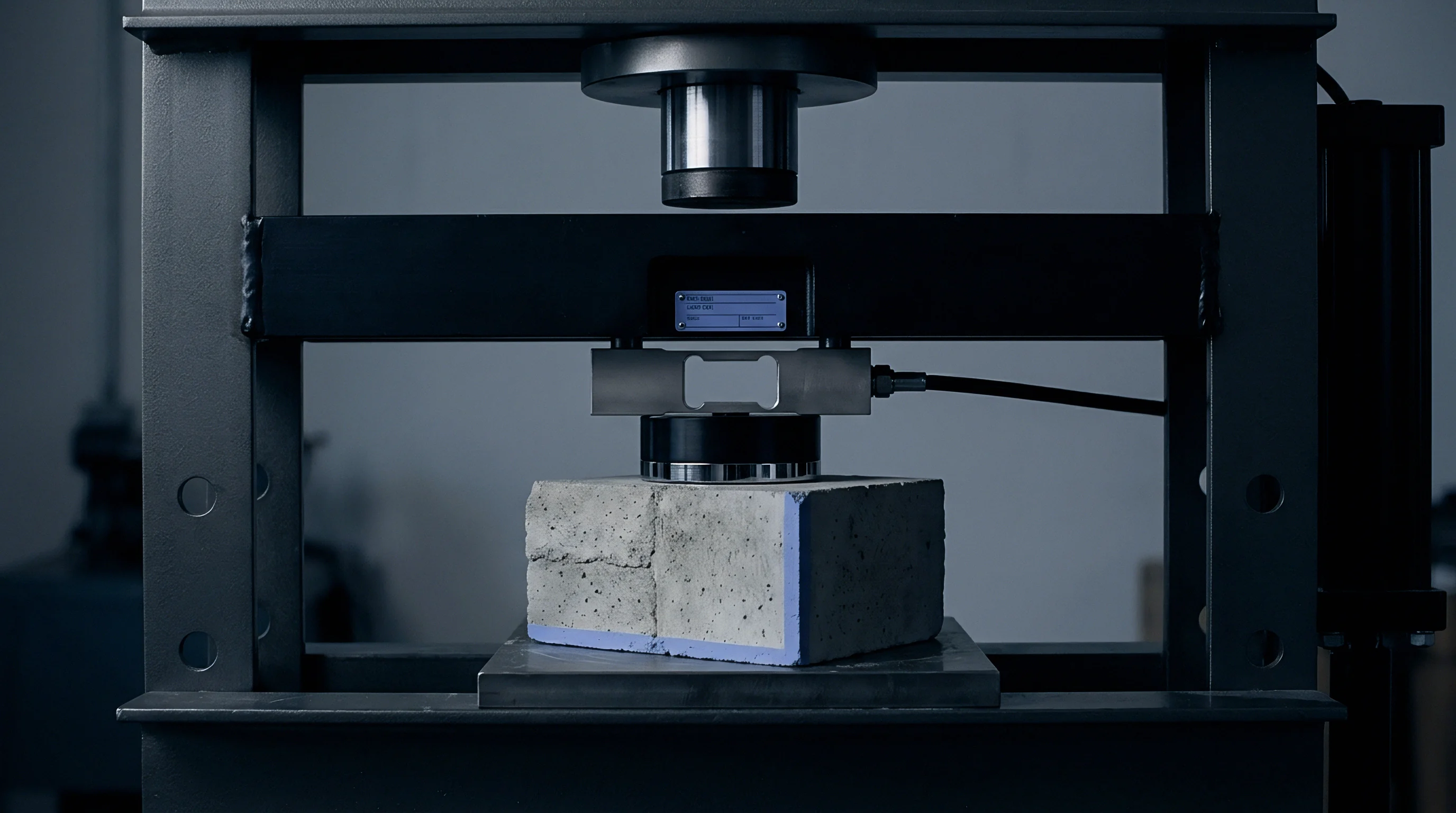
Chatter Suppression in Five Axis Machining Envelopes
Dynamic instability during high-speed milling limits depth of cut and feed rates. Regenerative chatter emerges when cutting tool vibrations overlap with structural natural frequencies of the machine frame. Multi-axis machine tools alter structural frequency profiles as rotating heads and tilting tables sweep through spatial orientation angles.
Fixed notch filtering techniques fail to suppress chatter across changing kinematic configurations.
High internal material damping widens stability lobe diagrams, increasing critical depth of cut across all spindle speed ranges. Dynamic compliance peaks drop significantly in amplitude. Spindle drive systems encounter fewer transient overloads during heavy roughing operations in difficult alloys like titanium grade 5 or Inconel 718.
Damping reduces dynamic chatter peaks.
Structural damping mitigates tool tip compliance variation during five-axis vector changes. Machining envelopes benefit from consistent dynamic response regardless of slide position. Column flexure under heavy Z-axis extension produces lower vibration amplitude, protecting surface finish quality during deep cavity milling.

Workpiece Surface Roughness and Tool Life Variance
Reducing vibration transmission between spindle nose and workpiece extends cutting tool edge life. Micro-chipping on carbide tool tips stems from high-frequency dynamic force fluctuations during tooth impact entry. Elevated structural damping smooths cutting force transitions, slowing flank wear progression and preventing premature insert fracture.
- Select polymer concrete base casting for operations requiring variable frequency spindle speeds and multi-axis tool path orientation sweeps.
- Integrate steel structural stiffeners inside slender machine columns to compensate for lower raw elastic modulus while retaining energy dissipation benefits.
- Isolate linear guideway mounting surfaces using micro-filled epoxy replication compounds to attenuate high-frequency vibration transmission into machine beds.
- Specify thermal post-curing cycles for all structural castings to ensure long-term dimensional stability and eliminate internal casting stresses.
Vibration amplitude reductions of 60 percent at the tool-workpiece interface extend carbide insert operational life by up to 35 percent in nickel alloy milling.
Machining trials confirm superior surface finish parameters when cutting steel molds on mineral casting structures. Arithmetic mean roughness values drop by half compared to identical cuts performed on conventional welded steel beds under matched feed parameters.
Machine platforms featuring high internal dissipation sustain aggressive cutting parameters without generating acoustic squeal or resonant structural chatter.


Qualification

Production Acceptance Gates and Batch Void Non-Destructive Testing
Verifying structural integrity of polymer concrete castings requires systematic non-destructive evaluation prior to final machining and machine assembly. Volumetric void content, resin distribution uniformity, and aggregate segregation govern structural damping consistency across production lots. Density variations exceeding two percent across different casting zones indicate batch mixing anomalies or inadequate vibration compaction.
Ultrasonic pulse velocity testing evaluates internal homogeneity. Ultrasonic waves travel faster through dense aggregate matrix structures than through air voids or resin-rich zones. Standard sound velocity values in high-quality epoxy granite fall between 3600 and 4000 meters per second.
Velocity drops below 3300 meters per second highlight internal voiding or incomplete resin polymerization. Ultrasonic waves detect internal voids.
| Diagnostic Test Method | Target Parameter Value | Acceptable Variance | Rejection Threshold |
|---|---|---|---|
| Ultrasonic Pulse Velocity | 3800 m/s | ± 5.0% | < 3400 m/s |
| Density Verification | 2350 kg/m³ | ± 1.5% | < 2280 kg/m³ |
| Barcol Hardness (Resin Surface) | 45 – 55 HBa | ± 3.0 HBa | < 40 HBa |
| Glass Transition Temp (Tg) | 85°C | ± 5.0°C | < 75°C |
| Modal Loss Factor (η) | 0.025 | ± 15.0% | < 0.018 |
Differential scanning calorimetry determines residual unreacted monomer concentration in the resin matrix. Glass transition temperature must exceed maximum expected operational temperature by at least 30 degrees Celsius to avoid structural softening under heavy heat load conditions. Thermal expansion alters axis position.
Guideway alignment governs machine precision.
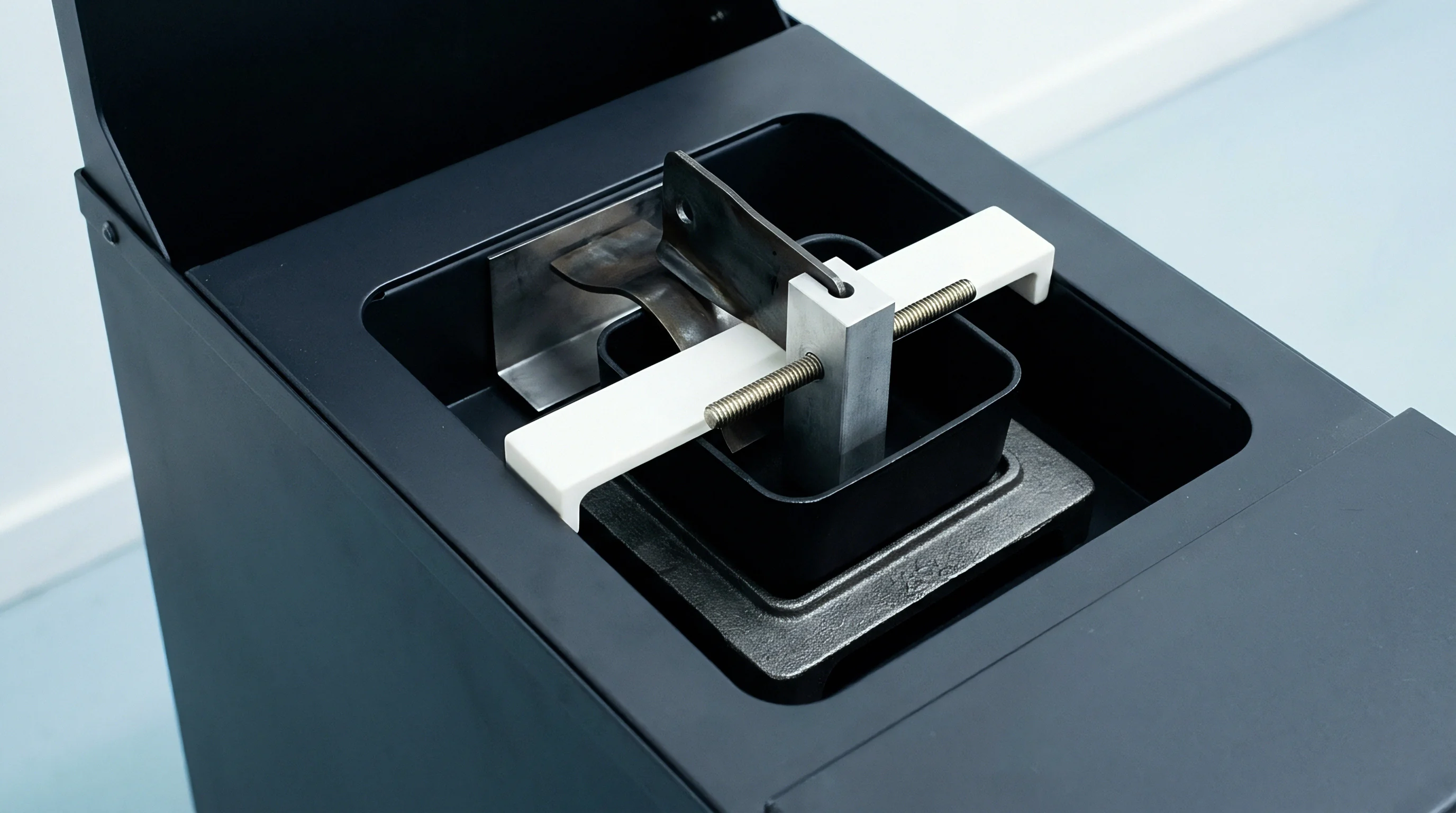
Post-Cure Shrinkage Calibration and Linear Rail Precision Alignment
Long-term dimensional stability depends on complete chemical cross-linking. Volumetric shrinkage during primary curing must be accounted for in mold cavity design dimensions. Secondary post-cure heating drives cross-linking to completion, relieving internal casting stresses that cause progressive warp over multi-year operational cycles.
- Resin batch chemical certification documenting viscosity profiles, epoxy equivalent weight, and amine reactivity numbers.
- Aggregate sieve analysis records verifying adherence to specified Fuller grading curve tolerances for every production batch.
- Curing temperature chart logs confirming ramp rates, peak hold temperatures, and controlled cooling phases during casting cure cycles.
- Ultrasonic volumetric scan maps identifying spatial density uniformity and confirming absence of localized internal voids.
- Post-cure dimensional inspection sheets reporting flatness, parallelism, and surface squareness before and after precision grinding operations.
Precision alignment of linear guideways on polymer bases relies on cast-in steel mounting strips or filled replication grooves. Replication compounds injected behind alignment rails compensate for local base surface irregularities, securing rail straightness within 0.005 millimeters per meter length. Void gaps reduce structural rigidity.
Torsional stiffness limits column flexure.
How structural loss factors change over a decade of continuous exposure to synthetic cutting fluids and oil emulsions remains an active area of investigation across machine design groups.