Evaluating Contractual Take or Pay Deficits in Industrial Scale Up
Evaluating industrial take-or-pay deficits requires reconciling fiscal meter mass records against avoidable costs, storage ullage, and verified headroom.

Meter
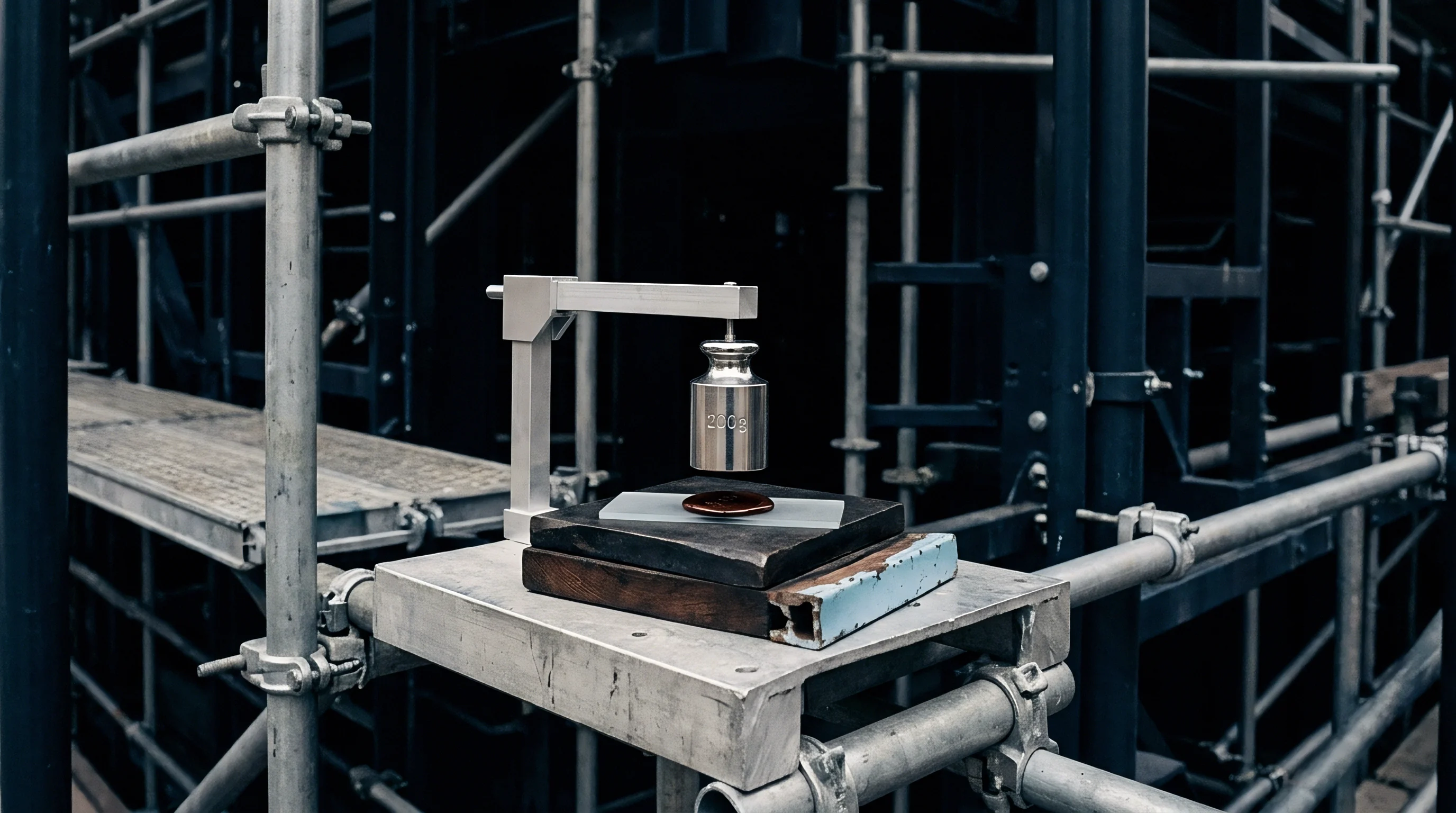
Off-take commitments made during pilot-to-commercial transitions usually hit reality at the fiscal measurement flange. Standard ramp schedules assume linear growth toward nameplate capacity, but catalyst beds, autogenous reactions, and filtration skids ramp up in steps set by fouling rates and utility disruptions. When an off-take agreement mandates minimum billable quantities before a plant reaches thermal equilibrium, financial exposure starts piling up directly at the mass flow meter.
The gap between planned throughput and billed volume shows whether a shortfall comes from contaminated feed or deliberate turn-down. Operating logs might show continuous processing while mass meters capture erratic delivery profiles across back-to-back shifts. Because fiscal meters log real mass, density, and temperature for every parcel, they produce transaction data that often conflicts with theoretical ramp curves.
Mass balance reconciliation logs verify that raw gas deliveries dropped twelve percent below contracted hourly minimums during thermal stabilization cycles.
Volume disputes often start when delivery pressure dips below pipeline criteria and trips automatic shutoff valves. Upstream teams may log the facility as ready for full production even as downstream receipt points reject product for off-spec moisture, sulfur carryover, or particulates. Resolving these deficits requires examining physical handover records rather than internal ERP reports.

Contractual Minimum Off-Take Baseline Metrics
Establishing actual shortfall exposure starts by comparing contract baselines against measured line performance across each accounting window. Under standard take-or-pay terms, the purchaser pays for the baseline quantity whether downstream units consume it or not, provided delivered product meets specifications.
- Annual take-or-pay quantity establishes the volumetric threshold where payment obligations trigger regardless of actual downstream consumption.
- Nominated hourly flow limits set instantaneous injection constraints that trigger penalties if line velocity falls below compressor stability limits.
- Off-specification rejection thresholds define exact contamination levels that relieve buyers of payment obligations when upstream scrubbers fail.
Temporary pressure differentials at the interconnection skid do not automatically balance out across subsequent billing periods, despite assumptions that short-term delivery variations will self-correct.

Formula
Liquidated liability formulas in gas, chemical, and power off-take contracts follow a set structure. The billable deficit is calculated as the contracted minimum minus qualifying delivered volume, multiplied by the contract price less avoidable variable costs. Disputes usually center on which operating inputs count as genuine avoided expenses during an outage.
Avoidable costs include variable inputs such as power, catalysts, disposal fees, and transit tariffs that were saved because product never moved. Fixed depreciation, scheduled maintenance, and salaried labor are excluded from these offsets. If an off-taker misses a monthly quota of ten thousand metric tons, the supplier cannot bill the full contract price without subtracting those unspent variable expenses.

Take or Pay Deficit Valuation Mechanics
Evaluating financial claims across varying production levels requires breaking down each billing cycle systematically. Consider an off-take agreement with an annual minimum threshold of 120,000 metric tons at 450 dollars per metric ton, where documented avoidable operating costs are 110 dollars per ton.
| Ramp Scenario | Minimum Quantity (t) | Delivered Mass (t) | Volumetric Deficit (t) | Avoidable Costs ($/t) | Net Exposure ($) |
|---|---|---|---|---|---|
| Turbine Outage | 10,000 | 4,200 | 5,800 | 110 | 1,972,000 |
| Catalyst Poisoning | 10,000 | 6,800 | 3,200 | 110 | 1,088,000 |
| Full Train Trip | 10,000 | 0 | 10,000 | 110 | 3,400,000 |
| Partial Scrubbing | 10,000 | 8,900 | 1,100 | 110 | 374,000 |
Variable costs change significantly across operating regimes. At thirty percent load, energy consumption per ton spikes, shrinking the avoidable cost offset. Baseline utility figures calculated at ninety percent steady-state loading distort financial calculations during erratic initial operations, skewing liquidated damages when efficiency curves do not align.
Section 8.4 assigns all volumetric shortfalls directly to the defaulting party unless documented pipeline embargoes halt custody transfer.
Downstream buyers often dispute baseline figures by claiming credit for raw materials salvaged or resold on spot markets. If a supplier sells un-taken intermediate slurry to a neighboring refinery, that revenue must offset the accrued shortfall penalty. Audit teams review manifests, bills of lading, and storage transfer records to verify whether secondary sales went uncredited.
Under standard supply agreements, paying for deficiency volumes grants the buyer a conditional credit to lift make-up volumes in later quarters.


Tank
Storage availability determines whether temporary volume deficits escalate into full plant shutdowns. When atmospheric storage hits ninety-five percent working capacity, upstream reaction trains automatically throttle back to avoid illegal environmental venting. Contractual take-or-pay obligations keep running against the buyer even as processing lines choke behind full tanks.
Bulk storage limits create hard physical boundaries during commissioning. A chemical reactor requiring an uninterrupted seventy-two-hour stabilization run cannot operate without enough receiving ullage downstream. If an off-taker fails to dispatch barges or rail cars on schedule, terminal tanks fill within days and force operations to a halt.

Will Storage Limits Preempt Make up Rights?
Accumulated make-up rights remain paper credits until terminal capacity and loading rack capacity allow extra withdrawals. Contracts typically state that make-up volumes can only be lifted using excess capacity above current baseline commitments. If tank ullage stays saturated with baseline production, recovering previously paid deficits becomes physically impossible.
- Inspect terminal tank receipts to verify that reported ullage figures account for mandatory vapor space and tank heel volumes. Settling times change usable tank capacity.
- Review railcar turnaround cycles at sidings, where yard congestion limits pump transfers during crew shortages and triggers dead freight charges.
- Audit barge nomination queues to check whether vessel delays forced emergency recirculation of unblended intermediate stocks, which lowers pumping rates as viscosity rises.
- Cross-check flare logbook entries to confirm whether headspace limits forced combustion of off-spec gas, potentially violating environmental permits.
Product quality degrades when inventory sits in storage buffers past rated shelf-life limits. Polymeric feeds dimerize spontaneously, while cryogenic liquids boil off and vent. If tanks remain stagnant, a financial deficit converts directly into a physical disposal problem.
Bulk storage ullage must remain above fifteen percent working margin to prevent emergency shutdown trip triggers across feeding units.
Loading rack bottlenecks are easily overlooked during deficit audits. A facility can have plenty of static storage capacity yet lack the pump manifold throughput to load multiple transports at once. When loading delays exceed demurrage limits, carriers reject orders and leave inventory stranded on site, shutting down production.
Failing to align tank capacity with delivery schedules causes unplanned plant slowdowns, generating unrecoverable deficit liabilities and damaging upstream catalyst beds.

Cure
Remediation provisions in supply contracts set defined windows for recovering value paid on undrawn volume. Buyers usually negotiate make-up windows of twelve to thirty-six months to lift surplus volume without paying base capacity fees twice. In practice, plant operating limits determine how much make-up volume can actually move through a facility running near design capacity.
If a plant runs at eighty-five percent of capacity to meet baseline orders, only fifteen percent headroom remains to clear historic deficits. Unplanned downtime, equipment wear, and routine maintenance quickly eat into that remaining margin. When the reconciliation window closes, any unused make-up rights expire, turning provisional payments into permanent losses.

Has the Commissioning Curve Cleared Operational Baselines?
Evaluating recovery schedules requires checking actual run rates against nameplate estimates before committing to remediation plans. Buyers need to confirm line stability rather than agreeing to recovery timetables built on uninterrupted steady-state performance.
| Line Headroom Tier | Nameplate Margin (%) | Monthly Surplus (t) | Deficit Balance (t) | Clearance Time (Months) |
|---|---|---|---|---|
| Constrained Headroom | 5 | 500 | 12,000 | 24 |
| Nominal Headroom | 12 | 1,200 | 12,000 | 10 |
| Expanded Headroom | 20 | 2,000 | 12,000 | 6 |
| Debottlenecked Headroom | 28 | 2,800 | 12,000 | 4.3 |
A plant with five percent spare capacity needs two full years of continuous operation to clear a single major shortfall. Chemical and processing units rarely run for twenty-four months without component inspections, refractory rebuilds, or system maintenance. Any unexpected outage disrupts the timeline and leaves deficit balances stranded.
Reviewing make-up claims requires checking production logs against seasonal feed constraints. During winter freezes or low river levels, upstream suppliers often ration raw materials and drop output below contractual minimums. When feed is tight, plant operators prioritize high-margin spot sales over past make-up obligations, leaving make-up volume unfulfilled.
- Priority allocation provisions require suppliers to fulfill deferred make-up orders before taking on spot purchases from third parties.
- Cash conversion triggers mandate cash refunds for unlifted balances if plant availability drops below ninety percent for two consecutive quarters.
- Transferability options allow off-takers to assign unused lifting capacity to secondary industrial buyers through pipeline transfers.
Make-up rights carry no real financial value if the supplier facility lacks spare operating capacity.

Horizon
Long-term debt for plant expansions must align with contractual liability windows. Staged ramp terms reduce early financial risk by tying minimum take obligations directly to equipment commissioning certificates. When lenders require guaranteed off-take to back project financing, locking in rigid volume targets too early creates severe working capital risk.
Structured agreements often use stepped qualification bands instead of fixed volume cliffs. Linking minimum volume requirements to proven plant reliability during trial runs protects the buyer while systems stabilize. The buyer avoids paying for undelivered product, and the supplier avoids running trains without commercial backing.
A contractual commitment signed before commissioning completion converts process variance into unhedged debt obligations.
Before settling historic deficit claims, review operating logs, metering data, and storage records. Identifying actual mechanical bottlenecks gives commercial teams the baseline needed to renegotiate contracts around real plant capability rather than original design specs.
Whether arbitration tribunals will prioritize physical mass meter logs over certified billing notices in international contract disputes remains an open legal question.