Cross Border Joint Venture Factory Ramp Delay Remedies
Factory ramp delay remedies require objective stage-gate sensor logs, capped per-diem penalties, and conditional escrow tranches before buyout execution.


Default
Production line acceptance tests fail when cycle times miss contracted targets by more than eight percent across three consecutive shifts. Overseas joint ventures frequently stumble over this specific threshold during site commissioning. Foreign operating partners often arrive at the production facility expecting local operating teams to run machinery at nominal nameplate speeds immediately after mechanical installation.
The equipment vendor signs off on dry-cycling trials, yet the plant fails to convert raw materials into saleable output within contracted dimensional tolerances. Output freezes. Scrap rates climb past eighteen percent on the primary stamping line.
The operating agreement categorizes this gap through distinct legal definitions of non-performance.
Remedies depend entirely on how the underlying joint venture agreement defines an uncured schedule variance. Agreements that rely on simple delivery dates create immediate jurisdictional friction. The international partner points to incomplete utility hookups, while the local entity points to delayed overseas component shipments.
Effective joint operating structures bypass general delay definitions by tying default directly to verified production parameters at specific machine centers.
- Mechanical Completion Failure establishes vendor liability when individual machine cells fail dry-run positioning tests within fourteen calendar days of utility connection. This failure freezes final vendor progress payments.
- Site Acceptance Rejection triggers immediate joint inspection protocols when continuous 72-hour test runs yield less than ninety percent of rated line speed. The foreign operating partner assumes technical direction of the shift.
- Commercial Ramp Default activates formal contractual cure notices when monthly saleable volume remains twenty-five percent below budget for two consecutive quarters. Financial penalties begin accruing against the defaulting partner’s equity distribution account.
The gap between mechanical completion and commercial operation exposes the joint venture to heavy working capital drain. Fixed factory overhead continues to run while equipment sits idle. Local utility demand charges accumulate regardless of actual output.
When the operating committee receives a notice of failure, the joint venture contract dictates whether the non-defaulting party can step in directly, adjust equity proportions, or levy liquidated damages against accrued technical service fees. The standard International Federation of Consulting Engineers Yellow Book conditions enforce clear mechanical milestones, shifting contractor performance risks into explicit financial cure periods before formal equity remedies take effect.

Toll
Idle factory floor space extracts immediate cash costs from both joint venture parents. A delayed ramp burns cash through facility lease payments, specialized tooling amortization, and committed labor teams waiting for line certification. When an international automotive stamping and welding facility planned for 30,000 units per month stalls at 12,000 units, unit production costs double overnight.
The facility continues absorbing electricity base tariffs, plant climate control expenses, and administrative overhead. Contractual mechanisms allocate these ongoing holding costs through explicit damages regimes.

Which Contractual Milestones Establish Operational Delay?
Contract drafting determines whether delayed factory output generates actionable damages or dissolves into unrecoverable partner disputes. Commercial agreements must differentiate between upstream supplier late delivery and true factory commissioning stall. When downstream assembly plants face assembly line shutdowns, delay penalties escalate beyond initial project estimates.
The joint venture operating document assigns these liabilities through two primary vehicles: per-diem delay damages and targeted recovery credits against future technical service payouts.
Per-diem liquidated damages capped at fifteen percent of total capital expenditure fail to restore working capital when line certification stalls past one hundred eighty days.
Consider a joint venture assembly facility capitalization of 85,000,000 dollars designed to yield 450 finished units per shift across two daily eight-hour shifts. The financial model assumes nominal steady-state volume inside five months following initial product sample approval. The line achieves only 210 units per shift at month eight due to high rejection rates at automated optical inspection stations.
The table below outlines the structural daily cost allocation between operational expenditure and remedy claims.
| Cost Component | Daily Burn Rate USD | Operational Cause | Governing Contract Clause | Remedy Mechanism |
|---|---|---|---|---|
| Direct Skilled Labor Standby | 14,500 | Line technicians idle during calibration | Section 8.2 Technical Transfer Agreement | Foreign partner pays direct wage offset |
| Facility Utility Base Demand | 6,200 | High-voltage draw for unoptimized ovens | Section 12.4 Utility Sharing Addendum | Absorbed proportionally by equity ratio |
| Specialized Tooling Depreciation | 18,400 | Stamping dies idle beyond planned cycle life | Section 4.1 Asset Contribution Schedule | Liquidated damages from equipment provider |
| Finished Buffer Sourcing | 32,000 | Third-party overseas airfreight replacement | Section 16.3 Supply Security Guarantee | Direct cash indemnity to off-taker parent |
| Scrapped Raw Feedstock | 9,800 | Off-spec heat treatment during trials | Section 9.5 Scrap Tolerance Protocol | Deduction from local partner management fee |
Liquidated damages provisions offer predictable recovery but carry distinct legal boundaries across cross-border jurisdictions. Chinese civil law allows courts to reduce contractual liquidated damages if the stipulated amount substantially exceeds actual verifiable losses. In contrast, common law jurisdictions like Singapore or England enforce agreed delay sums strictly, provided they reflect genuine pre-estimates of loss rather than punitive deterrents.
Delay remedies therefore link directly to verifiable carrier invoices, customer chargebacks, and actual feedstock scrap logs.
Failure to align contractual delay caps with actual third-party component supply commitments forces the purchasing parent to absorb uncovered spot-market premiums on emergency substitution purchases.

Clamp
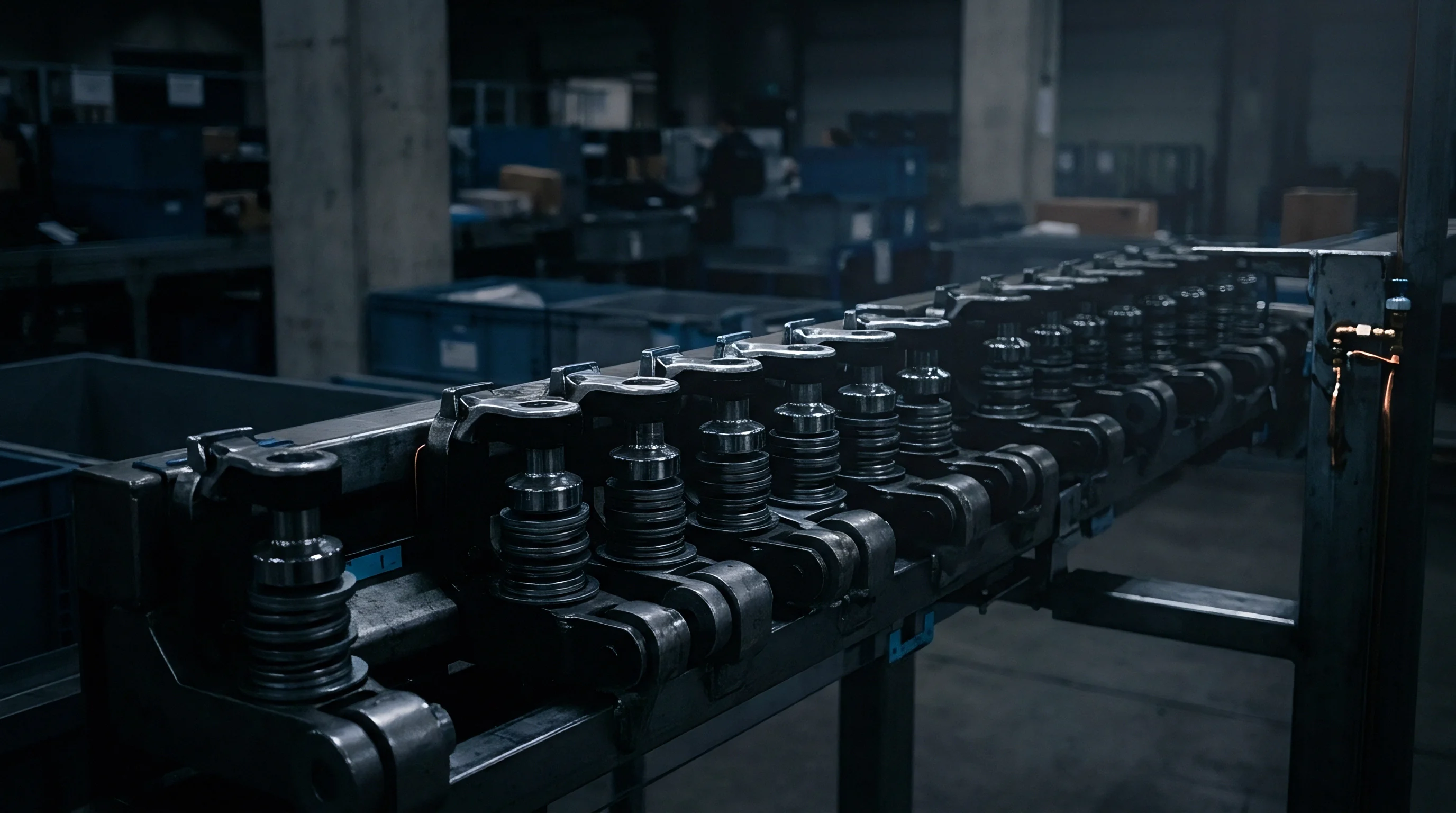
Tooling alignment issues account for sixty percent of early ramp line stoppages. Stamping presses, precision fixtures, and automated gripping jigs reveal mechanical tolerances during high-rate production runs that bench trials miss completely. When temperature fluctuations inside the factory building alter hydraulic clamping pressures by six percent, high-speed automated lines register repeated micro-stoppages.
Parts seat incorrectly. The automated transfer rail aborts the cycle. Resolving these physical constraints demands rapid engineering changes that cross-border joint venture agreements rarely assign cleanly.
Equipment transfers from European or Japanese mother plants to facilities in Southeast Asia or Mexico highlight operational differences in maintenance support. Machine tools designed to run within climate-controlled enclosures encounter local ambient humidity variations. Hydraulic seals swell.
Pneumatic valve manifolds suffer particulate contamination from unconditioned compressed air lines.
Ambient air temperature swings of twelve degrees Celsius shift hydraulic clamping force outside the five-millimeter tolerance envelope during high-speed cycle runs.
Technical remedy provisions handle machine-level failures by establishing clear engineering escalation protocols. The operating agreement must distinguish between core machine defects and improper operational inputs. Without physical data logging, disputes degenerate into prolonged partner standoffs.
- Hydraulic Clamping Variance occurs when line pressure drops below 160 bar during continuous high-cadence stamping sequences. This stops the primary feed station.
- Pneumatic Valve Manifold Contamination introduces actuator lag exceeding forty milliseconds across robotic placement cells. Misalignment alarms halt downstream sub-assemblies.
- Thermal Tooling Expansion shifts physical die clearances past fifty microns during afternoon ambient temperature peaks. Part galling scrap rates rise immediately.
The equipment vendor will routinely claim that local operators introduced unapproved hydraulic oil blends and skipped mandatory daily filter purges.


Escrow
Financial controls safeguard equity partners against capital waste during prolonged commissioning delays. When factory lines sit idle, partner contributions must not disperse into unchecked administrative burn. Structuring capital injections into conditional tranches tied to technical sign-offs preserves financial leverage.
An independent technical engineering firm holds release authority over funds held inside project escrow accounts.

Can Technical Failure Trigger Direct Equity Dilution?
Equity adjustment mechanisms represent the primary structural remedy when cash liquidated damages fail to resolve chronic output deficits. If the technology-providing partner fails to bring production yield above seventy-five percent within nine months of physical commissioning, the joint venture contract can execute a forced dilution provision. The non-defaulting partner converts outstanding recovery claims or provides additional equity capital at a discounted pre-agreed valuation, recalibrating board control and dividend rights.
Joint venture milestone protocols demand third-party engineering certification before escrow agents can disburse subsequent plant expansion tranches.
Documentation standards govern whether an escrow release or default dilution will survive international commercial arbitration. Arbitrators reject informal plant status memos. Claims demand structured verification dossiers including calibrated sensor readings, material traceability records, and machine downtime logs verified by mutual technical representatives.
| Stage Gate Milestone | Required Engineering Record | Acceptance Standard | Evidentiary Value in Arbitration |
|---|---|---|---|
| Dry Run Commissioning | Laser tracker positioning log | ISO 230-2 machine tool accuracy compliance | Proves mechanical base alignment independent of tooling |
| PPAP Sample Approval | Full dimensional CMM report on 300 parts | Cp and Cpk values exceeding 1.67 | Eliminates raw material defect defenses |
| 72-Hour Continuous Run | SCADA automated event and fault log | Mean time between failures greater than 24 hours | Establishes machine reliability under production load |
| Commercial Yield Target | ERP inventory intake reconciliation | First-pass yield above ninety-two percent | Confirms financial output capability for off-take contracts |
Where does liability fall when secondary software updates supplied remotely by the foreign parent disable the material handling programmable logic controller during local commissioning?

Severance
Deadlock mechanisms provide the exit when equipment fixes fail and partner relationships fracture beyond repair. If operational output remains depressed for twelve consecutive months, remedial damages no longer preserve economic value. The non-defaulting partner activates formal unwinding procedures defined in the founding partnership deeds.
These procedures liquidate physical equipment, dissolve local corporate structures, or force a complete buyout of the defaulting party’s equity stake.
Russian roulette and Texas shoot-out clauses present extreme buyout structures that favor cash-rich partners regardless of operational fault. In technical manufacturing joint ventures, a modified appraisal purchase mechanism offers a more orderly commercial resolution. Independent industrial valuers appraise the physical equipment at discounted asset recovery value, subtracting total incurred delay damages from the defaulting party’s final buyout settlement.
Intellectual property licenses require immediate operational disentanglement during partner separation. The foreign technology provider commonly revokes production licenses upon formal contract termination, leaving the local entity with unprogrammed machine cells and proprietary casting molds that cannot be legally deployed. Contracts protect the operational asset by granting a twelve-month non-exclusive transitional manufacturing right, allowing the facility to produce spare parts while local engineers retool the line with neutral third-party controls.
Physical plant control during severance disputes determines asset survival. The local operating partner controls physical facility security, warehouse access, and utility connections. The foreign technical partner controls programmable logic controller source codes, specialized firmware licenses, and international supply lines for proprietary components.
Without pre-negotiated transitional custodial arrangements, lines fall into immediate disuse. Tooling rusts in unheated staging bays. Skilled operators depart for competitor plants.
Clean contractual exits balance the value of physical machinery against the immediate forfeiture of proprietary operating software.