Capital Reserve Pooling Models for Premature Failure in High Pressure Die Casting Assets
Stochastic capital reserve pooling buffers high-pressure die casting operations against premature tooling failures without stranding idle liquidity.


Rupture
Thermal stress cycles inside a four-thousand-tonne high pressure die casting cell break tool steel long before abrasive wear rounds the parting lines. Molten aluminum injects at velocities exceeding forty-five meters per second, introducing extreme thermal shock across the tool face within sixty milliseconds. Surface temperatures swing from two hundred degrees Celsius during lubrication spray to six hundred and eighty degrees during cavity fill.
These cyclic gradients induce plastic strain reversals in the surface layers of premium hot-work tool steels. While standard asset life projections assume tooling surviving past one hundred and twenty thousand shots, early catastrophic failures regularly destroy structural die inserts between fifteen thousand and thirty-five thousand shots. A catastrophic fracture across a core segment instantly halts the casting cell, idles downstream trimming stations, and strands work in progress.
Catastrophic breakdowns split into mechanical mechanisms and metallurgical defects. Gross cracking propagates across sharp radii, internal cooling lines, and structural transitions under high toggle clamp pressures. Thermal mechanical fatigue initiates microcracks within the first five thousand cycles, which coalesce into macroscopic heat checking under unmanaged cooling regimes.
Hydraulic cylinder seizures, shot sleeve erosions, and tie bar micro-fractures further compound cell-level asset downtime. When premature mechanical breakage destroys a fifteen-tonne insert set, the replacement tooling lead time ranges from sixteen to twenty-eight weeks. Standard operational expense budgets fail to absorb an unforecasted three-hundred-thousand-dollar tooling rebuild without starving adjacent capital projects.
Unplanned die rebuilds initiated before twenty-five thousand shots triple the effective tooling cost per casting.
Asset management strategies in die casting operations frequently misclassify these premature catastrophic events as ordinary maintenance overhead. Traditional accounting distributes tooling costs evenly across the nominal design life through linear per-shot amortisation models. When an insert fractures at twenty percent of rated lifespan, the remaining unamortized tooling value instantly converts into an immediate accounting loss.
Manufacturing facilities operating without pooled capital reserves face immediate working capital shortfalls, deferred maintenance on secondary assets, and emergency procurement surcharges.

Why Do Early Fatigue Signatures Defy Standard Depreciation?
Linear depreciation models presume homogeneous mechanical degradation over time. High pressure die casting dies experience stochastic thermal mechanical shock profiles governed by shot velocity, cavity pressure, and alloy temperature spikes. Microstructural changes occur in the heat-affected zones surrounding conformal cooling channels where tensile stresses concentrate during every intensification phase.
Stress concentrations initiate sub-surface micro-voids that remain undetectable under standard non-destructive visual checks.
The rate of crack propagation accelerates non-linearly under continuous cycling. When thermal fatigue cracks intersect internal pressurized water lines, thermal shock causes rapid brittle propagation through the core block. Conventional depreciation schedules fail to represent this step-function collapse of asset value.
Premature mechanical failure constitutes an abrupt termination of asset utility that demands dedicated stochastic reserve mechanisms.
| Failure Category | Physical Root Mechanism | Nominal Shot Threshold | Premature Shot Threshold | Unplanned Downtime Duration |
|---|---|---|---|---|
| Gross Die Cracking | Thermal mechanical tensile overload at core base | 120,000 to 150,000 | 12,000 to 35,000 | 14 to 26 weeks |
| Cooling Line Breach | Stress corrosion cracking into water channel | 90,000 to 120,000 | 18,000 to 40,000 | 6 to 12 weeks |
| Shot Sleeve Washout | Erosion and soldering from high-velocity melt | 25,000 to 40,000 | 6,000 to 11,000 | 2 to 5 days |
| Tie Bar Fracture | Cyclic bending fatigue from platen deflection | 1,500,000 to 2,500,000 | 350,000 to 650,000 | 3 to 8 weeks |
| Hydraulic Platen Warp | Thermal unevenness and toggle force imbalance | 800,000 to 1,200,000 | 200,000 to 450,000 | 4 to 10 weeks |
Operating a casting facility without dynamic capital buffers forces production schedulers to reroute work to secondary, less efficient machines. Unbudgeted tooling expenditures compound across successive quarters, ultimately triggering line stoppages, penalty clauses on delivery contracts, and distressed capital raises.

Alloy
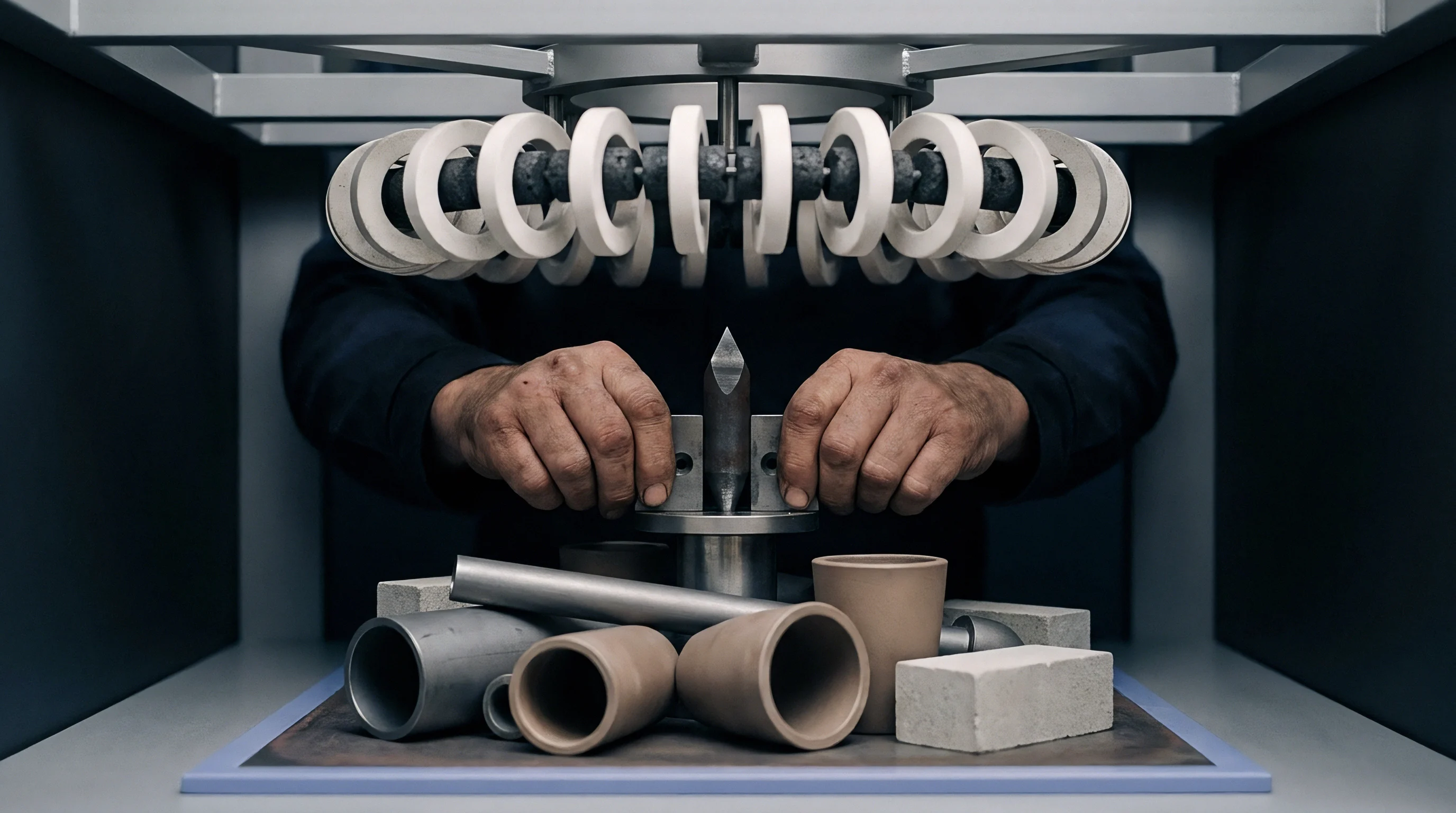
Steel grade chemistry dictates how die inserts resist cyclic microstructural degradation under thermal stress. Standard chromium-molybdenum hot-work alloys such as DIN 1.2343 offer baseline yield strength but show limited fracture toughness under severe thermal shock. Premium electro-slag remelted variants and vacuum arc remelted grades like DIN 1.2367 improve chemical homogeneity and minimize non-metallic inclusion density.
Inclusions act as initial stress risers where micro-cracks originate under multi-axial cyclic loading during shot intensification.
Operating temperatures during the casting phase drive distinct degradation kinetics across different steel chemistries. Silicon content above one percent increases hardness retention at high temperatures yet reduces impact toughness at room temperature. Lowering silicon while elevating vanadium and molybdenum contents enhances resistance to thermal checking and slows crack tip growth rates.
Tooling manufacturers specify precise heat treatment regimens, demanding double or triple tempering cycles to achieve uniform martensitic matrix structures with minimal retained austenite.
Hardness levels directly alter the dominant mechanical failure trajectory. Heat treatment targeting forty-eight to fifty Rockwell C provides high resistance against abrasive erosion and mechanical indentation during metal injection. That elevated hardness reduces fracture toughness, making the insert vulnerable to sudden brittle gross cracking when thermal gradients surge.
Targeting forty-four to forty-six Rockwell C raises fracture toughness, tolerating thermal expansion stresses but accelerating parting-line degradation and soldering.

Thermal Balance and Cooling Channel Design
Drilled cooling lines create sharp stress risers inside the die core. Pressurized cooling water induces cyclic temperature drops on channel interior walls, generating localized tensile stress peaks during each ejection cycle. When operators bypass water preheating during morning shift startups, the steep temperature differential spikes tensile stress beyond the yield limit of the alloy.
Conformal cooling channels manufactured via laser powder bed fusion offer optimized heat removal geometry. Those additive structures introduce microstructural porosity and anisotropic tensile properties along build layers. Post-processing hot isostatic pressing consolidates internal voids, yet grain boundary orientation remains a distinct mechanical variable under cyclic loading.
- Electro Slag Remelting lowers sulfur content below zero point zero zero three percent to eliminate isotropic toughness variations across deep core sections.
- Vacuum Arc Remelting reduces dissolved gas concentrations, raising impact energy values measured in Charpy V-notch testing past twenty Joules at room temperature.
- Gas Nitriding Treatments generate a five-hundred-micrometer diffusion zone that retards aluminum soldering while increasing surface compressive residual stresses.
- Physical Vapor Deposition applies multi-layer titanium aluminum nitride coatings to block direct liquid metal contact with bare tool steel surfaces.
Tooling suppliers assert that die insert fractures occurring inside thirty thousand shots result entirely from unmonitored thermal cycles and inadequate cooling line maintenance inside the foundry.
Sizing
Stochastic failure probability distributions govern the financial reserve pool required to sustain multi-cell high pressure die casting operations. Asset failures do not follow normal distributions. Early life premature failures align with Weibull distributions featuring a shape parameter beta below one during the burn-in period, transitioning to a shape parameter beta between one point five and two point eight as thermal fatigue dominates.
Pooling capital across ten to thirty casting cells stabilizes the aggregate reserve demand, flattening the variance of cash drawdowns.
Individual asset reserve sizing forces an operation to hold idle capital against the worst-case replacement cost of every running die set. If a foundry operates twenty distinct casting lines with replacement insert values of two hundred and fifty thousand dollars each, individual provisioning ties up five million dollars in liquidity. A pooled stochastic reserve model accounts for cross-cell failure correlation and replacement lead times, reducing total committed capital while maintaining a ninety-nine percent solvency confidence interval.
Pooled capital buffers reduce cash reserve requirements by thirty-five percent compared to standalone asset provisions across a twenty-press fleet.
Determining the optimal reserve contribution rate involves calculating the expected value of premature tooling attrition per thousand operating shots. Cell velocity, component mass, locking tonnage, and alloy liquidus temperature act as direct weighting coefficients in the failure probability equation. A structural automotive component casting on a four-thousand-tonne machine carries an attrition risk coefficient three times higher than a small powertrain bracket cast on an eight-hundred-tonne cell.
Where Does Capital Allocation Diverge across Machine Tonnages?
Locking force dictates the magnitude of thermal mass, mechanical shock, and replacement part pricing. Large tonnage cells above three thousand tonnes utilize insert sets weighing over twelve tonnes, where raw material availability alone dictates a three-month forging lead time. Small tonnage machines utilize standardized insert blocks that distributors stock as pre-machined blanks, shrinking the downtime exposure.
Capital pooling allocations must scale with both replacement cost and mean time between failure dispersion. High tonnage presses generate lower total cycle counts per year but exhibit severe tail-risk financial severity per failure. Low tonnage machines run high cycle volumes with predictable wear patterns, generating steady, low-severity maintenance drawdowns.
| Machine Tonnage Class | Insert Set Replacement Cost | Mean Shots To Premature Breakage | Weibull Shape Beta | Monthly Reserve Allocation Per Cell |
|---|---|---|---|---|
| 800T to 1,200T | $65,000 | 55,000 | 2.10 | $1,850 |
| 1,300T to 2,200T | $140,000 | 42,000 | 1.75 | $3,900 |
| 2,500T to 3,500T | $280,000 | 28,000 | 1.35 | $9,200 |
| 4,000T to 6,000T | $550,000 | 19,000 | 0.95 | $22,500 |
| 6,100T to 9,000T | $1,200,000 | 14,000 | 0.82 | $58,000 |
The statistical correlation of die failures across identical parts running on parallel lines remains an active analytical dispute when shared alloy melt batches introduce common-cause metallurgical contamination.

Yield
Throughput continuity inside high-volume casting operations depends on buffer tooling inventory and rapid changeover procedures. When a primary die fractures, production yield drops to zero unless a pre-heated backup insert set stands ready in an adjacent staging bay. Staging duplicate insert sets requires capital commitment, specialized pre-heating ovens, and systematic crane capacity allocations across the foundry floor.
Premature failures upstream immediately starve automated trimming cells, heat treatment furnaces, and multi-axis CNC machining stations. Work in progress inventories buffer downstream operations for a limited window, typically between twelve and thirty-six operating hours. Once buffer inventory drains, downstream assets idle while labor costs and fixed facility amortisation continue to run.
The total financial loss of a premature failure extends beyond tool replacement costs into unabsorbed fixed overheads.
- Acoustic Emission Sensors capture transient stress waves from micro-crack initiation during the intensification phase, logging energy spikes on the central supervisory console.
- Thermal Imaging Cameras track surface temperature profiles immediately after die opening, identifying cooling line blockage before thermal gradients cause macro-cracking.
- Hydraulic Pressure Transducers measure locking cylinder pressure balances across all four tie bars, flagging uneven platen deflection before mechanical fatigue sets in.
- Linear Variable Differential Transformers verify tie bar elongation symmetry during clamping, halting the shot cycle when platen skew exceeds zero point zero five millimeters.
Early defect detection allows operators to retire an insert for stress-relief annealing and laser cladding before cracks breach critical water lines. Laser cladding applies high-toughness nickel or cobalt alloys to repaired corners, restoring cavity dimensions without subjecting the base block to damaging bulk thermal cycles. Planned maintenance windows for stress relief cost four thousand dollars, avoiding a four-hundred-thousand-dollar emergency replacement.
Never run unheated cooling water through hot die inserts during cycle interruption recovery.
Foundries that calibrate reserve funds strictly against component lead times and scrap recovery rates maintain predictable cash flows during severe operational disruptions.
Ledger
Accounting structures for capital reserve pools require rigorous segregation between routine maintenance operating expense accounts and capitalized emergency reserve escrows. Contributions to the pool flow as variable overhead allocations pegged directly to monthly shot volume. When a casting asset executes fifteen thousand cycles in a month, the designated reserve account receives an automated capital transfer based on the tonnage class rate.
This mechanism matches liquidity accumulation directly with mechanical asset utilization.
Reserve drawdowns must satisfy strict validation protocols to protect fund integrity. An unexpected insert failure requires visual confirmation, metallurgical failure analysis documentation, and non-destructive testing reports showing irreparable cracking before the governance board authorizes capital release. Routine wear items, including ejector pins, plunger tips, and biscuit bushings, remain excluded from capital reserve pool coverage, drawing exclusively from standard plant maintenance budgets.
| Event Classification | Cost Threshold | Funding Source | Balance Sheet Impact | Tax Depreciation Schedule |
|---|---|---|---|---|
| Premature Gross Die Breakage | Greater than $50,000 | Pooled Capital Reserve | Capitalized as asset replacement | 5-year accelerated MACRS |
| Thermal Fatigue Laser Cladding | $5,000 to $25,000 | Plant Operating Expense | Immediate period expense | Expensed in current tax year |
| Scheduled Insert Refurbishment | $20,000 to $60,000 | Tooling Maintenance Accrual | Reduces maintenance reserve | Capitalized over remaining life |
| Shot Sleeve Replacement | $3,000 to $12,000 | Consumables Budget | Inventory consumption | Direct cost of goods sold |
| Tie Bar Fatigue Fracture | Greater than $100,000 | Machinery Capital Reserve | Capitalized asset addition | 7-year standard recovery |
Insurance policies covering mechanical breakdown carry high deductibles, typically between one hundred thousand and two hundred and fifty thousand dollars per incident. The internal capital pool functions as a self-insurance buffer that absorbs losses below the commercial policy deductible. Combining captive reserve pooling with catastrophic stop-loss reinsurance shields the enterprise balance sheet from concurrent multi-cell tooling failures.
Standard supply agreements stipulate that premature tooling failure liability shifts to the foundry once cumulative shot count exceeds ten percent of design life.
Under International Financial Reporting Standards IAS 16, replacement component costs qualify for capitalization only when the expenditure restores future economic benefits exceeding the originally assessed baseline standard of performance.