Active Foundation Isolation Protocols for Overseas High Precision CNC Equipment
Active foundation isolation requires tuned inertia blocks and active feedback actuators to decouple floor vibration from high-precision machine axes.


Disturbance
Floor acceleration measurements on industrial slabs reveal low-frequency energy generated by adjacent stamping presses, overhead cranes, and nearby rail lines. Unchecked resonance ruins surface finish. Subgrade ground displacement limits precision cut depth, transferring ambient kinetic energy directly through machine beds into the cutting tool dynamic loop.
Characterizing these background environmental waves forms the foundation of any overseas equipment site plan.
Vibration Criteria standards classify shop floor environments based on root-mean-square vibration velocity measured across broad frequency bands. Standard industrial concrete floors routinely display spectral peaks between 4 Hertz and 30 Hertz with RMS velocities exceeding 50 micrometers per second. High precision overseas CNC equipment, including 5-axis portal mills and ultra-precision jig borers, demands environmental stability matching VC-D or VC-E thresholds.
Ground displacement limits precision cut depth.
| Criterion Class | RMS Velocity Limit (µm/s) | Frequency Band (Hz) | Target Machine Application |
|---|---|---|---|
| VC-A | 50.0 | 8.0 to 80.0 | Standard 3-axis CNC milling machines and lathes |
| VC-B | 25.0 | 8.0 to 80.0 | High-speed 5-axis machining centers and gear shapers |
| VC-C | 12.5 | 4.0 to 80.0 | Precision optical grinders and micro-milling cells |
| VC-D | 6.25 | 1.0 to 80.0 | Ultra-precision jig boring machines and diamond turners |
| VC-E | 3.12 | 1.0 to 80.0 | Sub-micron scale research lathes and coordinate measuring units |
Acoustic pressure waves originating from HVAC air handlers and factory traffic also excite light machine structural panels. Vibration distorts optical tool paths. Placing high-precision equipment on conventional isolated concrete pads resting on elastomeric elastomer strips yields insufficient damping for low-frequency seismic motion.
Low frequencies bypass passive mounts. Passive elastomeric pads experience high natural resonance around 7 to 12 Hertz, amplifying floor vibration precisely within the critical structural modes of machine tool castings.
Active pneumatic systems isolate high-amplitude low-frequency floor noise while piezoelectric elements counter millisecond dynamic shock loads.
A micro-seismic floor survey logs three-axis acceleration data over 72 continuous hours. Continuous logging captures shift variations, crane movements, and regional transit impacts. The resulting power spectral density plot isolates narrow-band harmonics and broad-band random excitation forces.
Machine tool builders use this dataset to configure active actuator gain parameters prior to shipping the machine from the overseas facility. A machine OEM frequently claims that factory floor vibrations fall within standard tolerances until mirror-finish surface roughness fails optical profilometry.

Actuation
Active isolation systems merge pneumatic supporting mounts with high-speed voice coil or piezoelectric force generators to counter dynamic forces. Static loads compress isolator mounts. Pneumatic air springs lift heavy inertia foundations to lower passive natural frequencies to roughly 1.5 Hertz.
Active voice coil or electrodynamic actuators operate in parallel, applying counteracting real-time forces driven by digital signal processing feedback controllers.
Low-frequency floor motion excites internal structural frames if unmanaged. Actuators correct high speed drift. Air springs float heavy foundations.
Acceleration sensors attached to both the isolated mass and the surrounding factory floor measure dynamic displacement simultaneously. Feedforward loops detect arriving floor vibrations and trigger dynamic counter-forces prior to floor movement transmitting into the foundation inertia block. Passive air springs lack this dynamic reaction speed, yielding deflection under high-g gantry direction reversals.
Active electrodynamic isolation reduces transmit-through forces by 28 decibels at 2.5 Hertz when tuned against subgrade resonant modes.
Digital loop feedback algorithms process sensor signals within sub-millisecond control intervals. Phase delay causes dynamic instability. High gain settings eliminate dynamic tilt caused by rapid movement of heavy machine axes.
Unchecked axis acceleration creates high inertial pitch forces that tilt uncompensated foundations, distorting multi-axis machining trajectories.
- Phase Lead Degeneracy causes control loop chatter when digital feedback filters lag dynamic tool forces.
- Sensor Cross-Axis Coupling transfers horizontal floor sway into vertical actuator output, inducing unwanted vibration modes.
- Pneumatic Reservoir Friction creates mechanical stiction that bypasses low-amplitude active attenuation loops.
- Digital Controller Latency introduces phase lag during high-g gantry direction reversals, degrading tracking accuracy.
Pneumatic pressure regulation stabilizes machine geometry while high-bandwidth piezoceramic feedback dampens high-frequency tool head transients.

Monolith
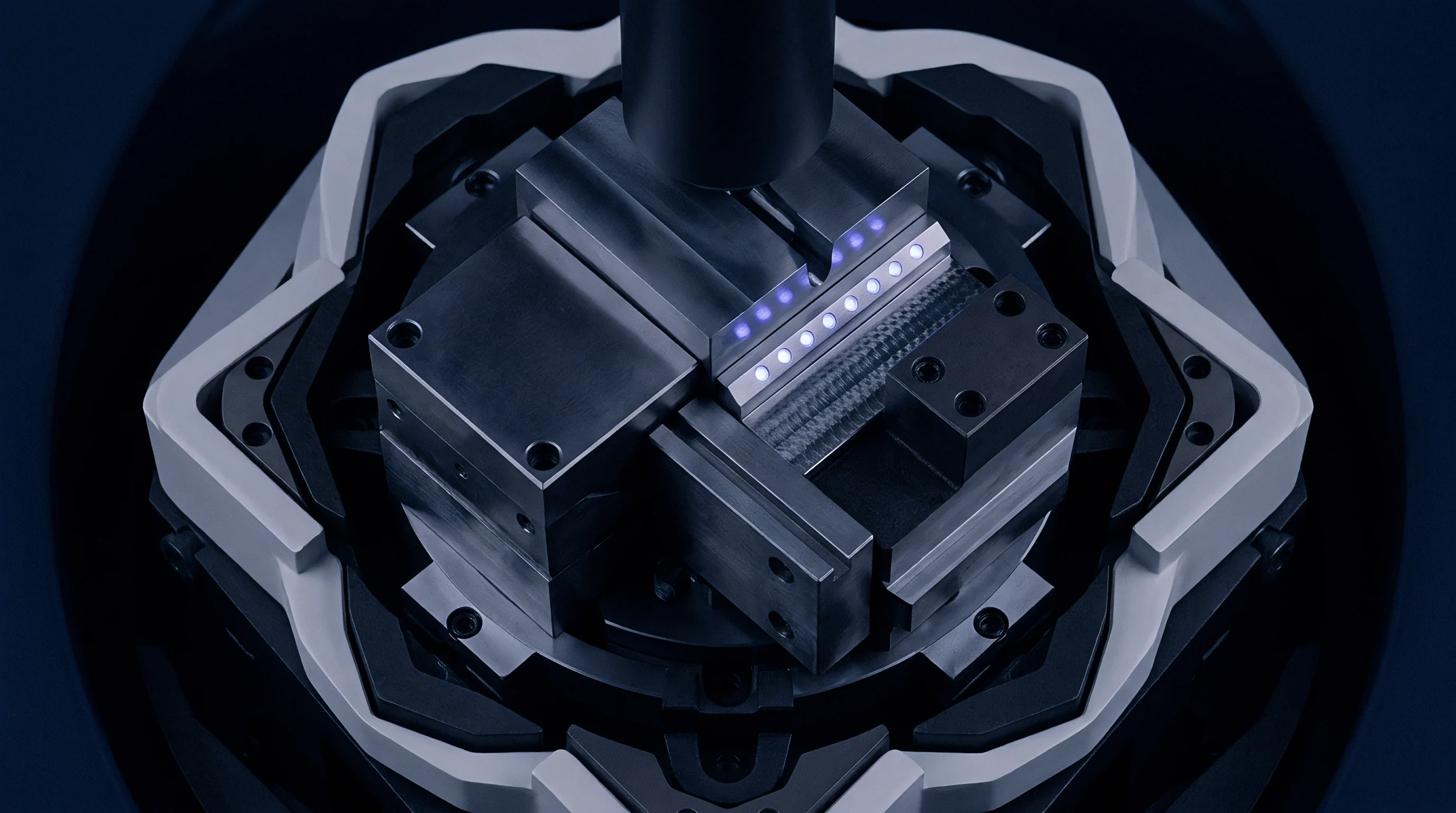
Sub-floor concrete blocks provide the stationary inertial mass required to offset rapid machine axis motion. Mass limits rapid acceleration sway. Concrete absorbs transient acoustic mass.
Designing an active isolation pit demands absolute decoupling between the floating monolithic concrete block and adjacent building structural footings. Synthetic elastomeric seals prevent groundwater ingress and eliminate acoustic bridging through side walls.

How Does Inertia Ratio Prevent Active System Saturation?
Ratio sizing governs dynamic stability under heavy payload movements. Take a 40-tonne 5-axis portal milling machine featuring axis acceleration rates of 1.2g along the lateral bridge. The dynamic mass displacement during travel creates an overturning moment calculated at 48 kilonewton-meters.
Coupling this machine to a 120-tonne reinforced concrete block yields a total isolated system mass of 160 tonnes. This 3-to-1 mass ratio shifts the baseline dynamic center of gravity downward by 1.4 meters, reducing structural tilt from 12 arcseconds down to 1.8 arcseconds during full-acceleration moves.
| Inertia Mass Ratio (Block to Machine) | System Mass (Tonnes) | Natural Frequency Shift (Hz) | Peak Axis Tilt (Arcsec) | Settling Time (ms) |
|---|---|---|---|---|
| 1:1 Ratio | 80.0 | 3.8 | 8.4 | 220 |
| 2:1 Ratio | 120.0 | 2.4 | 3.6 | 110 |
| 3:1 Ratio | 160.0 | 1.5 | 1.8 | 45 |
| 4:1 Ratio | 200.0 | 1.1 | 1.1 | 20 |
Rigid framing transfers plant noise. Cast concrete inertia blocks demand thick continuous rebar mats and high-density concrete formulations exceeding 35 megapascals compressive strength. Unreinforced foundation blocks develop internal micro-cracks over time under persistent cyclic forces from high-speed axis reversing movements, reducing overall structural bending stiffness.
DIN 4024 specifies foundation dynamic natural frequencies sit at least thirty percent away from running machine harmonics to prevent structural resonance.
An undersized concrete inertia mass causes active actuators to hit stroke limits during rapid gantry motion, leading to servo faults and tool mark gouges on million-dollar workpieces.

Dock
Transporting ultra-precision 5-axis machining equipment across international borders introduces severe mechanical shock hazards. Freight shocks ruin delicate sensors. Transit shock absorbers, shipping frames, and axis travel clamps prevent damage during ocean transit and road transport.
Crane riggers check factory access routes and pit clearances before offloading heavy equipment crates.
Installing overseas machine tools onto active foundations follows a strict chronological commissioning path. Site engineers verify pit concrete curing parameters prior to crane placement. Ocean transit moisture promotes flash rusting on structural mating surfaces unless air-purged packaging remains sealed until climate controls stabilize the installation hall.
- Transit Lock Inspection verifies mechanical shipping bypasses held alignment during ocean freight transport.
- Pit Surface Preparation confirms smooth sealing elastomer coating across concrete boundaries.
- Pneumatic Plumbing Purge cleans high-pressure supply lines before connecting active regulator valves.
- Leveling Screw Calibration balances machine base weight distribution across active isolation supports.
Sensor drift creates positional errors. Mechanical transit locks hold the active isolation top plate fixed to the foundation frame during machine mounting. Unlocking these mechanical bypasses before full weight distribution balancing damages sensitive internal voice coils and piezoceramic stacks.
Hard mechanical bypass locks protect piezoceramic stacks from impact damage during site crane placement.
ISO 10816-3 Clause 4.2 dictates baseline velocity readings taken prior to transit lock removal govern warranty coverage for spindle bearing clearance.
Audit
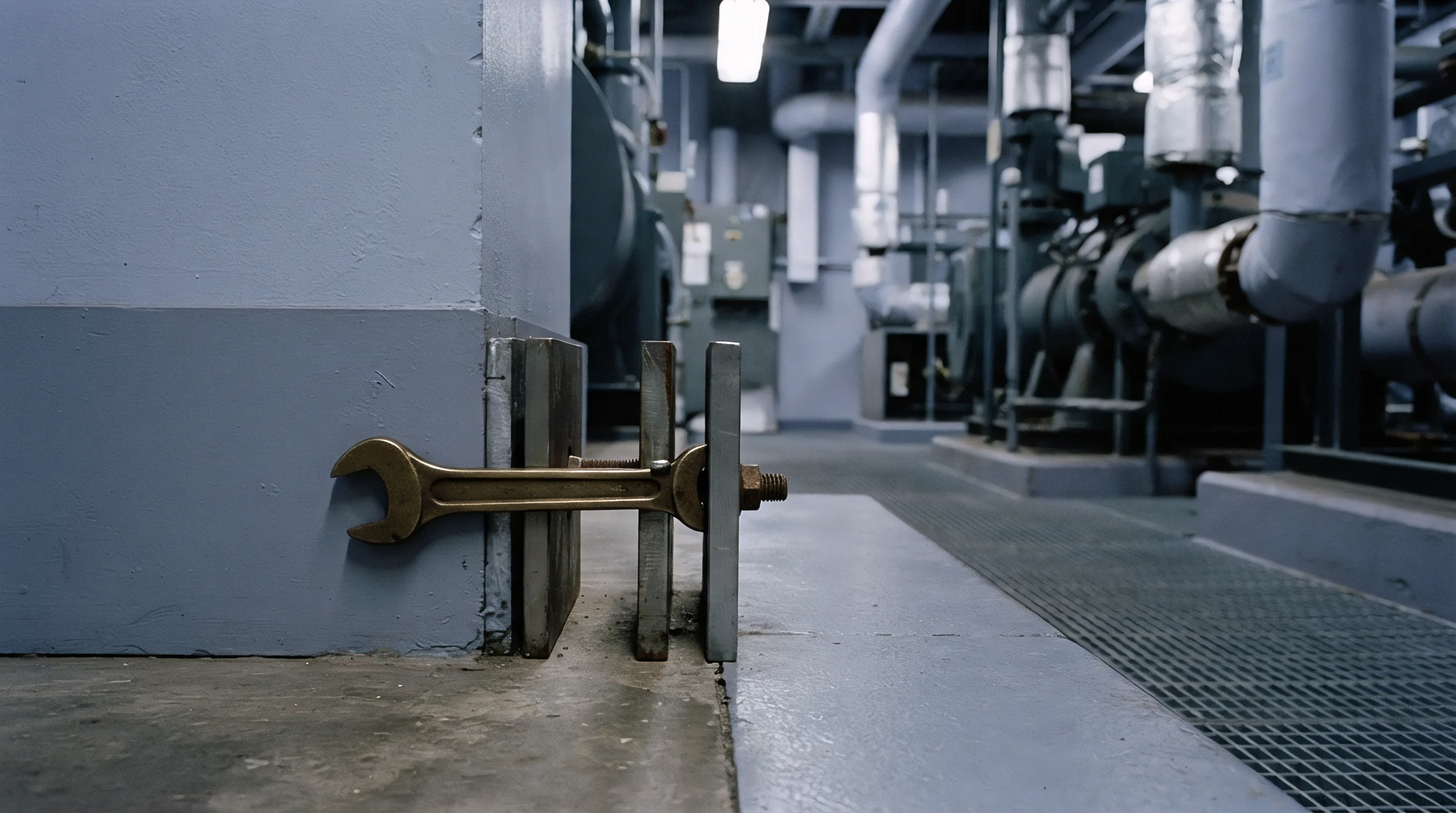
Final commissioning of isolated foundation structures demands rigorous frequency domain mapping under peak operational speeds. Diagnostic signal analyzers process three-axis acceleration data recorded at the machine bed, machine column top, and foundation pit floor. Comparing attenuation efficiency across active and passive operational modes validates system performance specifications.
Dynamic performance testing involves running high-g interpolation test cuts on test aluminum blocks while logging real-time floor acceleration data. Laser interferometers measure position deviation across all travel axes during simulated heavy cutting passes. Active isolators suppress low-frequency sway, maintaining optical alignment stability across long axis travels.
- Spectral Floor Footprint documents floor acceleration power spectral density across 0.1 to 200 Hertz bands.
- Transient Ringdown Log measures dampening time constants following emergency spindle stop events.
- Dynamic Center Alignment records tilt angles during maximum axis velocity movements.
- Transfer Function Map defines attenuation performance across active sensor channels.
Sign-off documentation includes power spectral density profiles, laser step-response ringdown profiles, and surface micro-topography roughness reports. Operating records confirm active system gain margins across seasonal environmental variations.
Whether active isolators retain gain margins when soil moisture content shifts structural ground resonance remains a variable for quarterly field re-calibration.