Delegating Engineering Sign off Authority for Reinforced Polymer Components
Delegating polymer sign off requires explicit material risk thresholds, named signers, non-conformance boundaries, and strict contractual authority locks.

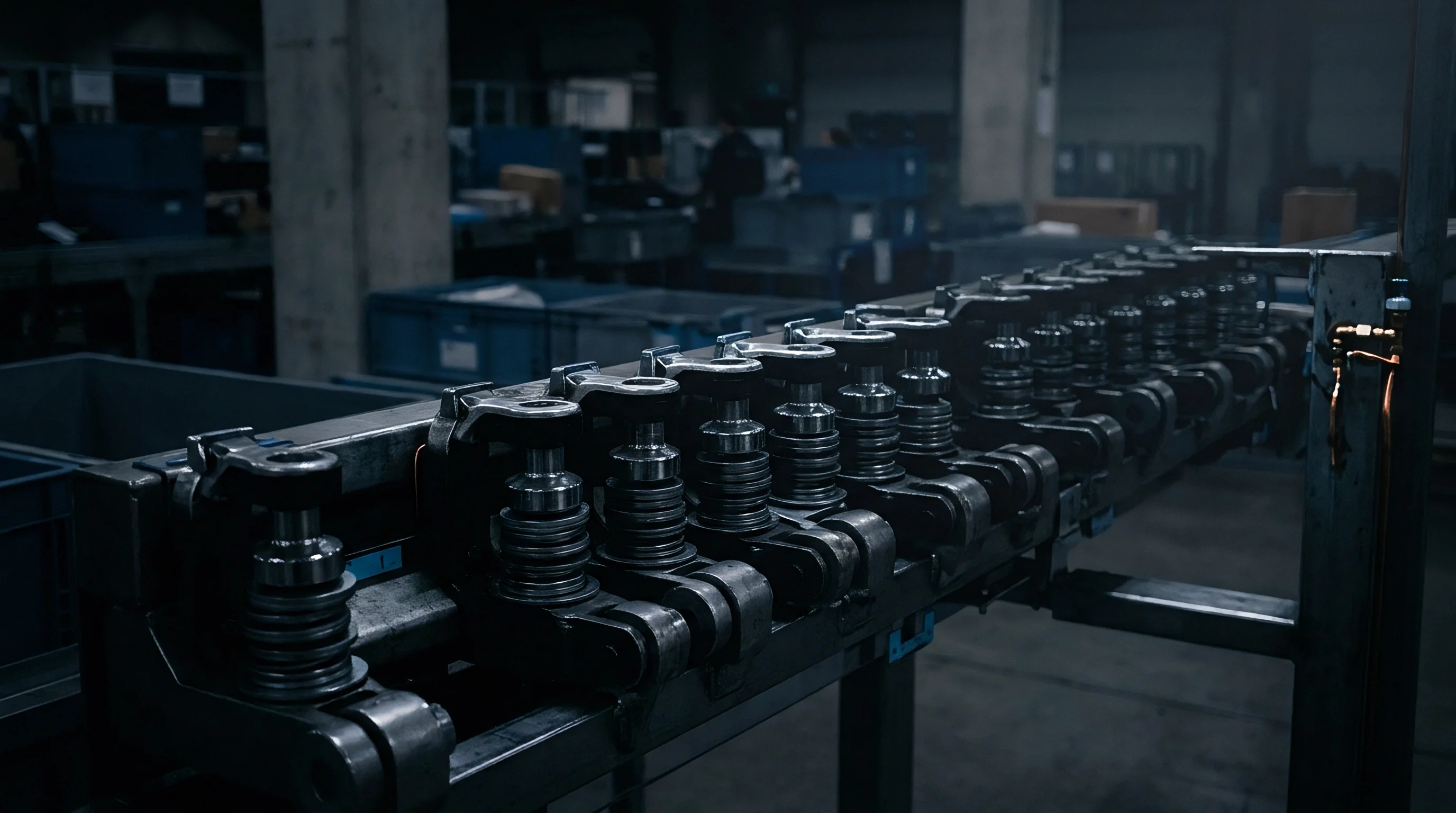
Coupon

Structural Risk Allocations for Fiber Composites
Engineering sign-off for composite materials depends on anisotropic failure mechanics rather than standard metallic yield thresholds. Continuous carbon or glass fiber reinforced polymer matrices degrade non-linearly, crack at the micro scale, and absorb moisture, making any technical approval irreversible once the cure cycle finishes. Handing off approval rights from a founding technical director to staff engineers requires tying component criticality straight to testing protocols.
Without clear delegation limits, approval backlogs choke manufacturing schedules, while unchecked sign-offs expose structural programs to catastrophic delamination.
Delegating authority starts with dividing components into distinct risk tiers. Primary load-bearing parts whose failure would compromise asset integrity sit at the top tier, requiring sign-offs from both a certified principal stress analyst and a materials specialist. Secondary structures with redundant load paths need only a single signature from a designated composite engineer.
Non-structural fairings and interior trim move directly to quality engineers working off standard batch test results. These classification tables keep signers from overstepping their actual technical experience when accepting production lots.
Each approval level ties directly to specific test results. Accepting a material batch takes differential scanning calorimetry for glass transition temperatures, thermal gravimetric analysis for resin content, and burn-off testing for fiber volume fractions. Delegation documents set strict numerical limits for each metric; for example, signers cannot accept lots with fiber volume variances over two percent from baseline without written concurrence from the chief engineer.
| Authority Tier | Structural Classification | Non-Conformance Limit | Sign Off Authorization |
|---|---|---|---|
| Tier 1 | Primary structural spars, pressure vessels, flight control surfaces | Zero variance from nominal qualification baseline | Principal Structural Specialist plus Materials Lead |
| Tier 2 | Secondary brackets, ribs, internal bulkheads, stiffened panels | Fiber volume variance within 1.5 percent, resin void fraction under 1.0 percent | Delegated Senior Composite Engineer |
| Tier 3 | Enclosures, non-structural covers, ducting, cosmetic fairings | Resin void fraction under 2.5 percent, cosmetic surface indication | Designated Quality Assurance Engineer |
Delegation breaks down if sign-off authority expands past actual analytical capability. Governance charts must pair each engineer with specific material systems, cure cycles, and stress conditions. An engineer qualified to sign off on autoclave-cured prepregs does not automatically have authority over resin-transfer molded thermosets or thermoplastic consolidation.
Process-specific bounds stop shop-floor shortcuts from bypassing chemical limits.
Delegation boundaries rest on physical testing limits, not job titles. Approval authority stays tied to coupons tested to destruction under standardized conditions. If a batch coupon fails transverse shear testing, sign-off authority instantly reverts up the reporting chain, no matter how tight the production schedule is.
A technical approval delegated without defined material variance limits defaults to complete operational failure during the first non-conformance event.
Delegation documents set clear boundaries for handling non-conformances. Designated engineers can sign off on standard rework, like secondary bond surface prep or minor resin touch-ups within set dimensional bounds. Rework involving structural laminate grinding, ply replacement, or fastener hole enlargement falls outside delegated authority and forces an immediate technical escalation.
Sign-off limits directly reflect the physical risk of structural failure.
Unambiguous reporting lines keep delegation boundaries intact across busy factory schedules. Composite quality inspectors answer directly to the chief technical officer on non-conformance decisions, insulating engineering judgment from plant volume targets. Plant production managers cannot override a quality engineer who rejects resin lots exceeding moisture limits.
Preserving safety requires keeping technical authority isolated from operational pressure.
Delegated authority demands a firm rule for structural safety: sign-off rights exist only where physical test coupon data matches finite element stress models.


Dossier

Traceability and Batch Dossier Qualification Requirements
Manufacturing records for composite structures require complete lineage tracking from raw chemical synthesis down to final cure logs. Delegated engineers take full operational and legal responsibility for the batch dossier before releasing parts to sub-assembly. The qualification package must contain raw material certificates of analysis, cleanroom environmental telemetry, laminate lay-up records, autoclave pressure and temperature charts, and ultrasonic non-destructive test reports.
A single missing environmental log halts production by invalidating the sign-off sequence.
Cleanroom temperature and relative humidity logs act as critical pass-fail gates for resin prepregs. Exceeding out-of-time exposure limits degrades surface tack and advances the matrix prematurely, creating interlaminar voids during consolidation. Sign-off personnel evaluate out-time logs against certified resin kinetics models before signing release dockets, confirming that matrix viscosity reaches the minimum level needed for complete fiber wet-out during cure.
Automated manufacturing systems generate massive datasets that still require structured human review. Automated fiber placement heads log speed, temperature, tow tension, and compaction pressure at millisecond intervals across every ply. Delegated engineers use exception-reporting software to flag parameter spikes instead of manually reviewing gigabytes of raw sensor streams.
Filtering for exceptions verifies structural compliance without bottlenecking factory operations.
Batch qualification failure modes stem from hidden chemical and physical process breaches. Understanding these systemic failure mechanisms allows engineering leaders to establish targeted dossier review checkpoints:
- Unmonitored out-time accumulation reduces resin flow during thermoset cure cycles, driving up void ratios in thick structural laminates.
- Calibration drift in autoclave thermocouple arrays causes localized cold spots, leaving internal resin uncured while outer surfaces look clean visually.
- Contamination from silicone-based releasing agents in prep zones compromises secondary bonding surfaces, causing debonding under cyclic fatigue loads.
- Incomplete ultrasonic inspection attenuation analysis allows sub-surface planar delaminations under three millimeters in diameter to slip past final inspection.
Ultrasonic inspection reports require detailed signal attenuation analysis prior to sign-off. The delegated engineer checks that A-scan amplitude drops stay within calibrated decibel limits across all critical radius zones. Because complex geometries vary in thickness and shift acoustic wave speeds, signers must verify depth-compensated gain calibrations against baseline reference standards containing machined flat-bottom holes.
Chemical batch variations require immediate evaluation. Resin batches often show slight shifts in molecular weight distribution between synthesis runs, which alters gelation timing during processing. Delegated engineers cross-check vendor rheological test curves against internal cure cycle parameters, since releasing production lots based solely on supplier certificates introduces severe risk of matrix cracking.
Requiring complete ultrasonic attenuation maps for every structural radius zone reduces undetected internal delamination rates to zero.
Vendor documentation must pass internal validation before batch acceptance. Supplier certificates of conformance often rely on average mechanical properties rather than minimum allowable thresholds. Delegated sign-off engineers check supplier lot test values directly against B-basis limits to ensure statistical confidence across tensile, compressive, and shear metrics.
Missing or incomplete vendor documentation stops component processing immediately.
Even when minor chemical variations fall within broad commercial specifications, unnotified resin composition changes alter material qualification baselines and compromise structural performance.


Remit

Escalation Pathways for Non-Conforming Resin Matrices
Processing deviations require predictable escalation steps to keep non-conforming components out of assembly. When thermal sensors register an autoclave pressure drop or vacuum bag loss during cure, delegated engineers enter a structured disposition routine. The decision framework determines whether to accept the part under engineering concession, perform non-destructive repair, or scrap it.
Strict delegation boundaries prevent shop-floor supervisors from overriding these technical rejections.
A typical disposition scenario shows how technical escalation works under production pressure. Consider an autoclave batch of 80 structural carbon fiber panels valued at 640,000 euros. During the final 30 minutes of the dwell phase at 180 degrees Celsius, vacuum pressure on three tool assemblies drops from 98 kilopascals to 62 kilopascals because a bag seal failed.
The shop floor requests a concession, arguing that overall vessel pressure remained stable.
The delegated Tier 2 composite engineer cannot sign off because matrix void risk exceeds local structural limits. The issue escalates to Tier 1 authority ~ the Principal Stress Specialist and Materials Lead. Evaluating the defect requires extracting core samples from panel trim margins, running dynamic mechanical analysis to verify glass transition temperature, and checking void content across polished specimens.
The testing sequence costs 18,000 euros and takes 48 hours of lab analysis.
Testing shows a void volume fraction of 1.8 percent in the affected zones ~ above the Tier 2 limit of 1.0 percent, but under the Tier 1 failure limit of 2.5 percent. Re-running finite element stress models with localized laminate properties confirms a six percent reduction in margin of safety under ultimate load. The Tier 1 authority signs a conditional concession with structural load deratings on that specific lot, saving 580,000 euros in scrap costs while maintaining verified safety limits.
When processing anomalies occur, delegated engineers execute a strict, ordered non-conformance sequence to maintain technical integrity:
- Isolate non-conforming manufacturing lot physically and in the ERP system to prevent downstream movement.
- Extract representative material test coupons from designated panel edge trim for destructive physical testing.
- Perform microscopic void content analysis and glass transition thermal testing in an accredited materials testing lab.
- Recalculate structural load margins using measured laminate properties inside localized finite element models.
- Execute formal disposition docket signed by authorized personnel with all supporting physical and analytical test records attached.
Escalation paths must stay separated from operational management. Engineering dockets flow through independent oversight committees chaired by senior structural principals. Manufacturing program directors sit outside the approval loop for concessions, keeping commercial delivery pressure away from risk evaluations and isolating technical choices from factory schedules.
| Defect Category | Physical Variance Limit | Required Engineering Sign Off | Governance Action Required |
|---|---|---|---|
| Thermal Cure Exotherm | Exotherm peak 5 to 12°C over nominal resin curve | Tier 2 Composite Engineer | Differential Scanning Calorimetry glass transition re-test |
| Vacuum Bag Depressurization | Pressure loss over 15 kPa during temperature ramp | Tier 1 Materials Lead and Stress Specialist | Destructive core sampling, ultrasonic volumetric scan |
| Dimensional Distortion | Spring-back profile variance 1.5 to 3.0 mm | Tier 1 Structural Specialist | Assembly stress redistribution analysis, shim tolerance review |
| Foreign Object Debris | Inclusion area under 4.0 mm² in non-critical zone | Tier 1 Dual Sign-Off (Materials + Stress) | Depth-specific NDT sizing, localized fatigue re-evaluation |
Clear escalation boundaries streamline factory throughput while preserving engineering rigor. Minor geometric variances rectifiable by standard liquid shimming fall under plant quality engineer approval. Microstructural matrix defects require analytical stress modeling, locking sign-off authority strictly within senior engineering seats.

Where Does Individual Liability Attach during Sign off Delegation?
Legal responsibility for structural component failure attaches to the registered professional engineer who signs the final manufacturing docket. Delegating authority does not shield engineers from regulatory accountability or personal liability under product safety laws. Governance charters should state that sign-off personnel are covered by corporate professional indemnity while acting within defined technical limits.
Approving components outside those limits voids internal indemnity clauses, leaving direct legal liability with the signer.
The consequences of failing to enforce escalation logic arrive quickly when an unvetted defect causes field delamination, triggering fleet groundings, scrap rates above 40 percent, and severe reputational damage across the industry.


Covenant

Contractual and Mandate Terms for Delegated Signers
Formalizing engineering delegation requires translating technical rules into enforceable employment contracts, authority charters, and corporate governance documents. A title change on an org chart carries no legal standing without an explicit delegation mandate tied to the employment contract. That mandate defines the scope of sign-off authority, spending limits for material testing, escalation duties, and conditions for suspension or termination, protecting both the firm and the engineer.
Contracts for delegated signers must include explicit professional autonomy clauses. These clauses state that no corporate officer, managing director, or commercial manager has the authority to order an engineer to sign a technical release against their professional judgment. If an executive attempts to force a sign-off, the contract provides an immediate, confidential reporting line directly to the board’s technical compliance committee.
Notice periods and garden leave for structural composite signers require careful calibration to manage key-person risk. Replacing a delegated primary structural engineer takes six to twelve months for material qualification training and regulatory registration. Contracts for Tier 1 signers should carry at least a six-month mutual notice period alongside mandatory six-month garden leave, preventing technical coverage gaps that could freeze production lines.
Engineering delegation covenants must contain four essential legal and operational structures:
- Explicit schedule of delegated technical limits itemizing approved material systems, cure processes, and component structural tiers.
- Contractual professional autonomy protections prohibiting commercial management override of technical non-conformance rejections.
- Comprehensive professional indemnity indemnification covering individual engineering sign-offs executed within charter boundaries.
- Mandatory technical re-qualification schedules requiring annual audits of analytical competency and materials testing knowledge.
Notice period costs scale directly with authority tier. A standard twelve-month compensation package for a senior composite principal covers base salary, qualification allowances, professional indemnity, and continuing education stipends. Competitive retention terms keep certified signers in place, protecting the plant from costly re-qualification pauses during staffing transitions.
Incorporating direct board escalation rights into employment contracts prevents commercial executives from forcing non-conforming engineering sign-offs.
Restrictive covenants must protect technical knowledge without violating statutory restraint-of-trade laws. Post-employment restrictions keep departing engineers from transferring proprietary process parameters, resin kinetic models, and tool spring-back algorithms to direct competitors. Restraints focused tightly on specific processing methodologies remain enforceable across jurisdictions and safeguard core IP.
Contractual delegation terms carry binding force through standard employment provisions. Under Section 14.2 of the Senior Engineering Delegation Charter, any direct or indirect attempt by non-technical management to compel an engineering approval signature constitutes immediate grounds for constructive dismissal and triggers formal notification to the relevant aviation or maritime safety authority.


Yield

Governance Frameworks and Key Person Transition Mechanics
Moving sign-off rights from a founding technical director to a trained second line frees up executive bandwidth while securing operational continuity. When founders keep exclusive approval authority, backlogs inevitably choke factory output as volumes grow. Delegating sign-off rights shifts the company away from single-person reliance toward a scalable governance model, giving the board structural resilience while senior leadership focuses on strategy and commercial growth.
Interim bridge mandates provide essential continuity during leadership transitions or while second-line engineers complete qualification. An interim technical principal holding full authority steps into the role for six to twelve months while permanent staff complete training. The mandate sets clear milestones for mentoring, dossier approvals, and phased authority handovers, keeping factory production moving without relaxing technical standards.
Handover files require thorough verification before an authority transfer closes. A complete package includes open non-conformance logs, current vendor qualifications, ongoing fatigue test reports, and registered regulatory delegation files. Outgoing and incoming signers run a joint audit covering three consecutive months of parallel docket evaluations, confirming that the successor fully understands the testing and tracking workflows before taking sole authority.
| Delegation Phase | Chief Engineer Hours Spent on Sign-Offs | Key-Person Risk Index | Factory Sign-Off Lead Time |
|---|---|---|---|
| Founder-Locked Sign-Off | 32 hours per week | 9.2 out of 10 | 72 hours average |
| Dual-Signature Transition | 12 hours per week | 4.5 out of 10 | 24 hours average |
| Fully Delegated Second-Line | 2 hours per week (Audit only) | 1.1 out of 10 | 4 hours average |
Board governance committees monitor delegation metrics through monthly compliance audits. The chief technical officer submits quarterly reports detailing sign-off distribution, non-conformance escalations, audit exceptions, and engineer re-qualification status. Independent oversight keeps shop-floor cost pressure from eroding technical standards, ensuring engineering safety stays aligned with business targets.
Consider an expanding aerospace composite component manufacturer generating 24 million euros in annual revenue. The founding chief technology officer spends 28 hours per week manually reviewing and signing material dockets, batch coupons, and non-conformance sheets. This operational bottleneck limits plant expansion, forcing a delegation transformation.
The company recruits two Tier 2 composite sign-off engineers at an annual fully loaded cost of 140,000 euros each, alongside engaging an interim principal engineer at 2,200 euros per day for a four-month transition period. The total financial commitment reaches 456,000 euros in the first year. The delegation framework releases 26 hours per week of executive bandwidth for the founding CTO, enabling the acquisition of two new structural supply contracts valued at 6.8 million euros.
Factory docket turnaround time falls from 68 hours to six hours, reducing work-in-progress inventory holding costs by 220,000 euros annually.
Key-person risk drops dramatically as authority spreads across qualified seats. A single engineer leaving unexpectedly no longer halts operations or invalidates compliance certificates, transforming a fragile, founder-centric operation into an institutional enterprise built for sustained growth.
Handover files complete the structural transition.
How far can automated machine learning defect classification replace human engineering sign-off authority in primary composite structural certification without invalidating professional statutory indemnity protections?