Standard Tolling Conversion Contracts and Extrusion Scrap Reconciliation
Tolling agreements demand tight scrap reconciliation; unmonitored melt losses and scrap variances erode conversion margins and shrink borrowing bases.


Assay

Inbound Scrap Classification and Chemical Limits
Raw aluminum scrap delivered to an extrusion plant undergoes chemical testing before it reaches the furnace. That chemistry dictates whether the melt can be cast directly into extrusion billet or needs prime P1020 ingot additions to satisfy EN 755-2 specifications. For standard 6063 alloy profiles, iron must remain below 0.35 percent and silicon between 0.20 and 0.60 percent.
Exceeding those trace element limits pushes the furnace bath out of spec, forcing the plant to dilute the melt with primary aluminum.
Process scrap comes in physical forms that carry very different melt risks. Dense crop ends and profile cutoffs have a low surface-area-to-mass ratio, so little metal oxidizes during charging. By contrast, turnings, thin-walled scrap, and shredded punchings expose large surface areas to heat.
Surface coatings and contaminants ~ including anodizing seals, paint, thermal breaks, and lubricants ~ vaporize during heating and form heavy dross skims that trap molten aluminum.
Melt shops reject mixed loads because unsorted scrap cross-contaminates production runs. Minute amounts of zinc, copper, or lead disrupt the age-hardening response of 6000-series structural alloys. Receiving procedures therefore mandate spark-emission spectroscopic checks at several points on each bundle before unloading into the furnace area.
- Iron contamination spikes caused by loose steel fasteners or thermal-break strips promote intermetallic needle formation, lowering tensile strength and requiring bath dilution.
- Moisture and oil residues remaining on unburnt chips spark thermal oxidation flares, pushing dross volumes past standard operating allowances.
- Anodized and painted fractions create heavy oxide dross in reverberatory melting, dragging clean metal into skim pans during deslagging.
- Mixed alloy shipments containing stray 2000 or 7000 series scrap contaminate 6000-series melts and force complete bath re-alloying or dilution.
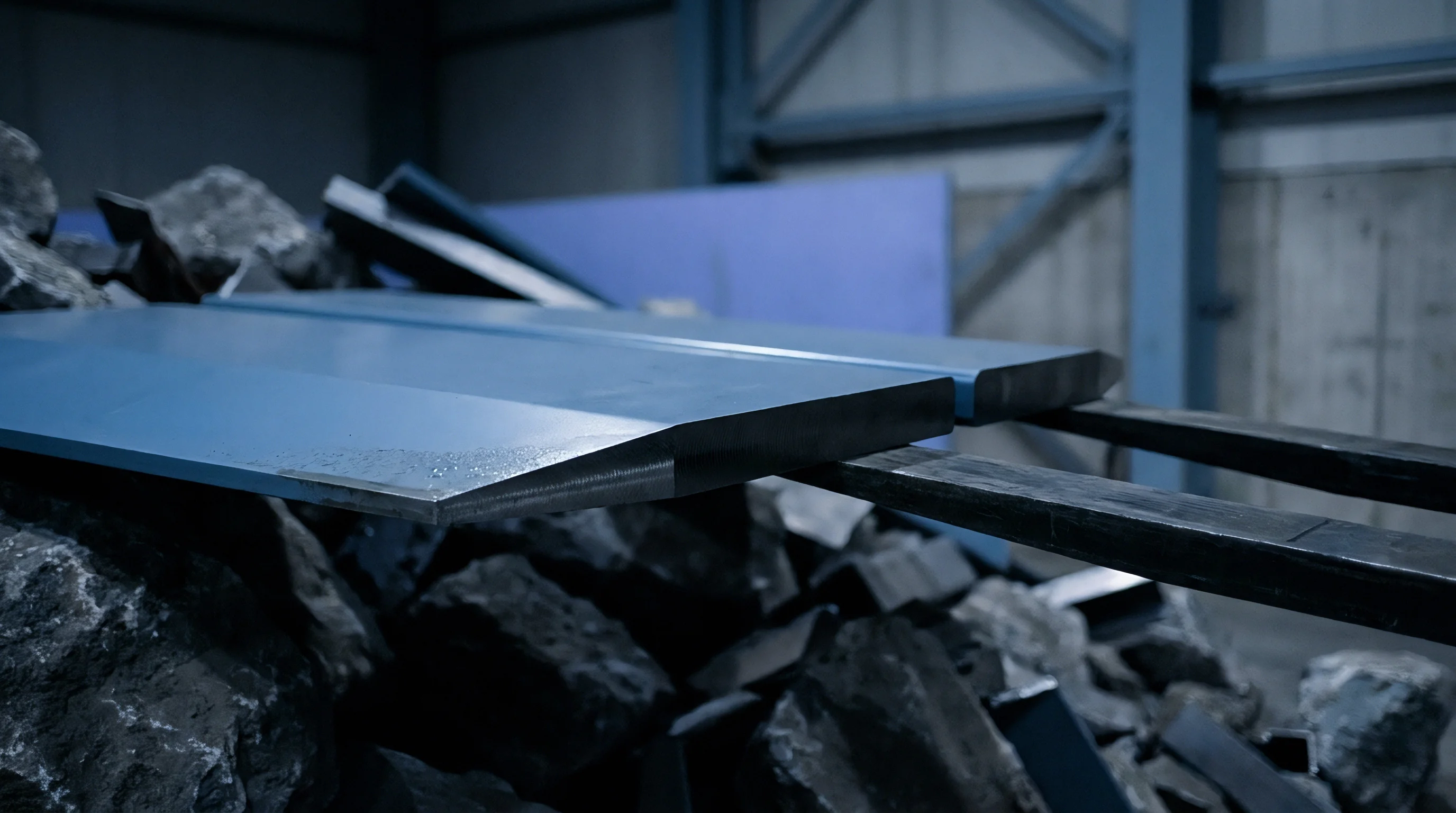
Melt Loss Allowance Standards by Scrap Geometry
Conversion contracts set baseline melt loss allowances matched to the scrap’s physical shape. These baselines establish the permitted mass drop between dry scrap loaded at the furnace door and clean liquid metal cast into logs. Heavy structural cutoffs carry allowances of 1.5 percent to 2.5 percent, light painted extrusions range from 4.0 percent to 6.0 percent, while loose turnings and fine swarf carry allowances of 12.0 percent to 18.0 percent because of high burnoff.
Scrap chemistry deviations turn straightforward metal tolling into expensive dilutive remelt runs.
When scrap deliveries contain foreign inclusions, moisture, or non-metallic attachments, weight adjustments are applied before entering the shipment on the ledger. Thermal dry-weight testing determines net dry weight by subtracting measured volatile organic compounds and surface moisture, and the converter credits the ledger with only the verified dry metallic mass. Excessive oxidation losses can stem from volatile organic coatings on customer feedstock or from poor furnace bath temperature control.


Yield

Press Recovery Calculations and Scrap Generation
Extrusion press yield depends on turning aluminum billet into profile shapes with minimal scrap. That conversion is constrained by container diameter, extrusion ratio, and die geometry. Production regularly generates material loss across four main stages: discard butts, front run-out ends, table shear cuts, and stretch-rectification cutoffs.
Billet butts are the single largest source of scrap. Standard operating practice leaves 10 percent to 15 percent of the billet length inside the container so surface oxides do not flow into the profile walls. Die changes, container cleanouts, and dimensional adjustments add further waste during setup.
Complex hollow profiles demand higher ram pressures and thicker discard butts than basic solid shapes. Recovery rates range from 75 percent on intricate thin-walled structural shapes up to 88 percent on solid rectangular bar. Any off-spec extrusion length produced at the press goes back to the reverberatory furnace for internal remelting.
| Alloy Grade | Profile Complexity Factor | Press Recovery % | Melt Loss Allowance % | Net Accountable Metal % |
|---|---|---|---|---|
| 6063 Architectural | Low (Solid shapes) | 85.0 to 88.0 | 2.0 | 83.3 to 86.2 |
| 6061 Structural | Medium (Hollow shapes) | 78.0 to 82.0 | 3.0 | 75.7 to 79.5 |
| 6005A Industrial | High (Multi-hollow profiles) | 74.0 to 78.0 | 3.5 | 71.4 to 75.3 |
| 7075 Aerospace | Extreme (High-strength solid) | 68.0 to 73.0 | 5.0 | 64.6 to 69.4 |

Scrap Balance Ledger Mechanics
Tracking metal balances requires ongoing reconciliation between customer scrap weight delivered and net finished weight shipped. Conversion contracts establish a perpetual ledger tracked in kilograms of prime aluminum, with tolling fees billed against net finished extrusions loaded onto outgoing trucks.
Process scrap generated during pressing remains customer property unless the contract specifies title transfer to the plant. If the converter retains that scrap, its fair market value is credited against processing invoices. Contracts state whether credits track spot scrap indices or take a fixed discount off the London Metal Exchange cash price.
- Weigh the incoming truck or container on certified platform scales upon arrival at the plant.
- Take representative chip samples from three depth levels in the load for laboratory spectroscopic analysis.
- Deduct volatile oil and surface moisture measured during thermal drying.
- Apply the contractual baseline melt loss allowance corresponding to the verified scrap form.
- Credit the customer’s metal ledger with the net recoverable prime aluminum weight.
Standard tolling agreements call for monthly physical audits to reconcile accumulated furnace dross against theoretical melt loss allowances.
Yield variance calculations compare actual metal loss against contractual baselines. If press recovery falls short because of poor die design, the converter absorbs the shortfall. When delivered scrap yields less metal because of non-conforming scrap, the deficit is debited to the customer ledger.
Under Section 4.2 of the European Aluminium Tolling Conditions, scrap generated beyond agreed press allowances remains customer property and must be credited on processing invoices.


Valuation

What Yield Variances Trigger Mandatory Cash Balancing?
Tolling balances require matching physical inventory shortages against benchmark market prices. Conversion contracts specify periodic settlement dates ~ typically quarterly or annually ~ when cumulative metal variances are settled in cash. A negative balance means the converter holds less physical metal than the ledger reflects, requiring market purchases or direct cash settlement for the deficit.
Cash settlements rely on agreed pricing sources, such as the monthly average London Metal Exchange cash price, the Platts Midwest Premium, or regional scrap indices. If primary metal prices rise during a production period, cash-settling an unhedged scrap deficit drains significant converter liquidity.
Contractual tolerance bands keep minor variances from prompting immediate payouts. Metal variances within plus or minus 1.0 percent of total order volume roll forward into the next period on the ledger. Any variance beyond that threshold triggers an immediate cash adjustment billed at market replacement cost.
| Variance Scenario | Scrap Shortfall Tonnes | LME Cash Price $/Tonne | Conversion Fee Adjustment $/Tonne | Net Cash Flow Impact |
|---|---|---|---|---|
| Baseline Tolerance (1.0%) | 5.0 | 2,400 | 350 | $13,750 Debit |
| Moderate Excess Loss (3.0%) | 15.0 | 2,400 | 350 | $41,250 Debit |
| Extreme Excess Loss (5.0%) | 25.0 | 2,800 | 350 | $78,750 Debit |
| Unhedged Price Surge (5.0%) | 25.0 | 3,200 | 350 | $88,750 Debit |
| Calculation assumes a 500-tonne scrap delivery commitment under standard toll conversion terms. Shortfall settled at spot LME cash price plus regional physical delivery premium. | ||||

Accounting Recognition of Consigned Metal and Metal Variance
International financial reporting standards require plants to separate owned raw material from customer-owned inventory. Under IFRS 15, scrap delivered for tolling does not meet control transfer criteria, so it stays off the converter’s balance sheet. The plant records no inventory asset and recognizes no metal revenue upon receipt.
A two percent melt loss variance on a 500-tonne order changes contract conversion costs by $28,000 when LME primary metal is at $2,800 per tonne.
The customer retains legal title and keeps the metal on its books under IAS 2 at landed cost, including freight and handling. Scrap created during pressing remains customer inventory, moving from raw scrap to work-in-process on the ledger. Misclassifying consigned toll metal as owned inventory inflates reported assets, distorts turnover ratios, and creates unexpected tax liabilities when physical counts are reconciled.


Liquidity

Borrowing Base Inclusion Rules for Consigned Metal
Working capital availability shifts when raw material moves to third-party plants. Asset-based lenders apply strict eligibility criteria to consigned scrap, excluding material stored off-site from the borrowing base unless a formal bailee agreement secures their lien.
Raw aluminum scrap stored in-house typically draws advance rates between 60 percent and 75 percent of orderly liquidation value. Once shipped to a third-party extruder, its collateral value drops to zero without executed bailee letters. These agreements require the plant to waive warehouse liens and ensure customer scrap remains clearly identifiable.
Physical perimeter segregation prevents customer metal from mixing with plant stock in storage bays. Field audits confirm that scrap lots carry tags matching enterprise ledger records.
- Bailee acknowledgment agreements signed by plant management waive warehouse liens on customer scrap stored on site.
- Physical perimeter segregation keeps customer scrap in designated bays during processing.
- Perpetual inventory ledger synchronization mirrors press consumption logs directly into corporate accounting systems daily.
- Casualty loss insurance designations name senior commercial lenders as loss payees for off-premises tolling inventory.

Working Capital Financing and Conversion Cycle Gaps
Cash conversion cycles stretch when toll processing faces unexpected delays. The cycle tracks days between paying scrap suppliers and collecting receivables from profile buyers. Tolling shifts this dynamic by substituting large upfront raw material purchases with smaller processing fee outlays.
A company delivering scrap to a converter avoids locking up capital in primary billet. Processing fees are paid upon invoice receipt, keeping cash headroom open under credit lines.
Lenders exclude consigned scrap from borrowing bases unless formal bailee waivers eliminate plant lien claims on raw material.
When conversion plants face scheduling backlogs or die breakage, inventory holding times extend without generating revenue. Credit agreements often impose borrowing base reserve haircuts if transit and processing stretch beyond 60 consecutive days. Lenders treat unhedged metal variances at third-party plants as direct capital impairments, prompting immediate reductions in borrowing availability.


Remedy

Audit Mechanics and Physical Metal Reconciliations
Enforcing contractual remedies requires clean audit documentation of scrap shortfalls. Tolling contracts give metal owners explicit rights to inspect remelt operations, scales, and storage yards. Audit teams verify inventory by comparing scale tickets against press logs and slag disposal receipts.
Mass balance checks compare incoming scrap weights against output volumes of billet, finished profiles, press scrap, and furnace dross. If unaccounted losses exceed agreed allowances, physical audit reports become key evidence in arbitration. Scale calibration certificates must meet ISO/IEC 17025 standards to hold up in formal dispute proceedings.
Auditors pull composite samples from slag containers before dross leaves for processing. Inductively coupled plasma spectroscopy measures residual metallic aluminum inside the skim, separating expected burnoff from losses caused by poor remelt operations.

Legal Protections and Lien Enforcement Mechanics
Clear title retention protects scrap owners if a converter enters insolvency. Tolling contracts feature explicit title clauses stating that metal ~ whether raw scrap, molten bath, billet, or finished profile ~ remains customer property through every stage of processing.
Artisan lien claims pose a major counterparty risk. Plants in financial trouble often assert statutory processor liens over customer metal to compel payment on unrelated orders. Well-drafted agreements restrict lien claims strictly to specific unpaid job lots rather than historical balances.
If a converter fails to resolve a metal deficit within contractual cure windows, title retention clauses allow the metal owner to enter the site, repossess equivalent raw material tonnage, and offset unrecovered metal shortfalls against outstanding conversion invoices.