Physical Verification and Factory Acceptance Protocols in Long Lead Capital Procurement
Factory acceptance protocols link progress payments directly to verified machine tolerances, preventing working capital leakage before asset title transfer.

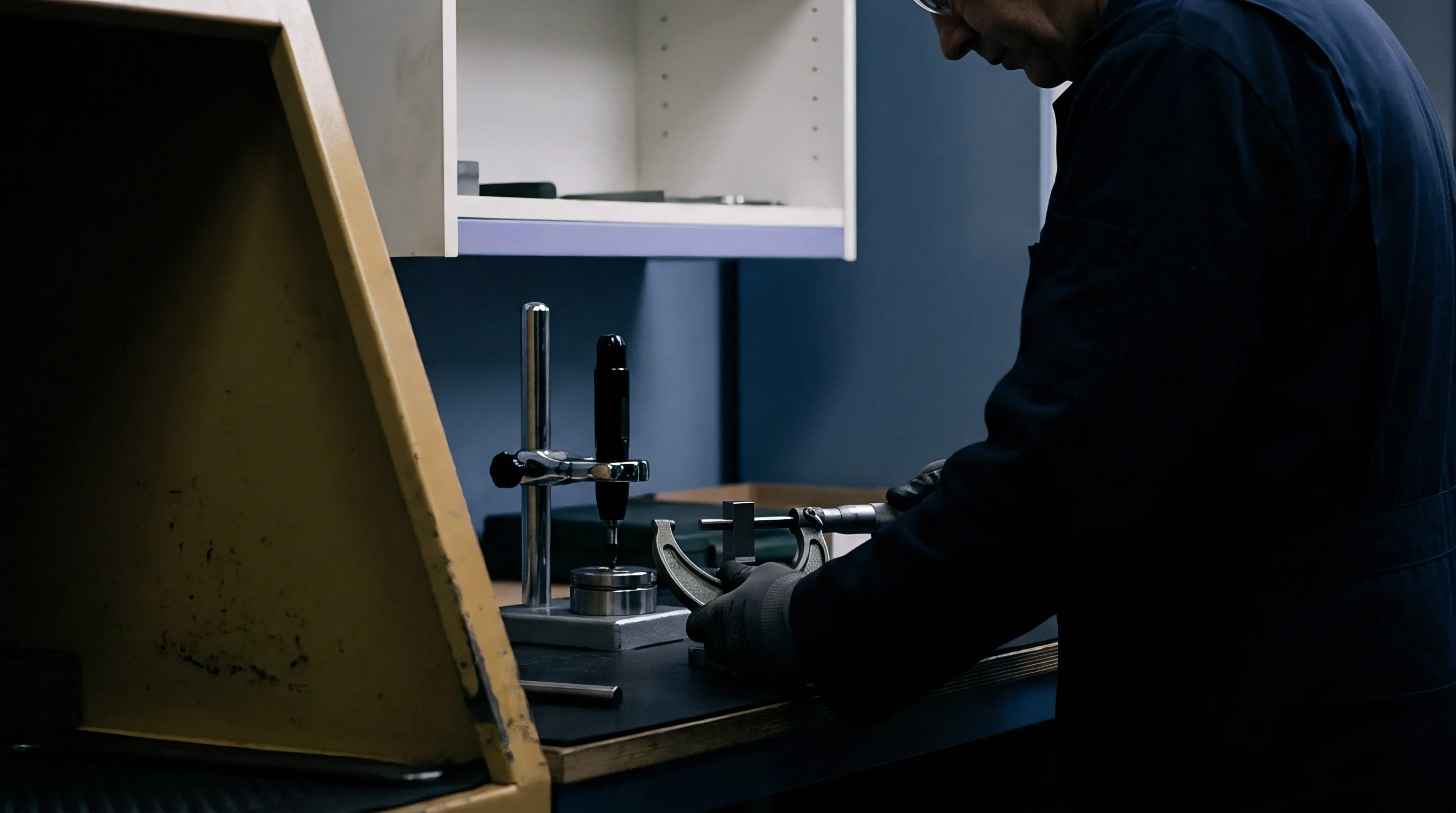
Anchor
Capital equipment procurement ties corporate liquidity to unformed metal months before that machinery produces saleable output. In long lead engineering programs, a standard advance payment schedule transfers up to 40 percent of total contract value before a machine cycles under power. The procurement contract governs this gap through physical verification checkpoints and factory acceptance tests.
A physical inspection establishes that material exists in the stated alloy, geometry, and sub-assembly state. The factory acceptance test proves that the fully integrated machine achieves specified tolerances, cycle rates, and safety cutoffs on the builder’s floor.
When physical verification decouples from cash disbursements, capital turns into an unsecured working capital loan to the machinery builder. Equipment builders operate on razor-thin operating liquidity, financing work-in-progress inventories through customer advance billings. If an intermediate milestone releases cash against an unverified vendor progress report, the buyer absorbs the entire balance-sheet risk of vendor insolvency, component substitution, or manufacturing delay.
The factory acceptance protocol serves as the final barrier before title transfer, ocean freight dispatch, and subsequent site installation. Once equipment packs into export crates, the buyer loses the physical leverage required to enforce structural engineering corrections without ruinous freight and site-work penalties.
The buyer retains legal leverage over machinery tolerances only while the equipment rests on the builder’s test foundation.
A rigorous factory acceptance protocol links specific engineering tolerances directly to the release of letter of credit drawings or commercial wire tranches. The milestone schedule converts subjective vendor claims into verifiable operational criteria. Tolerance verification requires calibrated instrumentation, traceable test pieces, continuous power logging, and full thermal equilibrium runs.
Missing any of these steps shifts commissioning risk straight into the project construction phase, where site modification costs escalate by multiples of original factory fabrication expense.
The financial architecture of heavy machine acquisition relies on strict operational verification at every major milestone.


Milestone
Structuring progress disbursements against physical verification prevents unearned cash releases throughout extended production cycles. Commercial builders routinely request payment stages tied to calendar dates or vendor-certified engineering completions. Accepting these terms exposes the procuring firm to severe cash-flow leakage without corresponding physical asset creation.
Progress milestones tie directly to distinct, observable states of raw material, sub-assembly integration, and functional bench tests.

Milestone Verification Criteria
A defensible milestone schedule splits procurement capital into clearly verified stages. Each stage requires specific evidentiary proof signed by the buyer’s designated technical representative before the treasury releases funds.
- Advance Payment Tranche releases funds strictly upon receipt of an irrevocable, demand-guaranteed advance payment bank guarantee issued under URDG 758 rules.
- Raw Material Allocation requires mill test certificates, ultrasonic non-destructive examination logs, and photographic validation of stamped serial numbers on primary castings or structural plates.
- Major Sub-Assembly Completion demands dimensional survey reports, hydro-testing logs for pressure systems, and physical verification of primary drive integrations on shop stands.
- Pre-Acceptance Cold Run confirms static electrical loop checks, input-output signal wiring continuity, hydraulic circuit pressure stability, and structural safety interlock functionality.
- Factory Acceptance Protocol mandates complete dynamic functional testing under variable load, thermal equilibrium verification, precision tolerance validation, and dry-cycle endurance runs.
- Ex-Factory Packing Release verifies application of corrosion inhibitors, desiccant placement, vapor-barrier vacuum heat sealing, shock-watch accelerometer installation, and export crate crating compliance.
The technical representative verifies the presence of primary castings before releasing payments tied to base machining. Sub-tier supplier invoices never substitute for physical inspection of the work piece on the shop floor.

Disbursement Mechanics and Working Capital Exposure
The timing of physical verification controls the buyer’s net cash exposure throughout the build phase. Consider a procurement contract valued at 5,000,000 dollars across an eighteen-month fabrication cycle. If payments flow on vendor schedule claims, capital expenditures advance ahead of physical progress, creating substantial off-balance-sheet credit exposure.
The disbursement framework must maintain positive working capital tension throughout the transaction.
| Milestone Stage | Contract Share | Cumulative Cash | Required Physical Verification Deliverable | Escrow or Retention Security |
|---|---|---|---|---|
| Down Payment | 15% | $750,000 | Advance Payment Guarantee verified via SWIFT MT760 | 100% bank guarantee value |
| Major Forgings and Castings | 15% | $1,500,000 | Mill test reports, heat numbers, ultrasonic examination records | Advance guarantee amortizes down |
| Mechanical Integration | 20% | $2,500,000 | Coordinate measuring machine inspection logs, drive alignment checks | Lien waivers from sub-tier vendors |
| Factory Acceptance Test | 30% | $4,000,000 | Signed acceptance protocol, continuous 48-hour run chart data | Title conveyance certificate |
| Ex-Factory Shipping Release | 10% | $4,500,000 | Export packing inspection, vapor barrier seal, bill of lading | Commercial invoice endorsement |
| Final Site Commissioning | 10% | $5,000,000 | Site acceptance protocol, full integrated line performance run | Performance bond holds for 12 months |
Under this schedule, the factory acceptance protocol gate controls the release of 30 percent of the contract value. This payment carries the builder’s final margin and working capital recovery. Withholding this tranche until physical tolerances match procurement specifications prevents builders from deferring factory remediation into the field.
Builders frequently argue that minor finishing items can be addressed during site commissioning, an assertion that shifts expensive re-machining and alignment work to an uncontrolled construction environment.
Liquidated damages clauses accelerate financial recovery if milestone dates slip beyond agreed contractual cure windows.


Protocol
Operational execution of a factory acceptance test demands precise alignment between engineering design limits and test floor measurement routines. The protocol document forms a legally binding addendum to the purchase contract, detailing every test procedure, operating envelope, feedstock requirement, and rejection boundary. Testing an incomplete or uncalibrated machine wastes engineering travel expense and weakens the buyer’s contractual posture.
The protocol establishes exact preconditions that the builder must satisfy before the buyer’s engineers arrive at the fabrication site.

Pre-Test Prerequisites and Utility Requirements
Factory acceptance testing requires the builder to complete internal preliminary commissioning before presenting the machinery for formal customer inspection. The machine must run continuous dry cycles for twenty-four hours without hardware alarms or emergency stop interruptions. All safety interlocks, physical guarding, light curtains, and emergency trip circuits undergo functional validation prior to running production material.
Calibration certificates for all integrated sensors, load cells, pressure transducers, and external test instrumentation must carry ISO/IEC 17025 accreditation, dated within six months of the test event.
The builder provides shop utilities that match the electrical, pneumatic, and cooling profiles of the ultimate installation plant. Voltage fluctuations exceeding three percent or unconditioned compressed air lines invalidate dynamic performance measurements. Clean, dry air meeting ISO 8573-1 Class 2.4.2 prevents premature valve seat degradation and erratic pneumatic cylinder timing.
Power logging monitors total harmonic distortion and transient voltage spikes during direct-on-line motor starts, confirming compatibility with the target facility sub-station capacity.
Calibrated test instrumentation traceable to national metrology standards invalidates vendor claims of shop-floor thermal drift.

Load Profiles and Thermal Stability
Static dimensional verification provides zero certainty of dynamic operational accuracy. Steel and cast structures deflect under operating loads and expand under internal friction and hydraulic fluid heating. The acceptance protocol mandates continuous testing under graded load profiles: 50 percent, 75 percent, and 100 percent of rated design capacity.
The machine runs continuously until all major bearing housings, gearboxes, and hydraulic sumps achieve thermal equilibrium. Thermal equilibrium occurs when temperature readings taken thirty minutes apart show variation under one degree Celsius.
Spindle runout, axis backlash, and linear positioning accuracy must be logged at baseline room temperature and re-measured at full thermal saturation. Multi-axis machinery requires laser interferometer tracking to evaluate volumetric positional errors across the full travel stroke. If thermal growth drives positioning accuracy outside the contractual tolerance envelope, the builder must re-engineer spindle cooling jackets or implement software thermal compensation algorithms before the buyer signs the protocol dossier.
Rejecting non-compliant equipment at this stage protects downstream product margin from excessive scrap generation and unexpected maintenance downtime.
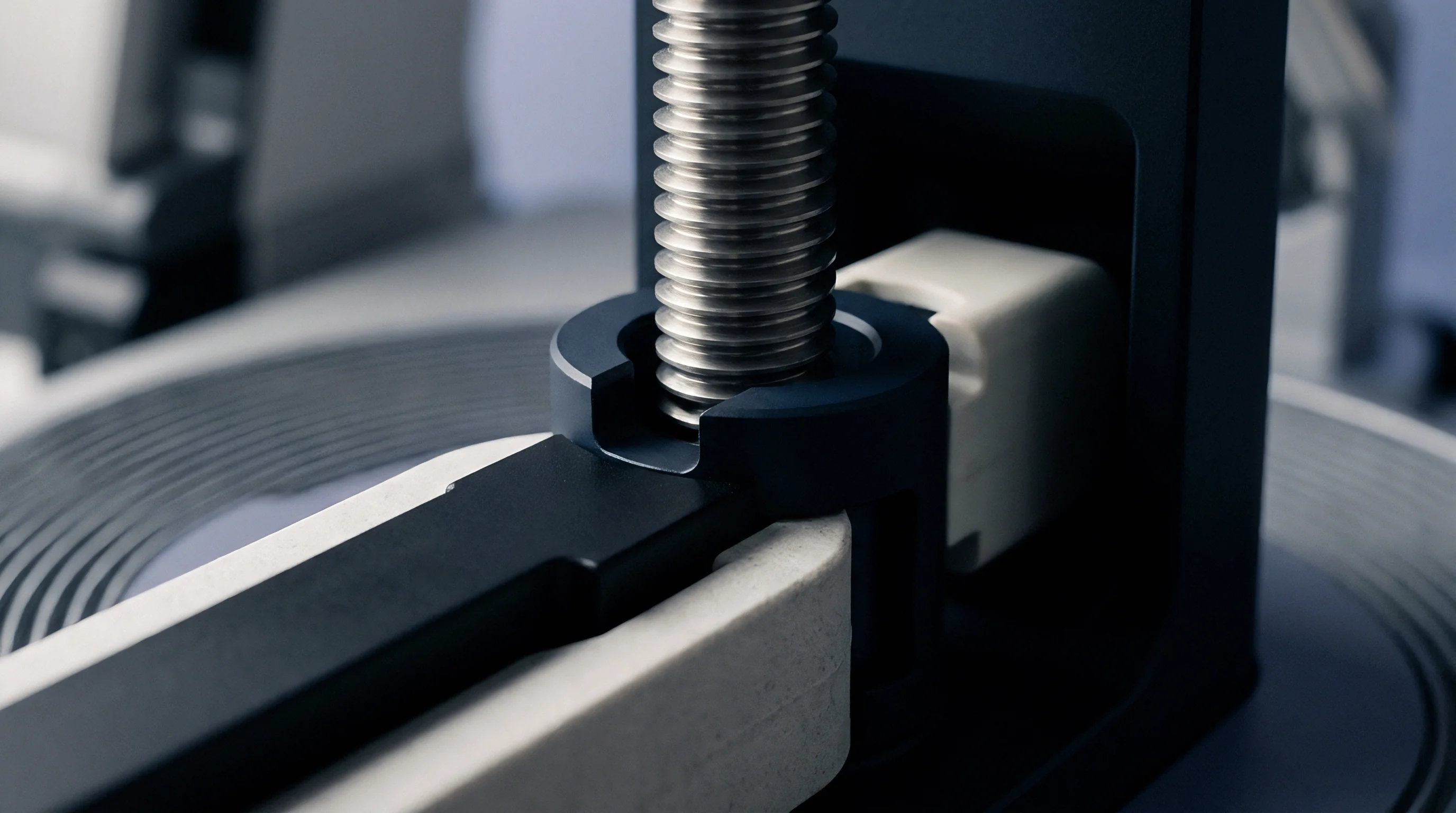

Specimen
Verifying machine capability requires processing representative test specimens under production conditions rather than relying on dry-cycling. Builders prefer using standardized, soft trial materials that reduce tool wear, eliminate chip clearing friction, and minimize structural vibration. The procurement protocol must specify the precise material grades, hardness ranges, physical dimensions, and metallurgical conditions of all raw workpieces used during the factory trial.
Running non-specified materials invalidates statistical process capability indices and masks structural rigidity deficiencies.
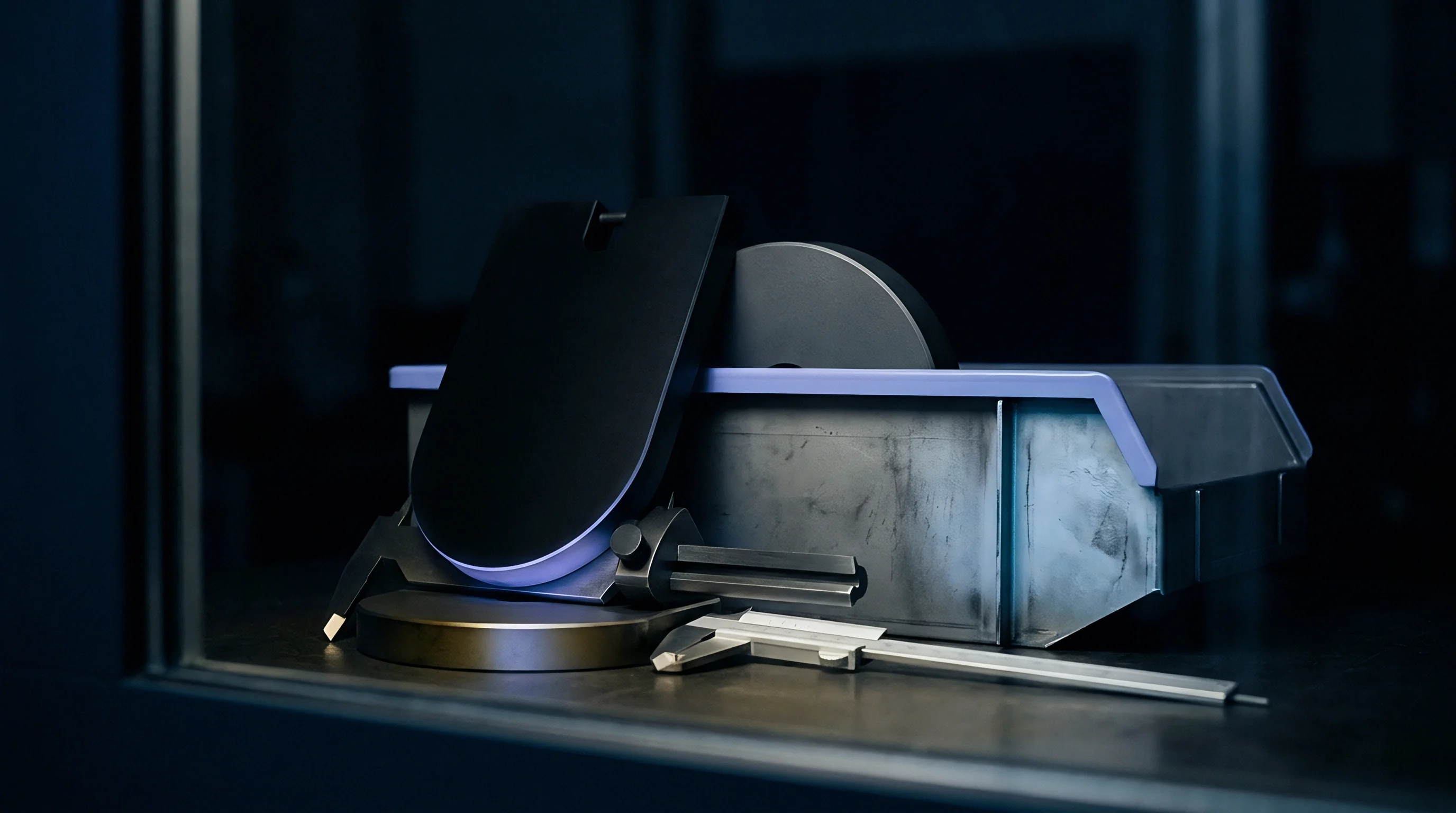
Statistical Capability and Defect Boundaries
A rigorous acceptance protocol measures continuous part production over an extended, statistically meaningful run. The evaluation calculates statistical process capability metrics, specifically the continuous capability index across critical functional dimensions. Achieving acceptable performance requires minimum capability levels on all agreed critical-to-quality characteristics.
- Preliminary Capability Study processes a continuous batch of fifty units without human tooling adjustment, recording dimensional deviations across designated inspection datums.
- Index Verification Gate calculates both the short-term capability ratio and the process center capability index, establishing that performance meets or exceeds a target threshold of 1.67.
- Geometric Tolerance Audit measures circularity, cylindricity, perpendicularity, and surface roughness on a stationary coordinate measuring machine across a randomized ten-piece sample.
- Destructive Metallurgical Cross-Sectioning confirms internal weld penetration, grain boundary structure, and absence of micro-voids in stressed load-bearing components.
The buyer provides or directly audits the procurement of the test specimens. Material variations in hardness, yield strength, or surface scale shift cutting dynamics and dynamic tool deflection. The procurement team sources test stock from the exact steel mills or resin compounders slated for ongoing plant operations, preventing vendors from blaming raw material defects for machine performance failures.

Should Testing Run Production Material at Rated Throughput?
Operational throughput targets cannot be evaluated independently of finished product specification limits. Equipment builders often achieve high cyclic speeds when running without raw material, but suffer dramatic throughput decay once full cutting resistance or forming tonnage applies. Dynamic testing requires sustained operation at 100 percent of nameplate speed for an unbroken four-hour window, running production-grade stock.
Any stoppage caused by jamming, software logic faults, or component overheat restarts the clock for that operational test block.
Continuous monitoring logs electrical energy consumption per unit produced, establishing baseline specific energy consumption metrics. These power signatures reveal unexpected mechanical binding or hydraulic throttling losses. Discrepancies between calculated motor draw and measured energy use point to mechanical misalignment in linear ways or improper preloading of drive bearings.
Identifying these defects before crating prevents catastrophic mechanical wear during commercial start-up.
Every out-of-spec part produced during the test window gets logged against the machine punch list, with root causes traced to mechanical, electrical, or software sources.

Remedy
Discovery of structural, operational, or software defects during the acceptance protocol requires clear contractual mechanisms for remediation and financial recovery. Without precise failure remedies, the procuring firm faces indefinite project delivery delays while carrying the deadweight cost of committed capital. The procurement contract establishes unambiguous categories for test failures, separating minor cosmetic punch list items from catastrophic performance failures that trigger cancellation rights and performance bond drawdowns.

Defect Classification and Rectification Windows
Test protocol discrepancies fall into three distinct contractual severity classes. Each class defines specific response timeframes, financial retentions, and re-testing requirements that bind the equipment builder.
- Category One Critical Defects encompass failures to achieve structural safety compliance, unresolvable dimensional out-of-tolerance conditions, thermal instability, or systemic throughput deficits exceeding ten percent of contract ratings.
- Category Two Major Functional Deficiencies include secondary axis positioning errors, excessive hydraulic fluid temperatures, sensor intermittent dropouts, and maintenance access clearance violations that do not halt primary production cycles.
- Category Three Minor Punch List Discrepancies cover cosmetic paint damage, missing exterior cable labels, incomplete operations manual documentation, or minor sheet-metal door misalignments.
A Category One defect halts all milestone cash releases and obligates the builder to present a formal engineering corrective action plan within ten business days. The builder funds all rectification work, including engineering redesign, part remanufacturing, and subsequent complete protocol re-testing. The buyer’s engineering team exercises sole discretion in approving the engineering changes.
If the builder fails to achieve full protocol compliance within thirty calendar days of the initial failure, the buyer invokes formal contract default mechanisms.
The legal right to reject equipment vanishes once the machine clears export customs and boards ocean carriage.

Cancellation Triggers and Liquidated Damages Mechanics
Contractual remedies must include defined exit ramps when performance deficiencies prove incurable. Heavy machinery orders that miss scheduled site delivery disrupt downstream facility construction and customer supply commitments. Liquidated damages for delayed delivery apply when acceptance testing fails due to builder non-compliance, accruing at standard market rates of 0.5 percent of total contract value per week of delay, capped at ten percent.
If the builder exceeds the cure period, the contract gives the buyer the immediate right to issue a notice of termination for default.
Termination triggers an automatic call on the advance payment bank guarantee and the immediate refund of all progress cash tranches paid to date. The builder surrenders all claims to partial progress payments and retains the rejected machinery on its own balance sheet. Equipment builders frequently request contract language allowing them to ship conditionally with open Category Two items, promising remediation during site commissioning.
Agreeing to conditional release shifts the leverage entirely to the supplier, as site technicians operate away from factory tooling, measuring frames, and engineering support staff.
The field inspector confirms that all Category One and Two deficiencies close completely on the factory test stand before signing the acceptance certificate.


Crate
Signing the physical acceptance certificate clears the equipment for packaging, ocean transit, and international logistics handling. The factory floor represents the last controlled environment where specialized preservation procedures protect sensitive components against maritime corrosion, thermal cycling, and physical impact. Equipment builders routinely treat packing as an incidental shipping function, delegating the task to third-party crating outfits that lack engineering knowledge of bearing sensitivities, optical alignment vulnerability, and surface finish degradation.

Preservation and Vapor Phase Packaging
Maritime transport exposes machinery to high ambient humidity, salt-laden atmospheres, and extreme temperature fluctuations inside cargo holds. Unprotected steel surfaces oxidize rapidly, ruining precision ground ways, spindle bearings, and hydraulic valve blocks. The crating specification requires applying solvent-dispersed corrosion preventive compounds conforming to MIL-PRF-16173 Grade 1 to all exposed unpainted metal surfaces.
Precision slide ways require heavy petrolatum-based coatings wrapped in wax-impregnated barrier paper to retain the protective grease layer during dynamic transit vibration.
Internal control cabinets, electrical junction boxes, and closed mechanical housings require vapor phase corrosion inhibitor packets sized according to enclosed air volume. The entire machine structure must be enclosed within a heavy-duty, heat-sealable aluminum foil barrier bag meeting MIL-PRF-131K Class 1. Packaging technicians draw a partial vacuum inside the barrier envelope before heat-sealing the seams, inserting calculated quantities of desiccant clay conforming to DIN 55473.
The vacuum envelope prevents air exchange and condensation cycles as the vessel crosses equatorial shipping zones.
Accelerometers and humidity indicator cards mounted inside the barrier foil provide physical evidence of shock impacts and vapor seal integrity upon arrival at the destination port.

Transit Shock and Ocean Carriage Rigging
Shock and vibration during sea transport and drayage induce mechanical fretting in precision bearing assemblies. False brinelling occurs when stationary bearing elements vibrate against raceways, displacing lubricants and creating localized micro-abrasions that lead to premature bearing seizure during operational startup. All dynamic linear axes, counterweights, and heavy gearheads require mechanical locking bars painted bright orange to prevent movement inside the machine structure.
Shaft clamping collars lock motor rotors, preventing axial float during ship roll and heave cycles.
Heavy export crates must be constructed from heat-treated, debarked timber complying with ISPM 15 standards, designed to support the concentrated center of gravity of the enclosed equipment. Skid runners must feature beveled lead ends to facilitate handling by heavy rigging gear and port terminal forklifts. Heavy internal machinery bases must be through-bolted directly to the timber skid runners using high-tensile threaded rods and heavy steel backing plates, preventing internal crate shifting during vessel deceleration or heavy sea conditions.
Contractual delivery remains incomplete until physical inspection of the unopened crates at the destination facility confirms that shock-watch indicators and tilt-sensor tags show no trip events during ocean transport.

Balance
Physical verification protocols directly control balance sheet health by governing the conversion of cash into productive fixed assets. An unverified progress payment represents a high-risk unsecured loan, while a verified acceptance certificate transforms that working capital exposure into verifiable construction-in-progress inventory. Under international accounting standard IAS 16, capital procurement assets sit in Construction-in-Progress until the equipment reaches the location and condition necessary for operation in the manner intended by management.
Rigorous factory acceptance tests supply the audit trail required to justify continued capitalization of engineering costs, shipping freight, and intermediate site preparation expenses.
Treasury teams monitor these operational gates to maintain compliance with debt facility covenants. Secured credit agreements frequently restrict capital expenditure drawdowns to verified asset stages, requiring independent engineer sign-offs before term debt converts from construction credit facilities into amortizing equipment loans. A failed acceptance test freezes debt disbursements, forcing the buyer to cover vendor progress billing obligations from operational cash flow unless the contract tightly aligns payment milestones with verifiable protocol completions.
Unresolved disputes over machinery capability during factory trials create immediate cash conversion cycle drag. If equipment ships with latent defects, operational startup slips, delaying the revenue generation required to service the capital procurement debt. The buyer’s working capital remains tied up in non-performing assets while the engineering team absorbs unbudgeted site modification costs.
Rigid factory verification enforces the physical boundary where manufacturing risk remains with the equipment builder and off the balance sheet of the buying enterprise.
The standard procurement agreement protects enterprise liquidity only when contract language states that milestone certification depends on quantitative acceptance data rather than the unilateral declaration of the machinery vendor.