Borrowing Base Eligibility Rules for International Inventory Lines
Asset-based lenders enforce strict borrowing base eligibility on foreign stock by requiring negotiable bills of lading, possessory control, and duty reserves.


Title
Asset-based credit facilities enforce stringent legal thresholds before recognizing foreign-stored raw materials or finished goods within credit limit calculations. Collateral agents evaluate the exact moment ownership rights pass from an overseas vendor to the domestic buyer. International commercial terms dictate whether risk of loss, physical possession, and unencumbered legal rights transfer at the loading port, during oceanic transit, or upon arrival at a domestic warehouse.

In-Transit Freight Control and Documented Transfer
Ocean shipments remain uncommitted balance sheet assets until clear commercial paperwork establishes who holds direct physical access to the cargo. Under Cost, Insurance, and Freight (CIF) or Free on Board (FOB) shipping terms, title transfers when goods pass the ship’s rail at the foreign port of loading. Lenders refuse to include these goods in the borrowing base without direct access to original shipping manifests and negotiable transport documents.
Ocean freight carries inherent transit hazards.
When goods float across international waters under an unendorsed straight bill of lading, the ocean carrier holds an obligation to deliver cargo exclusively to the named consignee. If the borrower defaults during transit, the secured lender lacks the legal standing to instruct the carrier to divert the vessel or hold the containers at the port of entry. Credit agreements demand negotiable bills of lading issued to the order of the administrative agent or accompanied by a blank endorsement signed by an authorized corporate officer.
Marine cargo insurance policies present another failure point in transit eligibility. Credit structures require cargo insurance certificates specifying all-risk marine coverage at one hundred ten percent of invoice value. Policies must designate the collateral agent as sole loss payee.
Without this endorsement, insurance payouts following container loss at sea route directly to the borrower’s general operating account, bypassing the lender’s control account.
Ocean freight floating between overseas assembly plants and regional destination ports yields zero credit availability unless negotiable bills of lading name the lender as sole consignee.

Negotiable Bills of Lading in Asset Financing
Lenders mandate endorsing document packages directly to their collateral agent to prevent dual-pledging during transit across oceanic lanes. The physical possession of original negotiable ocean bills of lading controls legal rights to the underlying merchandise under Uniform Commercial Code Article 7 and equivalent international maritime conventions. Holding the physical document prevents the borrower from pledging the same cargo to multiple trade finance providers or selling the shipment while en route.
Title transfer timing remains essential. If terms require Delivery Duty Paid (DDP), the foreign vendor retains legal ownership until the goods clear domestic customs and reach the borrower’s destination dock. Financing lines exclude DDP shipments in transit because the buyer holds no property interest against which a security interest can attach.
Converting purchase contracts from DDP to FOB vessel origin allows early collateral attachment, provided freight forwarder agreements confirm possessory control.
Section 5.2(d) of the Credit Agreement stipulates that foreign cargo moving under Cost, Insurance, and Freight terms converts to ineligible collateral if original bearer documents fail to reach the collateral agent within five business days of vessel departure.


Customs
Import authorities hold statutory priority encumbrances over imported merchandise entering domestic maritime ports or border entry terminals. Sovereign tax claims supersede any commercial security interest registered by commercial banks or private debt funds. Until import tariffs, excise taxes, and administrative clearance fees settle in full, border agencies retain physical custody and absolute priority over the landed goods.

Bonded Warehouse Mechanics and Lien Subordination
Storing goods under duty-deferred facility regimes isolates the commercial inventory from immediate tax liabilities until regional distribution occurs. Foreign Trade Zones (FTZ) and bonded customs warehouses allow companies to hold imported inventory on domestic soil while deferring tariff payments until the items leave the facility for domestic consumption. Lenders evaluate bonded inventory under specialized eligibility parameters due to the contingent tax liabilities attached to the stock.
A secured creditor enforcing its rights against inventory inside a bonded facility cannot liquidate those assets domestically without first settling all accrued customs liabilities. Customs duties reduce net liquidation value. If high protective tariffs apply to specific product categories, the net realisable value drops significantly below book value.
Collateral agents deduct estimated duty obligations from gross inventory values before applying agreed advance percentages.
| Logistics Location Node | Legal Possession Holder | Customs Duty Status | Eligibility Standard | Default Haircut Range |
|---|---|---|---|---|
| Overseas Supplier Plant | Foreign Vendor | Unpaid Foreign Tax | Ineligible | 100% Deductible |
| Ocean Vessel In-Transit | Ocean Freight Carrier | Unpaid Entry Duty | Conditional Eligibility | 30% to 50% Reserve |
| Domestic Bonded Warehouse | Licensed Bonded Operator | Deferred Duty Liability | Eligible with Reserve | 15% to 35% Reserve |
| Domestic Owned Warehouse | Borrowing Entity | Cleared and Fully Paid | Fully Eligible | 0% Base Reserve |

Tariff Reserves and Import Tax Liabilities
Unpaid governmental assessments function as senior sovereign claims that reduce net collateral recovery during enforcement scenarios. Lenders establish custom duty reserves within the borrowing base calculation formula to protect liquidity. These reserves track the company’s open import declarations, antidumping duty exposures, and retaliatory tariff assessments under national trade enforcement statutes.
Unpaid tariffs create senior priority claims.
Customs brokers play an active operational role in collateral control systems. Broker agreements must include tri-party subordination language where the customs broker waives its statutory lien over imported goods in favor of the secured lender. The broker confirms that upon notice of default from the lender, it will act under instructions from the collateral agent regarding customs clearances and vessel diversions.
Failure to obtain written customs broker waivers leaves the credit provider vulnerable to administrative port seizures that void the entire collateral pool.


Jurisdiction
Sovereign borders alter legal remedies available to secured creditors attempting to seize physical stock stored inside foreign distribution centers. A perfected security interest recorded under domestic commercial laws carries zero legal enforceability inside foreign territories without local registration. Secured lenders must navigate distinct commercial codes, bankruptcy statutes, and property ownership laws across every sovereign state where physical inventory sits.

Lex Situs Principles in Cross-Border Collateral
Conflict of laws rules dictate that the law governing physical goods rests entirely where the physical assets reside. Under the legal doctrine of lex situs, local courts apply home market commercial codes to resolve property disputes, security priorities, and enforcement rights. A United States UCC Article 9 filing or an English debenture floating charge creates no enforceable security interest over inventory physically located inside warehouses in Germany, China, or Mexico.
Foreign civil law systems rarely recognize flexible floating charges over fluctuating inventory pools. Civil code jurisdictions often demand specific possessory pledges, detailed serial number registrations, or public notary filings to perfect security interests over movable assets. Supplier retention of title terms adds further legal friction.
Statutory retention of title principles in countries like Germany automatically preserve supplier ownership until full payment of the purchase price clears, leaving bank security interests subordinate to unpaid vendor claims.

When Does Overseas Inventory Enter the Borrowing Base?
Credit availability activates only after physical arrival at an approved domestic storage facility carrying executed landlord waivers and verified perfection filings. International inventory lines enforce strict staging gates before recognizing offshore stock within calculated borrowing limits.
- Foreign Legal Security Filing requires registering local pledges, charges, or hypothecations directly with foreign commercial registries under local legal counsel supervision.
- Local Legal Opinion Issuance obliges independent foreign counsel to deliver formal legal opinion letters confirming the enforceability of collateral agreements within the host nation.
- Tri-Party Bailee Execution mandates obtaining signed collateral access contracts from foreign warehouse operators, subordinating local storage liens to the lender.
- Currency Hedging Verification verifies active foreign exchange hedging contracts to isolate collateral valuation from currency fluctuations against the base lending currency.
Offshore manufacturers frequently assert that local commercial codes automatically preserve their primary ownership rights despite formal invoice payments cleared through international wire transfers.


Reserve
Credit agreements establish explicit deductions against raw gross valuation amounts to account for liquidation costs and physical degradation. Borrowing base availability relies on converting reported inventory book value into Net Ordered Liquidation Value (NOLV). Professional appraisal firms conduct periodic liquidation simulations to determine the exact cash recovery percentage expected during an orderly wind-down of operations.

Borrowing Base Availability and Ineligible Deductions
Senior lenders strip out specific categories of physical merchandise before applying agreed advance percentages against reported balance sheet numbers. Ineligible categories represent stock carrying legal encumbrances, high liquidation friction, or elevated valuation risk. Uncommitted in-transit cargo, slow-moving items, damaged lots, customized goods, and stock housed at un-waived locations undergo immediate exclusion from gross inventory figures.
Landed costs reduce net availability. Management accounts routinely capitalize inbound ocean freight, customs duties, port handling fees, and marine insurance into inventory asset values. Liquidation sales rarely recover these soft capitalized costs.
Collateral appraisals evaluate inventory at base component cost or wholesale disposal value, requiring lenders to establish landed cost reserves that trim capitalized freight additions from the borrowing base balance sheet.
Net liquidation value appraisals conducted during market downturns routinely reduce advance rates from eighty percent of cost down to fifty-two percent of book value.

Landed Cost Reconciliation and Net Realizable Value
Inbound sea freight costs, marine insurance premiums, and port handling fees alter the baseline valuation recorded on management accounts. A precise borrowing base calculation isolates pure physical cost from capitalized supply chain accruals. Consider a commercial inventory portfolio carrying a reported gross balance sheet value of 15,000,000 dollars across domestic and international locations.
| Collateral Ledger Component | Gross Book Value ($) | Ineligible Deduction ($) | Eligible Base ($) | NOLV Rate (%) | Advance Rate (%) | Available Credit ($) |
|---|---|---|---|---|---|---|
| Domestic Warehouse Finished Goods | 8,000,000 | 500,000 | 7,500,000 | 80% | 85% | 5,100,000 |
| In-Transit Ocean Cargo (CIF) | 3,500,000 | 1,000,000 | 2,500,000 | 70% | 75% | 1,312,500 |
| Foreign Bonded Stock | 2,500,000 | 1,500,000 | 1,000,000 | 65% | 70% | 455,000 |
| Slow-Moving / Obsolete SKUs | 1,000,000 | 1,000,000 | 0 | 0% | 0% | 0 |
| Landed Cost Capitalized Freight | (500,000) | (500,000) | 0 | 0% | 0% | 0 |
The borrowing base calculation walks down from 15,000,000 dollars in gross assets to 11,000,000 dollars in total eligible inventory after deducting ineligible categories. Appraisers apply specific NOLV factors across each location class: 80 percent on domestic finished goods, 70 percent on eligible ocean freight, and 65 percent on foreign bonded stock. Applying agreed advance rates yields a total credit availability line of 6,867,500 dollars.
Unhedged currency movements create liquidity risk.
- Verifying Original Invoices and Bills of Lading confirms that physical ownership documentation matches reported accounts payable balances without duplicate trade credit lines.
- Scrutinizing Transit Lead-Time Variances identifies shipments exceeding standard ocean transit windows, triggering automatic eligibility disqualification upon crossing ninety days post-departure.
- Tracking Landed Freight Cost Components isolates capitalized shipping fees from physical raw material costs to prevent artificial collateral base inflation.
- Evaluating Supplier Retention of Title Claims assesses unpaid vendor contracts across foreign jurisdictions to quantify exposure to statutory priority ownership claims.
The extent to which real-time supply chain disruption fees will trigger automatic borrowing base shrink reserves remains a point of active negotiation between syndicate agents and corporate borrowers.


Crate
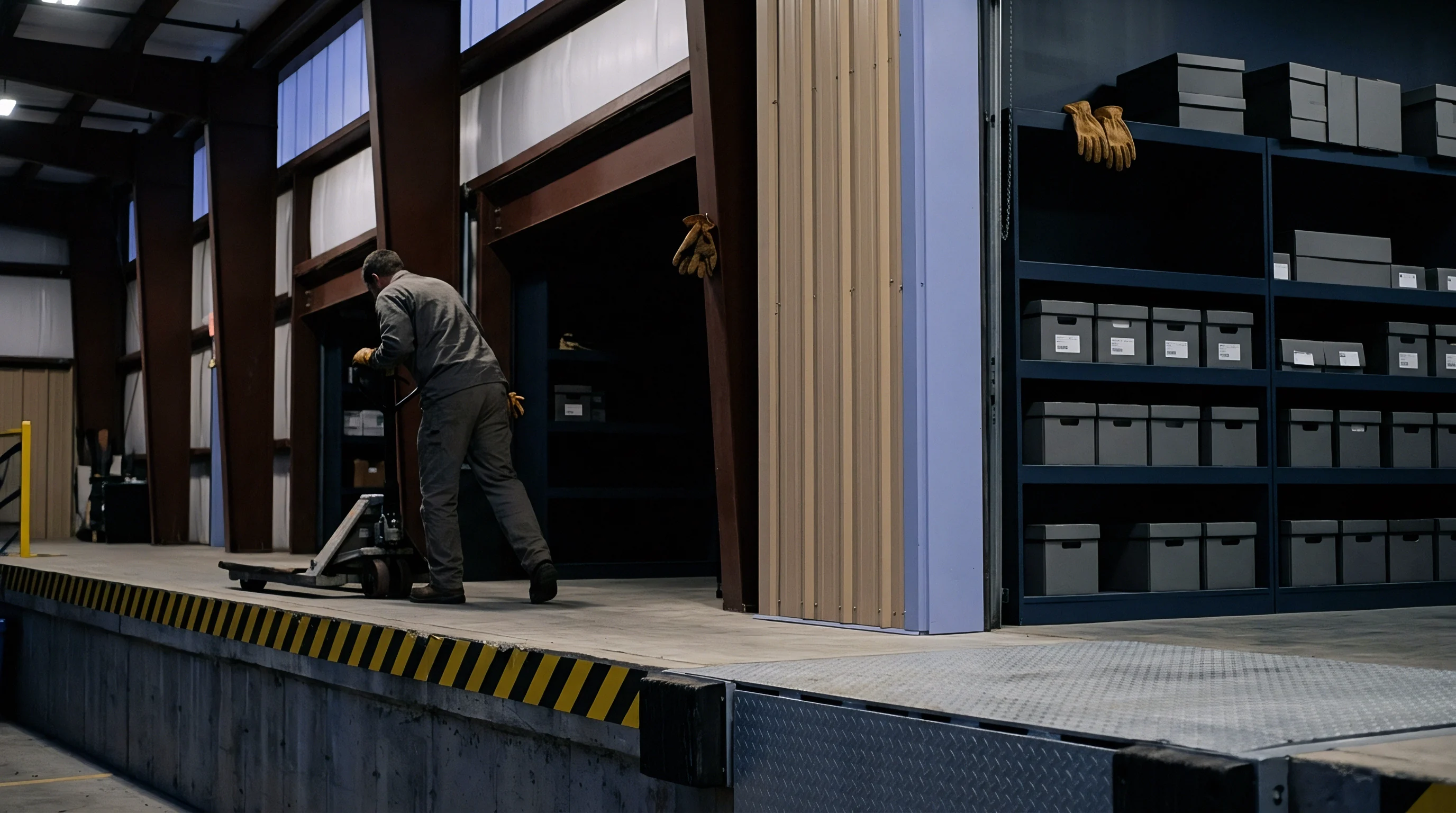
Palletized goods sitting inside commercial logistics hubs demand physical verification checks before securing credit drawdowns. Third-party logistics (3PL) providers operate public warehouses under bailment law principles. Public warehouse operators possess common law possessory liens over stored merchandise to secure unpaid storage, handling, and logistics service fees.

Third-Party Warehouse Access Agreements and Bailee Letters
Storage fees create possessory warehouse liens. If a corporate borrower defaults on warehouse payments, the 3PL operator can refuse entry to the facility and execute a warehouseman’s lien sale to recover unpaid debts. Credit providers refuse to include inventory stored at third-party facilities within borrowing base availability calculations unless the operator signs an enforceable landlord waiver or bailee letter.
A comprehensive bailee agreement achieves three distinct commercial goals. The warehouse operator waives or subordinating its statutory storage liens to the bank’s security interest. The operator acknowledges the lender’s paramount security right over the specific inventory lots.
The contract guarantees the collateral agent immediate physical access to the premises following an event of default, enabling independent inventory removal without interference from the property owner.
Under standard commercial lending terms, failure to deliver an executed landlord waiver within thirty days converts all inventory housed at that leased facility into ineligible collateral.
Perishable and Slow-Moving Stock Disqualifications
Expiration dates and seasonal shifts erode the market resale value of physical goods held over extended periods. Slow moving stock faces immediate haircutting. Asset-based lending structures enforce automatic SKU aging rules within credit monitoring software.
Items remaining in storage past one hundred eighty days undergo fractional availability reductions, while inventory exceeding three hundred sixty-five days faces complete disqualification.
- Execute automated SKU aging analysis against 30, 90, 180, and 360-day inventory movement thresholds across all regional distribution nodes.
- Flag non-standard or customized stock-keeping units carrying limited secondary market liquidity for immediate appraisal discount reviews.
- Cross-reference perpetual inventory general ledger balances against recent third-party cycle counts to identify physical shrink variances.
- Deduct identified damaged, expired, or returned physical goods from gross inventory values during monthly borrowing certificate generation.
Inventory that has not moved out of a regional storage facility within one hundred twenty days carries an appraisal value approaching scrap recovery.


Verification
Periodic financial audits allow asset-based lenders to monitor collateral health against reported general ledger balance sheets. Field examinations occur on annual, semi-annual, or quarterly cycles depending on borrower financial performance and covenant headroom. Field audits test reported ledger accuracy.
Audits evaluate inventory accounting policies, scrap tracking, price variance reserves, and shipping documentation integrity.

Borrowing Base Certificate Roll-Forward Schedules
Borrowers present monthly or weekly reconciliation schedules detailing gross additions, sales deductions, and updated ineligible listings. The Borrowing Base Certificate (BBC) functions as a binding legal declaration signed by the Chief Financial Officer. Submitting inaccurate collateral data on a BBC constitutes an event of default, accelerating outstanding loan balances instantly.
Unannounced audits prevent collateral double pledging.
Roll-forward mechanics link inventory balances directly to sales ledgers and purchasing records. Beginning inventory balances add new stock arrivals verified by receiver manifests and bills of lading. Deductions subtract cost-of-goods-sold figures calculated from cleared customer billing files.
Perpetual inventory systems must integrate directly with loan reporting engines to prevent reporting lags that obscure collateral erosion during declining trading periods.
Discrepancies between perpetual inventory records and physical field counts trigger immediate downward adjustments to available credit lines.

Field Examinations and Physical Count Discrepancy Audits
Auditor visits examine physical pallets, review shipping manifests, and evaluate cycle counting accuracy at manufacturing plants. Field examiners perform test counts across selected high-value stock-keeping units, comparing physical warehouse counts against reported general ledger entries. Reconciliation errors trigger immediate borrowing caps.
| Audit Verification Area | Observed Inventory Defect | Underlying Collateral Risk | Borrowing Base Availability Impact |
|---|---|---|---|
| Cycle Count Accuracy | Physical count lower than book value by 4% | Unrecorded physical shrink and theft | Immediate dollar-for-dollar shrink reserve expansion |
| Landed Cost Accounting | Capitalized ocean freight overstated by 12% | Inflated unit cost baseline values | Landed cost reserve deduction against eligible base |
| 3PL Warehouse Access | Missing landlord waiver at main regional distribution hub | Unsubordinated landlord possessory lien | Reclassification of total site stock to ineligible status |
| In-Transit Documentation | Straight bill of lading used without lender endorsement | Inability to redirect floating cargo upon default | 100% exclusion of floating shipment from eligibility |
Field examination teams reconcile physical counts against collateral certificates by conducting sample test counts across high-value stock keeping units, verifying batch numbers against customs documentation, and confirming that warehouse access agreements remain active across all operational sites.