Meaning
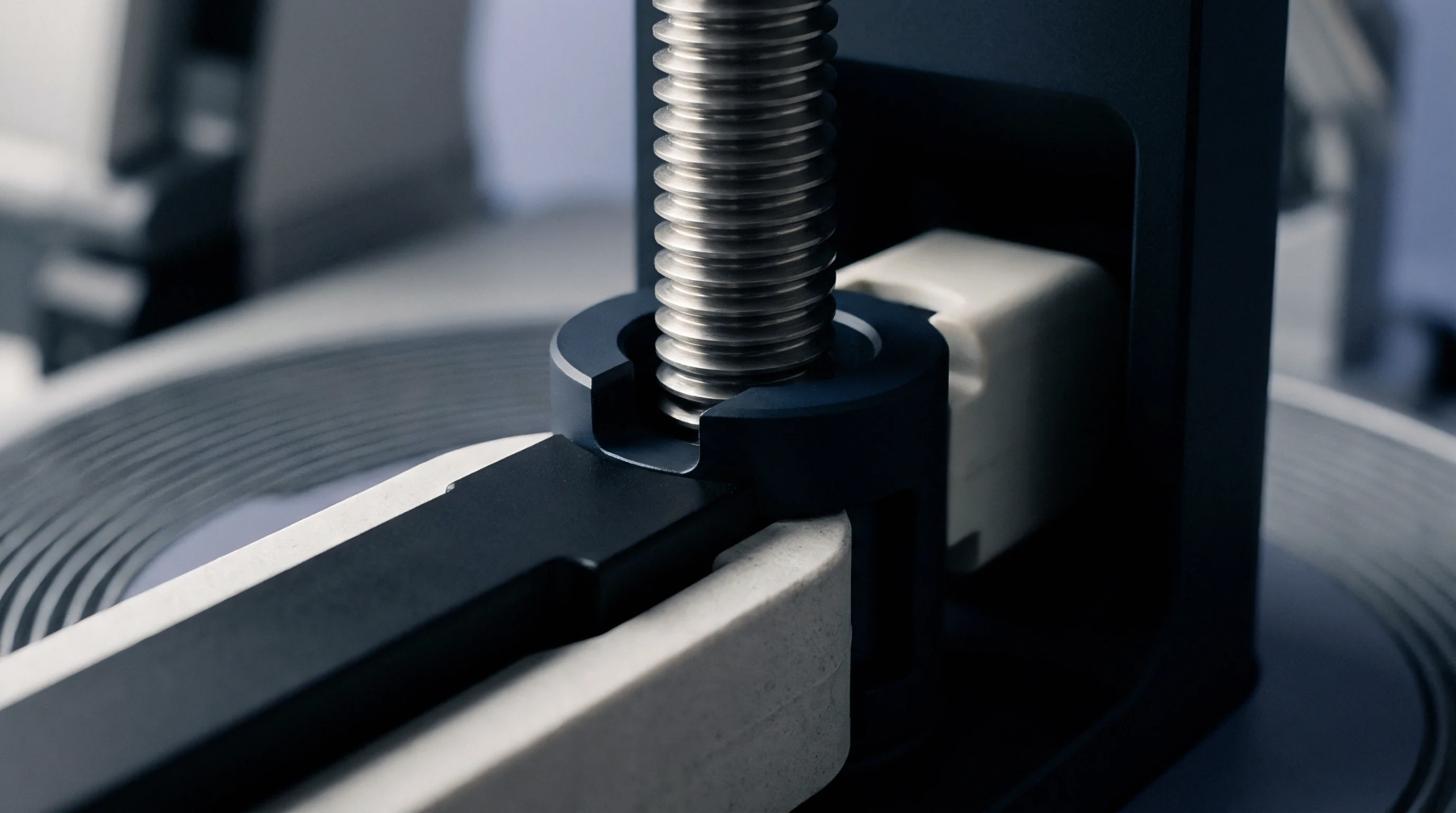
Elastic and thermal deflection of the load-bearing path between the cutting tool and the workpiece degrades the geometrical precision of a machine tool. The phenomenon of structural loop distortion refers to any change in the shape or alignment of the mechanical components that connect the tool to the part, including the spindle, column, bed, and table. This distortion is caused by a combination of thermal gradients, mechanical loads, and weight redistribution during axis travel.
It directly alters the tool-to-workpiece relationship, defining the limit of achievable part accuracy under dynamic operating conditions.
Component Interaction
The structural loop represents a chain of mechanical elements, and any deflection in one element propagates through the entire system. For example, when a heavy workpiece moves along the table, its weight bends the machine bed, which slightly tilts the column and shifts the spindle. Thermal gradients also cause different parts of the loop to expand unequally, twisting the machine structure and misaligning the axes.
These deflections are often microscopic, but in high-precision applications, they can exceed the allowed dimensional tolerances of the workpiece.
Measurement Assessment
Evaluating these deflections requires a combination of static load testing, thermal modeling, and dynamic measurements. Engineers use ballbar tests, electronic levels, and laser interferometers to measure how the structural loop responds to axis movement and thermal changes. This testing reveals which components are most susceptible to bending or expansion under load.
Understanding these weak points allows manufacturers to modify the machine design or develop software compensation routines to minimize the impact of the distortion.
Industrial Impact
High levels of structural deflection make it difficult to scale up production from a prototype setup to a continuous run. If structural loop distortion occurs as the machine warms up or runs under load, the demonstrated yield of the process will drop due to parts being cut out of spec. Mitigating this problem early in the machine design stage by increasing structural stiffness and isolating heat sources is more cost-effective than trying to correct the resulting errors through software alone.
Ensuring a stable and rigid structural loop is essential for maximizing both machine capability and long-term production capacity. Without this structural integrity, any initial calibration of the machine is quickly lost as soon as the operating forces and temperatures begin to build up during a high-speed production shift.