Resolving Structural Executive Interference in Independent Technical Quarantine Authority during High-Growth Scaling
Resolving executive interference requires independent reporting lines, automated logistics interlocks, and dual-signature overrule liability contracts.

Shield

Quarantine Boundaries in Rapid Scale Operations
A technical containment zone acts as an operational and legal firewall between manufacturing output and customer delivery. When product volume jumps tenfold over four quarters, the physical and digital boundaries separating unit testing from commercial logistics buckle under the stress. In early engineering firms, quality decisions rely on informal consensus among senior developers and founders.
Growth breaks that consensus. Establishing dedicated isolation environments requires clear, unyielding authority lines that stop compromised inventory, unverified code builds, or out-of-spec hardware lots from slipping into distribution networks.
Fast-growing companies generate intense friction between throughput targets and isolation gates. Board commitments to monthly revenue targets put constant pressure on engineering teams to clear pending inventory. If a quarantine authority lacks explicit structural protections, executive leadership treats containment decisions as advisory recommendations rather than binding operational halts.
The authority of a quality head or isolation lead must rest on organizational structure rather than personal persuasion. Without structural isolation, commercial urgency almost always overrides safety and compliance thresholds.
Physical containment requires explicit access boundaries, air-gapped testing infrastructure, and independent inventory holds inside logistics software. Digital containment relies on automated pipeline halts where failure flags lock production keys. The integrity of both systems comes down to who holds override authority.
As organizations transition from founder-led execution to structured management, executives frequently bypass isolation protocols through informal instructions to shop-floor technicians or deployment engineers. Eliminating this backdoor requires translating quarantine mandates into explicit contractual, governance, and operational rules that bind executive behavior.
Commercial delivery schedules regularly push plant managers to accept unverified component batches under informal assurances from sales executives.

Structural Isolation of Technical Decision Rights
Where a technical quarantine lead sits in the organizational hierarchy determines whether quality thresholds survive a volume surge. Reporting directly to a CEO or VP of operations creates an inherent conflict of interest. Operations executives are evaluated on throughput, unit cost, and shipment velocity.
Put quarantine authority under an operations direct report, and quarantine decisions will inevitably be weighed against quarterly delivery targets. True independence requires a different reporting vector ~ positioning the lead under an independent risk committee, a technical governance board, or directly under non-executive directors overseeing audit and compliance.
Delegated authority limits define the exact financial and operational boundaries for a technical quarantine officer. They set the maximum value of inventory a quality manager can hold independently before triggering a mandatory board notification. Set these thresholds too low, and the quarantine role becomes useless during high-volume runs.
Set them too high, and the business faces catastrophic recall liabilities. A structured model establishes clear monetary tiers for inventory holds and spells out the precise escalation steps needed to lift a hold.
| Containment Tier | Inventory Value Range | Primary Decision Holder | Override Authority Level | Mandatory Reporting Cadence |
|---|---|---|---|---|
| Tier 1: Minor Deviations | Below 50,000 USD | Lead Quality Engineer | Head of Engineering | Weekly Operations Dossier |
| Tier 2: Systemic Defects | 50,000 to 250,000 USD | Technical Quarantine Manager | Chief Technology Officer | 48-Hour Executive Briefing |
| Tier 3: Batch Contamination | 250,000 to 1,000,000 USD | Head of Independent Quarantine | Independent Risk Committee | 24-Hour Board Notification |
| Tier 4: Critical Recalls | Above 1,000,000 USD | Chief Quality Officer | Unanimous Board Governance Audit | Immediate Board Audit Event |
The balance of authority shifts quickly during operational crises. Executive teams frequently try to reclassify critical hardware failures as cosmetic flaws to protect delivery windows. Preventing this takes rigid defect definitions locked into engineering documentation.
When an anomaly triggers a predefined safety or compliance parameter, the quarantine hold executes automatically. No single executive has the administrative right to alter defect classifications during an active production run.
Independent quarantine units need dedicated operational budgets separate from manufacturing and software cost centers. When a quality lab is funded out of an operations budget, production heads can starve the quarantine team of testing reagents, compute time, or staffing whenever budgets tighten. Ring-fencing the technical containment budget ensures that volume spikes do not erode analytical testing capacity.
The ability to inspect, test, and isolate components must expand alongside total production volume.
Vendors routinely offer explicit rationalizations when delivery delays trace back to executive overrides. Plant managers have authorized releasing uncalibrated sensor modules simply because corporate leadership treated shipping deadlines as absolute, non-negotiable mandates.


Intrusion
Patterns of Executive Override in Scaling Phases
Executive interference rarely starts with a written directive to bypass safety controls. It emerges through subtle resource shifts, informal messages, and verbal instructions passed straight to junior lab technicians. As production lines strain under growth targets, executive leadership sets up shadow communication channels that bypass formal quality protocols.
Senior managers point to company survival, investor expectations, or quarterly revenue targets to justify quick exceptions ~ exceptions that quickly establish precedents and erode quarantine boundaries.
This interference often shows up as deliberate restructuring of testing procedures. When standard ninety-six-hour thermal stress tests threaten shipping deadlines, executives pressure quality engineers to switch to truncated twelve-hour profiles. They usually justify this by citing historical pass rates from low-volume production.
But low-volume pass rates say little about high-volume reliability. Accelerated testing profiles simply hide latent component defects, shifting the burden of failure from the factory floor to the customer.
Another common pattern is reassigning technical quarantine personnel during volume crunches. Operations directors pull quality staff into packing, manual assembly, or shipping under the banner of cross-functional support. This starves the quarantine team of analytical manpower, creating massive testing backlogs.
Executives then point to that very bottleneck as a rationale for waiving testing requirements altogether to clear logistics.
Short-circuiting thermal stress profiles during volume expansion hides latent material degradation until field deployment fails.

Operational Drag and Technical Debt Escalation
Bypassing quarantine controls injects immediate technical debt into physical assets and deployed software. Components shipped without complete qualification show sharp spikes in field failure rates. The cost of field remediation, warranty service, and customer churn vastly outweighs whatever short-term revenue was gained by rushing unverified inventory out the door.
Executive leadership stays focused on monthly shipping targets, ignoring the long-tail liabilities building up on the balance sheet.
In one high-growth industrial hardware firm, an executive override released two thousand uncalibrated power inverter assemblies to hit end-of-quarter targets. The release satisfied immediate revenue expectations for board reporting. Within ninety days, secondary thermal degradation triggered a forty percent field failure rate across three major client sites.
The resulting warranty claims, emergency technician dispatches, and contract penalties wiped out three quarters of operating margins, requiring a full year of structured operational recovery.
Informal pressure on technical teams degrades trust and accelerates senior engineering attrition. Experienced engineers resist signing off on compliance certificates or release dossiers when testing standards are compromised. When executive overrides force engineers to choose between professional ethics and career advancement, principled staff leave.
That leaves behind an agreeable but uncritical team that rubber-stamps executive directives without independent verification.
- Informal Bypass Escalation Executive leaders issue direct verbal orders to shop-floor technicians, instructing them to move unverified component lots from quarantine holding bays straight to final packaging lanes without quality sign-off.
- Testing Compression Mandates Corporate management alters written operating procedures to cut required burn-in times from forty-eight hours to six hours during peak shipment weeks.
- Metric Reclassification Senior managers reclassify critical functional defects as acceptable cosmetic variances on intake forms to avoid mandatory batch isolation.
- Quarantine Depower Strategy Management shifts quality lab operating funds into logistics expediting services, effectively halting chemical batch verification during peak production.
Shadow decision-making structures naturally emerge when formal quality channels are systematically bypassed. Technical staff set up off-system spreadsheets and informal document repositories to protect themselves from liability. These records detail every instance where executive pressure forced the release of unverified material.
The presence of shadow files signals a complete breakdown in official corporate governance and creates severe legal exposure during audits or product safety litigation.
An interim technical assignment to restructure a broken quality framework after an unauthorized batch release forced a complete plant shutdown highlighted the severe operational cost of governance failures.


Charter
Designing Absolute Quarantine Mandates
Formal governance documents must define technical quarantine authority as an absolute, non-delegable mandate. The charter sets up the quality function as an independent body operating alongside executive management rather than under it. Language in the corporate charter needs to state explicitly that no executive officer, including the CEO, has the authority to release quarantined inventory without written concurrence from the designated independent quality officer or board committee.
The scope of quarantine authority covers raw material intake, in-line sampling, software release keys, and final product dispatch. Establishing these boundaries in corporate governance filings protects technical staff from personal retaliation. The charter should specify that any executive attempt to force the release of isolated inventory constitutes a material breach of corporate policy, triggering immediate notification to the board of directors and external regulatory auditors.
Escalation frameworks need fixed timeframes and deterministic pathways. When a quarantine hold exceeds twenty-four hours or one hundred thousand dollars in value, the system should automatically send an immutable notification directly to the corporate audit committee. Executive leadership receives a copy but has no administrative ability to suppress, delay, or alter the transmission.
Automating this step removes the friction and personal risk tied to whistleblowing.

Whose Signature Triggers an Overrule on Batch Rejection?
Overriding an independent quarantine hold requires a formal, legally binding instrument, not an informal executive agreement. Standard operational procedure demands a dual-signature overrule charter executed jointly by the CEO and the Chair of the Board Audit Committee. This document must explicitly transfer commercial, technical, and regulatory liability to the signing executives, protecting the quarantine officer from any professional or financial fallout caused by the release.
The overrule document must be uploaded to the corporate regulatory ledger within two hours of execution. It requires a detailed justification outlining the commercial rationale for the release, the specific technical risks accepted, and the mitigation plan for tracking field failures. Mandatory corporate documentation drastically reduces executive appetite for bypassing quality controls, turning informal pressure into a high-stakes liability decision.
Delegation of authority charts need to spell out boundaries clearly. The table below outlines the division between executive management rights and independent quarantine rights across typical high-growth scenarios.
| Operational Context | Executive Management Decision Rights | Quarantine Authority Independent Rights | Conflict Resolution Mechanism |
|---|---|---|---|
| Production Velocity Adjustments | Determines line speed, shift allocation, and labor density. | Halts specific processing cells if process drift exceeds 3 sigma. | Automated sensor interlock halts line until recalibration completes. |
| Vendor Component Acceptance | Negotiates commercial terms, pricing, and volume tiers. | Rejects component lots failing material purity metrics. | Independent lab testing panel issues binding purity verdict. |
| Software Release Deployment | Sets market release dates and commercial commitments. | Revokes release keys if static code analysis reveals critical vulnerabilities. | Board Risk Committee authorization required to bypass release block. |
| Finished Goods Logistics | Manages freight selection, routing, and delivery schedules. | Locks warehouse location codes for non-certified inventory batches. | Dual-signature overrule charter execution by CEO and Audit Chair. |
Whistleblower protections built into the charter safeguard bench staff and lab technicians. Technical personnel need direct, anonymous communication channels to non-executive board members. The charter should state clearly that any retaliation, salary withholding, or operational sidelining of quarantine staff triggers an immediate independent legal audit funded entirely by corporate reserves.
Executive overrides require a dual-signature liability instrument uploaded directly to the corporate regulatory ledger.
A corporate charter implemented for an aerospace manufacturer protected technical quarantine leads through a 300 percent production expansion. The charter required every batch overrule to be logged in an external compliance database. Over two years of rapid commercial growth, executive leadership attempted zero informal overrides because of the explicit personal liability attached to the formal protocol.
Clear role definitions eliminate boundary ambiguity. The following structural elements belong in the written job description of every senior technical quarantine officer to guarantee operational autonomy.
- Unilateral Hold Authority The absolute right to lock warehouse bays, stop automated production lines, and disable software deployment pipelines without prior executive approval.
- Direct Board Reporting Line A formal quarterly reporting requirement to the non-executive audit committee, fully independent of executive management supervision.
- Ring-Fenced Operating Expense Budget An independent operational budget calculated as a fixed percentage of gross revenue, immune to executive reallocation or cost-cutting measures.
- Legal Indemnification Guarantee Contractual indemnification providing company-funded legal defense against external product liability claims stemming from quarantine actions.
Embedding these boundaries into the foundational charter secures the quarantine function against executive overreach. When growth pressures spike, the framework holds because authority rests on institutional contracts rather than executive relationships.

Interlock
Automated Containment Mechanics in Scaled Production
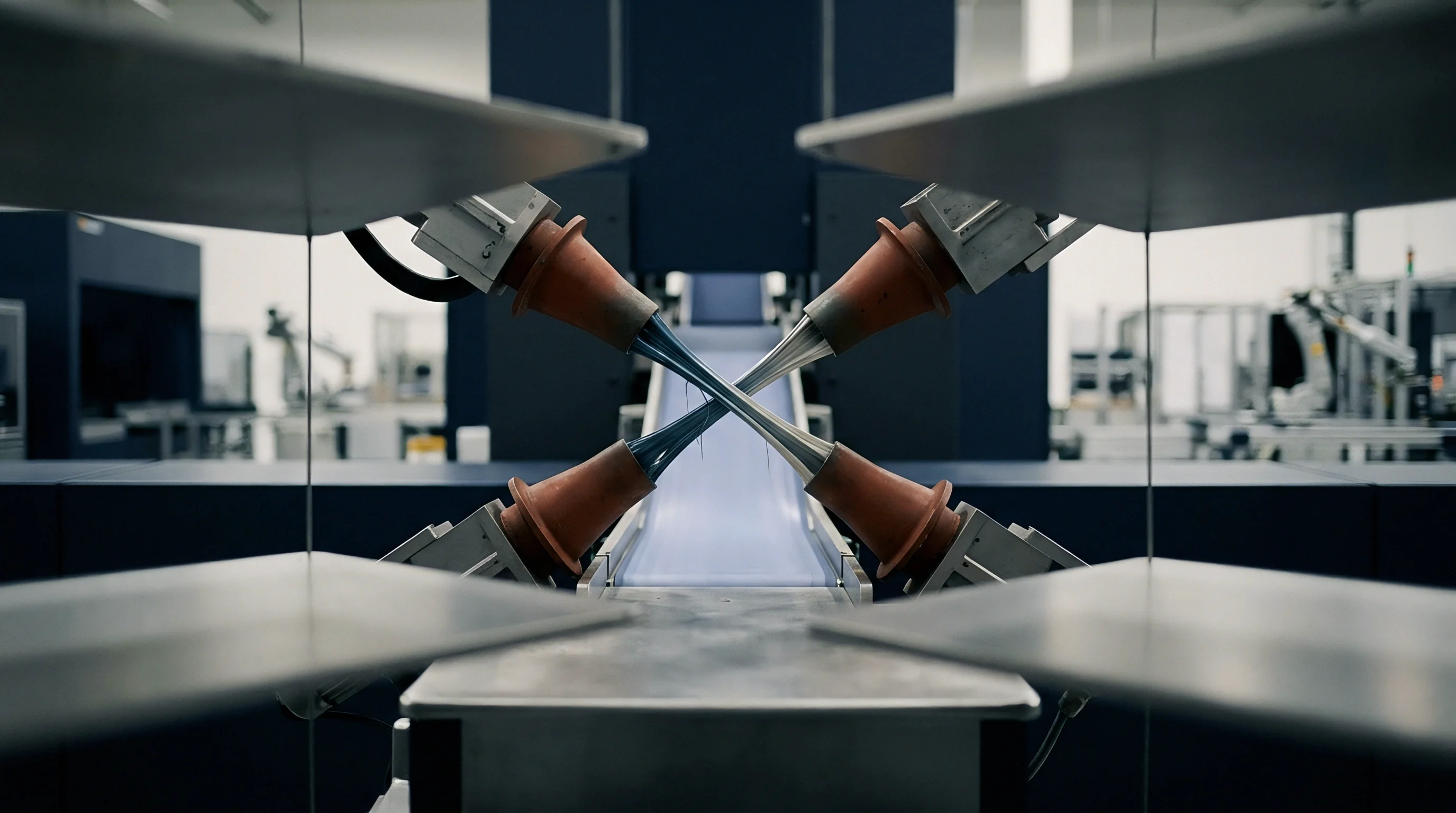
Manual isolation breaks down once production volume exceeds what human inspectors can process. Relying on paper tags, physical stickers, or manual system entries leaves vulnerabilities that executive pressure easily exploits. Fast-scaling operations require automated interlocks that physically and digitally restrict component movement the instant a test flags a deviation.
Human intervention should be required to release inventory, never to place a hold.
Digital interlocks integrate directly into ERP and Warehouse Management Systems. When a test station registers an out-of-spec metric, the system immediately changes the stock status of the whole batch to restricted quarantine. That status change automatically revokes picking privileges in logistics software, blocks shipping label generation, and stops automated guided vehicles from moving affected pallets to loading docks.
Reverting the status requires a cryptographically signed key held exclusively by the quarantine authority.
Software release pipelines need the exact same digital containment interlocks. CI/CD pipelines must include mandatory security and quality gates. If static analysis, vulnerability scanning, or automated regression tests fail, the build pipeline must automatically shut down.
The build artifact cannot be signed or deployed to staging or production. Executives cannot force a deployment through admin web controls when release keys live on hardware security modules accessible only to independent quality leads.
Automated interlocks strip human discretion from initial containment actions by locking warehouse logistics systems instantaneously upon metric failure.

Cadence and Triage Protocols during Volume Surges
High-volume manufacturing requires a disciplined daily triage cadence to work through flagged inventory without causing operational bottlenecks. A daily twenty-minute standup brings together the lead quarantine engineer, operations director, and supply chain manager strictly to review active holds, analyze failure data, and plan root-cause investigations. Strict agenda constraints prevent executive leadership from using these meetings to pressure technical staff for premature releases.
Data-driven triage models route quarantined inventory into three distinct operational streams: clear material defects for immediate scrap, items eligible for rework under pre-approved instructions, and complex anomalies requiring detailed failure analysis. Managing these streams efficiently keeps the quarantine area from turning into a physical bottleneck that slows factory throughput.
- Automated Flag Generation Sensors or testing software detect a non-conformance and immediately update the batch status to restricted in the enterprise database.
- Physical Isolation Execution Automated conveyances or warehouse management systems route flagged inventory directly to secure, access-controlled containment cages.
- Root Cause Assessment Quarantine staff perform standardized diagnostic tests to determine whether the deviation is an isolated issue or a systemic batch defect.
- Disposition Determination The independent quarantine authority assigns the inventory to scrap, approved rework, or deep engineering analysis.
- Cryptographic Release Sign-off Cleared inventory receives an authenticated digital signature, updating logistics software to permit picking and shipment.
Contractually binding quality agreements with tier-one suppliers should mirror internal quarantine interlocks. Supplier terms need specific containment clauses mandating immediate notification and quarantine execution as soon as a defect is discovered. A standardized contract clause alters supplier behavior by introducing immediate financial consequences for delivering unverified material.
Standard Commercial Quality Clause 14.3 explicitly establishes that the buyer maintains the right to lock supplier inventory upon automated sensor failure, backcharging all associated warehousing and analytical testing costs to the vendor account.
Implementing automated interlocks bridges the gap between corporate charters and daily shop-floor execution. When software systems automatically enforce isolation rules, executive interference requires deliberate, traceable database modifications that executives are rarely willing to risk.


Remedy

Contractual and Structural Realignment of Authority
Resolving entrenched executive interference requires restructuring contractual relationships between the company, executive management, and independent technical authorities. Employment contracts for chief quality officers and quarantine heads should contain explicit mandate protection clauses. These clauses define any executive attempt to undermine, bypass, or retaliate against quarantine decisions as constructive dismissal ~ triggering immediate equity vesting and severance payouts from the corporate treasury.
Mandate protections align financial incentives with uncompromising technical integrity.
Executive compensation structures must also change so short-term volume metrics do not drive destructive quality overrides. Annual bonuses and long-term incentive plans should include mandatory quality clawback provisions. If an executive overrides a quarantine hold and the released product later suffers field failures, regulatory sanctions, or product recalls, the clawback clause automatically revokes all equity grants and cash bonuses awarded during that fiscal year.
Direct financial accountability curbs executive appetite for shortcuts.
Reporting structures need a clear structural shift, separating technical evaluation from operational management. The Chief Technical Audit Officer should report functionally to the Board Risk and Audit Committee and administratively to the Chief Executive Officer. This dual-reporting framework prevents operational managers from altering performance evaluations, salary reviews, or resource allocations for quarantine staff.

Legal Protections and Whistleblower Architecture
Legal safeguards for technical personnel must extend beyond internal policies. Employment contracts for technical auditors should explicitly reference statutory whistleblower frameworks, guaranteeing direct access to external legal counsel at corporate expense if executive interference occurs. A legally protected reporting path immunizes technical staff from non-disclosure penalties when reporting non-compliant releases to regulatory authorities.
Independent technical audit boards provide an essential buffer against executive pressure. Composed of non-executive technical experts, university faculty, or compliance consultants, these boards conduct unannounced quarterly audits of quarantine logs, automated interlocks, and executive override registries. Their findings go directly to the full board of directors and external regulatory agencies, completely bypassing executive editing or suppression.
Restructuring reporting lines often surfaces complex governance questions during rapid growth. How does an organization balance the agility needed for market expansion with the rigid legal frameworks required to preserve technical containment integrity?
This tension leaves open a practical question: how can early-stage firms afford the administrative overhead of independent quarantine boards before reaching profitability?


Residue
Long-Term Governance Architecture and Key-Person Risk
Sustaining technical isolation during continuous growth means institutionalizing processes so quarantine integrity never relies on individual heroism. When quality authority depends on the personal courage of one senior engineer, the structure remains fragile. High-growth scaling requires translating individual technical expertise into systematic, automated, and legally binding frameworks that survive executive turnover and team changes.
Key-person dependency in quarantine roles is a major risk for scaling hardware and software companies. If a business relies on one veteran engineer to catch component defects through intuition or context, the quarantine mechanism breaks the moment that engineer leaves. Documenting testing profiles, automated diagnostic scripts, and explicit defect classification matrices converts tacit knowledge into institutional memory.
Standardized operational dossiers allow incoming technical managers to enforce containment rules immediately without spending months picking up informal factory norms.
Regular governance audits preserve the integrity of the quarantine firewall across multi-year scaling phases. These audits evaluate technical indicators alongside organizational metrics, tracking the ratio of automated holds to executive overrides, quality department turnover, and average resolution times for flagged inventory. High turnover in quality roles paired with rising executive overrides indicates severe structural breakdown long before field failures hit corporate balance sheets.
Institutional resilience built through independent authority frameworks turns quality control from a point of friction into a durable competitive advantage. Companies that master structural quarantine governance scale faster because they avoid catastrophic product recalls, regulatory shutdowns, and reputational damage. Investing in independent protections yields operational velocity backed by uncompromised technical integrity.
Maintaining independent technical authority requires constant institutional vigilance. As executive teams turn over and market pressures shift, the temptation to streamline quality controls recurs. Rigid governance charters, automated software interlocks, and explicit contractual indemnifications ensure that quarantine authority withstands executive interference through every phase of corporate growth.