Submeter Allocation Methods for Shared Industrial Steam Headers
Enthalpy-based allocation submetering prevents billing disputes on shared steam headers by accounting for wetness, pressure drops, and fixed line radiation losses.


Steam
Central utility infrastructure supplying thermal energy to multiple manufacturing units operates under continuous pressure and enthalpy variations. Downstream plant units drawing from a common supply line register varying mass rates depending on localized process demand cycles. Shared distribution pipes transfer thermal energy from central boilers across long pipe bridges to disparate production facilities.
Mass balance alone creates cost skew. Mass flow measurement without real-time pressure and temperature compensation miscalculates thermal delivery when line pressure fluctuates between peak and off-peak shifts.

Shared Header Physics and Thermal Distribution
High-pressure boiler discharge manifolds deliver energy across extended piping topologies where line losses alter fluid conditions before customer takeoff points. Vapor flowing through uninsulated main headers loses latent heat to surrounding air, generating condensate liquid that settles in drip legs and steam traps. When multiple tenant units extract volume simultaneously, localized velocity increases cause line pressure drops along the distribution header.
Pressure drops reduce fluid density. Lower fluid density increases actual volumetric flow velocity while reducing total enthalpy content per cubic meter transferred.
- Establish central boiler export baseline data at five-minute sampling intervals over thirty consecutive days.
- Install pressure and temperature transducers adjacent to every customer submeter takeoff point.
- Apply real-time specific enthalpy steam tables to convert volumetric flow into net thermal energy delivery.
- Calculate unmetered manifold radiation losses by subtracting tenant enthalpy totals from boiler house mass export.

Mass Balance versus Enthalpy Accounting
Volumetric measurement alone fails to capture the true thermodynamic energy delivered when fluid phase or temperature fluctuates. Industrial steam meters calibrated for dry saturated steam at a fixed nominal pressure register severe error when actual operating pressure drifts by even two bar. Phase changes distort density calculations.
Measuring total kilograms delivered treats low-pressure saturated vapor as equivalent in commercial value to high-pressure superheated vapor. Accounting for actual megawatt-hours or gigajoules transferred requires integrating local specific enthalpy calculations into meter flow computers.
Operating a shared distribution manifold at 24 bar gauge with an average steam dryness fraction of 0.92 introduces a mass flow meter over-reading error of 4.8 percent when uncompensated differential pressure orifice plates are used.
Line sizing that keeps vapor velocities below acoustic erosion limits prevents moisture slugging and protects differential pressure primary elements from permanent mechanical distortion.


Enthalpy
Thermodynamics dictates that total heat content per unit mass determines the true commercial value delivered across process boundaries. Calculating specific enthalpy at each takeoff point converts gross volume readings into true energy delivery rates. Steam entering a submeter station at 300 degrees Celsius and 20 bar gauge holds significantly higher specific enthalpy than saturated vapor at 10 bar gauge.
Enthalpy tracking resolves phase distortion.

Saturated and Superheated Energy Formulations
Pressure and temperature sensors at each submetering station supply real-time state variables to compute specific heat capacity and latent phase heat. Flow computers execute IAPWS-IF97 formulations to establish specific enthalpy in kilojoules per kilogram continuously. Differential pressure drops indicate velocity.
When steam remains superheated, knowing pressure and temperature fully defines the thermodynamic state. In saturated steam headers, pressure and temperature lock together along the saturation curve, preventing single-phase sensors from determining dryness fraction directly.
| Technology | Primary Principle | Turndown Ratio | Wet Steam Error Drift | Maintenance Frequency |
|---|---|---|---|---|
| Vortex Shedding | Kármán vortex frequency | 12:1 to 20:1 | High under-count below 0.95 dryness | Annual sensor check |
| Differential Pressure Orifice | Bernoulli pressure differential | 4:1 to 6:1 | Over-reads mass due to liquid phase mass | Bi-annual plate inspection |
| Coriolis Mass Meter | Direct mass force deflection | 20:1 to 30:1 | Moderate damping at high wetness | Triennial calibration |
| Venturi Tube DP | Constricted flow differential | 8:1 to 10:1 | Lower erosion drift than orifice plates | Five-year inspection cycle |

Condensate Heat Credit Mechanisms
Returning liquid condensate carries residual thermal energy that reduces raw fuel consumption at the central boiler plant. Takeoff points returning condensate at 90 degrees Celsius supply warm feedwater, reducing the boiler fuel input needed to regenerate high-pressure steam. Condensate return carries valuable heat.
Crediting tenant submeters for returned condensate mass and enthalpy while debiting tenants who discharge condensate directly to drain systems establishes balanced thermodynamic billing across the site.
- Uncompensated Phase Shifts alter fluid density downstream of pressure-reducing valves, corrupting volumetric flow integration formulas.
- Condensate Line Backpressure reduces heat recovery efficiency at customer heat exchangers and increases thermal discharge losses.
- Orifice Plate Edge Dullness decreases pressure drop across primary elements, causing meters to register lower mass flow than actual consumption.
Measuring temperature alongside pressure becomes indispensable whenever distribution piping runs through unheated outdoor pipe racks susceptible to ambient heat drops.
Section 6.4 of ISO 5167-2 mandates upstream straight pipe length multipliers when fitting flow straighteners, shifting meter uncertainty boundaries from three percent down to one point five percent.
Drift
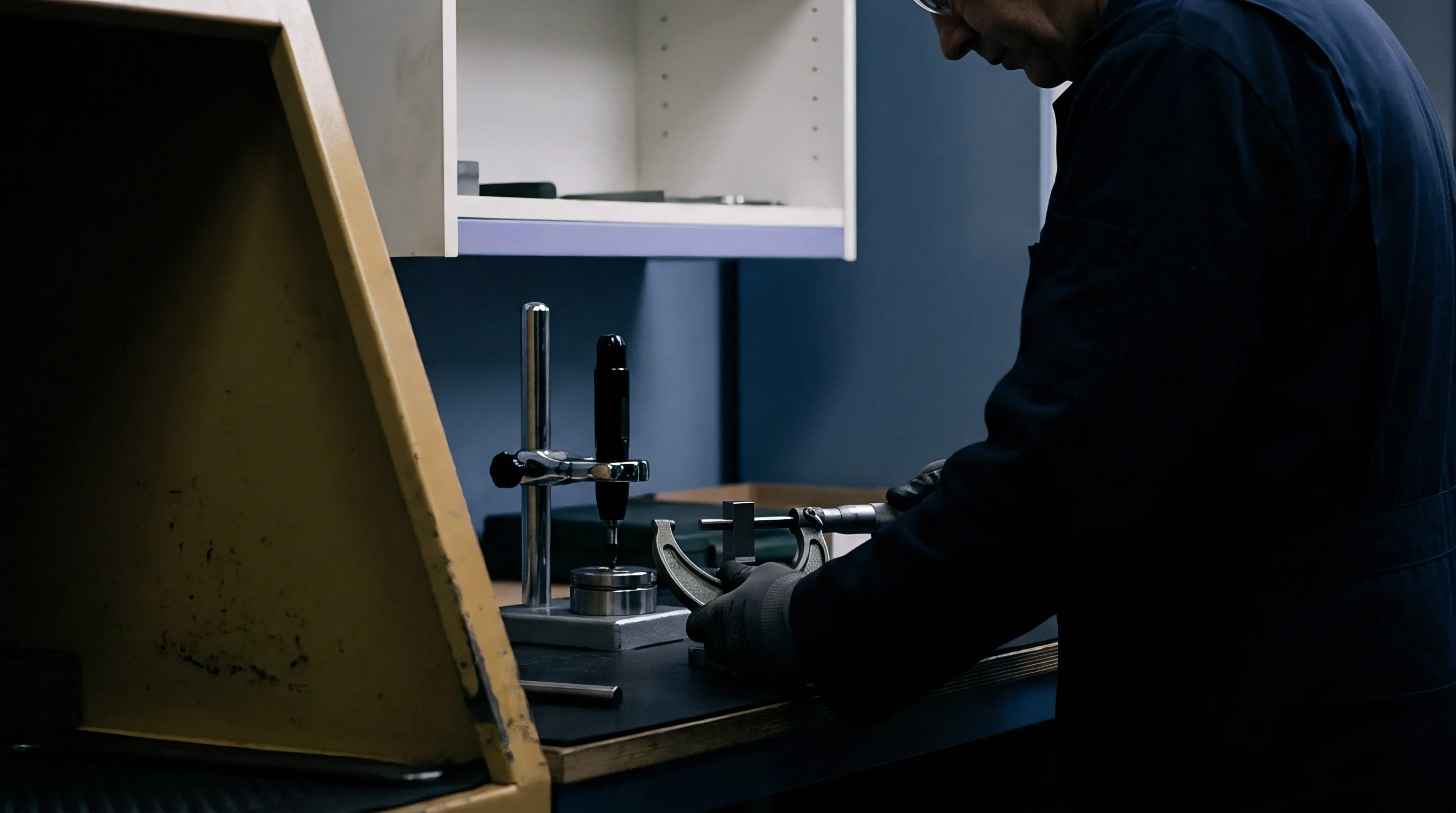
Flowmeter calibration degrades continuously over extended operational periods due to orifice edge wear, sensor fouling, and transducer signal decay. Differential pressure transmitters experience zero-point shifts under constant high temperature and static line pressure. Shared headers lose energy constantly.
Small instrument offsets create substantial commercial cumulative allocation errors over multi-month billing cycles.

Differential Pressure and Vortex Sensor Errors
Primary elements installed in harsh thermal environments experience mechanical erosion that shifts baseline calibration coefficients. Orifice plates wear over time. Sharp square edges on orifice plates gradually round off from particle impingement and wet droplet impact, causing the discharge coefficient to rise.
A higher discharge coefficient produces a smaller differential pressure for a given flow rate, leading the flow computer to under-report steam mass consumption by up to eight percent.
Adhering to ASME MFC-3M calculation standards for orifice flow meters restricts maximum uncompensated density error to within agreed commercial tolerances.
Two-Phase Flow and Wetness Corrections
Liquid moisture droplets entrained within vapor streams cause differential pressure primary devices to report artificially inflated mass flow rates. Wet steam causes meter over-reading. Water droplets travel at lower velocity than the vapor phase while adding density to the fluid mixture, inflating differential pressure signals.
Applying the Murdock or Chisholm correction equation in the submeter flow computer corrects for two-phase fluid mechanics based on measured or estimated steam dryness quality.
- Meter Turndown Range dictates sensor selection for facilities experiencing broad seasonal demand variations between winter heating loads and summer process baselines.
- Thermal Insulation Thickness governs standing radiation loss rates across shared pipe bridges connecting central boiler houses to tenant takeoff stations.
- Straight Pipe Run Clearance determines flow profile distortion upstream of primary sensing elements to maintain valid discharge coefficients.
Instrument vendors frequently claim that dual-sensor vortex shedding meters bypass wetness distortion, ignoring fluid density shifts that alter true volumetric conversion.

Ledger
Reconciliation between master boiler supply meters and downstream tenant submeters always reveals an unaccounted volume of mass and energy. Discrepancies arise from piping radiation losses, steam trap drainage, steam valve packing leaks, and meter accuracy tolerances. Unmetered losses demand transparent rules.
Accounting structures distribute this unmetered residual balance across participating submeter accounts without creating structural cost distortions.

Fixed Radiation Loss Distribution Models
Uninsulated pipe walls, valve bonnets, and support brackets release thermal energy continuously regardless of production throughput. Heat radiation continuous during idling. Operating a distribution header at full pressure during low-production weekends generates identical standing radiation losses as peak operating hours.
Allocating standing losses purely as a percentage of consumed steam penalizes heavy users while allowing idle facilities to avoid paying for header readiness.
| Allocation Method | Fixed Loss Basis | Variable Loss Basis | Idle Facility Cost Burden | Audit Trail Complexity |
|---|---|---|---|---|
| Proportional Mass Consumption | 0% | 100% consumed volume | Zero standing fee charged | Low manual calculations |
| Two-Part Capacity Tariff | 50% peak connection size | 50% metered enthalpy | Fixed monthly standing fee | Medium tier formula |
| Thermodynamic Exergy Split | 70% pressure enthalpy grade | 30% volume flow rate | High penalty for pressure drops | High flow computer modeling |
Unallocated standing header losses increase proportionately when total tenant steam demand drops while supply manifold pressure remains constant.
Proportional Residual Allocation Algorithms
Assigning unmetered distribution losses to individual tenant accounts requires a transparent mathematical rule agreed upon before commercial supply commences. Mathematical routines prorate the residual difference between master meter export and sum-of-submeter consumption back into each tenant billing line item. Meter drift corrupts billing ledgers.
Calibrations alter allocation balances directly. When submeter drift is detected, retrospective adjustment formulas recalculate historical distribution shares without shifting retroactive liabilities onto non-fault tenants.
- Transducer Calibration Log records baseline zero-drift shifts and zero-point offset adjustments performed during scheduled maintenance outages.
- Header Enthalpy Balance Summary reconciles total energy export against sum-of-tenant meter reads over monthly billing intervals.
- Dispute Settlement Matrix specifies commercial adjustment factors applied during submeter failure events or sensor signal corruption.
Failing to account for unmetered condensation traps forces low-volume users to subsidize system-wide thermal radiation losses, triggering commercial billing disputes and contract renegotiations.

Dossier
Commercial billing integrity relies upon structured verification routines, immutable data logging, and pre-agreed dispute mechanisms. Tenant facilities sharing industrial steam headers demand verifiable proof that submeter algorithms calculate charges accurately under all flow regimes. Pressure compensation requires accurate transducers.
High-frequency telemetry capture ensures transparent data trails during billing audits.
Meter Data Management and Audit Requirements
Continuous ten-minute interval logging of pressure, temperature, and mass flow raw signals prevents retrospective manipulation of utility bills. Archiving raw differential pressure and fluid temperature signals alongside calculated mass flow allows auditors to re-run flow calculations using revised steam tables or corrected discharge coefficients. Lease agreements govern variance limits.
When a submeter fails completely, billing continuity relies on secondary baseline models derived from historic process steam intensity per unit of output.

Contractual Reconciliation Protocols
Commercial supply agreements define precise threshold boundaries for acceptable meter variance before third-party recalibration takes place. Contracts mandate annual physical calibration of primary differential pressure cells and secondary temperature RTD sensors by ISO 17025 accredited laboratories. Instrument drift outside two percent triggers retroactive billing adjustments across the preceding three-month interval.
Establishing clear engineering guidelines for submeter allocation converts complex thermal dynamics into transparent commercial settlements.
The remaining question for site operators is whether real-time enthalpy reconciliation algorithms can replace quarterly manual meter drift adjustments without introducing algorithmic dispute clauses into tenant leases.