Resolving Transnational Divergence in Material Degradation Protocols for Post-Consumer Recycled Injection Molding Resins
Transnational resin qualification demands aligning test specimen thermal histories and harmonizing melt flow conditions across ISO and ASTM testing frameworks.


Discrepancy
Cross-border trade in post-consumer recycled polyolefins and engineering thermoplastics operates across conflicting test standards. European recyclers certify polymer quality under European Committee for Standardization and International Organization for Standardization frameworks, whereas North American processors rely primarily on American Society for Testing and Materials parameters. Asian reclaimers frequently reference Chinese Guobiao standards.
These technical frameworks apply different test temperatures, pre-conditioning sequences, shear rates, and sample preparation methods. A resin batch certified as prime quality under one regional framework routinely fails incoming inspection under another.

Regional Testing Standard Conflicts
Melt flow characterization highlights the structural divide in global resin qualification. ISO 1133-1 and ISO 1133-2 specify test procedures for melt mass-flow rate and melt volume-flow rate using tight temperature control tolerances of plus or minus 0.2 degrees Celsius. ASTM D1238 permits a wider thermal band of plus or minus 0.5 degrees Celsius while employing distinct pre-heating durations and piston weight load sequences.
Polypropylene and high-density polyethylene experience measurable thermal degradation during prolonged pre-heating cycles inside the melt indexer barrel. A ten-minute pre-heat duration under ASTM D1238 Procedure A promotes localized chain scission in post-consumer polypropylene, yielding elevated flow readings compared to the five-minute pre-heat prescribed by ISO 1133-1.
Mechanical performance evaluation reveals similar regional divergence. ISO 527 specifies type 1A or 1B dumbbell specimens molded under rigid cooling rates, whereas ASTM D638 uses Type I or Type IV geometry with different gauge lengths and strain rates. Test results for tensile strength at yield and elongation at break cannot be directly converted between standards via mathematical factors.
Recycled resins containing trace contaminants, micro-gels, or residual particulate stress concentrators display divergent notch sensitivity when evaluated under ISO 179 Charpy impact protocols versus ASTM D256 Izod impact protocols. The geometric difference in notch radius and pendulum impact velocity alters the ductile-to-brittle transition temperature threshold observed in post-consumer polyolefin compounds.
| Test Parameter | ISO Standard | ASTM Standard | GB/T Standard | Divergence Mechanism and Material Impact |
|---|---|---|---|---|
| Melt Mass-Flow Rate | ISO 1133-1 / 1133-2 | ASTM D1238 | GB/T 3682.1 / 3682.2 | Barrel residence times and temperature tolerances vary, inducing differential thermal degradation in heat-sensitive PCR batches during testing. |
| Oxidation Induction Time | ISO 11357-6 | ASTM D3895 | GB/T 19466.6 | Isothermal versus high-pressure differential scanning calorimetry yields conflicting stabilizer consumption measurements in reprocessed resins. |
| Tensile Properties | ISO 527-1 / 527-2 | ASTM D638 | GB/T 1040.1 / 1040.2 | Specimen geometry and crosshead speed differences distort yield stress and elongation metrics for contaminated PCR streams. |
| Impact Resistance | ISO 179-1 (Charpy) | ASTM D256 (Izod) | GB/T 1043.1 / GB/T 1843 | Notch tip radius variations change strain rate concentration, masking micro-particle contamination severity. |
| Volatile Organic Emissions | ISO 16000-6 | ASTM D4526 | GB/T 37884 | Thermal desorption temperature profiles differ, creating discrepancies in reported total volatile organic content and odor classification. |
Environmental stress cracking resistance protocols compound these transnational inconsistencies. ISO 22088 evaluates crack initiation under constant tensile stress in surfactant environments, while ASTM D1693 measures bent-strip failure time in full-strength detergent solution at 50 degrees Celsius. Post-consumer high-density polyethylene containing variable fraction blends of blow-molded container scrap and injection-molded crate scrap responds differently to these stress modes.
Tensile stress configurations detect inter-molecular tie-chain failure, whereas bent-strip configurations induce localized surface yield that hides underlying molecular weight degradation. Buyers relying on ASTM D1693 data routinely misjudge environmental stress cracking resistance for parts destined for outdoor storage applications.
Importers accepting resin lots certified under divergent parameters encounter unforecasted scrap rates during high-speed cavity filling.


Shear
Reprocessing post-consumer polymers through multiple extrusion and molding passes subjects the molecular backbone to thermal and mechanical energy. Polypropylene undergoes radical-induced beta-scission, cleaving long polymer chains into shorter segments and widening the molecular weight distribution. High-density polyethylene demonstrates competing degradation pathways where free radicals initiate crosslinking and long-chain branching alongside chain scission.
The balance between these mechanisms depends on barrel residence time, screw profile geometry, local melt temperature peaks, and residual oxygen concentration inside the feeder zone.

Viscous Dissipation and Molecular Scission Mechanics
Mechanical degradation occurs inside high-shear zones of the injection molding screw, non-return valve, and runner gating. High shear stress strips physical entanglements from long polymer chains, accelerating mechanical bond rupture. Melt flow rate measurement at single shear rates fails to capture this degradation.
Low-shear viscosity measured via capillary rheometry at shear rates below ten inverse seconds sensitive to high-molecular-weight fractions reveals severe chain scission before single-point melt mass-flow rate changes become apparent on the shop floor.
Consider a 20-tonne batch of post-consumer polypropylene flake reprocessed through a twin-screw compounding line. Assume the incoming flake exhibits a melt flow rate of 12 grams per ten minutes measured at 230 degrees Celsius under a 2.16 kilogram load. After compounding at a melt temperature of 240 degrees Celsius and a screw speed of 450 revolutions per minute, the output pellet stream measures a melt flow rate of 18 grams per ten minutes.
Capillary rheometry conducted across shear rates from 10 to 10,000 inverse seconds demonstrates that zero-shear viscosity dropped by 34 percent, while high-shear viscosity at 1,000 inverse seconds dropped by only 8 percent. The material flows readily into thin-wall sections but demonstrates reduced melt strength during the holding phase, inducing sink marks and structural voids in molded components.
Polymer degradation alters batch consistency.
Structural failure modes emerge directly from unmonitored thermal processing histories across the recovery chain:
- Polypropylene Chain Scission lowers zero-shear viscosity, triggering flash at parting lines and reducing long-term flexural fatigue resistance in living hinge applications.
- High Density Polyethylene Crosslinking increases melt elasticity and structural die swell, causing erratic cavity filling, un-melted gel formation, and surface surface defects.
- Contaminant Stress Concentration accelerates crack propagation from un-melted engineering plastic inclusions like polyethylene terephthalate or polyamide embedded within the polyolefin matrix.
- Low Molecular Weight Volatilization generates gaseous outgassing during high-temperature processing, fouling polished mold cavities and creating internal micro-voids that degrade tensile yield performance.
Capillary rheometry profiling reveals non-Newtonian flow changes across processing temperatures. Melt viscosity ratios between low shear rates of 10 inverse seconds and high shear rates of 1,000 inverse seconds provide an accurate structural degradation index. Un-degraded prime resins maintain stable viscosity ratios across compounding passes, whereas heavily reprocessed resins display severe shear-thinning shifts due to altered molecular weight distributions.
Standard melt index units mask these non-linear viscous changes entirely.
Single-point melt index testing misses structural chain scission happening inside high-shear processing channels.
Blenders frequently contend that melt index variations reflect ordinary feedstock heterogeneity rather than thermal degradation during pelletization cycles.


Oxidation
Thermo-oxidative decay attacks post-consumer resins during outdoor service lives, washing cycles, mechanical shredding, and melt re-extrusion. Hydroperoxides formed during prior lifecycle exposure remain latent within resin pellets. When re-heated during injection molding, these hydroperoxides decompose into alkoxy and hydroxy radicals, initiating rapid auto-oxidative degradation cascades.
Antioxidant additives incorporated during original resin manufacturing undergo depletion, leaving the recycled resin vulnerable to rapid chain degradation during subsequent converting operations.
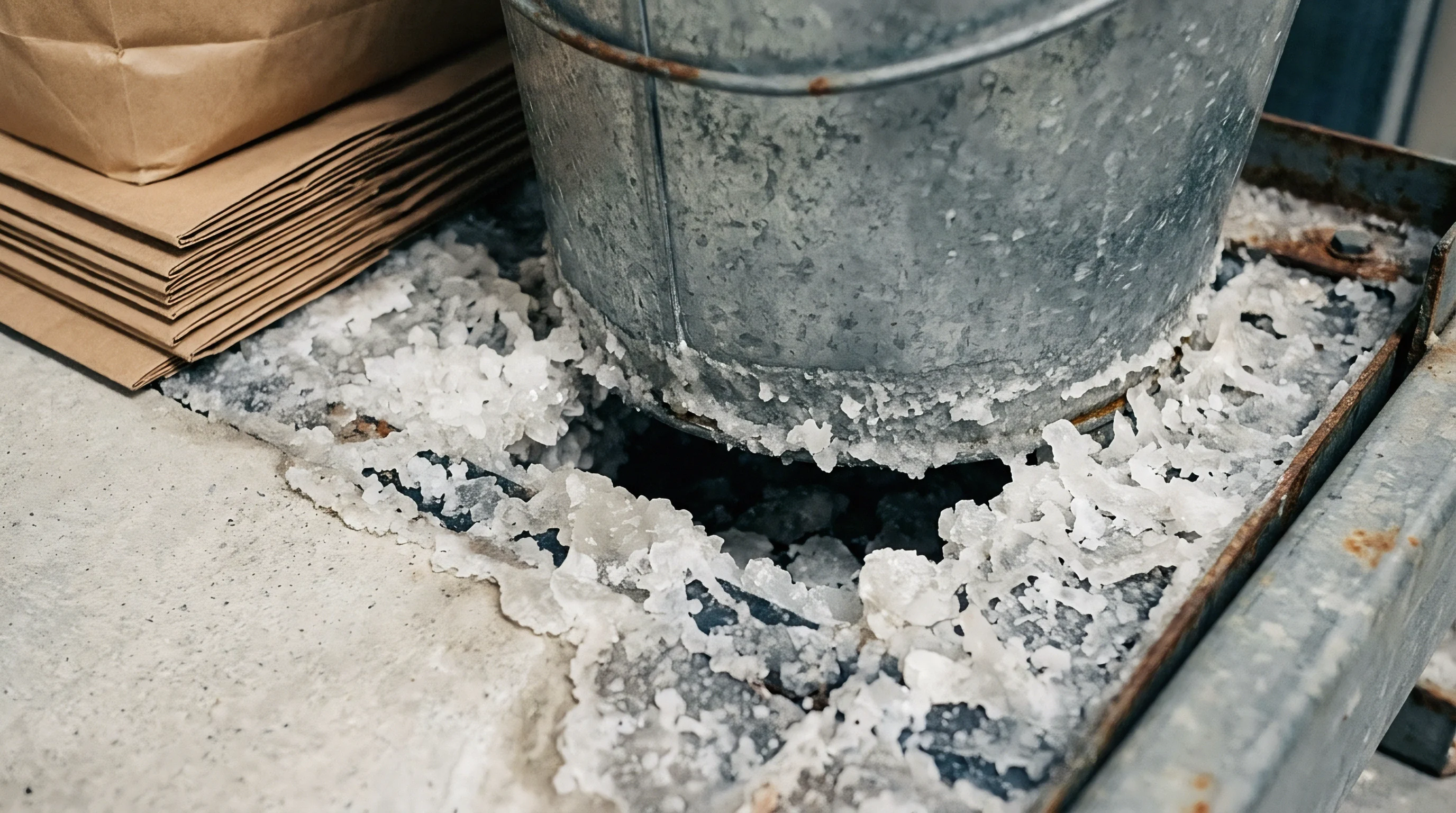
Which Oxidation Test Prevents Unnoticed Mold Deposit Accumulation?
Stabilizer depletion measurement requires differential scanning calorimetry to evaluate oxidation induction time under controlled thermal environments. ISO 11357-6 specifies heating the polymer sample to an isothermal test temperature, typically 200 degrees Celsius for polyolefins, under nitrogen flow before switching to pure oxygen at ambient atmospheric pressure. The duration from oxygen introduction to the onset of exothermic oxidation defines the oxidation induction time.
ASTM D3895 employs similar isothermal conditions but permits variation in pan geometry and purge gas flow rates, inducing up to a 25 percent variance in recorded stability times between laboratories analyzing identical PCR batches.
Stabilizers prevent rapid hydroperoxide formation.
High-pressure oxidation induction testing offers an alternative protocol for highly degraded post-consumer resins containing volatile antioxidants. ASTM D5885 measures oxidation induction under an elevated oxygen pressure of 3.5 megapascals. The elevated pressure prevents phenolic and phosphite antioxidant evaporation prior to chemical reaction, yielding precise measurement of functional additive reserve.
Standard ambient-pressure testing frequently underreports residual stabilization in compounds containing volatile phosphites, falsely indicating complete degradation where active protection remains.
| Analytical Protocol | Governing Standard | Primary Target Parameter | Limit of Detection | Inter-Laboratory Reproducibility |
|---|---|---|---|---|
| Isothermal OIT | ISO 11357-6 / ASTM D3895 | Primary antioxidant depletion rate | 1.0 minute induction duration | 15 to 25 percent coefficient of variation |
| High-Pressure OIT | ASTM D5885 | Volatile antioxidant reserve in PCR | 0.5 minute induction duration | 8 to 12 percent coefficient of variation |
| Carbonyl Index FTIR | ASTM E168 / ISO 10640 | Accumulated hydroperoxide and ketone groups | 0.001 absorbance unit ratio | 3 to 5 percent coefficient of variation |
| Melt Mass-Flow Stability | ISO 1133-1 (Multi-pass) | Rheological degradation sensitivity | 0.1 g/10 min MFR shift | 5 to 10 percent coefficient of variation |
Fourier-transform infrared spectroscopy complements thermal analysis by quantifying carbonyl oxidation products. The carbonyl index calculates the ratio of the absorbance peak associated with carbonyl groups at approximately 1715 inverse centimeters to an invariant reference peak, such as the methylene stretching vibration at 1460 inverse centimeters for polyethylene. High carbonyl index values correlate with severe mechanical degradation, reduced impact strength, and micro-cracking risk during end-use service.
Resins showing low oxidation induction times alongside elevated carbonyl index values have exhausted their additive stabilization package and accumulated structural molecular damage.
ISO 11357-6 oxidation testing conducted without accounting for antioxidant volatility underreports active stabilizer reserve by up to 25 percent.
Technical committees continue to debate whether isothermal duration or high-pressure oxidation temperature better predicts real-world outdoor shelf stability for post-consumer polyolefin compounds.


Specimen
Laboratory test bar fabrication introduces systematic bias into recycled material property characterization. Thermal history accumulated during test specimen injection molding sets crystal morphology, residual stress levels, and polymer orientation. ISO 294-1 mandates exact mold cavity dimensions, gate locations, holding pressure profiles, and mold cooling temperatures for crafting standard test specimens.
ASTM D3641 details separate injection velocity profiles and melt temperature targets for test bar fabrication. A recycled polypropylene batch molded under ISO 294-1 parameters exhibits up to 15 percent higher flexural modulus than an identical batch prepared under ASTM D3641 due to faster cooling and higher induced crystalline alignment.

Molding Profile Standardization and Conditioning Protocols
Crystallinity dictates final impact strength.
Material testing requires a standardized thermal pre-conditioning sequence to erase structural processing history before recording mechanical metrics:
- Heat the molded test specimens inside a vacuum oven to a temperature 10 degrees Celsius above the polymer melting peak to erase prior crystalline structures and orientation history.
- Hold the specimens at the erasing temperature for 30 minutes under nitrogen purge to prevent thermal oxidation during treatment.
- Cool the test bars to ambient room temperature at a controlled rate not exceeding 2 degrees Celsius per minute to standardize crystalline lamellar thickness.
- Condition the erased specimens inside a climate chamber held at 23 degrees Celsius and 50 percent relative humidity for a minimum of 48 hours according to ISO 291 or ASTM D618 prior to physical testing.
Moisture absorption represents another critical variable during specimen preparation for engineering recyclates like recycled polyethylene terephthalate or recycled polyamide. Residual moisture content exceeding 0.02 percent during specimen injection molding induces hydrolytic degradation, cleaving ester or amide bonds and dropping molecular weight inside the mold cavity. ASTM D6869 moisture measurement via Karl Fischer titration ensures moisture levels remain within specified limits before test specimen fabrication.
Molding un-dried engineering PCR pellets yields degraded mechanical test bars that reflect poor laboratory protocol rather than intrinsic polymer quality.
Specimen thermal history must be fully erased before mechanical characterization to isolate raw resin capability.
Slower mold cooling produces higher crystallinity and stiffer mechanical response across all recycled semi-crystalline grades.


Threshold
Establishing commercial quality limits requires statistical process control models that account for feed stream variations inherent in post-consumer recovery systems. Fixed tolerance limits designed for virgin polymers fail when applied to PCR resins. Statistical process control sets upper and lower control limits based on three-sigma variance calculated over 30 consecutive production lots.
When melt flow rate or impact strength metrics fall outside these statistical boundaries, the converter stops processing to prevent mold damage or part failure.

Statistical Quality Boundaries and Volatile Limits
Volatile organic compound emissions represent a strict gate for recycled resins targeted at automotive interiors or food-contact packaging. VDA 278 thermal desorption testing quantifies organic outgassing by heating resin samples to 90 degrees Celsius for volatile organic compounds and 120 degrees Celsius for semi-volatile organic compounds, analyzing emitted species via gas chromatography-mass spectrometry. Post-consumer resins derived from municipal solid waste often contain residual fragrances, limonene, and solvent contamination that exceed strict OEM emission limits.
Establishing acceptable total volatile limits prevents cavity surface fogging and objectionable interior odor generation.
| Property Parameter | Packaging Grade Target | Automotive Grade Target | Testing Protocol Reference | Control Action on Deviation |
|---|---|---|---|---|
| MFR Variance Band | Plus or minus 15 percent | Plus or minus 8 percent | ISO 1133-1 (230°C / 2.16 kg) | Adjust injection profile and hold pressure; reject out-of-spec lots. |
| OIT Reserve Limit | Greater than 10 minutes | Greater than 30 minutes | ISO 11357-6 (Isothermal 200°C) | Dose secondary antioxidant masterbatch prior to molding cycle. |
| Volatile Emissions (VOC) | Under 50 ppm total carbon | Under 25 ppm total carbon | VDA 278 / ISO 16000-6 | Degas pellet batch under vacuum or reject lot for interior use. |
| Particulate Inclusion Size | Under 150 micrometers | Under 50 micrometers | ISO 22494 / Optical Analysis | Replace melt filtration screens; re-filter melt stream. |
Rheological shifts distort mold filling.
Receiving inspection checks prevent unready batches from entering high-speed tool cavities:
- Melt Index Variance Window verifies that incoming lot flow rate remains within plus or minus 10 percent of the approved baseline master sample.
- Residual Thermal Mass Reserve demands minimum oxidation induction time values to guarantee the resin survives barrel residence without thermal decay.
- Volatile Organic Loading Limit enforces strict emission thresholds via gas chromatography analysis to prevent surface bloom and mold venting blockages.
- Particulate Contaminant Density counts un-melted gels and cross-contaminated particles using optical gel counters to prevent stress concentration points in thin-wall parts.
Contaminant particle size distribution directly impacts mechanical reliability. Optical particle counting protocols according to ISO 22494 evaluate un-melted polymeric impurities and inorganic particulate density in transparent or translucent resin films. Inclusions larger than 100 micrometers act as stress concentration sites, dropping Charpy notched impact strength by up to 50 percent in post-consumer polypropylene compounds.
Setting strict particle count thresholds per kilogram of resin prevents catastrophic mechanical failure in high-stress end-use applications.
Automotive grade PCR receiving specifications mandate oxidation induction times exceeding 30 minutes at 200 degrees Celsius to survive secondary compounding.
Purchase contracts that incorporate DIN EN 15343 compliance provisions give buyers explicit legal standing to reject lots exhibiting un-declared feedstock origin changes.


Clause
Cross-border commercial agreements require technical precision to manage degradation liability across regulatory jurisdictions. Legal contracts must define reference test methods, lab accreditation requirements, sampling frequency, and arbitration procedures. A simple agreement specifying high-density polyethylene resin fails when the buyer tests via ASTM standards while the seller certifies via ISO methods.
Contracts must specify the exact governing protocol, specimen preparation temperature, conditioning environment, and joint sample retention obligations.

Commercial Dossier Architecture and Dispute Mechanisms
Technical dossiers attached to international supply contracts establish the verification record. The dossier contains raw differential scanning calorimetry curves, rheological flow curves, particle distribution scans, and certified certificates of analysis for every lot shipped. If a shipment exhibits anomalous processing behavior inside the buyer mold, retained sealed samples from both destination and origin ports undergo independent testing at an accredited ISO/IEC 17025 laboratory using agreed-upon reference protocols.
Material qualification prevents production downtime.
Consider a commercial dispute where a European buyer rejects a 50-tonne shipment of recycled polypropylene imported from an Asian compounder. The buyer cited flexural modulus values of 1,100 megapascals measured via ISO 178, whereas the contract specification listed 1,300 megapascals based on supplier testing. Technical audit revealed the supplier prepared test specimens using ASTM D3641 parameters with rapid mold cooling, while the buyer tested bars molded under ISO 294-1 slow-cooling requirements.
Re-testing both sets of bars after thermal relaxation conditioning at 150 degrees Celsius yielded identical flexural modulus metrics of 1,240 megapascals, demonstrating that specimen processing variations caused the apparent property gap. The contractual dispute was resolved by incorporating ISO 294-1 specimen molding requirements directly into the supply agreement specification addendum.
Technical dossiers must mandate ISO/IEC 17025 certified laboratory arbitration using identical thermal conditioning sequences.
Technical dossiers that include cross-referenced testing logs provide clear documented proof during international trade arbitration.