Integrating Mathematical Transformation Algorithms into Real Time Process Analytical Systems
Real-time analytical systems succeed only when mathematical transformation algorithms execute deterministically within physical unit operation cycle limits.
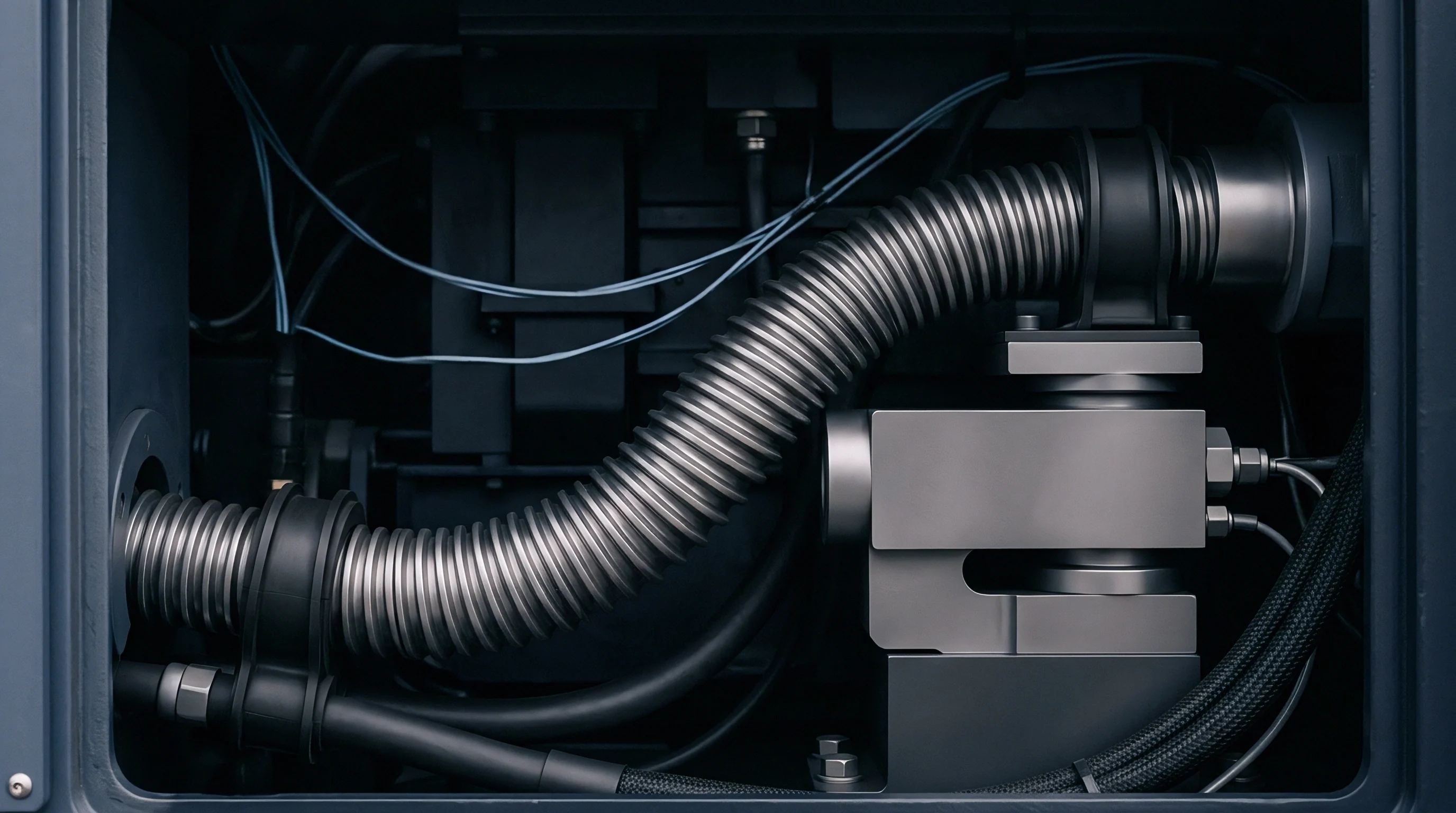

Probe
Optical immersion interfaces mounted directly in high-shear granulators foul within fourteen batches when wet massing reaches peak torque. Powder clinging to the sapphire windows attenuates incident near-infrared light by 0.8 absorbance units, compressing detector dynamic range before drying even starts. Process analytical technology installations frequently stall right here.
Raw spectra reflect physical scatter, particle size drift, and surface cake formation instead of chemical change, driving production teams back to manual offline Karl Fischer titrations every twenty minutes. The dryer sits idle while technicians log sample weights, wiping out the cycle-time gains promised in the capital expenditure proposal.
Spectroscopic sensors generate arrays of 1,024 to 4,096 discrete intensity values every 500 milliseconds. Raw optical density signals hit local memory buffers distorted by baseline tilt from expanding granules, temperature-driven detector drift, and pathlength shifts from varying bed density. Feeding raw optical vectors straight into regression models fails immediately.
Chemometric models built during bench trials assume an optical constancy that industrial vessels never provide. The physical behavior inside the unit operation has to dictate how mathematical operations extract chemical signal from mechanical noise.
A sapphire window fouled by two hundred microns of wet cake shifts baseline absorbance by forty percent across the entire water absorption band.
Optical interfaces fall into three mechanical categories, each introducing distinct mathematical artifacts into the downstream data pipe:
- Static reflectance probes generate severe baseline shifts when powder velocity drops below half a meter per second across the sensing face.
- Flow-through transmission cells suffer pathlength compression under fluid pressure variations, altering absolute molar absorptivity calculations.
- Non-contact diffuse optics register heavy specular reflection whenever fluid meniscus formation alters the refractive boundary of the sample stream.
Data acquisition boards digitize detector voltages through 16-bit or 24-bit analog-to-digital converters, sending spectral packets over industrial Ethernet links. Line speed determines the available window. On a continuous tableting line producing 120,000 units per hour, each tablet passes the inspection head in 30 milliseconds.
If integration time exceeds 15 milliseconds, spatial averaging blurs adjacent tablets into one another. Shorter integration protects unit identity but degrades signal-to-noise ratios, requiring heavy filtering before quantitative prediction algorithms run.
Optical interfaces survive production runs only when cleaning routines keep pace with how fast the process stream fouls them.
Kernel
Pre-processing routines strip physical noise from digitized spectral vectors before multivariate quantification. Standard normal variate algorithms calculate the mean and standard deviation for each spectrum, centering the vector at zero and scaling to unit variance. Multiplicative scatter correction takes a different route, regressing each sample spectrum against an idealized reference to remove additive offsets and multiplicative scaling terms.
Choosing between the two comes down to reference stability. If the reference vector drifts from lamp aging or optical solarization, multiplicative scatter correction propagates systematic offsets through every subsequent batch.
Derivative filtering via Savitzky-Golay polynomial convolution removes baseline drift and resolves overlapping chemical bands. The algorithm fits a low-degree polynomial across a symmetric window of spectral channels using linear least squares, then takes the derivative at the center point. Window width dictates numerical stability: narrow windows preserve sharp features while amplifying high-frequency noise, whereas wide windows smooth noise at the expense of peak height, hiding low-concentration active ingredients.
Second derivatives invert spectral peaks ~ turning absorption maxima into local minima ~ and flatten linear baseline tilt across varying granule densities.
| Mathematical Algorithm | Floating Point Operations | Mean Execution Time | Worst-Case Execution Time | L1 Cache Eviction Rate |
|---|---|---|---|---|
| Standard Normal Variate | 8,192 | 4.2 microseconds | 11.8 microseconds | 0.02 percent |
| Multiplicative Scatter Correction | 14,336 | 7.6 microseconds | 19.4 microseconds | 0.08 percent |
| Savitzky-Golay Second Derivative (15-point window) | 32,768 | 16.1 microseconds | 48.2 microseconds | 0.14 percent |
| Continuous Wavelet Transform (Daubechies 4) | 98,304 | 52.7 microseconds | 142.6 microseconds | 1.85 percent |
| Asymmetric Reweighted Penalized Least Squares | 245,760 | 138.4 microseconds | 412.0 microseconds | 4.20 percent |
Digital filtering routines developed in high-level analytical software require compilation into native binary code before real-time deployment. Commercial packages often wrap routines in interpreted environments that trigger garbage-collection pauses of up to 250 milliseconds. At 100 hertz continuous acquisition, a quarter-second gap overflows communication buffers.
Implementing the math in static, single-instruction multiple-data C libraries enforces deterministic execution cycles, keeping vectorized matrix operations aligned with programmable logic controller scan rates.
Single-instruction multiple-data vectorization drops Savitzky-Golay convolution latency below twenty microseconds on standard x86 industrial hardware.
Graphical pre-processing toolkits rarely manage execution latencies automatically without custom deterministic compilation.
Drift
Sensor hardware starts degrading the moment it enters service. Halogen lamps lose filament mass over time, dropping output in the ultraviolet and blue regions while shifting emissions toward longer wavelengths. Ambient temperature swings expand diffraction gratings and optical benches, displacing wavelength calibration on photodiode arrays.
A shift of just 0.3 nanometers can alter calculated values on steep spectral slopes by ten percent, triggering false out-of-spec alarms. Multivariate control charts tracking Hotelling T-squared and squared prediction error then shut down processing lines as baseline drift crosses statistical limits.
Component aging forces a choice between periodic offline recalibration and automated standardization. Manual recalibration means stopping production, pulling dozens of physical samples, and retraining partial least squares models ~ an exercise costing thousands of dollars per line hour. Mathematical techniques like piecewise direct standardization and Shenk-Westerhaus calibration transfer project a degraded unit’s response back into the master instrument’s coordinate space.
Piecewise direct standardization uses a small set of transfer standards to build a banded diagonal matrix, rotating incoming spectra into alignment before the model runs.
- Reference standard measurement establishes the baseline optical transmission profile using sealed, certified standard materials under controlled chamber temperature.
- Spectral difference calculation quantifies local wavelength displacement and photometric attenuation against factory acceptance spectra.
- Transfer matrix computation calculates transformation coefficients using regularized singular value decomposition to prevent noise amplification.
- Validation verification run evaluates the transformed model against independent secondary standards to verify prediction errors remain within acceptable analytical tolerances.
Operational variations complicate matters further. When fluid bed temperatures swing between 40 and 65 degrees Celsius during drying, water absorption bands broaden and shift position. Partial least squares models trained only on ambient lab data misinterpret this thermal movement as moisture loss.
Orthogonal signal correction addresses this by isolating spectral variance uncorrected to the target chemical property, stripping out temperature artifacts while leaving moisture-related variance intact.
Ignoring physical degradation leads directly to unplanned shutdowns, premature sensor replacements, and false product rejections during validation.
Parity
Algorithms running inside manufacturing execution systems must match the numerical output of offline development models. Discrepancies routinely arise from differences in floating-point representations, rounding rules, and linear algebra libraries. Desktop design tools rely on 64-bit IEEE 754 double precision, whereas embedded microcontrollers and programmable logic controller coprocessors often run 32-bit single precision or fixed-point math to hit throughput targets.
| Tablet Batch Segment | Mean Offline Prediction | Mean Real-Time Prediction | Maximum Absolute Error | Specification Conformance |
|---|---|---|---|---|
| Startup (Tablets 1 to 10,000) | 99.82 mg | 99.81 mg | 0.04 mg | Identical Release Status |
| Core Run (Tablets 10,001 to 30,000) | 100.14 mg | 100.11 mg | 0.09 mg | Identical Release Status |
| High-Speed Drift (Tablets 30,001 to 45,000) | 101.45 mg | 101.32 mg | 0.38 mg | Marginal Borderline Shift |
| Terminal Phase (Tablets 45,001 to 50,000) | 98.12 mg | 97.68 mg | 0.89 mg | Divergent Batch Disposition |
| Methods note: Analysis conducted using 7 latent factors with mean centering and Savitzky-Golay 9-point first derivative filtering. Real-time predictions executed on ARM Cortex-M7 floating point unit. | ||||
Precision errors accumulate across matrix operations. A partial least squares model with seven latent variables standardizes a 2,048-point input vector, multiplies by a weights matrix, projects into score space, and scales by regression vectors. Single-precision roundoff alone can shift final predictions by 0.9 milligrams on a 100-milligram tablet specification.
Near release boundaries, that arithmetic drift flips batch decisions from pass to fail. Verifying numerical parity requires passing five hundred identical synthetic vectors through both execution environments to confirm residual errors remain below 10 to the negative fifth power.
ASTM E2891 mandates documented proof that multivariate mathematical transformations executed on real-time platforms maintain statistical equivalence to offline reference calibrations.
Deployment protocols require strictly frozen software and hardware environments. Compilers, dynamic libraries, and microcode revisions fall under formal computer system validation. Upgrading an operating system kernel or replacing a processor card invalidates prior qualification if updated libraries alter floating-point register optimizations.
United States Pharmacopeia Chapter 1039 establishes that any change to calculation software constitutes a major revision requiring full re-qualification of the analytical procedure.

Actuation
Real-time analytical pipelines justify their cost only when outputs directly drive machinery controls. Processing spectra, evaluating chemometric models, and testing multivariate limits must complete before the target material reaches the downstream control point. On continuous wet granulation lines, calculated granule moisture feeds directly into the peristaltic pumps regulating binder spray.
If calculation lag exceeds five seconds, pumps adjust flow based on outdated moisture values, causing cyclic hunting that destabilizes granule quality.
Managing latency requires attention to the entire communication stack. Time-stamped data packets move from spectrometers to edge processors over deterministic networks like OPC Unified Architecture or PROFINET. The edge processor executes the math, archives raw spectra to data historians, and passes predicted quality attributes to the distributed control system.
Latency spikes occur when database writing shares execution threads with the math engine: disk I/O delays hold threads open, postponing setpoint updates to downstream variable-frequency drives.
Architecture decisions dictate real-time system stability:
- Asynchronous buffer queues isolate continuous optical acquisition tasks from downstream database storage operations.
- Dedicated numerical coprocessors execute matrix calculations independently of communication protocol handlers.
- Hardware watchdogs trigger default safety setpoints if the mathematical transformation engine drops three consecutive calculation cycles.
Real-time release testing requires tight alignment between analytical evaluation cycles and mechanical diverters. Unit rejection mechanisms operate at speeds above two meters per second. When the system identifies an out-of-spec tablet, the timestamp must match the exact physical position of that tablet on the belt.
A timing jitter over five milliseconds causes the air blow-off valve to eject a good tablet while letting the defective unit pass into final packaging.
The validation boundary becomes blurred when adaptive algorithms modify baseline transformation matrices continuously during commercial batch runs.