Foreign Currency Interest Parity Excess Allocation Methods in Multiyear Plant Expansion Audits
Capitalise foreign exchange losses on expansion debt only up to the domestic interest rate differential, expensing all excess currency depreciation immediately.


Benchmark
Capitalisation of foreign currency borrowing costs during multiyear industrial facility expansion rests upon an exacting regulatory threshold. Under international accounting conventions, specifically International Accounting Standard 23, financing costs directly associated with the acquisition, construction, or installation of a qualifying asset enter the carrying value of that physical property. Domestic credit facilities supply the base comparison.
When an industrial operator finances local equipment fabrication and civil works using external currencies, the nominal interest rate often sits below domestic debt pricing. Movement in the exchange rate between the disbursement date and the commissioning milestone alters the aggregate expense of servicing foreign facilities. Foreign exchange losses qualify as capitalisable borrowing costs solely to the extent that those losses represent an adjustment to interest costs.
Any currency depreciation loss exceeding the interest rate differential between local and foreign currency debt stays on the income statement as a period expense.
Auditors measure the qualifying boundary against an objective local debt reference rate. That comparative indicator reflects the interest rate the entity would have paid on equivalent borrowings raised in its functional currency with identical maturity and comparable credit risk. In emerging industrial zones, the sovereign bond yield plus the corporate credit spread establishes this local financing marker.
For a project entity constructing an ethylene cracking unit or a smelting cell line, that functional rate frequently exceeds the foreign loan coupon by five hundred to eight hundred basis points. The baseline governs the cap.
The borrowing cost differential between functional currency facilities and external obligations dictates the ceiling for asset balance sheet adjustments.
Determining whether a cross-border borrowing arrangement generates excess foreign exchange losses requires systematic tracking of monthly cash outflows. Industrial engineering teams disburse funds across multiple vendors according to progress milestones: foundation pouring, structural steel assembly, pressure vessel delivery, and piping integration. Each disbursement establishes an independent foreign exchange base.
If the corporate entity secures an offshore loan at four percent in United States dollars while equivalent domestic debt commands twelve percent, the annual interest differential equals eight percentage points. When the domestic currency depreciates by fourteen percent against the dollar over that twelve-month audit cycle, the total nominal cost of the dollar facility reaches eighteen percent. The eight percent gap qualifies for inclusion in asset carrying value.
The remaining six percent constitutes an unhedged currency deterioration that cannot enter the capitalized plant balance.
Audit engagements scrutinize the local reference rate used to construct the capitalisation ceiling. General treasury yields cannot substitute for an actionable corporate borrowing quotation. The diligence dossier must contain contemporaneous loan offers, executed local credit lines, or independently calculated synthetic borrowing rates derived from active debt market observations.
A synthetic corporate rate derived for heavy process manufacturing plants typically assumes a spread of 340 basis points above the sovereign benchmark for a thirty-six-month term, resting on credit rating determinations and audited corporate bond spreads recorded during 2023. That spread moves upward if domestic central banking authorities alter statutory bank reserve asset ratios or if local corporate bond issuance volumes contract. Idle cash yields zero relief.
Foreign exchange gains create a reciprocal accounting adjustment. If the functional currency strengthens, reducing the domestic currency equivalent of foreign loan principal, the resulting foreign exchange gain reduces previously capitalised interest or offsets gross interest incurred during the construction phase. Project teams cannot isolate gross foreign interest payments for capitalisation while routing currency appreciation gains to financial income.
Net interest mechanics govern the qualifying asset account across every active accounting period.
Borrowing costs on foreign facilities cease qualification once the qualifying asset reaches operational readiness for its intended commercial purpose, regardless of ongoing project loan servicing commitments.
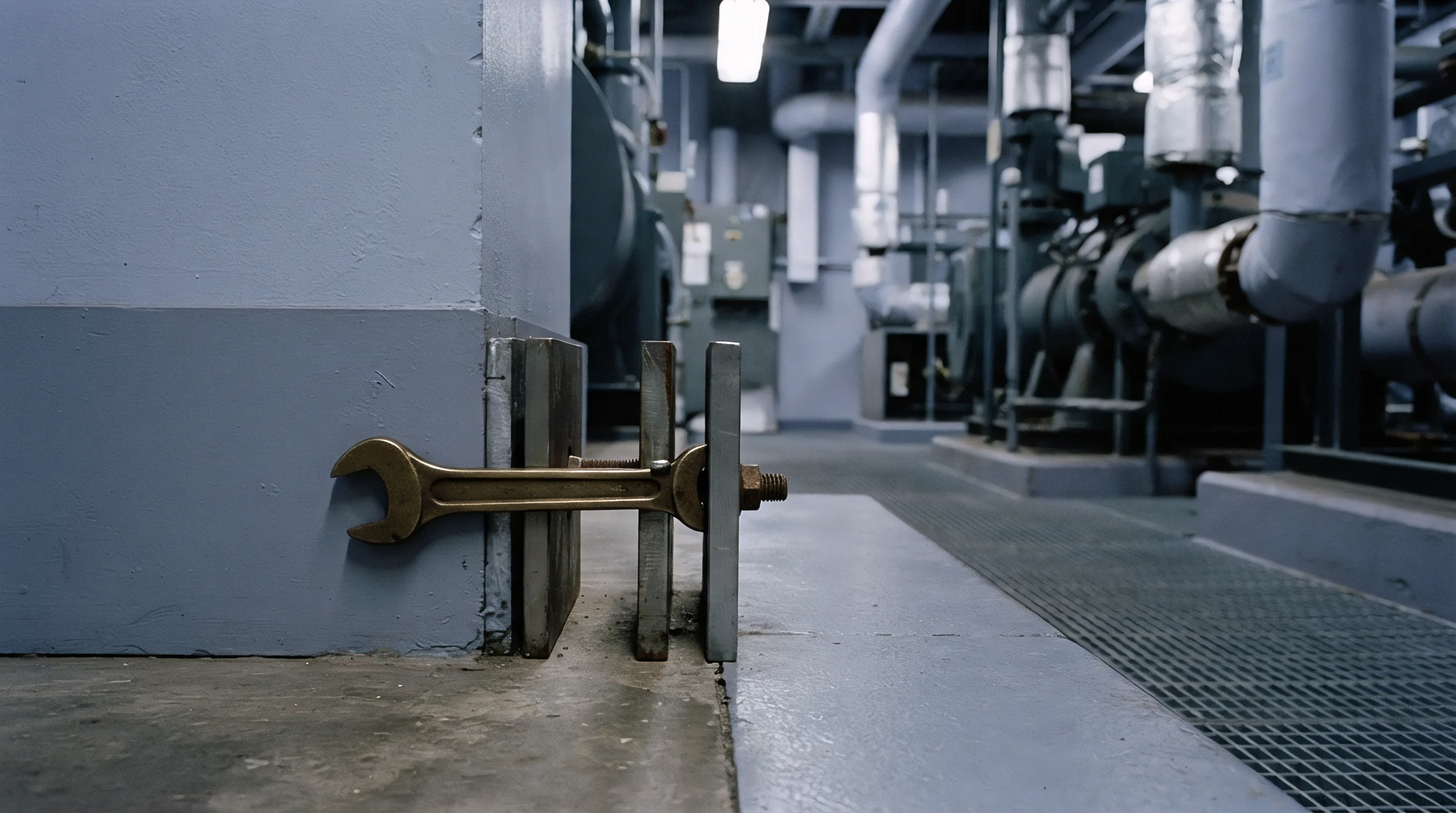
Slab
Physical plant assets acquire qualifying status only while active construction advances toward operational handover. Heavy manufacturing facilities require massive sub-grade engineering, reinforced equipment slabs, structural columns, and complex utility tie-ins before processing machinery can operate. Construction delays frequently stretch these civil works across consecutive accounting cycles.
When site progress halts, the mechanical capitalisation window closes immediately under standard audit criteria. Capitalisation of financing costs suspends during prolonged interruptions in which active physical construction or necessary technical preparation pauses. Foundations lock the timeline.
Site inspection logs provide the primary evidentiary trail for financial examiners. Plant engineers record daily concrete pours, pile driving verification, structural bolt torque inspections, and welding certifications within the physical quality system. Diligence teams reconcile these engineering field reports directly against capitalised interest ledgers.
If physical progress stops on a blast furnace foundation slab due to permitting appeals or supplier contract disputes, interest accruals during the dormant months must land in operating expenses. Delays swell carrying expenses.
Engineering site journals and structural pour sign-offs establish the operational calendar that validates borrowing cost eligibility.
Multiyear plant expansions introduce compounding complications when distinct process units reach mechanical completion at different calendar intervals. A metallurgical refinery project contains ore preparation facilities, leaching tanks, solvent extraction circuits, and electrowinning houses. Each process unit occupies its own concrete slab and operates under a dedicated commissioning sequence.
Interest capitalisation on specific machinery ends the day that individual unit runs performance test batches, even if downstream refining sections remain under structural erection.
- Unscheduled civil suspension forces an immediate halt to interest allocation throughout the dormant period while site access or technical validation remains blocked.
- Premature commercial pre-commissioning terminates borrowing cost capitalisation on functional process units even when surrounding utility plants continue testing.
- Off-site equipment storage prevents financing cost addition whenever fabricated components sit idle in external warehouses without active on-site installation work.
- Redundant reserve inventory excludes redundant mechanical spares and secondary replacement parts from qualifying asset balances during primary line construction.
Auditors examine the link between procurement disbursement dates and equipment installation records. If an entity draws down foreign currency term loans twenty-four months ahead of equipment positioning on the slab, financing costs incurred while cash rests in temporary deposit accounts cannot enter asset values. Interest income generated by temporary investment of borrowed funds pending expenditure on the asset deducts directly from capitalisable borrowing costs.
The calculation runs monthly.
Construction management teams often claim that administrative preparations or preliminary layout surveys maintain continuous project development. Financial examiners separate administrative delay from necessary technical activity. Standard audit provisions reject financing additions during periods where no substantive physical work or critical engineering design progresses.
Under International Accounting Standard 23 paragraph 20, an entity suspends capitalisation of borrowing costs during extended periods in which it suspends active development of a qualifying asset.


Premium
Cross-currency interest rate parity establishes the theoretical framework linking interest differentials to currency forward exchange rates. Under covered interest rate parity, the difference in nominal interest rates between two currencies equals the percentage difference between the forward exchange rate and the spot exchange rate. In liquid wholesale financial markets, forward pricing reflects this parity condition with high statistical fidelity.
In capital project procurement across developing industrial jurisdictions, covered interest parity breaks down due to financial friction, cross-currency basis spreads, sovereign risk premia, and transaction illiquidity. The basis spread widens.
When an expansion project incurs unhedged foreign debt to acquire long-lead machinery, currency movements regularly deviate from theoretical parity bands. Large balance of payments imbalances, macroeconomic shocks, or capital control implementations push spot rate devaluations far beyond initial forward rate indications. The resulting financial divergence raises critical audit questions regarding how much of the combined interest and currency loss reflects actual financing costs versus speculative foreign exchange exposure.

Is Functional Currency Indexation Legally Enforceable?
Industrial supply contracts for specialized equipment, such as rolling mills, turbine generator sets, and multi-axis machining centers, frequently incorporate foreign currency indexation clauses. When local fabricators quote plant infrastructure in domestic units but tether settlement values to an external currency basket, audit teams evaluate whether the transaction contains an embedded derivative. If the contract designates payments in a currency foreign to both the primary economic operating environment of the buyer and the manufacturing base of the vendor, financial reporting standards require bifurcation of the embedded derivative from the host construction contract.
Cross-border plant construction reveals deep interdependencies with global manufacturing capacity. In heavy shipyard dry-dock facilities across East Asia, where specialized vessel and floating plant fabrication occurs, procurement contracts frequently adjust base pricing to shifts in raw plate steel import tariffs and foreign currency pegs. Those maritime structural facilities demonstrate how sudden currency revaluations reshape physical equipment deliveries and renegotiate procurement milestones.
Disbursements track concrete milestones.
Cross-currency basis spreads and local liquidity constraints drive market exchange differentials away from theoretical parity assumptions.
Hedging arrangements alter the qualifying cost calculation. When an industrial developer executes cross-currency interest rate swaps or forward exchange contracts to fix functional currency repayment totals, the accounting framework looks to the hedged net cash flow. If cash flow hedge accounting applies, the effective portion of derivative gains or losses transfers into the carrying cost of the qualifying plant asset concurrently with the recognition of construction expenditures.
Disqualifications arise when speculative options structures or uncovered interest rate collars appear inside treasury operations.
- Contemporaneous documentation records confirm that hedging instruments were explicitly assigned to specific equipment supply contracts at execution.
- Prospective effectiveness assessments verify that derivative cash flows correlate with milestone invoice commitments across the entire installation timeframe.
- Designated spot adjustments separate forward points from intrinsic contract value to ensure only qualifying financing components alter asset balances.
- Credit valuation adjustments reflect the default risk of cross-border financial counterparty institutions within reported derivative values.
Financial officers frequently confront an execution liquidity discount when pricing long-tenor cross-currency swaps in illiquid developing markets. The desk cannot fully defend a standard 45 basis point pricing discount observed during sovereign balance-of-payments crises, because public dealer quote boards become untradeable during severe currency dislocations. Under that degree of pricing uncertainty, industrial project sponsors must obtain at least three executable quotes from licensed primary market makers on the exact settlement dates to substantiate market pricing before audit panels.
Auditors reject retrospective hedging.
Equipment suppliers regularly defend invoice indexation escalations by claiming that domestic banking systems failed to provide accessible long-dated forward cover for project financing facilities.


Partition
Allocation of borrowing costs between capitalised asset accounts and direct statement of profit or loss charges requires mathematically reproducible partition methodologies. Standard audit procedures acknowledge two primary computational frameworks for isolating the interest-adjustment component of foreign exchange fluctuations: the Marginal Borrowing Method and the Cumulative Parity Cap Method. Diligence examiners evaluate both options to detect aggressive balance sheet capitalization practices that obscure project cost overruns.
The Marginal Borrowing Method recalculates the financing charge on each foreign expenditure tranche as if the capital had originated from a domestic credit line on the drawdown date. The entity calculates the hypothetical domestic interest charge for the accounting period using the marginal local borrowing rate applicable to the firm. It then measures the actual foreign currency interest paid plus the actual net foreign exchange movement on that tranche.
If the actual foreign interest plus foreign exchange loss falls below the hypothetical domestic interest total, the entire currency loss enters the plant asset balance. If the sum of foreign interest and currency loss surpasses the hypothetical local charge, the excess is carved away and charged immediately to financing expense.
| Evaluation Framework | Tranche Drawdown Value | Foreign Coupon Rate | Functional Benchmark Rate | Annual Currency Movement | Allowable Capitalised Charge | Expensed Excess Amount |
|---|---|---|---|---|---|---|
| Marginal Borrowing Model | 10,000,000 USD | 4.50% | 12.50% | -11.20% | 1,250,000 USD Eq | 320,000 USD Eq |
| Marginal Borrowing Model | 15,000,000 EUR | 3.75% | 11.00% | -6.00% | 1,462,500 EUR Eq | 0 EUR Eq |
| Cumulative Parity Cap | 25,000,000 USD | 5.00% | 13.00% | -16.50% | 3,250,000 USD Eq | 2,125,000 USD Eq |
| Basis-Adjusted Index | 8,000,000 USD | 4.25% | 11.75% | -8.50% | 940,000 USD Eq | 80,000 USD Eq |
The Cumulative Parity Cap Method evaluates borrowing parameters across the full multiyear construction timeline rather than in isolated annual increments. Under this convention, cumulative capitalised interest and foreign exchange adjustments across all project periods cannot exceed the cumulative hypothetical interest that a domestic credit facility would have accrued from project commencement to date. In periods of moderate currency depreciation, capitalised charges remain within the cumulative ceiling.
During acute currency devaluations, the cap triggers immediate write-offs. A cumulative currency depreciation of 18.4 percent represents the historical threshold at which three-year capital expansion loans typically exhaust their interest differential margin, based on multi-site chemical engineering audits executed between 2021 and 2023. That figure contracts downward if foreign inflation rates run hotter than domestic industrial price movements, tightening the allowable spread.
The excess drops into expense.

Are Unhedged Borrowing Spreads Truly Eligible?
Project developers frequently argue that credit spreads attached to foreign borrowings represent pure financing costs that should broaden the capitalisation threshold. If a borrower pays an offshore credit spread of 350 basis points over the London Interbank Offered Rate or the Secured Overnight Financing Rate because of elevated plant construction risks, adding that spread to the foreign base rate widens the gross borrowing cost. Financial audit teams check whether that spread represents asset-specific financing or generic corporate risk.
Spreads linked to parent-level liquidity issues cannot inflate the qualifying asset ceiling. Tenors rarely align perfectly.
| Audit Step | Required Documentation | Diagnostic Metric | Rejection Condition |
|---|---|---|---|
| Baseline Calibration | Executed domestic bank loan facility or verified local bond curve | Annualized percentage yield | Use of short-term money market paper or non-binding indicative pricing |
| Tranche Revaluation | Milestone payment vouchers matched to offshore wire confirmations | Spot exchange rate on disbursement date | Use of period-average currency rates for discrete capital disbursements |
| Differential Test | Monthly financing cost ledger and amortization schedules | Net interest plus realized and unrealized FX variance | Exclusion of foreign interest coupon from the differential comparison |
| Ceiling Imposition | Cumulative project capitalization ledger | Hypothetical domestic interest accumulation | Capitalisation of foreign currency losses exceeding functional benchmark |
- Reconcile project drawdowns against verified plant milestone certificates to date-stamp the currency basis for every asset component.
- Determine the functional benchmark borrowing rate applicable to the entity for loan tenors matching the actual construction duration.
- Calculate the interest differential for each reporting cycle by subtracting the foreign nominal coupon from the functional benchmark rate.
- Compare foreign exchange movement against the calculated interest differential to isolate the qualifying adjustment component.
- Post the excess variance directly to the income statement under net foreign exchange loss, leaving the qualifying plant asset balance unpolluted by speculative currency depreciation.
Selecting an inappropriate partition method shifts millions in construction expenditure between balance sheet capital accounts and current period operating statements. When a project management team erroneously capitalises excess currency losses, the carrying value of the physical plant becomes inflated. That balance sheet inflation overstates initial profitability by deferring financing expenses into long-term depreciation schedules.
Subsequent impairment testing routinely uncovers that the unhedged asset base cannot generate sufficient operating cash flows to cover its inflated carrying value. Unhedged volatility hits earnings directly.
Incorrect execution of foreign currency excess allocation models results in mandatory restatements of prior-period earnings, balance sheet write-downs of plant carrying values, and formal audit qualification notes that trigger debt covenant reviews across parallel corporate lending facilities.

Rebuttal
Audit defense strategies require the assembly of an unassailable financial and engineering evidence dossier before audit committees convene. External audit firms deploy specialized technical valuation desks to challenge capitalised foreign exchange allocations on industrial megaprojects. Company finance teams must mount substantiated technical defenses against audit challenges to retain legitimate borrowing cost allocations within property, plant, and equipment balances.
Paper trails decide asset values.
The primary technical defense against external audit write-offs centers on proving that foreign debt capital was directly tied to offshore procurement commitments. When an entity demonstrates that the foreign currency loan was drawn down to settle invoices denominated in that same external currency, the interest differential test stands on firmer ground. In this structure, the entity did not deliberately convert foreign borrowings into local currency to exploit interest rate disparities.
The financing structure mirrored the procurement footprint of the plant expansion. Inspection logs settle the dispute.
Contemporaneous currency quotes, milestone engineering sign-offs, and verifiable domestic borrowing spreads form the triad of audit defense.
When external auditors attempt to substitute low sovereign bond yields for the functional currency borrowing benchmark, project sponsors counter by submitting actual corporate borrowing documentation. A corporate entity constructing complex manufacturing infrastructure cannot borrow at sovereign risk-free yields. The appropriate benchmark must reflect the company’s incremental borrowing rate for a term corresponding to the asset construction schedule.
Providing contemporaneous credit evaluations, term sheets from local commercial lending syndicates, or documentation of local currency bond issuances provides the necessary factual weight to defend a higher functional reference cap. Mechanical completion stops the clock.
Technical arguments escalate when examining the treatment of multiyear cumulative balances. If foreign currency losses capitalized in year two are followed by currency appreciation in year three, audit teams sometimes argue for asymmetric treatment: recognizing currency appreciation gains immediately in the profit or loss statement while leaving prior capitalized losses permanently locked inside plant asset balances. Financial management must defend the net cumulative position.
Standard interpretations allow prior capitalized foreign exchange adjustments to be reversed by subsequent currency recoveries, provided the net capitalized balance never drops below zero and remains within the bounds of cumulative functional financing costs.
Disputes frequently arise concerning the exact operational moment when an expansion asset transitions from construction work in progress to depreciable fixed property. Audit defense teams must harmonize engineering certificates with accounting ledgers. The handoff between construction management and plant operations requires rigorous documentation: punch list completion certificates, hot commissioning test sign-offs, environmental compliance permits, and formal production handover logs.
If an auditor asserts that commercial production commenced three months prior to the formal sign-off, capitalised financing charges across that ninety-day window face disallowance.
The unresolved question confronting corporate audit committees is whether national accounting enforcement bodies will establish a rigid formulaic cap on foreign exchange adjustments to interest costs, or whether project entities will retain discretionary latitude to defend bespoke allocation methodologies under local economic realities.