Commercial Risk Mitigation Mechanisms for Sub Tier Machining Vendor Headroom Verification Failures
Sub-tier machining headroom fails when unrecorded changeovers and scrap inflate availability; verify actual spindle logs and enforce capacity escrow clawbacks.
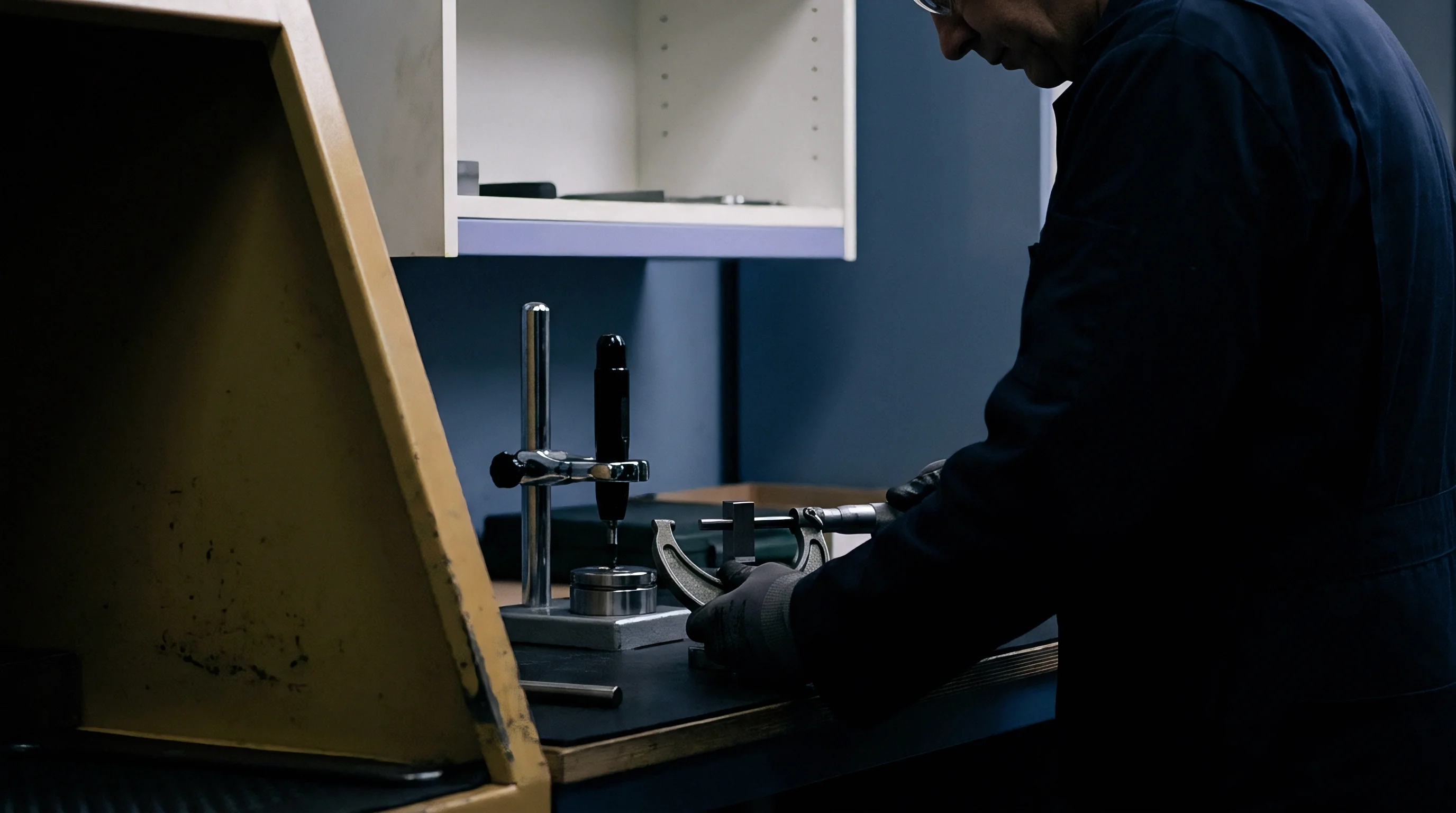

Spindle
Precision machining capacity reported on balance sheets and vendor questionnaires routinely evaporates once demand shifts from steady state to surge rates. Tier-1 integrators regularly subcontract high-complexity metal removal ~ 5-axis milling, deep-hole boring, jig grinding, and wire EDM ~ to secondary and tertiary machine shops. To keep structural overhead low, these sub-tier suppliers run lean on idle machinery, leaving little operational elasticity when demand spikes.
When a buyer asks for higher volume, the prime contractor often accepts the sub-tier shop’s written capacity figures without testing the mathematical assumptions behind them.
Discrepancies in sub-tier capacity calculations emerge because machine tool availability is expressed in raw engine hours rather than effective cutting time. A sub-tier shop running six vertical machining centers across five eight-hour shifts per week logs two hundred forty available machine hours. Converting that raw schedule into verified headroom requires adjusting for setup changeovers, scheduled maintenance windows, tool wear compensation, unscheduled mechanical downtime, and first-pass scrap rates.
With aerospace and automotive alloys like Inconel 718, Ti-6Al-4V, and 17-4 PH stainless steel, accelerated tool wear forces frequent insert rotations and offset adjustments that steadily erode actual cutting time.
Overall Equipment Effectiveness reported by sub-tier machining vendors frequently rests on optimistic assumptions about availability and performance. Availability is often measured against planned production time rather than total calendar availability, which masks deferred maintenance and extended setups. Performance rates are routinely benchmarked against nominal cutting speeds published by machine tool builders rather than the reduced feed rates needed to hold tight geometric tolerances on hardened workpieces.
Quality metrics regularly bypass rework loops, logging parts as conforming units even if they required two additional hours on a deburring or honing bench to fix dimensional drift.
| Machining Process Category | Vendor Reported OEE (%) | Audit Validated OEE (%) | Primary Source of Time Inflation | Stated Headroom Margin (%) | Verified Headroom Margin (%) |
|---|---|---|---|---|---|
| 5-Axis CNC Milling (Titanium Structural Castings) | 82.5 | 54.2 | Unrecorded setup changeover and dynamic workpiece alignment | 35.0 | 4.2 |
| Deep Hole Boring (Hardened Alloy Steel Bar Stock) | 88.0 | 61.8 | Tool thermal drift corrections and chip clearing stoppages | 40.0 | 11.5 |
| Wire Electrical Discharge Machining (Tool Steel Dies) | 91.0 | 73.0 | Wire breakage retensioning and dielectric tank filter replacement | 25.0 | 6.8 |
| Jig Grinding (Aerospace Valve Housings) | 85.0 | 58.5 | In-process metrology probing and thermal stabilization cycles | 30.0 | 2.1 |
| High-Speed Swiss Turning (Medical Grade Stainless) | 90.0 | 69.4 | Bar feeder reload jams and micro-burr inspection delays | 45.0 | 16.3 |
Operational headroom contracts further when sub-tier shops commit the same cutting assets to overlapping customer accounts. A machining subcontractor serving three tier-1 suppliers might allocate twenty percent of its total machine hours to each buyer while claiming forty percent surplus capacity on paper. If all three customers surge demand simultaneously, the vendor faces a combined load exceeding one hundred twenty percent of physical capacity.
Because sub-tier suppliers rarely disclose customer allocation matrices under non-disclosure agreements, tier-1 integrators discover these competing commitments only after delivery schedules collapse.

Sub-Tier Machine Hour Accounting Errors
Accounting methodologies in precision machine shops routinely miscalculate machine hour availability by booking fixture swap time as productive runtime. When a 5-axis machining center takes ninety minutes to switch from a turbine blade holding fixture to a pump housing clamp setup, that duration yields zero finished parts. Sub-tier shops often log these changeovers under operational runtime if an operator remains stationed at the cell.
True cutting time begins only when the tool engages raw stock, and any accounting method that blurs this boundary inflates calculated headroom.
In multi-axis milling, dynamic workpiece alignment introduces machine downtime that standard scheduling tools fail to register. High-precision structural parts require probing routines to locate reference datum points on raw forgings before roughing passes begin. When raw forging dimensions vary across mill heats, the CNC program requires manual offset adjustments or custom probe macros.
In one aerospace machining sub-tier, batch-to-batch forging stock variation added twelve minutes of probing time per part, consuming twelve cutting hours per week that had been categorized as surplus headroom.
A claimed 35 percent headroom margin collapses to 4 percent when set-up changeovers exceed 180 minutes on 5-axis cells.
Tool wear management is another steady drain on available machine hours that sub-tier vendors underreport during initial audits. High-speed machining centers use automated tool changers with carousels holding thirty to one hundred twenty tools. When cutting abrasive nickel-based superalloys, carbide inserts require replacement every forty-five minutes of cut time to prevent thermal cracking and dimensional drift.
Presetting replacement tooling, measuring runout on optical presetters, and updating tool offset registers inside the CNC control often takes twice as long as the cutting pass itself, consuming capacity that planners treat as open headroom.
Workpiece loading and unloading outside automated enclosures introduces further variance into machine hour logs. While large production plants install robotic pallet pools that swap fixtures in under forty seconds, smaller sub-tier suppliers use overhead cranes, manual hoists, or physical operator labor to secure heavy castings. Operator fatigue, shift handoffs, and crane availability stretch loading cycles.
A pallet loading sequence estimated at five minutes routinely stretches to twenty minutes during second and third shifts, compounding throughput shortfalls across the weekly schedule.

Kinematic Cycle Times and Tooling Downtime
Kinematic acceleration and deceleration curves in CNC control algorithms drive a persistent gap between theoretical CAM cycle times and physical machine output. Computer-aided manufacturing software estimates cut duration using programmed feed rates and linear toolpath distances. When profiling complex geometries with tight contour radii, the controller throttles feed rates to limit servo lag, axis vibration, and profile error.
This dynamic deceleration extends actual cycle times by fifteen to thirty-five percent beyond software estimates, eroding calculated headroom before cutting begins.
Thermal growth in high-speed spindles creates secondary operational delays that disrupt production schedules. As spindle bearings heat during continuous twelve-thousand RPM milling runs, the spindle shaft expands along the Z-axis, shifting the tool tip by up to thirty micrometers. To stay within print tolerances, operators halt production for thermal stabilization cycles or perform manual offset recalibrations every few hours.
These stabilization pauses are rarely logged as downtime in shop floor systems, remaining hidden within normal operating hours while cutting into net capacity.
Chip clearing and coolant maintenance generate frequent micro-stoppages that aggregate into substantial capacity losses across a work week. High-volume metal removal produces hundreds of kilograms of swarf per hour, requiring continuous conveyor operation and periodic bin dumping. High-pressure coolant loops collect fine particulate sludge, clogging inline filters and lowering fluid delivery to the cut zone.
Once filter pressure drops past threshold limits, machine interlocks halt the cycle. In shops without dedicated maintenance crews, operators clear swarf and swap filter elements manually, taking cutting spindles offline during production hours.
Toolroom constraints frequently bottle up cell output even when machine tools are mechanically available. A facility with ten multi-axis CNC machines may employ only one skilled toolroom technician per shift to handle insert grinding, custom fixture modification, and tool presetting. If cutting tools wear or chip simultaneously across several machine cells, spindles sit idle waiting for replacement packages.
This shared resource bottleneck forms local queues that pull shop throughput well below theoretical machine capability, rendering nominal headroom metrics invalid.
Mandatory in-process inspection requirements add non-cutting delays to machining schedules. Critical aerospace and defense components require coordinate measuring machine verification after roughing passes and before final finishing. If a shop runs two CMM units to support fifteen machining centers, parts queue at inspection for hours while custom machine fixtures remain occupied holding partially machined parts.
The spindle cannot begin the next job while its fixture holds a workpiece awaiting dimensional buyoff, immobilizing capital assets and shrinking plant headroom.
The following sequential list outlines the cascading operational breakdown that occurs when sub-tier machine hour calculations fail to account for toolroom and fixture constraints:
- Toolroom Presetting Bottleneck occurs when a single technician fails to prepare incoming carbide tooling packages on time, leaving high-value 5-axis machines idling with open tool carousels.
- Fixture Lockup During Metrology Inspection happens when workpieces remain clamped in machine beds while awaiting CMM dimensional sign-off, halting downstream part processing.
- Thermal Drift Offset Accumulation forces operators to pause machining cycles every two hours to adjust control registers, expanding total batch processing time beyond program estimates.
- Swarf Conveyor Lockup and Pressure Loss triggers automated safety shutdowns on high-pressure coolant lines, causing unprogrammed operational pauses during night shifts.
- Multi-Contract Schedule Collision arises when overlapping delivery commitments for separate buyers hit the shop floor simultaneously, forcing emergency batch splits and setup overhead multiplication.

Phantom Headroom in Multi-Axis Machining Cells
Multi-axis machining cells operating without integrated flexible manufacturing systems present the highest risk of phantom headroom. FMS lines equipped with automated pallet carousels, guided vehicles, and central dispatching sustain genuine unattended operation. Sub-tier shops without this automation attempt to match multi-axis cell output using manual staging and single-shift staffing.
These hybrid cells show high theoretical availability on paper, but output drops sharply during unattended weekend and overnight runs due to unrecovered fault states.
Error recovery protocols on unstaffed or lightly staffed shifts consume large blocks of expected sub-tier capacity. If an automated tool break detector triggers an alarm at two o’clock in the morning in a cell running without night-shift machinists, the CNC controller halts the job. The machine tool remains idle for the remaining six hours of the shift.
Standard capacity models assume these unattended shifts achieve seventy to eighty percent utilization, booking unmonitored overnight hours as headroom that vanishes the moment a fault sensor trips.
Fixture sharing across non-identical machines introduces physical bottlenecks that standard planning tools miss. Sub-tier suppliers often operate one modern high-rigidity 5-axis machining center alongside two older, less rigid 3-axis or 4-axis mills. To meet target tolerances, critical roughing and finishing must run on the high-rigidity machine.
While the vendor reports combined machine headroom across all three units, the work can physically execute on only one spindle. The secondary machines sit underutilized while the primary unit operates at one hundred percent capacity, generating delivery delays.
Sub-tier suppliers often obscure the lead times of their subcontracted special processing networks when quoting turnaround times to tier-1 buyers. Machined parts frequently require heat treatment, surface passivation, anodizing, shot peening, or non-destructive testing before delivery, which smaller machining vendors outsource to commercial processors. If a machining shop expands internal spindle capacity while its external processing vendors operate on four-week queues, internal machining headroom cannot accelerate delivery.
Parts pool in intermediate inventory buffers, making internal machine availability figures irrelevant to landed component lead times.
Raw material stock preparation forms a final constraint that invalidates sub-tier headroom calculations. Machining centers require raw billets, forgings, or extrusions cut to precise length and squareness tolerances before loading into fixtures. Sub-tier shops using manual bandsaws or undersized cutoff equipment create material feeding bottlenecks.
A 5-axis machine capable of completing an aluminum billet in twenty minutes per part sits idle if the prep department saws stock at a rate of one billet every twenty-five minutes, turning the sawing operation into the governing bottleneck.
Surge commitments in precision machining can fail despite open machine schedules when spindles sit idle waiting for replacement inserts delayed in transit, or when the sole machinist qualified to configure dynamic probing macros is away on medical leave.


Dossier
Verifying sub-tier machining headroom requires an evidence collection protocol focused on primary operational data rather than summary capacity questionnaires. Operational diligence teams inspect raw machine logs, physical maintenance files, toolroom consumption data, and floor-level material movement. Relying on self-reported vendor surveys guarantees exposure to phantom capacity, as sub-tier managers routinely present best-case historical runs as baseline metrics.
Establishing an accurate capacity baseline requires gathering direct physical and digital records from the production floor.
Data validation begins by extracting native machine control logs from machine tools via standard industrial protocols like MTConnect or OPC UA. These logs capture direct sensor data, including spindle rotation hours, axis movement metrics, active feed overrides, tool change counts, and error alarms. Comparing ERP dispatch schedules against MTConnect spindle hours highlights operational gaps.
Extracted control logs typically show actual cutting spindle time running twenty to forty percent below the operating hours reported in customer-facing shop management software.
Physical evidence collection extends to consumable tool purchase orders and scrap bin weight receipts. Precision metal cutting generates predictable consumption profiles: removing a given volume of nickel alloy or titanium consumes a mathematically defined quantity of indexable carbide inserts and liquid coolant. If a vendor reports processing five hundred structural forgings in a quarter, but toolroom records show only ten replacement inserts purchased during that period, the claimed production volume cannot be reconciled without severe tool wear that would compromise surface finishes and tolerances.
Scrap receipt analysis provides an objective check against vendor-reported first-pass yield metrics. Sub-tier shops sometimes store non-conforming parts in off-line hoppers or route out-of-spec workpieces through undocumented manual rework to avoid logging scrap on quality records. Comparing raw material intake weights against finished shipping weights and documented metal chip recycling receipts establishes the physical mass balance of the plant.
Gaps between material purchased, scrap sold to recyclers, and finished goods shipped expose undocumented scrap rates that consume machine runtime.
The following plain numbered procedure outlines the exact five-step physical and digital verification method diligence teams enforce during sub-tier machining capacity audits:
- Extract MTConnect digital event logs directly from machine controllers for a continuous ninety-day historical window, isolating spindle rotational hours from total power-on hours.
- Reconcile extracted spindle cut time against logged labor hours in the shop ERP system to isolate unrecorded setup delays, operator absence, and manual deburring downtime.
- Audit physical toolroom inventory logs and cutting tool purchase orders to verify that consumable wear parts match the material removal volumes required by active customer contracts.
- Perform a physical mass-balance audit comparing raw metal stock deliveries against scrap metal recycler receipts and certified finished component shipping weights.
- Execute an unannounced physical shift-change audit to observe job handover efficiency, operator staffing levels, fixture loading times, and night-shift error recovery protocols.

Physical Audit Protocols for Tier Two Lathes
Evaluating sub-tier turning capacity on CNC lathes and multi-spindle Swiss-type turning centers requires targeted checks on bar feeder mechanics and live-tooling turret alignment. Turning centers operating at high speed depend on steady bar feed operation to sustain throughput. During site audits, inspectors examine bar feeder alignment, guide channel insert condition, and stock staging queues.
Worn guide channels cause material whip and vibration, forcing operators to drop lathe spindle speeds thirty to fifty percent below programmed rates and degrading headroom models.
Turret indexing accuracy and live-tooling drives represent frequent failure points on high-precision turning centers. Continuous cutting in hardened alloys subjects tool turrets to high radial loads that wear dynamic couplings and internal index pins. Auditors use dial indicators or optical alignment tools to inspect turret alignment on the floor.
An offset of several micrometers causes accelerated insert chipping, poor surface finishes, and dimensional drift, requiring constant operator intervention and machine stops that pull down cell efficiency.
Chip conveyors and coolant pump maintenance require direct inspection on turning cells. Turning ductile alloys like stainless steel or aluminum produces continuous stringy chips. If chip breakers are mismatched or coolant pressure is low, swarf birds-nests around the toolholder and main spindle, forcing manual stops to clear material.
Auditors check coolant sump levels, oil skimmer operation, and delivery pressure gauges. Pressure drops below target thresholds indicate clogged filtration, which leads to automated spindle protection shutdowns.
Extracting native event logs directly from machine tools exposes discrepancies where physical cutting time runs 30 percent below ERP dispatch logs.
Spindle bearing condition requires physical verification through vibration analysis and thermographic monitoring during active cutting passes. Worn main spindle bearings generate heat and vibration that distort part concentricity and surface profiles. Portable accelerometer probes placed on spindle housings during roughing passes identify bearing wear before mechanical failure occurs.
A machine running degraded spindle bearings cannot hold print tolerances without frequent thermal pauses, converting reported capacity into unallocated downtime.
Chuck jaw wear and hydraulic clamping systems require direct inspection during physical diligence. Machine shops turning thin-walled castings or delicate components must regulate hydraulic chuck pressure to avoid part distortion while maintaining safe clamping force. Worn master jaws, leaking seals, or uncalibrated pressure valves force operators to reduce depth of cut, increasing the number of passes and extending cycle times well past standard routing estimates.
Data Room Validation of ERP Dispatch Logs
Digital diligence in sub-tier capacity data rooms focuses on reconciling high-level ERP schedules against detailed job execution logs and labor tracking data. Smaller sub-tier shops often run entry-level or legacy ERP software without real-time machine floor integration. When operators enter start and stop times manually at the close of twelve-hour shifts, the smoothed data conceals mid-shift idle periods, equipment breakdowns, and prolonged setups.
Data room reviews require raw timestamp records generated by barcode scanners or RFID badge readers rather than manual batch entries.
Auditing job routing sheets within the ERP system confirms whether standard labor hours reflect physical floor operations. Routing master files define expected setup and cycle hours per piece for every component produced. Diligence teams compare historical actual labor hours against these baseline routings.
If historical job records show actual run times running twenty-five percent above master routings, the capacity projections generated by the ERP system overstate available plant headroom by a matching margin.
| ERP Data Category | Stated Master Parameter | Audited Floor Parameter | Root Cause of Variance | Impact on Stated Headroom |
|---|---|---|---|---|
| Setup Time (5-Axis Cell) | 2.0 Hours | 4.8 Hours | Manual fixture shimming and uncalibrated probe offsets | 18.5% Loss of Cell Runtime |
| Cycle Time (Swiss Lathe) | 3.5 Minutes/Piece | 4.9 Minutes/Piece | Manual override feed reduction to prevent tool chip | 28.6% Loss of Part Throughput |
| First-Pass Yield (Inconel Milling) | 98.0% | 81.2% | Unlogged bench rework and high-temperature stress warp | 17.1% Loss of Capacity to Rework |
| Planned Maintenance Window | 8.0 Hours/Week | 0.5 Hours/Week | Deferred maintenance to hit short-term delivery quotas | Increased Risk of Catastrophic Halt |
| Shift Staffing Ratio | 1 Tech per 3 Machines | 1 Tech per 7 Machines | Labor shortage and unreplaced second-shift resignations | 32.0% Increase in Unattended Idle Time |
Work-in-progress movement logs provide digital evidence of flow efficiency and station backlogs. Diligence reviews track part timestamps across sequential manufacturing stages, including rough machining, heat treat, finish grinding, and final inspection. Extended dwell times between operations point to localized bottlenecks, material handling delays, or CMM backlogs.
WIP inventory accumulating in front of a specific machine shows the cell operating at its physical throughput limit, regardless of open hours recorded elsewhere in the plant.
Maintenance software logs show whether sub-tier management maintains machine assets or defers servicing to meet short-term shipment targets. Typical precision machining facilities allocate three to five percent of total machine time to scheduled preventative maintenance, including spindle lubrication, way lube flush cycles, ball screw alignment checks, and filter changes. If the maintenance log records zero work orders completed over the preceding six months, the reported headroom rests on deferred maintenance that risks sudden spindle failure, thermal instability, and tolerance loss under load.
Labor dispatch data must be cross-checked against machine counts to verify that reported assets have qualified operators assigned to run them. A shop with twenty CNC machining centers cannot operate those spindles concurrently if payroll records list only eight qualified machinists across all shifts. Sub-tier vendors sometimes treat physical machine tools as available headroom while skilled labor constraints prevent those machines from running simultaneously.
Cross-referencing machine asset registries against operator badge logs identifies these staffing shortfalls.

Evidence Criteria for True Capacity Baselines
Establishing a verified capacity baseline requires strict documentation criteria before accepting sub-tier headroom statements. Capacity audits reject unformatted spreadsheets, verbal assurances, and general presentations in favor of transaction records from operational software systems. Validating true headroom requires reconciling physical shop floor outputs with financial accounts and official quality records in an audit dossier.
Required transaction records include quarterly electric utility billing data matched against machine power draw ratings. CNC machining centers draw substantial electric loads when running under heavy cutting conditions. Extracting hourly power consumption from utility records provides an objective profile of machine floor activity.
If a vendor asserts its machining cell ran at eighty-five percent continuous utilization throughout a quarter, but utility records show baseline electric consumption during night shifts, the night-shift claims are unverified, indicating phantom headroom.
Quality management system non-conformance reports and corrective action logs are core components of the audit dossier. NCR files document every instance of out-of-tolerance dimensions, surface roughness failures, or hardness defects. A concentration of NCRs tied to a single machine indicates mechanical wear, thermal drift, or axis backlash.
Capacity allocated to a spindle producing ten percent non-conforming parts cannot be counted as usable headroom, since rework and scrap cycles consume the surplus volume.
Tooling vendor invoices and tool preset records offer third-party confirmation of metal removal volumes. Precision machining operations consume predictable volumes of carbide inserts, coated end mills, solid carbide drills, and custom workholding jaws. Diligence audits require sub-tier shops to provide six to twelve months of itemized invoices from their primary tooling distributors.
Comparing purchased tool volumes against calculated tool life expectations for target components confirms whether the shop executed the cutting passes claimed in its logs.
The standard supply agreement clause governing sub-tier capacity verification compliance reads as follows: “The Buyer reserves the unrestricted right to perform unannounced physical and digital audits of the Sub-Tier Vendor’s production facilities, native machine controller software logs, cutting tool procurement records, and utility consumption files to verify that reported open machine headroom represents true physical cutting availability available for immediate production allocation.”


Penalty
Commercial risk mitigation terms convert sub-tier operational shortfalls into enforceable contractual and financial liabilities that protect the buyer when capacity verification fails. Standard purchase order terms offer little protection against sub-tier capacity failure, as boilerplate language typically caps supplier liability at repairing defective parts or refunding purchase prices. When a sub-tier machining supplier fails to deliver precision components, the buyer faces consequential losses from assembly line stoppages, missed customer milestones, air freight expenses, and emergency tooling transfers.
Supply agreements require explicit financial mechanisms to address these exposures.
Enforceable capacity contracts require sub-tier machining vendors to support headroom commitments with financial instruments, including capacity reservation escrows and performance bonds. Under a capacity reservation escrow, the buyer pays a monthly fee to reserve dedicated machine time, with a portion held in a third-party escrow account. If the sub-tier vendor fails periodic verification audits or misses throughput targets, the escrowed funds revert to the buyer as liquidated damages.
This structure reduces the financial incentive to oversell reserved spindle hours to other accounts.
Liquidated damages clauses for capacity verification failures must specify operational default conditions to withstand judicial scrutiny. Legal challenges against liquidated damages typically assert that the penalty represents an unenforceable punitive measure rather than a reasonable pre-estimate of loss. To ensure enforceability, contracts explicitly tie penalty schedules to direct recovery costs, including CMM re-qualification, secondary vendor expediting fees, emergency tooling transfer, and engineering teardown support.
Establishing this direct link supports legal enforcement in commercial disputes.
Dynamic scrap clawbacks protect buyers when sub-tier suppliers accept high-volume orders knowing their actual yields drop under accelerated feed rates. When volume pressure pushes machining scrap from two percent to fifteen percent, the vendor uses excess raw material stock and absorbs unplanned spindle hours to deliver the net component count. Dynamic clawbacks require the supplier to cover raw material replacement costs and compensate the buyer for consumed machine hours whenever scrap exceeds agreed thresholds, placing the financial burden of yield drops on the vendor.

Can Commercial Remedies Neutralize Tier Two Capacity Deficits?
Contractual remedies cannot machine parts or recover lost spindle hours once sub-tier capacity fails. Contract terms containing liquidated damages, escrow clawbacks, and default penalties provide financial recovery after a delivery breakdown occurs, but they do not supply missing structural components to a stalled assembly line. Commercial mechanisms serve primarily to enforce operational transparency during negotiations, prompting sub-tier vendors to disclose physical constraints rather than accept aggressive volume targets backed by severe financial penalties.
Financial remedies influence sub-tier vendor planning by making phantom capacity claims commercially hazardous. Small and mid-sized machine shops operate on tight cash reserves where direct financial clawbacks immediately affect operating cash flow and payroll. When supply agreements impose clawbacks for failed headroom audits, vendors manage capacity commitments more conservatively.
They decline orders that exceed verified spindle capacity, disclose shared workholding setups in advance, and grant buyer auditors access to raw machine control logs to substantiate reported capacity figures.
To establish commercial leverage, buyers structure capacity agreements directly with tier-1 contractors while requiring mandatory pass-through provisions that bind sub-tier machining shops. Tier-1 integrators sometimes treat sub-tier defaults as force majeure events. Supply contracts can explicitly preclude this defense, establishing that tier-1 suppliers carry primary commercial responsibility for sub-tier capacity verification, tooling availability, and delivery schedules.
Tier-1 contractors must then apply matching audit and clawback mechanisms across their own machining sub-tiers.
| Mechanism Category | Financial Commitment Required | Legal Enforceability Index | Operational Lead Time Impact | Primary Failure Risk |
|---|---|---|---|---|
| Capacity Reservation Escrow | High (10-15% Fee Holdback) | Very High (Escrow Agent Disburses) | Zero Latency (Pre-funded) | Vendor refuses term due to cash flow stress |
| Direct Step-In Rights Clause | Medium (Legal/Audit Legal Fees) | High (Requires Clear Court Injunction) | Immediate Physical Asset Takeover | Vendor physical access obstruction or labor strike |
| Dynamic Scrap Clawback | Low (Triggered Post-Failure) | High (Deducted from AP Invoices) | Retroactive Financial Recovery | Vendor insolvency prior to invoice reconciliation |
| Phased Dual-Sourcing Trigger | High (Dual Tooling Capex) | Very High (Contractual Volume Split) | 3 to 6 Months (Qualification Gap) | Secondary vendor fails qualification steps |
| Index-Linked Material Penalty | Low (Variable Chargeback) | Medium (Requires Proof of Excess Consumption) | Monthly Billing Adjustment | Disputes over scrap accounting and weight scales |
Step-in rights clauses provide a direct contractual remedy for sub-tier capacity failures. Under an enforceable step-in provision, if a sub-tier machining vendor falls behind schedule beyond a defined threshold or fails consecutive headroom audits, the buyer holds the legal authority to deploy technical personnel directly into the vendor’s facility. The buyer’s operations team assumes management of dedicated tooling, raw stock, and assigned machine tools to run shifts directly.
Step-in terms bypass vendor management, applying operational control to recover production volume.
Emergency tooling repossession terms work alongside step-in rights by ensuring the buyer can remove custom fixtures, dies, cutter packages, and CNC programs from a defaulting facility without procedural delays. Sub-tier vendors entering insolvency or default sometimes hold buyer-owned tooling inside their shops to negotiate financial concessions. Contracts must define that all specialized fixtures, tooling packages, and NC programs remain the property of the buyer, using bailment terms that authorize immediate repossession upon notice of default.

Contractual Architecture for Capacity Reservation Escrows
Structuring a capacity reservation escrow requires defining clear terms for deposits, operational milestones, verification criteria, and fund release schedules. The contract sets up a three-party escrow structure between the buyer, the sub-tier vendor, and an escrow agent. The buyer funds monthly reservation deposits into the account, which releases disbursements to the vendor only after audits confirm that the agreed physical machine headroom was maintained during the billing period.
Specific audit criteria govern the monthly verification process required for escrow releases. The contract identifies five core operational metrics: spindle cutting hours from native MTConnect logs, completed CMM inspection counts, consumable tool inventory records, scrap bin weight receipts, and shift staffing logs. When audit reviews confirm that all five metrics satisfy contractual headroom requirements, the escrow agent releases the monthly reservation payment within five business days.
If the audit shows that the sub-tier supplier failed headroom criteria, diverted reserved spindle hours to third-party jobs, or operated below required staffing ratios, the contract triggers partial or full forfeiture of the escrowed funds. Contracts use a tiered penalty scale: minor capacity shortfalls result in a twenty-five percent deposit forfeit, while shortfalls exceeding fifteen percent of reserved spindle hours forfeit the full monthly deposit and initiate an operational review. Forfeited funds return to the buyer to offset secondary sourcing costs.
The agreement must explicitly restrict vendors from using capacity reservation escrow receivables as collateral for commercial loans or factoring facilities. Machine shops sometimes seek to pledge anticipated escrow proceeds to lenders for short-term working capital. Contracts require anti-assignment and non-pledging clauses stating that escrow deposits remain unencumbered property of the buyer until all monthly verification conditions are met, protecting the funds against lender claims in the event of vendor insolvency.
Escrow provisions include expedited dispute resolution mechanisms to prevent suppliers from tying up forfeited funds in prolonged litigation. The contract specifies that disputes over audit determinations must be submitted to an independent technical arbitrator ~ such as a certified master machinist or manufacturing consultant ~ with a binding decision rendered within ten calendar days. This accelerated schedule prevents funds from being frozen while the buyer manages production shortfalls.

Cascading Liability and Dual-Sourcing Triggers
Cascading liability provisions require tier-1 contractors to assume commercial responsibility for performance failures within their subcontracted machining networks. Prime contractors often attempt to limit their liability for sub-tier defaults to best-effort standards, agreeing only to provide reasonable oversight of secondary vendors. Supply contracts reject these liability limits, establishing that the tier-1 contractor serves as primary guarantor for all sub-tier capacity representations, product quality, and delivery schedules.
The list below outlines key contractual failure modes that buyers must protect against when structuring sub-tier machining capacity contracts:
- Unsanctioned Work Outsourcing occurs when a sub-tier vendor surreptitiously offloads overflow machining operations to unvetted tertiary job shops lacking appropriate quality certifications.
- Tooling Ransom Locking arises when a failing sub-tier shop holds proprietary buyer fixtures, dies, and CNC program code hostage inside its plant to block contract termination.
- Unreported Scrap Hiding happens when sub-tier operators re-run out-of-spec parts through manual rework benches to hide high scrap yields from quality management auditors.
- Commingled Capacity Overselling occurs when vendor management sells identical 5-axis machine hours to multiple tier-1 customers, creating guaranteed delivery breakdowns during surge periods.
- Deferred Maintenance Asset Breakdown arises when small job shops skip spindle overhauls and way lube flushes to meet delivery quotas, causing sudden mechanical failure during rate acceleration.
Contractual dual-sourcing triggers establish operational thresholds that automatically reallocate production volume between two independent machining vendors if the primary supplier fails headroom audits. Dual-sourcing requires upfront capital for duplicate tooling, NC programming, and first-article qualification. To support this investment, the primary supply agreement provides that if the lead vendor’s verified headroom remains below fifteen percent for two consecutive months, the buyer holds the right to transfer up to fifty percent of production volume to the secondary source without contractual penalty.
Index-linked scrap clawback provisions generate automatic billing credits based on physical tracking of raw material utilization. In precision machining operations using expensive materials like Inconel, cobalt-chrome, or carbon-fiber composites, raw material can account for up to sixty percent of total part cost. The contract establishes a baseline scrap percentage from initial first-article inspection trials.
If operational scrap exceeds this baseline during volume production, the buyer deducts the value of the excess raw material from outstanding invoices, shifting yield loss costs directly to the vendor.
Contractual mechanisms fail to cut metal when sub-tier capacity collapses, but aggressive penalty terms force vendors to disclose physical constraints before defaults occur.
A critical turbine housing project lost thirty-four days of production scheduling when an unmonitored sub-tier machine shop locked its doors after declaring bankruptcy, holding three sets of proprietary hydraulic fixtures inside its facility while secondary lenders disputed asset ownership.


Ramp
Accelerating production volume across subcontracted machining networks requires following a structured, milestone-driven execution sequence. Committing to volume surges based solely on calendar schedules or vendor assurances introduces operational risk, as machine shops often attempt to accelerate feed rates before tooling is stabilized, scrap rates are contained, or shift staffing is secured. Managing a ramp demands stage-gate controls where volume increases depend on physical capacity verified on the shop floor.
Stage-gate controls serve as operational hold points, preventing volume increases until sub-tier suppliers demonstrate repeatable dimensions, stable setup times, and verified machine headroom. Each stage gate requires the vendor to complete a production run at target surge speeds for a specified operating duration. If a supplier fails to achieve required first-pass yields or shows inconsistent cycle times during a gate trial, the ramp pauses, holding output at current levels until root-cause engineering changes resolve the bottleneck.
Capital participation strategies allow buyers to unlock sub-tier machining capacity without carrying permanent plant overhead. Small precision machine shops often lack the capital needed to acquire 5-axis machining centers, high-pressure coolant units, optical tool presetters, or automated pallet systems. By purchasing and leasing specific capital equipment directly to the vendor, the buyer removes target machine bottlenecks while retaining asset title and repossession rights in the event of supplier default.
Evaluating, clearing, and scaling a sub-tier machining supplier through structured stage gates follows a strict operational sequence. Authorizing volume increases before clearing diagnostic gates leads to scrap spikes, tooling damage, and disrupted delivery schedules. Managing production ramps requires completing each step in the qualification sequence before advancing volume commitments.

Stage Gate Conditions for Production Volume Acceleration
Initial validation begins at Gate Zero, which requires establishing an operational baseline across machine health, shift staffing, and tooling inventory. Gate Zero requires audits of native MTConnect machine control logs, CMM inspection yield records, utility consumption logs, and technician payroll data. The sub-tier vendor must demonstrate historical operational availability of at least eighty percent across assigned machine tools over the preceding ninety days before receiving initial ramp authorization.
Gate One requires a controlled Run-at-Rate production trial conducted under standard shop floor conditions. The vendor must run the designated machining cell continuously for at least twenty-four operating hours, maintaining target surge cycle speeds while holding engineering print tolerances. The Run-at-Rate trial requires standard production tooling, full shift staffing, and normal material handling procedures.
Passing Gate One requires achieving a minimum first-pass yield of ninety-five percent with zero unplanned machine stoppages during the test window.
Gate Two assesses metrology throughput, fixture repeatability, and CMM queue times. Accelerated metal removal can create inspection bottlenecks at metrology stations where finished parts wait for dimensional sign-off. Gate Two requires the vendor to demonstrate that CMM inspection throughput exceeds peak machining cell output by at least twenty-five percent, preventing inspection delays from tying up machine fixtures.
The supplier must present statistical process control data demonstrating process capability indices (Cpk) above 1.33 across all critical print dimensions.
Gate Three authorizes full-rate production upon verification of special processing lead times, raw material safety stock, and secondary sourcing arrangements. To clear Gate Three, the sub-tier supplier must verify that external processing vendors ~ such as heat treaters, platers, and non-destructive testing labs ~ possess open headroom matching the target surge rate. The vendor must maintain two weeks of pre-cut raw material stock on-site and establish formal pass-through capacity terms with all secondary subcontractors.
The decision checklist below defines the mandatory operational conditions that diligence teams must clear before authorizing a sub-tier machining vendor to advance through production ramp gates:
- Spindle Log Verification requires extracting ninety days of native controller data proving minimum eighty percent continuous physical cutting utilization.
- Toolroom Presetting Clearance mandates demonstrating sufficient tool presetting capacity and insert inventory to sustain three-shift operations without cell idle time.
- Run-at-Rate Trial Success requires completing a continuous twenty-four-hour production run achieving ninety-five percent first-pass yield at target cycle speeds.
- Metrology Capability Validation demands proving Cpk values above 1.33 for all critical print tolerances with zero CMM queue delays.
- Special Processing Alignment mandates verifying that external heat treat and plating vendors possess open headroom matching target delivery schedules.
Capital Participation in Sub-Tier Tooling Recovery
Deploying buyer capital to expand sub-tier machining capacity requires defined equipment selection, asset tagging, and clear leaseback terms. Small shops often operate with aging, low-rigidity fixtures and toolholders that force operators to run spindles at reduced speeds to prevent chatter and dimensional variation. Investing in hydraulic clamping systems, modular zero-point receiver plates, and high-rigidity shrink-fit toolholders reduces setup duration and increases cutting speeds on existing production equipment.
Direct equipment bailment agreements protect buyer-funded machinery, fixtures, and tooling located within sub-tier plants. The bailment contract establishes that the buyer holds unencumbered title to all supplied assets, which are loaned to the vendor solely for executing buyer purchase orders. Every asset must carry permanent metal property tags identifying buyer ownership, preventing shop management from pledging buyer-owned equipment as security to commercial lenders.
| Investment Category | Average Capital Requirement | Typical Cycle Time Reduction (%) | Setup Time Reduction (%) | Asset Repossession Latency |
|---|---|---|---|---|
| Zero-Point Modular Workholding Systems | $25,000 – $60,000 | 8.0 – 12.0 | 60.0 – 75.0 | 24 Hours (Immediate Pull) |
| High-Pressure Coolant (1000 PSI) Retrofits | $15,000 – $35,000 | 20.0 – 35.0 | 5.0 – 10.0 | 48 Hours (Mechanical Disconnect) |
| Optical Bench Cutting Tool Presetters | $30,000 – $50,000 | 5.0 – 8.0 | 40.0 – 50.0 | 24 Hours (Bench Unit Pull) |
| On-Machine Automated Metrology Probes | $18,000 – $28,000 | 12.0 – 18.0 | 30.0 – 40.0 | 12 Hours (Software/Probe Decouple) |
| Dedicated High-Speed 5-Axis Milling Centers | $350,000 – $750,000 | 30.0 – 50.0 | 20.0 – 30.0 | 5 to 10 Days (Heavy Rigging Required) |
High-pressure coolant retrofits provide an economical path to unlocking capacity on existing machine tools. Standard flood coolant systems supply fluid at low pressure, allowing vapor pockets to form at the insert tip during aggressive cuts in nickel alloys or titanium. Installing aftermarket one-thousand-PSI high-pressure systems delivers coolant directly into the cut zone, improving chip evacuation, lowering cutting temperatures, and extending insert life by up to three hundred percent while supporting feed rate increases of twenty to forty percent.
On-machine metrology probing systems reduce inspection delays by utilizing the machine tool as an initial measurement station. Spindle-mounted optical probes and automated tool setters allow the machine to verify datum surfaces, adjust offsets dynamically, and inspect critical dimensions before releasing workpieces from fixtures. This in-process inspection minimizes manual setup variation, reduces alignment times by up to seventy percent, and stops non-conforming parts from advancing to downstream processes.
Capital participation agreements can incorporate performance amortization structures that tie asset title transfer to operational delivery targets. The agreement may establish that if the vendor maintains verified headroom, achieves ninety-eight percent on-time delivery, and keeps scrap rates below two percent over a three-year period, title to the leased equipment amortizes and transfers to the vendor at the conclusion of the contract term. This gives supplier management a direct equity incentive to maintain operational standards.

Dated Execution Sequence for Dual Sourcing
Executing an emergency dual-sourcing transition following a headroom verification failure requires a dated technical sequence. Dual-sourcing cannot occur overnight; tooling, custom workholding, NC programs, and CMM inspection routines require weeks to replicate and qualify. Waiting until a sub-tier vendor defaults before launching a secondary source leads to a three-to-six-month delivery gap during which assembly operations remain starved of parts.
The sequence begins on Day One with legal notice under tooling bailment terms or parallel CAD model release to the qualified secondary machine shop. During Month One, the secondary supplier receives raw material inventory, imports master CAM programming files, and adjusts workholding designs to match its machine spindle configurations. The secondary shop performs cutting simulations and runs toolpath collision checks using digital twin software to prevent machine crashes during initial setups.
Month Two covers physical fixture assembly, tool package setup, and initial First Article Inspection runs at the secondary facility. The shop runs an initial pilot batch of five to ten parts with engineering oversight, recording cycle times, surface finish metrics, and spindle load data. Finished parts undergo full three-dimensional scanning and CMM inspection to verify geometric compliance with design specifications, completing the formal FAI documentation package required for production sign-off.
Month Three implements the production transfer, shifting fifty percent of volume to the secondary vendor under continuous stage-gate monitoring. The buyer tracks both suppliers through MTConnect spindle logs, CMM yield records, and tool consumption data. This dual-source structure creates operational redundancy between the two machining vendors, reducing exposure to unverified headroom claims or single-point supplier capacity failures.
How far should a buyer extend capital participation and direct operational step-in support before declaring a sub-tier precision machining vendor structurally unviable and executing full contract re-allocation?