Technical Authority Delegation in Subsea Engineering Organisations
Technical authority delegation separates subsea integrity signoffs from project schedules, isolating veto power within qualified personal appointments.


Seam
Technical authority delegation in subsea engineering isolates engineering integrity decisions from commercial schedule pressure through an unbroken chain of personal appointments. Operating companies and tier-one EPCI contractors structure this barrier by separating line management from technical governance. The line manager controls project budget, staffing rosters, procurement schedules, and vessel commitments.
The appointed technical authority controls code compliance, material qualification, design verification, and concession approvals. When these paths cross, the technical authority holds an absolute veto over pressure-containing and load-bearing equipment signoff. If a project director faces a daily spread cost of three hundred thousand dollars for a dynamically positioned construction vessel, that director cannot overturn an engineering refusal issued by an authorized subsea discipline lead.
Subsea engineering environments enforce this separation because subsea hardware operates beyond the reach of direct human intervention. Interventions at water depths exceeding one thousand meters demand specialized intervention vessels, subsea remotely operated tooling, and prolonged production shut-ins. Recovering a failed subsea production tree or repairing an unbonded flexible pipe riser introduces repair costs that frequently exceed the original installation capital expenditure by an order of magnitude.
Structural integrity hinges upon formal technical delegation letters that specify distinct competence levels, unambiguous boundary limits, and statutory signoff accountabilities.
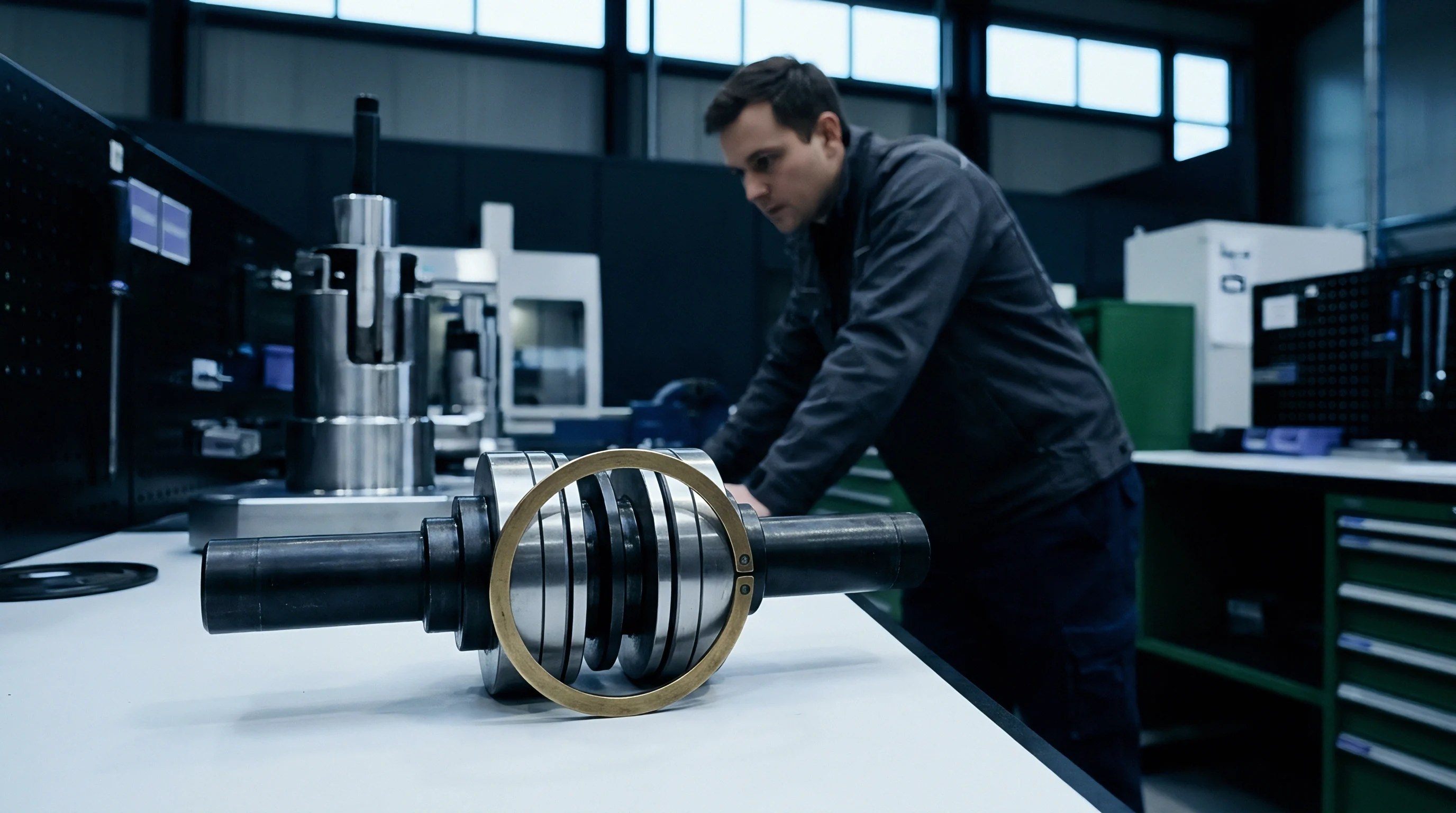
Boundary Separation across Project Delivery
Industry governance structures establish three hierarchical tiers of technical authority across subsea mechanical, pipeline, materials, controls, and marine disciplines. Technical Authority Level 1 (TA1) holds enterprise-wide accountability for company specifications, technical variance dispensations, and endorsement of major project philosophies. Technical Authority Level 2 (TA2) acts at the project level, confirming that field layouts, flowline sizing, subsea manifold piping, and structural templates satisfy statutory mandates and corporate standards.
Technical Authority Level 3 (TA3) operates on the equipment package level, validating manufacturing drawings, witness points during factory acceptance testing, and factory disposition reports.
| Authority Level | Governance Scope | Governing Codes and Industry Standards | Approval Authority Limit | Escalation Trigger |
|---|---|---|---|---|
| TA1: Discipline Lead | Corporate technical specifications and philosophical exemptions | API 17D, ISO 13628-4, DNV-ST-F101 | Company functional specifications and unproven design concepts | Statutory regulatory notifications and cross-discipline safety risks |
| TA2: Lead Subsea Engineer | Project design baseline and supplier deviations | ASME B31.8, API RP 2RD, API 6A | Code-allowable engineering deviations and vendor concessions | Class 1 design changes and safety barrier reductions |
| TA3: Package Engineer | Component manufacture, inspection, and FAT signoff | ASTM A182, API 17J, NACE MR0175 | Minor drawing clarifications and non-structural rework approvals | Material chemistry concessions and pressure rating variances |
Every subsea operating organisation relies on this division of work to prevent single-point technical failures during procurement. Package engineers interface daily with equipment fabricators in forging mills, valve assembly plants, and umbilical carousels. Because commercial milestones incentivize prompt supplier progress payments, equipment vendors systematically request concessions on material testing requirements or machining tolerances.
The TA3 package engineer evaluates whether a variance alters component performance without compromising structural endurance. When an unexpected non-conformance exceeds defined technical limits, the delegation framework forbids local signoff.
Contractual risk allocation breaks down whenever commercial managers acquire administrative power to settle technical non-conformances without the discipline authority signature.

Line Management Pressures on Integrity
Direct conflicts occur when project delivery timelines collide with verification hold points. Subsea projects operate under extreme seasonal weather windows in offshore regions such as the North Sea, the Norwegian Sea, and the Barents Sea. Missing a summer installation window forces a twelve-month deferral of first hydrocarbons.
Line managers face immense institutional pressure to expedite documentation and sign off concession requests. A resilient engineering organisation prevents commercial coercion by lodging the technical authority reporting line entirely outside project delivery. The TA2 reports administratively to a project director, but reports technically to the corporate discipline lead (TA1).
Performance appraisals, compensation revisions, and career progression for technical authorities remain under the authority of the functional engineering head. This reporting architecture protects the independence of subsea specialists when assessing difficult concessions. Subsea manifold headers, high-pressure pipeline end terminations, and deepwater production risers require uncompromising technical diligence.
The commercial organisation manages expenditures; the functional organisation certifies physical safety and structural asset integrity. Bypassing an appointed authority invalidates project insurance covenants, exposes directors to statutory liabilities, and triggers immediate equipment decertification by offshore verification bodies.

Charter
Authority delegation within subsea engineering demands written instruments rather than informal understandings. An engineering chart merely lists operational job titles; it does not grant the right to approve subsea safety equipment or override design standards. An individual assumes technical authority through a formally issued Technical Authority Charter, accompanied by a competence dossier and a signed delegation letter.
The letter defines exact equipment boundaries, maximum operating pressures, material categories, and the specific codes under which the authority operates.
Subsea engineering systems operate under severe dynamic loads, high external hydrostatic pressures, corrosive formation fluids containing hydrogen sulfide, and extreme temperatures. A general mechanical engineer cannot evaluate a titanium stress joint or an unbonded flexible pipe carcass without proven domain competence. The charter establishes boundaries where the individual can make binding decisions, and defines the threshold above which technical decisions must advance to higher authority.

Which Engineering Concessions Expose the Operator to Liability?
Concessions that alter the structural barrier envelope or diminish material corrosion margins expose offshore operators to severe legal liabilities and statutory penalties. In deepwater fields, subsea trees, wellhead connectors, and chemical injection check valves form primary and secondary hydrocarbon containment envelopes. When a forging supplier reports localized yield strength reductions or Charpy V-notch impact toughness values below specified limits, accepting that component introduces systemic risk.
The appointed technical authority evaluates whether the defect impairs safety factors defined in ISO 13628-4 or API 17D.
Operating companies encounter major legal exposures when concessions compromise environmental barriers without third-party design verification. If an unverified concession leads to subsea hydrocarbon release, maritime courts examine whether the signoff followed documented industry processes. Deviations involving weld overlays of Nickel Alloy 625 on AISI 8630 low-alloy steel components represent a classic dispute area.
Inadequate iron dilution checks create susceptibility to hydrogen-induced stress cracking under cathodic protection. Any deviation from qualified welding procedures demands rigorous evaluation by an accredited materials TA1.
- Competence assessment and gap analysis verifies academic qualifications, verified years of design practice, field installation experience, and familiarity with offshore safety directives through rigorous peer review.
- Formal delegation letter execution records the scope of decision rights, technical discipline boundaries, allowable expenditure dispensations, and explicit design code limitations signed by the functional director.
- Periodic independent technical audits inspect previous engineering concession dispositions, design review comments, and material verification records produced by the authority holder during live projects.
- Triennial charter revalidation confirms continuous professional practice, updates authority boundaries against newly published ISO and API specifications, and formalizes re-appointment.
ISO 13628-4 section 5.1 dictates that any deviation from specified material performance targets requires formal approval by the designated operator technical authority prior to component fabrication.

Formal Scope of Package Responsibility
The delegation letter sets explicit boundaries across specific equipment types. A Subsea Controls TA2 holds authority over electro-hydraulic multiplex control pods, subsea distribution units, master control stations, and umbilical terminations. That same engineer possesses no authority over structural umbilical design, armor wire wrap angles, or internal tube crush resistance, which belong to the Umbilical Discipline Lead.
Precision prevents package engineers from assuming authority outside their demonstrated technical background.
Delegation documents delineate the boundary between minor shop-floor deviations and field modifications. Minor deviations involve inconsequential non-conformances, such as surface coating blemishes repaired according to approved specifications. Field modifications involve structural alterations, weld repairs on pressure-retaining forgings, or alterations to safety instrumentation logic.
A package technical authority holds power to evaluate minor factory deviations, whereas major non-conformances require formal technical assessment by the TA1 discipline authority.
Contractual agreements incorporate these authority boundaries directly into subsea supply agreements. When an engineering contractor assumes responsibility for subsea flowline engineering, the procurement contract stipulates that contractor concessions remain subject to the operator TA2 endorsement. The standard engineering terms state that no verbal communication, minutes of meeting, or commercial variation order alters specified technical requirements without a formal Engineering Technical Deviation disposition bearing the authorized technical authority digital certificate.


Concession
Engineering concessions form the crucible where theoretical delegation meets operational reality. Fabrication yards, forging plants, and pipelay vessels encounter unforeseen physical anomalies that demand immediate technical dispositions. Material heat treatments yield unexpected tensile results.
Heavy-wall pipe mills generate occasional wall-thickness variations below nominal design allowances. If an automated cold-wire TIG machine loses shielding gas during a subsea manifold header hot-pass weld, the manufacturer submits an urgent non-conformance report accompanied by a concession request to perform a local manual repair.
Processing an offshore concession requires strict engineering mechanics. The package engineer (TA3) receives the supplier non-conformance report and validates the physical data. The TA3 performs preliminary engineering assessments against project specifications and applicable design codes.
If the concession affects structural integrity, fatigue performance, or design longevity, the TA3 cannot approve the request independently. The file advances through a formalized deviation management software system directly to the project TA2 and the discipline TA1.

Deviation Review Cycles in Fast-Track Subsea Campaigns
Fast-track subsea tieback campaigns place severe strain on technical authority delegation systems. Project directors push for compressed procurement cycles to achieve earliest production. When a forging supplier reveals that a 15,000 psi subsea production tree valve body exhibits localized micro-porosity during ultrasonic inspection, line management seeks immediate disposition.
An unauthorized concession at this junction presents catastrophic long-term consequences. The technical authority evaluates the ultrasonic indication using fracture mechanics analyses, applying BS 7910 guidelines to determine critical flaw sizes under cyclic deepwater thermal and pressure loads.
| Component Category | Physical Non-Conformance | Discipline Scope | Reviewing Authority | Mandatory Validation Artefact |
|---|---|---|---|---|
| UNS S31803 Duplex Piping | Ferrite phase balance outside 35-65% target | Subsea Materials | TA1: Materials Discipline Lead | ASTM E562 microstructural point-count analysis and ferric chloride corrosion testing |
| AISI 4130 Forgings | Charpy V-notch energy below 42 J at -46°C | Welding and Metallurgy | TA1: Integrity Authority | BS 7910 fracture toughness assessment and CTOD testing |
| High-Pressure Flowline | Local wall thinning exceeding 12.5% mill tolerance | Subsea Pipeline | TA2: Pipeline Technical Lead | ASME B31G burst capacity calculation and finite element stress verification |
| Production Tree Valve Trim | Tungsten carbide coating thickness deviation | Subsea Mechanical | TA2: Package Authority | Micro-hardness profiling and vendor qualification endurance data |
| Subsea Umbilical Armoring | Zinc galvanizing thickness below class standard | Marine Umbilicals | TA3: Umbilical Engineer | Salt spray corrosion chamber validation and sacrificial anode recalculation |
Every concession file demands clear substantiating data. The technical authority does not evaluate concessions on trust or vendor assurances. The documentation dossier must provide certified material test certificates, calibrated laboratory readings, finite element modeling runs, and life-cycle fatigue assessments.
If a pipeline fabrication yard requests permission to waive post-weld heat treatment on an unlisted forging geometry, the technical authority demands physical macro-sections, hardness surveys, and cross-weld tensile tests from sacrificial test coupons before completing an evaluation.
Laboratory ferric chloride pitting corrosion tests under ASTM G48 Method A verify whether duplex stainless steel retains passivity following an unauthorized fabrication thermal cycle.

Where Does Final Design Accountability Rest?
Final accountability remains anchored to the individual signature of the appointed technical authority. While project teams utilize external engineering consultants to perform specialized numerical modeling, external consultants cannot sign concession approvals. The internal technical authority evaluates the consultant findings, reviews underlying boundary conditions, and formally accepts personal ownership of the design deviation.
This mechanism prevents operating companies from outsourcing technical accountability to external contractors.
- Unverified supplier finite element simulations that rely on idealized linear-elastic material models rather than nonlinear plastic-collapse formulations under external hydrostatic pressure.
- Omission of corrosive fluid environmental factors during stress corrosion cracking evaluations of high-strength fasteners operating in cathodic protection overpotential zones.
- Improper boundary constraints in thermal expansion assessments that underestimate pipeline walking forces at subsea manifold tie-in spools.
- Relaxation of non-destructive testing criteria without prior verification of critical flaw sizes through physical crack tip opening displacement tests.
- Substitution of standard commercial elastomer seals in subsea control valves exposed to high-pressure gas decompression and methanol flushing fluids.
Engineering contractors occasionally argue that minor fabrication delays excuse temporary relaxations of quality standards. When challenged on delivery milestones, manufacturing executives frequently assert that their standard commercial processes have successfully supplied adjacent industries without requiring such extensive non-destructive testing dossiers.

Veto
True technical authority manifests through the power of technical refusal. An engineering manager possesses administrative authority to manage people; a technical authority possesses sovereign authority to shut down engineering activity or reject non-compliant equipment. When a TA2 or TA1 exercises a technical veto, project line management cannot override the disposition.
Reversing a technical veto requires formal escalation to the corporate Chief Engineer or the Chief Technical Officer, accompanied by an independent engineering review panel.
The veto mechanism protects offshore safety and environmental integrity. Deepwater projects operate under unforgiving physics. In deepwater fields, pressure containment boundaries face extreme cyclic thermal gradients, internal multiphase slugging, and severe slug-induced vibrations.
Subsea equipment cannot be maintained through regular visual inspections. Subsea integrity must be verified prior to equipment load-out. If an unverified seal design or an uncertified forging arrives at the offshore mobilization dock, the technical authority halts the load-out process.

Commercial Escalation versus Technical Refusal
Offshore installation spreads generate staggering standby expenditure rates. A deepwater pipelay vessel, accompanying dive support vessels, anchor handlers, and supply boats cost operators between four hundred thousand and eight hundred thousand dollars per day. When a pipelay contractor detects an automated ultrasonic testing anomaly on a high-pressure subsea tie-in weld, the project director experiences immediate commercial strain.
The installation vessel cannot hold station indefinitely without incurring enormous financial burn.
Vessel spread costs can never justify lowering code-mandated acceptance criteria during offshore installation.
The pipeline technical authority on board the installation vessel evaluates whether the weld anomaly falls within the engineering critical assessment limits established under DNV-ST-F101. If the defect length or height exceeds allowable limits, the pipeline technical authority refuses the weld. The line manager cannot instruct the welding team to continue laying pipe.
The weld must be cut out and repaired, regardless of the vessel standby cost. The technical authority delegation charter protects this inspector from offshore managerial coercion. The operational chain of command terminates at the safety boundary.

Package Verification under Vessel Standby Dayrates
Managing the interface between commercial risk and technical compliance demands predefined escalation workflows. Technical authorities cannot exercise vetos arbitrarily; they must ground decisions in verified specifications, statutory legislation, and empirical data. When an offshore non-conformance arises, the package authority follows a structured review process to settle the question rapidly without sacrificing diligence.
- The technical authority receives the physical inspection report and immediately alerts project line management to the technical hold.
- The authority checks the anomaly against project engineering critical assessments and allowable flaw sizes defined by the design code.
- The engineer verifies whether the observed anomaly represents a repeatable fabrication defect requiring systemic intervention or an isolated occurrence.
- The specialist confirms whether safe operational alternatives exist, such as operating under derated pressures pending further verification, or if immediate physical repair is required.
- The authority issues a formal, time-stamped Technical Instruction Notice recording the technical rationale, referenced code clauses, and required corrective actions.
This disciplined process prevents offshore friction from degenerating into personal disputes. Line managers understand that technical authorities act under professional engineering codes of conduct and statutory mandates. Under corporate governance charters, retaliating against an engineer for exercising a technical veto represents an actionable breach of corporate compliance policies.
The central unresolved tension remains determining how long an operating company can sustain substantial daily vessel standby costs before commercial management appeals a conservative technical refusal to the executive board level.


Severance
Organisational structures must withstand the departure of key technical personnel without losing engineering integrity. Technical authority delegation resides in the appointment, not in the person. When a Lead Subsea Pipeline Engineer (TA2) resigns, that individual cannot take the authority rights away or transfer them informally to an interim successor.
A technical authority role cannot be occupied through casual succession. If an authority holder leaves, the role remains vacant until an interim or permanent candidate completes the formal competence evaluation and receives an executed Technical Authority Charter.
Subsea engineering projects frequently employ interim engineering managers during transitional delivery phases. A commercial pitfall occurs when organisations permit interim contractors to assume full TA1 or TA2 delegation without corporate vetting. Consulting contractors face inherent structural conflicts of interest; their commercial assignments depend on customer satisfaction and project progress.
Entrusting unmonitored technical veto power to external contractor personnel can undermine the integrity verification chain unless clear corporate controls govern their appointments.

Contractual Indemnity and Independent Professional Duty
A technical authority signs documents as a professional engineer operating under statutory codes of conduct. This professional responsibility creates specific legal exposures in common-law and civil-law jurisdictions. While corporate indemnities protect employees from direct financial liability for ordinary negligence, corporate protection ends where gross negligence or willful misconduct occurs.
If an engineer signs a fraudulent technical concession to assist project line management, that individual faces personal professional disqualification, civil claims, and potential statutory criminal charges under offshore safety legislation.
| Authority Tier | Notice Period Duration | Garden Leave Entitlement | Post-Termination Technical Restraint | Statutory Indemnity Mechanism |
|---|---|---|---|---|
| TA1: Discipline Lead | 6 months | Mandatory 3 months | 12 months against direct project suppliers | Corporate director and officer insurance with professional liability indemnity riders |
| TA2: Lead Subsea Engineer | 3 months | Discretionary 1 month | 6 months against immediate engineering contractors | Standard employer vicarious liability with qualified performance protections |
| TA3: Package Engineer | 1 month | None | None | Standard employment contractual indemnity coverage |
Notice periods for senior technical authorities must reflect the replacement lead time within specialized subsea disciplines. Sourcing an experienced subsea materials and corrosion specialist capable of acting as an enterprise TA1 requires four to nine months in competitive international labor markets. If a contract carries a brief four-week notice period, a sudden resignation leaves multi-billion-dollar offshore developments without qualified technical governance.
During this vacancy window, ongoing fabrication either halts or proceeds at extreme commercial risk without formal concession signoffs.

Continuity Architecture for Package Successors
An effective delegation framework includes structured handover files and continuity protocols. The departing authority compiles an exhaustive technical status dossier documenting active concessions, unresolved non-conformances, pending vendor qualification reviews, and active technical audits. The outgoing engineer cannot simply brief the successor verbally.
The handover file catalogs every technical deviation approved during that engineer’s tenure, cross-referenced against original procurement purchase orders and equipment serial numbers.
Senior executive leadership maintains continuous oversight through annual delegation audits. Corporate technical audit panels periodically examine a random sample of concession files signed by TA2 and TA3 authorities across all live assets. These audits review whether authorities operated strictly within their financial and technical boundaries, whether technical rationale met published corporate benchmarks, and whether any evidence of commercial coercion influenced the outcomes.
Engineering competence management remains an operational baseline rather than an administrative human resources exercise. By documenting authority boundaries, separating line management budgets from safety signoffs, enforcing written delegation instruments, and safeguarding the technical veto, subsea engineering organisations build robust protection against catastrophic subsea equipment failures. The integrity of deepwater subsea hardware endures only as long as the technical authority delegation chain remains completely uncompromised by project commercial targets.