Structuring Borrowing Base Eligibility around Supplier Minimum Order Quantities
Structure dedicated inventory sublimits with extended aging bands to maintain borrowing base availability across large supplier batch commitments.


Intake
Working capital facilities break when procurement minimums outrun commercial velocity. A contract manufacturer signs raw material purchase agreements demanding forty-metric-ton production campaigns, yet customer delivery schedules absorb five metric tons monthly. Cash vanishes into raw stores eight months before conversion into invoices.
Asset-based lenders review accounts receivable and finished goods, immediately discounting slow-moving lots that exceed ninety days on hand. The commercial gap between vendor minimum batch constraints and collateral definitions forms an unfunded cash drain.
Credit committees examine liquidation values rather than procurement contracts. When a distributor purchases imported packaging materials subject to full-container-load constraints, the transaction consumes immediate cash availability. The borrowing base formula measures eligible inventory under strict criteria, typically capping raw materials at sixty percent of lower of cost or market value.
Slow-turn provisions reduce advance rates to zero once inventory ages past one hundred and twenty days. Buying to satisfy vendor thresholds forces balance sheets into immediate collateral compression.
A ninety-day inventory turnover cap reduces borrowing availability to zero on unconsumed portions of twelve-month purchase minimums.
Unadjusted borrowing certificates treat each incoming delivery as uniform collateral. Lenders evaluate standard inventory reporting and discover thirty percent of raw stock sitting static across consecutive quarters. The resulting audit write-down strips borrowing availability without warning, producing sudden cash freezes across active production lines.
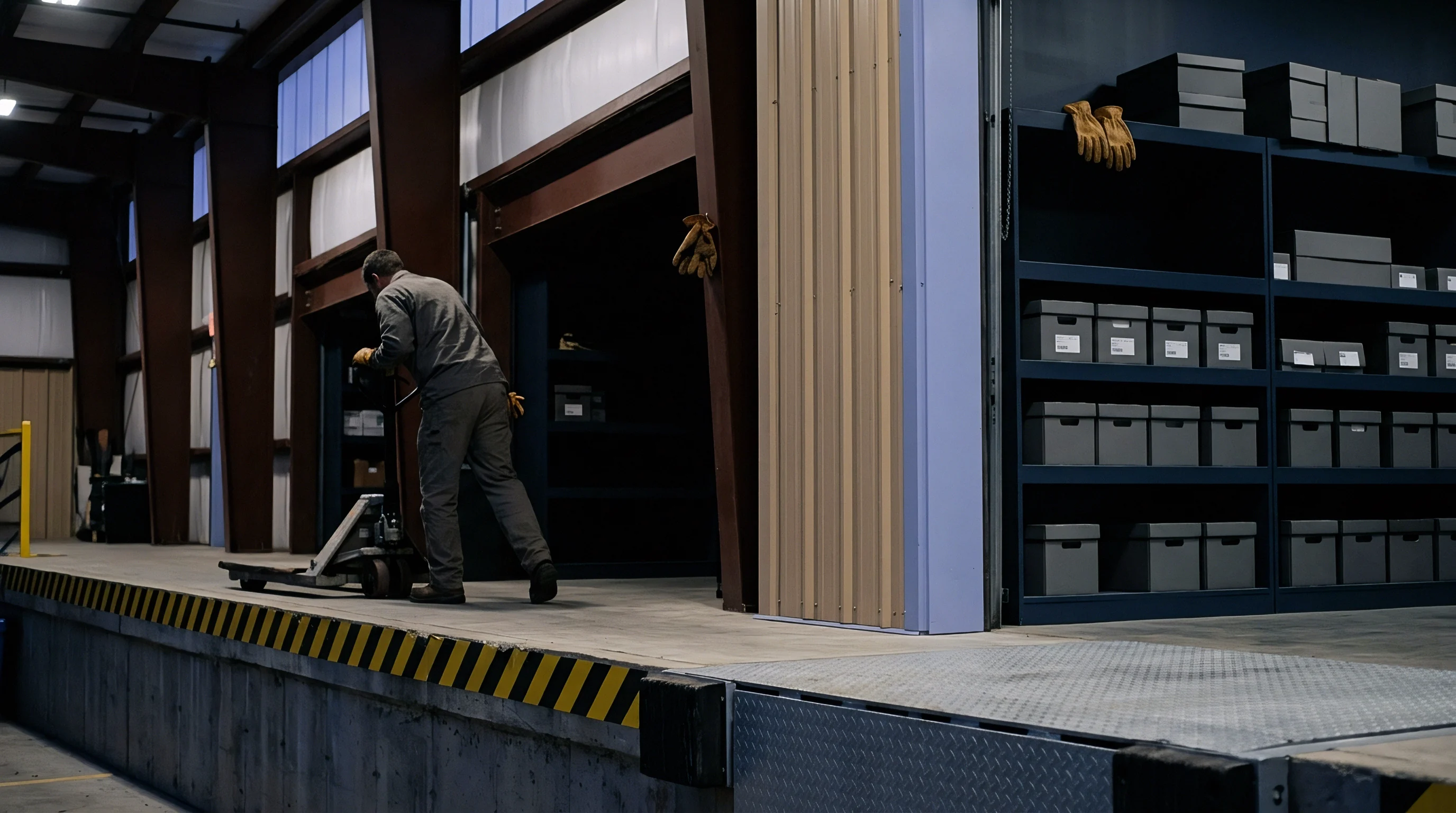
Purchasing Batch Constraints across Core Industrial Sectors
Manufacturing inputs dictate distinct contractual order floors based on processing physics and freight consolidation economics. Primary producers impose these constraints to prevent production downtime and chemical changeover expenses on continuous operating machinery.
| Industrial Sector | Physical Unit Constraint | Landed Working Capital Value | Standard Consumption Window | Typical Collateral Advance Rate |
|---|---|---|---|---|
| Specialty Chemical Synthesis | 20 MT Bulk Tanker | $160,000 | 180 to 240 Days | 35% of Cost |
| Flexible Barrier Packaging | 10,000 Kilograms Master Roll | $85,000 | 120 to 180 Days | 45% of Net Orderly Liquidation Value |
| Precision Cold-Rolled Strip | 25 MT Master Coil | $55,000 | 90 to 150 Days | 50% of Lower of Cost or Market |
| Pharmaceutical Active Excipient | 5 Drum Lot Batch | $125,000 | 210 to 300 Days | 20% of Cost |
Capital drain escalates when minimum procurement requirements exceed standard consumption intervals. Operating lines face margin erosion through warehousing charges, secondary financing interest, and immediate liquidity reserves imposed by credit monitoring teams.


Cargo
Ocean freight logistics penalize fragmented consignments. Full container loads present lower freight rates per cubic meter, prompting logistics teams to combine six months of packaging supplies into single international bookings. The treasury department absorbs the resulting imbalance.
The goods arrive at terminal discharge points where customs clearance, container demurrage risk, and drayage fees draw cash reserves down before warehouse check-in occurs.
Lenders exclude goods in transit unless strict documentation protections exist. A commercial invoice and bill of lading do not satisfy standard field examiners without title documentation, direct marine risk policies naming the lender as loss payee, and absolute control agreements with freight intermediaries. Inventory trapped on water for thirty-five days consumes revolving credit balance while generating zero eligible availability under conventional borrowing certificates.

Physical Aging across Segregated Warehouse Storage
Pallets placed into warehouse racking follow automated enterprise resource schedules. A single twenty-foot container of extruded aluminum profiles holds twenty thousand kilograms. Monthly consumption averages two thousand kilograms across custom extrusion runs.
The initial four months of inventory draw standard collateral valuations. The remaining balance hits the ninety-day aging boundary, triggering mandatory reporting reserves under standard credit covenants.
Field examiners audit bin cards against stock keeping unit movement logs. If an examiner finds twenty identical bundles untouched for four months, that inventory is flagged as slow-moving. Borrowers dispute these adjustments by presenting annual customer contracts.
Lenders reject long-term commercial expectations, relying strictly on trailing thirty-day stock drawdown velocity.
Non-negotiable marine bills of lading without endorsed collateral assignments render waterborne inventory entirely ineligible for revolving credit advances.
Storage density problems compound collateral write-downs. Off-site staging yards demand third-party landlord waivers, preventing landlords from claiming distraint on debtor stock. If a landlord refuses the standard tri-party lien waiver, the lender declares all stock inside that facility ineligible.
High procurement minimums force businesses to use secondary contract facilities, raising eligibility disqualifications across satellite warehouses.

How Rapidly Does Excess Purchase Volume Age?
Stock aging accelerates as demand seasonality shifts against static procurement calendars. When seasonal production peaks pass, unsold inventory components lose liquidation value rapidly.
- Receiving Intake Classification registers the delivered bill of materials cost into the enterprise ledger system, establishing the baseline date for collateral verification tests.
- Sixty Day Turnover Review highlights excess quantities remaining on site, triggering internal warnings before banking examiners conduct monthly borrowing base reviews.
- Ninety Day Ineligibility Reserve reduces allowable availability by fifty percent across all lots showing trailing sales velocity below standard baseline requirements.
- One Hundred Twenty Day Disqualification strips borrowing capacity to zero value, transferring the entire holding expense directly onto unsupported operating cash reserves.
Vendors maintain that single production run economics require minimum continuous batch weights, leaving the customer responsible for warehousing balances that exceed seasonal turnover curves.


Carveout
Legal agreements define borrowing base availability through exclusions rather than inclusions. Standard definitions begin with gross inventory, progressively carving out packaging materials, obsolete stock, damaged items, work in process, and quantities exceeding turnover parameters. When minimum supplier thresholds require purchases that exceed trailing sixty-day usage, borrowers negotiate specific covenant provisions to prevent immediate collateral disallowances.
Sublimits isolate high-minimum purchases within controlled parameters. A borrower establishes a distinct sub-facility for bulk raw materials, capped at fifteen percent of total revolving availability. This mechanism insulates the primary revolving credit facility from seasonal procurement shocks.
Under this structure, raw material inventories stay eligible under customized ninety-to-one-hundred-eighty-day aging bands, provided that finished goods turnover maintains standard operational velocity.

Contractual Modifications for High-Minimum Raw Materials
Borrowers structure specialized eligibility provisions inside credit and security agreements. Without these specific modifications, standard language automatically excludes procurement volumes that do not clear warehouse racks within generic timeframes.
- Extended Aging Carveouts adjust eligibility schedules from ninety days to one hundred and eighty days for certified non-perishable primary feedstocks supporting verified customer orders.
- Pre-Sold Inventory Endorsements permit inclusion of raw materials covered by non-cancelable customer purchase contracts, bypassing traditional velocity tests through explicit contract assignment.
- Letter of Credit In-Transit Rungs grant immediate sixty percent advance rates on waterborne cargo supported by documentary letters of credit and negotiable carrier bills of lading.
- Raw Material Split Sublimits create dedicated dollar thresholds for bulk materials, ensuring standard finished goods availability calculations remain insulated from purchasing spikes.
Lenders require quarterly orderly liquidation appraisals before granting extended aging provisions. Appraisers evaluate market depth, historical secondary recovery, and repackaging costs. If secondary recovery on bulk chemical drums falls from sixty percent to thirty-five percent of cost, the appraisal adjustment reduces advance rates across the entire carved-out inventory category.
Tri-party processing agreements offer another structural avenue. A supplier agrees to hold reserve stocks at their own regional warehouse, delivering smaller batch sizes against weekly pull notices. The buyer pays a storage premium per unit, avoiding massive upfront cash commitments and bypasses inventory ineligibility penalties entirely.
A borrower with dedicated finished goods backlogs can preserve raw material availability by pledging irrevocable customer purchase orders directly to the lending group.
The standard credit agreement amendment incorporates Section 2.1(b) definitions, establishing that inventory acquired under verified non-cancellable supply contracts remains eligible up to one hundred and fifty days post-delivery, provided overall borrowing availability maintains a fifteen percent minimum cushion above total commitments.


Appraisal
Net orderly liquidation value benchmarks determine the borrowing base. Lenders do not lend against inventory cost. They retain valuation specialists who determine recovery rates under an eight-week forced disposal scenario.
Bulk commodities bought under strict volume constraints encounter severe liquidator discounts when specialized coatings, custom slit widths, or private-label additives prevent open market auction sales.
Specialized inventory liquidation relies on specialized buyers. When a steel fabricator holds one hundred metric tons of custom-alloy slit coils ordered to meet mill minimums, a liquidator cannot sell those coils to standard structural fabricators. The liquidator contacts secondary scrap brokers, reducing gross recovery to thirty percent of landed invoice cost.
Field examiners translate this recovery haircut directly into the borrowing base formula by slashing advance rates from sixty-five percent to thirty percent.

Collateral Valuation under Forced Disposition Conditions
Valuation models determine liquidation recovery by analyzing historical secondary transactions, freight deduction estimates, and warehouse preservation overhead.
| Material Category | Landed Cost Per Unit | Liquidation Discount Rate | Net Orderly Recovery Rate | Effective Advance Rate |
|---|---|---|---|---|
| Standard Hot-Rolled Sheet | $900 / MT | 18% | 82% of Cost | 70% of Net Orderly Value |
| Slit Custom Electrical Steel | $2,400 / MT | 58% | 42% of Cost | 35% of Net Orderly Value |
| Generic Resin Pellets (Polypropylene) | $1,350 / MT | 12% | 88% of Cost | 75% of Net Orderly Value |
| Custom Color-Compounded Resin | $2,800 / MT | 64% | 36% of Cost | 30% of Net Orderly Value |
Liquidation tests become volatile when order minimums force raw material commitments that cannot easily serve secondary customers. Standard raw materials command strong advance rates. Custom variations yield immediate liquidation discounts, shrinking the debt support available against working capital outlays.

Can Sublimit Structures Protect Formula Availability?
Establishing segregated formula limits prevents bulk raw material write-downs from triggering immediate technical defaults on broader facility availability. The mechanics depend on separate pools for raw inputs, finished inventory, and qualified trade receivables.
Consider a manufacturing entity generating $2,000,000 in monthly revenue with an active $4,000,000 revolving credit facility. The supplier requires minimum chemical orders of $600,000 per delivery. Normal consumption sits at $100,000 monthly, requiring six months to exhaust a single delivery batch.
Under a generic borrowing base agreement, inventory turns below three times per year trigger automatic reserve deductions. By month three, $300,000 of the inventory lot crosses the ninety-day threshold. The lender marks the older lot balance ineligible.
Borrowing availability contracts by $150,000 precisely when the business needs cash to cover production payroll and power overhead.
Under a segregated sublimit agreement, the parties set a $750,000 dedicated Raw Material Procurement Pool. The eligibility parameters for this pool evaluate consumption across a two-hundred-day schedule, tied to documented sales backlogs. The calculation applies a lower advance rate of forty percent, yet maintains eligibility across the entire holding period.
Availability stays steady at $240,000 without abrupt cliff-edge exclusions.
Cash availability correlates directly with raw material fungibility during field audit reconciliations.


Covenant
Compliance tests function as circuit breakers on operating lines. A borrower can manage technical inventory eligibility while violating financial covenants caused by holding unconsumed stock. Inventory holding costs include third-party logistics invoices, insurance riders, material handling, scrap leakage, and monthly floor-plan interest.
These expenses accumulate in operating expenses, reducing earnings before interest, taxes, depreciation, and amortization.
Fixed charge coverage ratios measure whether operational earnings cover debt service and lease commitments. When large purchasing minimums trap capital on pallets, businesses draw junior facilities or stretch trade payables to meet routine obligations. Working capital stress appears in days payable outstanding metrics, alerting senior lenders to deteriorating supplier terms.
A single breach of the fixed charge coverage ratio freezes discretionary facility draws, leaving the borrower unable to fund the next scheduled supplier order.

Intercreditor Structures for Inventory Financing
Alternative inventory financing structures require coordination between primary asset-based lenders and trade finance providers. Primary lenders resist junior liens on inventory assets unless definitive intercreditor agreements clarify collateral boundaries.
A purchase order financing structure resolves minimum volume deadlocks by having an auxiliary lender fund the supplier invoice directly. The purchase order lender holds an absolute first lien on the specific goods purchased until delivery to the customer occurs. Upon customer invoicing, the asset-based lender advances against the resulting qualified account receivable, wiring funds directly to clear the purchase order facility.
This settlement pathway allows companies to absorb massive supplier batch requirements without consuming primary borrowing base headroom.
Trade acceptance mechanisms function similarly. The buyer issues bank-guaranteed acceptances maturing in one hundred and eighty days, aligning payment obligations with actual consumption schedules. Primary asset lenders treat these liabilities as trade debt rather than senior funded borrowings, protecting leverage covenant calculations while keeping raw materials off conventional borrowing base exclusions.
The core structural question remains how lenders and borrowers can build programmatic liquidity tools that automatically adjust collateral advance rates against supplier volume thresholds without demanding continuous contractual forbearance.