Quantifying Dynamic Cross Dock Marshalling Freight Reserves across Volatile Third Party Logistics Networks
Accruing variable freight reserves based on real-time dwell telemetry prevents mid-quarter cash drains and protects credit facility borrowing bases.


Slack
Intermediate freight facilities operating under rapid transfer arrangements absorb volume surges by expanding staging lane allocations. When inbound trailers arrive outside scheduled receiving windows, cross-dock floor management shifts available space from throughput clearance to temporary holding space. This reallocates square footage originally set aside for immediate outbound loading, forcing fork trucks to navigate congested aisles and slowing overall facility cycle times.
The resulting capacity drop compounds quickly during seasonal peaks, turning high-velocity transit nodes into unintended short-term warehouses.

Staging Area Allocation for Cross-Docking Operations
Transshipment hubs require precise spatial planning to prevent freight congestion during arrival spikes. Dock operations divide floor footprints between active unloading zones, inbound sorting tracks, and outbound lane marshalling bays. Floor space runs tight.
When receiving volume exceeds hourly processing thresholds, staging bay capacity contracts immediately, forcing inbound shipments into secondary overflow zones.
Truck delays expand yard costs. Each hour a trailer sits waiting for dock door access increases yard spotter movements and driver detention accruals. Logistics managers track dock door utilization against planned throughput targets, yet unannounced carrier delays break these balances.
The financial drag manifests in elevated re-handling expenses as warehouse labor moves pallets multiple times across the floor to clear access to priority outbound trailers.

Buffer Inventory Dynamics across Variable Inbound Schedules
Managing temporary storage volume demands real-time tracking of truck arrival windows and departure commitments. Inbound scheduling variance creates unpredictable peaks in floor occupancy. When incoming shipments arrive simultaneously, cross-dock supervisors hold freight in temporary marshalling lanes rather than directly cross-docking to waiting trailers.
The operational cost of managing these buffer reserves scales exponentially with facility congestion levels.
| Facility Type | Nominal Dwell Window (Hours) | Peak Occupancy Threshold (%) | Daily Yard Premium Rate ($/Pallet) | Working Capital Drag Per Tonne ($) |
|---|---|---|---|---|
| High-Throughput Parcel Hub | 4 ~ 12 | 85 | 14.50 | 22.10 |
| Regional Pallet Cross-Dock | 12 ~ 36 | 75 | 18.00 | 34.50 |
| Cold-Chain Transfer Depot | 6 ~ 18 | 70 | 42.00 | 78.00 |
| Bonded Import Intermediate Hub | 24 ~ 72 | 65 | 28.50 | 56.00 |
Cross dock marshalling buffers absorb arrival delay variance up to the threshold where lane congestion restricts forklift movement.
Calculating the precise volume of reserve capacity necessary to maintain fluid operations requires evaluating historical carrier arrival punctuality. Facilities setting reserve allocations based on mean arrival times systematically underfund space requirements during carrier disruptions. A robust reserve model accounts for tail-risk arrival clustering, reserving sufficient floor area to absorb multi-trailer arrivals without spilling into active transport aisles.
Maintaining off-site staging clearance keeps cross-dock throughput running at nominal capacity during peak carrier delays.


Variance
Third-party transport networks exhibit unpredictable lead time fluctuations that skew planned shipping expenses. Line-haul congestion, port gate queues, and driver shortages introduce dwell time jitter into intermodal transfer schedules. When freight sits immobilized at intermediate cross-dock hubs, transport contracts trigger automated demurrage penalties, storage surcharges, and secondary drayage fees that erode gross trading margins.
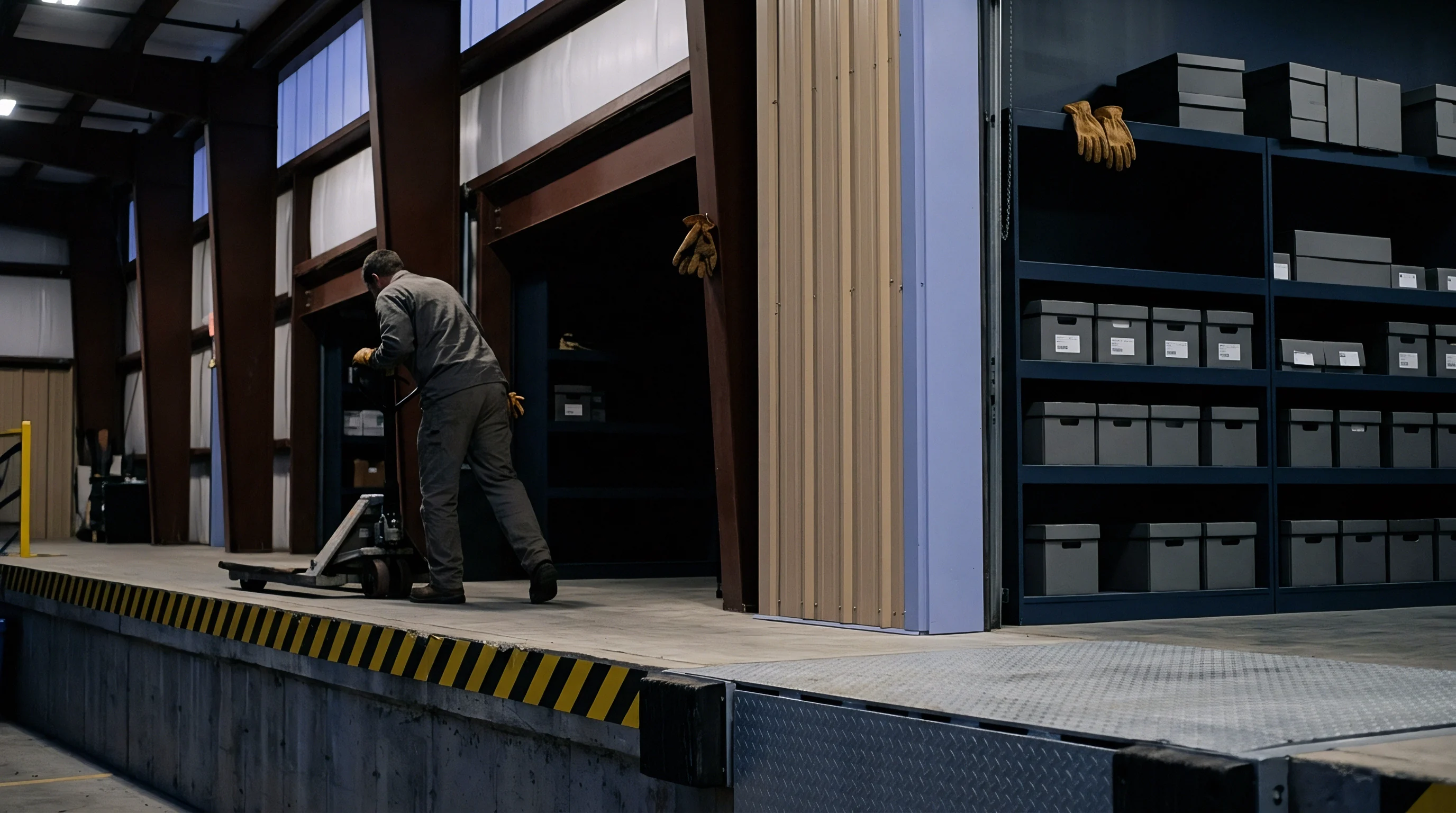
Quantifying Dwell Time Jitter and Line-Haul Delays
Carrier performance metrics reveal substantial divergence between contracted transit schedules and actual gate departures. Spot freight rates surge during quarter-end. Line-haul carriers encountering highway delays miss scheduled cross-dock loading slots, causing downstream supply chain interruptions.
The cash impact of these delays appears in accrued freight expense line items before carrier invoices are delivered for payment reconciliation.
Detention penalties accrue fast. Standard third-party logistics agreements allow a initial grace period, typically two hours, for trailer loading and unloading. Dwell time beyond this free window incurs hourly detention billing rates ranging from sixty to one hundred twenty dollars per trailer.
Uncollected shipping documentation and delayed customs clearances extend trailer hold times further, consuming cash reserves earmarked for operational expansion.

Which Dwell Metrics Predict Liquidity Depletion in Cross Dock Hubs?
Monitoring trailer retention statistics offers early visibility into unbilled facility detention expenses. Logistics directors analyze mean dwell hours alongside standard deviation metrics to identify systemic carrier delays. High dwell time variance correlates directly with balance sheet cash volatility, as sporadic freight surcharges arrive weeks after order fulfillment.
- Unmonitored Trailer Staging leads to unbilled detention fees that accumulate unnoticed until carrier invoice delivery.
- Static Freight Expense Accruals understate cash commitments during periods of high spot-rate volatility.
- Inaccurate Pallet Count Calculations skew facility storage allocations and force emergency truck diversions.
- Delayed Bill of Lading Reconciliation defers cost recognition past the financial reporting cutoff window.
Inbound staging delays exceeding four hours expand total cross-dock working capital commitments by 14 percent when freight contracts mandate daily dwell penalties.
Quantifying financial risk across volatile transport routes demands continuous variance tracking. Linear freight budget projections fail because carrier rate penalties step upward in non-linear tiers. Establishing dynamic accrual reserves based on real-time transit telemetry protects net cash flow against unexpected logistics cost spikes.
Third-party facility operators state that unexpected chassis shortages at receiving ramps prevent prompt outbound trailer transfers.


Crate
Physical unit loads passing through consolidation terminals incur cumulative handling fees based on stackability and volume footprint. Oversized or non-standard cargo disrupts standard pallet racking configurations, occupying excess floor space in cross-dock marshalling yards. Facilities charge premium storage rates for floor-loaded or non-stackable units, directly increasing the landed cost of goods sold.

Floor Storage Unit Density and Floor Charge Metrics
Facility rate structures enforce per-pallet fees that scale rapidly once dwell duration passes initial grace periods. Re-handling fees drain gross trading margin. Cross-dock operators publish standardized rate cards specifying base transit handling fees alongside hourly floor storage escalation rates.
When freight remains uncollected, floor space consumption charges multiply daily, depleting product margin structure.
Off-site staging doubles drayage costs. When internal cross-dock lanes reach maximum physical density, terminal managers transfer overflow unit loads to off-site warehousing facilities. This emergency movement incurs short-haul transport charges, double handling costs, and secondary storage administrative fees that penalize delayed inventory lots.
| Dwell Interval (Hours) | Standard Storage Fee ($/Pallet/Day) | Congestion Surcharge ($/Pallet/Day) | Re-Handling Fee ($/Pallet) | Effective Daily Margin Drag (%) |
|---|---|---|---|---|
| 0 ~ 12 | 0.00 | 0.00 | 4.50 | 0.15 |
| 13 ~ 24 | 12.50 | 5.00 | 4.50 | 0.65 |
| 25 ~ 48 | 28.00 | 15.00 | 12.00 | 1.85 |
| 49+ | 55.00 | 35.00 | 25.00 | 4.20 |

Pallet Dwell Decay Mechanics under Short-Term Storage Rate Cards
Storage cost tiers step upward at twenty-four and forty-eight hour thresholds across commercial warehouse agreements. Calculating the true cost of inventory held in intermediate transit requires modeling storage fee escalation profiles. Inventory controllers tracking cash flow cycles must recognize these floor charges as active liabilities, accruing costs daily rather than awaiting month-end settlement statements.
- Measure average inbound trailer queue times over a fourteen-day rolling window.
- Calculate peak-to-average dwell variance ratios across each receiving dock door.
- Multiply excess dwell hours by tiered carrier detention rate schedules.
- Establish dynamic freight reserve line items inside monthly management accounts.
- Audit weekly carrier invoices against automated dock door timestamp records.
Under standard Baltic and International Maritime Council storage terms, uncollected staging freight accrues escalating daily detention rates after twenty-four hours of facility dwell.
Optimizing unit-load density inside marshalling bays requires rigorous enforcement of packaging standards. Loose, damaged, or un-palletized freight consumes disproportionate floor space, slowing fork truck clearance rates and triggering unit-load re-configuration surcharges from facility operators.
Miscalculating unit-load footprint requirements forces emergency transfers to off-site staging facilities, raising spot drayage expenses.


Exposure
Financial liabilities tied to unbilled transit services obscure true working capital availability during rapid expansion phases. Freight forwarders, line-haul carriers, and cross-dock operators routinely bill services weeks after delivery completion. Unbilled freight reserves reduce available cash.
Without accurate accrual mechanisms, published financial statements overstate short-term liquidity while hiding significant transport debt obligations.

Working Capital Allocation for Unbilled Freight Reserves
Accounting standards mandate accruing estimates for completed transport movements prior to receiving formal carrier invoices. Freight bills arrive with variable documentation fees, fuel surcharges, and terminal handling add-ons that diverge from initial spot quotes. Audit every carrier invoice.
Establishing dedicated reserve accounts based on historical variance percentages protects corporate balance sheets from unexpected liquidity drains.
Consider a practical operational sequence involving a 500-pallet intermediate shipment of industrial components moving through a high-volatility cross-dock network. Baseline freight costs for the shipment are projected at $45,000 for line-haul transport with an expected cross-dock dwell window of 18 hours per pallet lot. Unforeseen carrier congestion at the receiving hub extends average dwell time to 42 hours per lot.
The facility charges no storage for the first 12 hours, $15.00 per pallet for hours 13 to 24, and $35.00 per pallet plus a $15.00 congestion surcharge for hours 25 to 48. In addition, 10 pallet lots require temporary off-site transfer, incurring an extra drayage charge of $1,200. The calculation walks forward as follows:
- Base line-haul transport contract: $45,000.00
- Tier 1 storage fee (500 pallets × $15.00 for hours 13-24): $7,500.00
- Tier 2 storage fee (500 pallets × $35.00 for hours 25-42): $17,500.00
- Facility congestion surcharges (500 pallets × $15.00): $7,500.00
- Emergency off-site drayage transfer fee: $1,200.00
- Total accrued transit liability: $78,700.00
This single network disruption expands transport expenses by $33,700.00, representing a 74.8 percent increase over the base contract. The gross margin on the underlying product batch drops from an anticipated 22.4 percent to 14.1 percent once unbilled reserves are booked under IAS 37 provision guidelines. Cash conversion cycle calculations expand simultaneously from 42 days to 51 days, tying up working capital and depleting available cash lines.

Cash Conversion Drag Driven by Third Party Invoicing Delays
Late billing settlement cycles obscure real transport costs, creating false profitability signals in monthly accounts. Unbilled freight depletes cash. When finance teams compute net working capital without factoring in dynamic freight reserves, reported liquidity ratios reflect false cash headroom.
Carrier charges accrue daily. Implementing automated invoice-matching procedures reduces the time lag between service execution and balance sheet recognition.
- Weekly Freight Billing Audits reconcile carrier invoices against digital gateway records before balance sheet sign-off.
- Dynamic Demurrage Accruals adjust liability reserves based on real-time trailer positioning telemetry.
- Contractual Rate Caps limit third-party yard surcharges during unexpected port or hub congestion events.
- Integrated Cash Flow Stressing factors freight reserve expansion directly into liquidity forecast models.
| Operational State | Average Dwell (Hours) | Unbilled Reserve Accrual ($) | Cash Conversion Cycle (Days) | Available Liquidity Impact ($) |
|---|---|---|---|---|
| Baseline (Nominal Flow) | 12 | 14,200 | 38.4 | Base Credit Line |
| Moderate Network Delay | 28 | 48,600 | 43.1 | -34,400 Cash |
| Severe Hub Congestion | 54 | 122,800 | 51.6 | -108,600 Cash |
| Extended Network Dislocation | 86 | 245,000 | 62.0 | -230,800 Cash |
| Methods Note: Data reflects modeled cash flows for a mid-market industrial distributor operating under standard 30-day carrier payment terms. | ||||
Delayed freight bills turn liquid cash reserves into unverified balance sheet liabilities.
Establishing clear payment terms and contractual invoice audit windows remains essential for protecting liquidity. Carrier agreements lacking defined billing submission deadlines leave companies open to back-dated demurrage claims that disrupt planned corporate expenditures.
Inserting a strict thirty-day invoice audit window into the carrier agreement caps unbilled demurrage claims at two percent of total monthly spend.


Covenant
Asset-based credit facility agreements establish strict borrowing base formulas that restrict credit availability against staged collateral. Commercial lenders evaluate inventory quality based on physical location, control documentation, and transit risk profiles. Inventory haircuts reduce available credit lines.
Inventory residing in third-party cross-dock hubs frequently incurs heavy valuation haircuts or faces complete exclusion from eligible collateral certificates.

Borrowing Base Haircuts on Staged Cross-Dock Goods
Lenders apply valuation discounts to products resting in intermediate transit yards rather than finished goods warehouses. Asset lenders apply twenty percent haircuts. Goods in transit lack verified physical control records, prompting risk officers to classify staged cargo as ineligible inventory.
Borrowing bases exclude goods in transit. Borrowers relying on revolving credit lines experience sudden liquidity contractions when high volumes of inventory shift into cross-dock staging bays.
Lenders inspect aged stock. When facility congestion extends pallet dwell times beyond contractual thresholds, financial institutions reclassify held inventory as high-risk assets. This reclassification reduces net borrowing capacity exactly when extra working capital is required to fund elevated freight demurrage fees.

Lender Ratio Stress Tests under High Freight Reserve Accruals
Bank compliance reviews measure fixed-charge coverage ratios by incorporating accrued transit liabilities directly into current debt calculations. Rising unbilled freight reserves increase reported current liabilities, deteriorating debt-to-equity ratios and testing facility covenant thresholds. Companies experiencing rapid sales expansion often violate leverage covenants due to unbooked logistics liabilities rather than operational trading losses.
Mitigating covenant risk requires aligning inventory tracking telemetry with lender reporting schedules. Transmitting real-time pallet location data directly to financing partners validates asset integrity, reducing collateral haircuts and securing credit line availability during periods of transport network disruption.
Whether senior asset-based lenders will accept real-time cross-dock telemetry as valid collateral verification during periods of severe carrier dislocation remains unresolved across commercial banking practices.