Prorating Purchase Price Variance between Inventory Valuation and Cost of Goods Sold
Prorating purchase price variance allocates material cost variances across inventory and cost of goods sold to prevent margin distortion and balance sheet misstatement.


Drift

Direct Expensing versus Balance Sheet Absorption
Standard cost systems record raw material intake at a predetermined engineering price, parking invoice discrepancies immediately into a purchase price variance account. When purchase price variance sits entirely in current period profit and loss, operating profit swings on purchasing volume rather than physical consumption. High intake volumes at favorable discounts artificially elevate gross margin in the acquisition month.
The inventory remains on the balance sheet at standard, detached from the actual cash paid to clear the dock. Conversely, adverse procurement spikes punish current earnings even when ninety percent of the affected stock sits unconsumed in physical racking.
International accounting rules under IAS 2 and domestic standard ASC 330 require inventory valuation at the lower of actual cost and net realizable value. Standard costs satisfy these standards only when standard approximates actual cash outlay at the reporting date. Writing off heavy cumulative variances directly to cost of goods sold distorts ending stock values, misstating both working capital assets and gross margin lines.
Operating facilities tethered to borrowing base covenants find their credit lines compromised when unprorated variances inflate book collateral past audit tolerances.
Under IAS 2, standard costing systems remain compliant only when period-end variances are systematically allocated back to unsold inventory and cost of sales.
Absorption accounting forces that discrepancy back across the balance sheet and income statement paths. Standard cost variance prorating re-establishes actual landed cost across ending raw materials, work in progress, finished goods, and realized cost of goods sold. When procurement prices elevate during rapid production scaling, inventory requires proportional capitalization of those extra disbursements.
The cash drain precedes operating expense recognition, requiring explicit visibility across financial reporting layers.


Allocation

Standard Cost Discrepancy Apportionment Dynamics
Apportionment mechanics demand precise tracking of where purchased lots migrate throughout the conversion cycle. The variance arises at invoice matching, representing the delta between actual unit invoice price and frozen standard unit price multiplied by received quantity. Materials enter raw stores, blend into active production orders, move to finished goods warehouses, or exit through customer dispatches.
Apportioning the net monetary variance requires establishing an equitable, mathematically defensible allocation base across these operational pools.
Direct material valuation balances across four balance sheet and income statement accounts govern the apportionment ratio:
- Raw Materials Inventory houses unprocessed inputs remaining in warehouse bays at standard valuation, capturing direct unblended procurement balances.
- Work In Progress holds direct materials committed to active manufacturing stages, quantified through standard bill-of-materials consumption values.
- Finished Goods Inventory maintains complete manufactured items awaiting outbound logistics, carrying standard raw inputs alongside capitalized conversion expenses.
- Cost Of Goods Sold reflects standard material cost embedded in customer dispatches delivered within the current reporting cycle.
Each inventory pool absorbs variances based on its relative share of standard material costs derived from the period receipts. Isolating material values from conversion markups prevents labor and overhead variances from distorting purchase price apportionment.

Mathematical Allocation Baseline
The standard proration factor relies on material input tracking. Let the total net purchase price variance generated during the period equal V. Let M1, M2, M3, and M4 represent the standard cost of direct materials residing respectively in ending raw materials, work in progress, finished goods, and cost of goods sold, originating solely from current period receipts. The proration factor Pf for each location i equals:
Pf(i) = M(i) / (M1 + M2 + M3 + M4)
Allocated variance to location i equals V multiplied by Pf(i). This formula strips prior-period inventory layers from the denominator. Including prior-period standard stock in the denominator dilutes current-period variance absorption, improperly stranding current inflation into historical balances.
| Account Category | Standard Direct Material | Standard Allocation Ratio | Prorated Variance Share | Final Adjusted Balance |
|---|---|---|---|---|
| Raw Materials Inventory | 450,000 | 0.3000 | 42,000 | 492,000 |
| Work In Progress | 150,000 | 0.1000 | 14,000 | 164,000 |
| Finished Goods Inventory | 300,000 | 0.2000 | 28,000 | 328,000 |
| Cost of Goods Sold | 600,000 | 0.4000 | 56,000 | 656,000 |
| Total Receipts Allocation | 1,500,000 | 1.0000 | 140,000 | 1,640,000 |
The data in the table illustrates an adverse net purchase variance of 140,000 dollars distributed across a 1,500,000 dollar standard material base. Direct expensing would drop the entire 140,000 dollars straight onto cost of sales, punishing current gross margin with an unearned 84,000 dollar hit. That 84,000 dollar figure belongs inside warehouse assets, reflecting actual cash committed to inventory not yet realized through revenue.

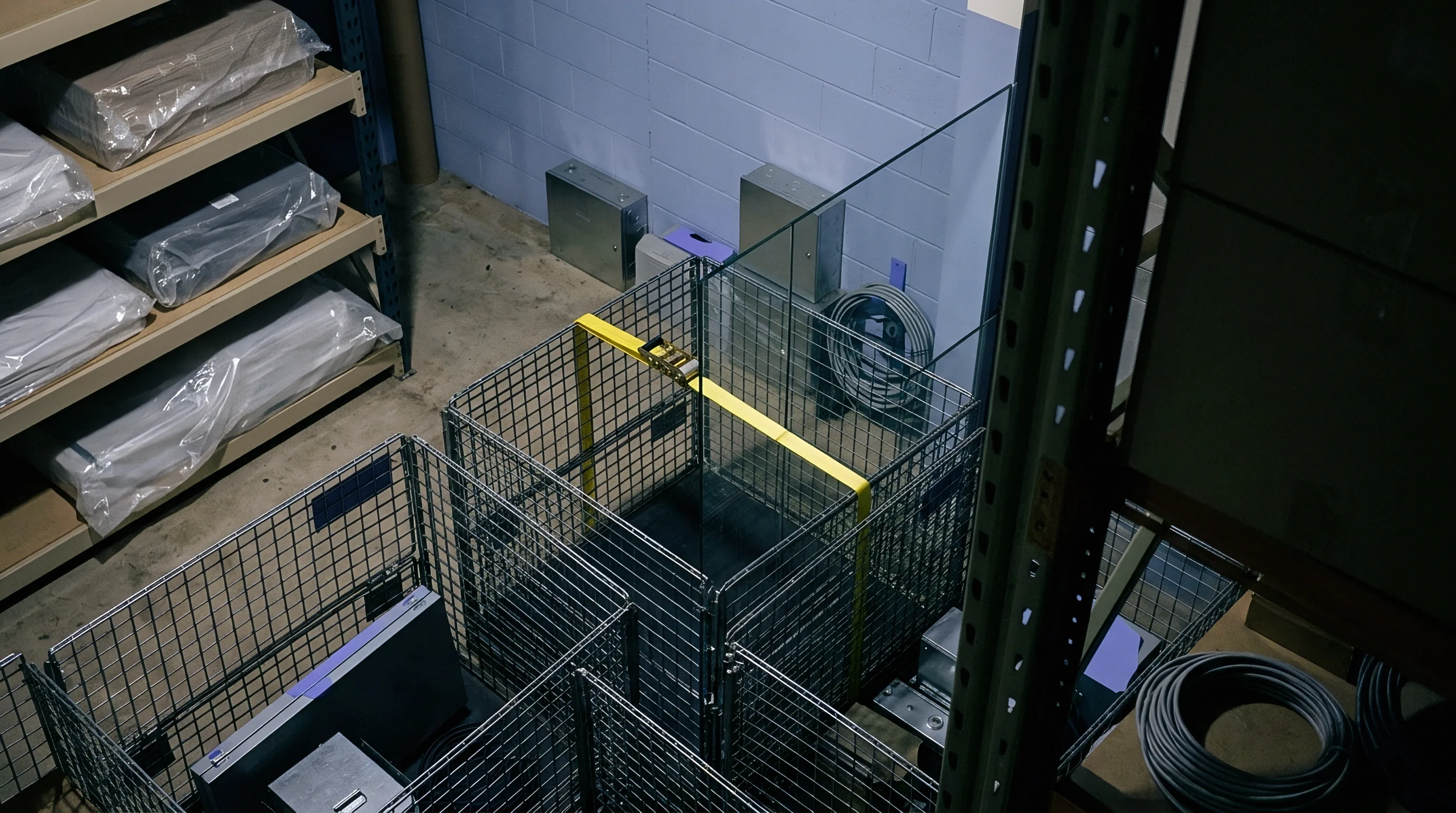
Crate

Material Movement across Physical Storage Layers
Steel coils, chemical totes, and microcontrollers do not sit statically waiting for accounting reconciliations. Pallets land at the receiving dock, move to quality inspection racks, drop into production staging, and pass through packaging conveyors. Standard pricing systems assume steady flow, but physical inventory mechanics introduce friction.
Scrapped components, vendor lot rejections, and transit breakage separate physical pieces from general ledger receipts.
When procurement secures bulk discounts by purchasing nine months of safety stock, standard purchase price variance generates an immediate positive ledger balance. The purchasing team appears to generate instant margins, yet the physical warehouse aisle fills with immobile pallets. The business commits upfront liquidity to carrier freight, handling labor, and dock fees.
The purchase price variance ledger logs an immediate accounting credit, creating an illusory separation between reported profitability and depleted bank cash.
Bulk procurement savings frequently generate paper credits while draining physical working capital lines through auxiliary carrying costs.
Tracking the physical destination of high-variance components requires rigorous shop-floor data collection. If a batch of specialized alloy steel incurs an extraordinary forty percent price surcharge due to spot market shortages, routing matters. If those bars are consumed exclusively on a rush aerospace work order billed out within five business days, proration to balance sheet raw materials creates an asset distortion.
The variance followed that specific physical lot out the door into customer billing.


Strain

Working Capital Realities under Inventory Inflation
Prorating variances alters headline margin metrics and inventory asset values simultaneously. When raw material input prices accelerate, balance sheet inventory swells under prorated purchase price allocations. Working capital formulas show expanding current assets, giving external lenders a cosmetic impression of asset growth.
Unadjusted operating cash flow deteriorates over the same timeframe because purchase orders demanded immediate cash settlement at higher real invoice prices.
Asset-based lending facilities utilize borrowing base certificates calibrated to eligible inventory values. Loan agreements typically cap lending availability at sixty-five percent of eligible raw materials and finished goods, assessed at the lower of standard cost or market value. Consider the regulatory tension:
- Covenant Headroom Distortion occurs when unprorated unfavorable purchase price variance leaves ending stock artificially low, needlessly depressing the borrower credit limit.
- Net Realizable Value Breaches arise when favorable purchase price variances are left unallocated, leaving inventory standard values above actual recoverable market prices.
- Appraisal Verification Audit Adjustments eliminate unprorated variance pools during annual collateral field exams, triggering sudden borrowing base re-benchmarks.
Auditors eliminate standard variance pools that fail periodic reconciliation against physical lot tracking. The borrower then faces immediate liquidity contraction as excess drawdowns convert into mandatory line paydowns.

Should Unfavorable Variances Capitalize into Inventory Indefinitely?
Capitalizing adverse purchase price variance indefinitely into inventory values violates lower of cost and net realizable value principles. If procurement pays three dollars per unit for resin historically pegged at two dollars, prorating that one-dollar variance expands asset carrying costs. If finished retail product selling prices cannot elevate to absorb this procurement jump, the inventory is carried above net realizable value.
Writing down that inventory via an obsolescence or lower-of-cost-or-market adjustment is mandatory at the close of the period.
The gross margin profile degrades either as a purchase price variance absorption into cost of sales or as an inventory impairment write-down. The difference rests on asset qualification: lenders strip inventory reserves from the borrowing base entirely. The controller must model whether margin suppression in current income proves less destructive to ongoing banking covenants than an asset-side valuation reserve.


Modeling

Dynamic Simulation of Single Batch Allocation
Consider an operational scenario with defined procurement parameters. Assume a processing facility purchases 100,000 units of raw component X at a negotiated spot invoice price of 14.50 dollars per unit. The engineering standard cost rests at 10.00 dollars per unit.
Total cash committed to the order reaches 1,450,000 dollars, generating an adverse purchase price variance of 450,000 dollars upon receiving dock signoff. The production run processes 60,000 units through sub-assembly during the quarter, shipping 40,000 completed units to commercial customers while 20,000 units linger in work-in-progress test fixtures. The remaining 40,000 units of component X stay in unopened crates inside the main distribution warehouse.
Standard costing ledgers without proration assign 400,000 dollars of direct materials to cost of goods sold, 200,000 dollars to work in progress, and 400,000 dollars to ending raw stock. Direct expensing immediately dumps the entire 450,000 dollar adverse variance into cost of goods sold. Under direct write-off, cost of goods sold registers 850,000 dollars of material expense, collapsing product line gross margin.
Raw materials remain carried at 400,000 dollars, understating actual cash tied up in the racking by 180,000 dollars.
| Physical Inventory State | Component Units | Standard Direct Cost | Direct Expensing COGS | Prorated Allocation Basis |
|---|---|---|---|---|
| Raw Materials Crates | 40,000 | 400,000 | 400,000 | 580,000 |
| Work In Progress Fixtures | 20,000 | 200,000 | 200,000 | 290,000 |
| Finished Goods Storage | 0 | 0 | 0 | 0 |
| Cost of Goods Sold (Dispatched) | 40,000 | 400,000 | 850,000 | 580,000 |
| Total Reconciled Batch | 100,000 | 1,000,000 | 1,450,000 | 1,450,000 |
Prorating the variance aligns material costs with consumption stage. Raw materials inventory absorbs 180,000 dollars of the variance, lifting carrying value to 580,000 dollars. Work in progress absorbs 90,000 dollars, lifting balance sheet staging to 290,000 dollars.
Cost of goods sold absorbs 180,000 dollars, raising realized expense to 580,000 dollars. The unit cost of dispatched goods settles at exactly 14.50 dollars, accurately matching real commercial margins on current dispatches.
A borrowing base covenants agreement typically defines eligible inventory net of standard-to-actual variance reserves when proration tracking breaks down during audits.
Direct expensing misallocates 270,000 dollars of actual asset outlays straight into current-period income statements. This distortion deflates reported net income, depresses debt-service coverage ratios, and falsely signals operational manufacturing waste. The inventory value on the balance sheet fails an audit check because it omits actual acquisition liabilities recorded in trade payables.
A supplier rarely accepts responsibility for internal standard cost mismatches, pointing out that spot purchase orders reflect prevailing raw material indices accepted by the procurement team at order signoff.