Meaning
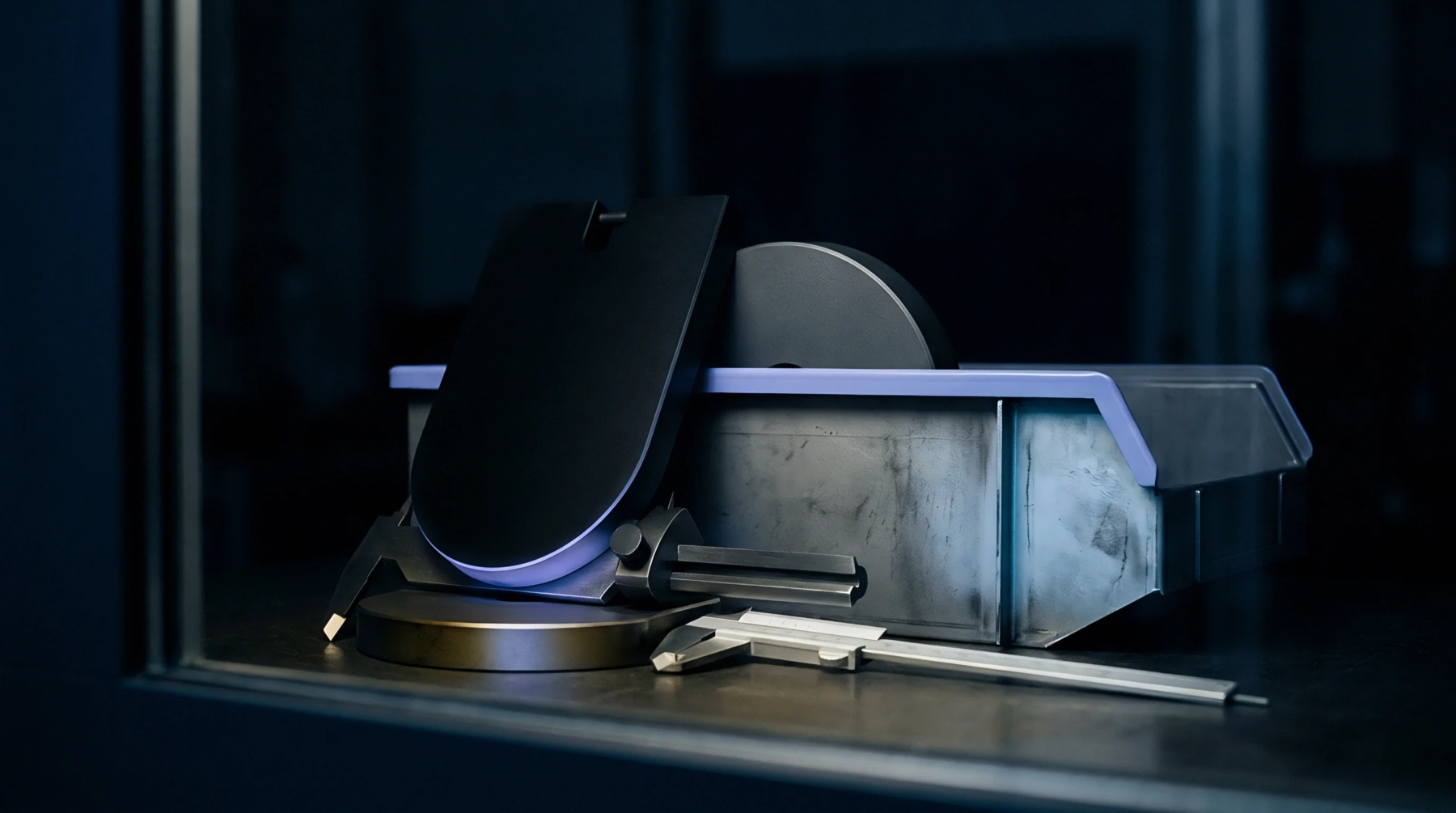
Dimensional metrology and precision machining track structural expansion and sensor offset caused by thermal gradients and mechanical relaxation over time. High-precision manufacturing systems suffer from thermomechanical drift when ambient temperature fluctuations and internal friction cause machine components and optical frames to shift during operation. Uncompensated thermal expansion of machine spindles and structural mounts introduces micro-scale positional errors that distort measurement accuracy and machining tolerances.
Accounting for this phenomenon governs long-duration CMM cycles and precision CNC milling runs, but stops applying when structural components reach complete thermal equilibrium in climate-controlled environments.
Thermal Compensation
Real-time sensor networks and thermal compensation algorithms offset structural expansion in high-precision machine tools. Engineers monitor thermomechanical drift by placing temperature sensors across machine frames, and mathematical correction models adjust axis coordinates dynamically. Without real-time thermal tracking, volumetric errors grow during extended machining operations as spindle heat dissipates into structural castings.
Environmental Control
Maintaining tight environmental tolerances inside metrology enclosures mitigates temperature-induced dimensional variation. Fluctuations in ambient workshop air create thermal gradients across large granite bases, causing localized bending and axis misalignment. Implementing strict enclosure temperature regulation protects long automated scanning runs from environmental thermal shifts.
Calibration Frequency
Setting re-calibration intervals for precision coordinate measuring equipment prevents cumulative drift from corrupting quality verification data. Over extended production shifts, heat generated by linear drives and optical illumination sources slowly shifts machine reference frames. Scheduled thermal calibration passes reset machine zero points, preserving gauge repeatability throughout continuous production cycles.